What is Content Distribution?
Content distribution is the process of publishing and promoting content across owned, earned, and paid channels to reach a target audience. It encompasses everything that happens after an asset is created - from scheduling a social post on LinkedIn to sending a nurture email to your subscriber list to promoting a video clip through paid ads.
For B2B marketers in 2026, distribution is no longer an afterthought. Industry research consistently shows that the most successful content marketers are far more likely to have a documented distribution strategy than their underperforming peers. The gap between teams that create great content and teams that get results from it almost always comes down to distribution.
The three distribution channels
- Owned channels: Platforms you control - your website and blog, email newsletter, social media profiles, podcast feed, and YouTube channel. These are free to use but limited by your existing audience size.
- Earned channels: Exposure you receive organically - social shares, backlinks, press mentions, guest posts, syndication pickups, and word-of-mouth referrals. These have high credibility but are harder to predict or control.
- Paid channels: Any placement you pay for - LinkedIn Sponsored Content, Google Ads, sponsored newsletters, influencer partnerships, and content promotion platforms. These offer precise targeting but require budget.
Why Content Distribution Matters for B2B Marketers in 2026
The average B2B buyer engages with 6-8 touchpoints across multiple channels before entering a sales conversation. If your content only shows up on your blog, you are invisible during most of the buyer's research journey. Distribution is how you ensure your expertise reaches prospects wherever they spend their time.
Problems content distribution solves
- The "publish and pray" problem: Many teams invest heavily in content creation, hit publish, and hope organic traffic arrives. Without a distribution plan, even strong content underperforms. Strategic distribution ensures your assets get in front of the right people at the right time.
- Channel coverage gaps: Your audience is spread across LinkedIn, email, YouTube, podcasts, Slack communities, and more. Without multi-channel distribution, you only reach the fraction of your audience active on one platform.
- Short content lifespan: A social post has a lifespan of hours. A blog post might take weeks to gain traction in search. Distribution strategy layers these timelines - using social to drive immediate traffic while SEO builds long-term discoverability.
- Wasted production investment: If you repurpose a webinar into 30 assets but only distribute 10 of them, you have left two-thirds of your investment on the table. A content calendar paired with a distribution plan ensures every asset gets used.
Real-World Examples
Post-webinar distribution sprint
A demand gen team hosts a monthly webinar on product-led growth. Within 48 hours of the live session, they execute a distribution sprint: the recap blog post goes live on the website, 3 video clips are posted to LinkedIn with native upload, the email sequence starts dripping to registrants who missed the live event, and quote cards are scheduled across the next two weeks. Over the following month, they release remaining clips, audiograms, and carousels on a steady cadence.
Agency cross-channel playbook
A content agency builds a reusable distribution playbook for each client's repurposed webinar content. The playbook maps each asset type to specific channels: video clips go to LinkedIn, YouTube Shorts, and paid social. Blog posts target organic search and email newsletter features. Podcast episodes go to Apple Podcasts and Spotify. The playbook standardizes timing, captions, and hashtags, reducing distribution labor from hours to minutes per asset.
Paid amplification of top-performing clips
A marketing team repurposes each webinar into 10-12 video clips and posts them organically on LinkedIn. After one week, they review engagement metrics and put paid budget behind the top 2-3 performers. This "organic-first, then amplify" approach means ad spend goes only toward content already proven to resonate - dramatically improving cost-per-click and engagement rates compared to promoting untested creative.
How RepurposeMyWebinar Makes Content Distribution Easy & Fast
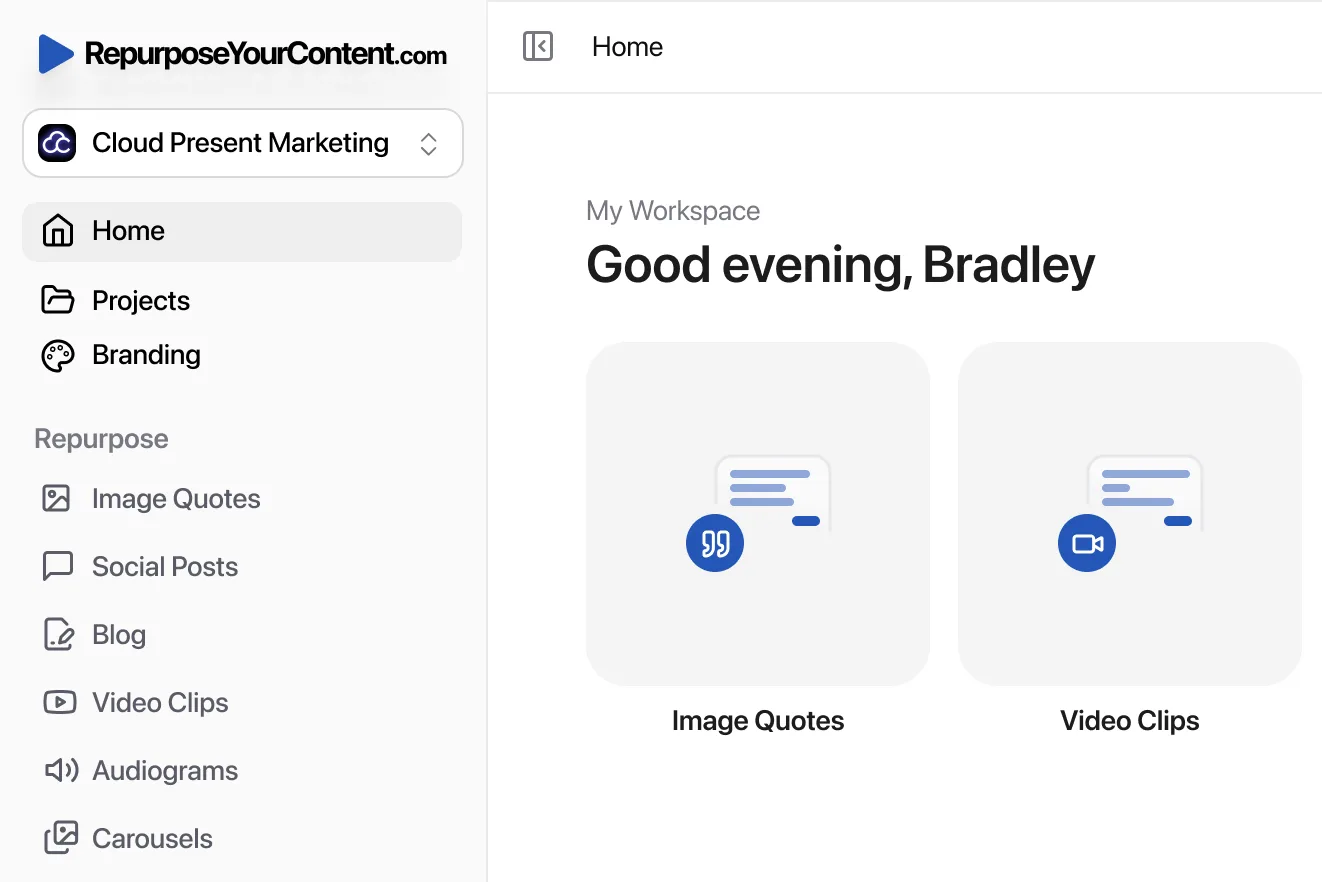
Effective distribution requires having the right assets for every channel - and that is where most teams stall. RepurposeMyWebinar shifts the balance from creation to distribution by producing channel-ready assets from a single recording:
- Upload your webinar - paste a link from Zoom, Goldcast, ON24, YouTube, or any supported platform, or upload a file directly.
- Generate channel-specific assets - the platform creates video clips sized for each social platform, blog posts optimized for search, social post copy tailored to LinkedIn and X, audiograms for audio-first audiences, image carousels, and email sequences for lead nurture.
- Brand Kit ensures consistency - your Brand Kit settings are applied across every output so assets look cohesive regardless of which channel they appear on.
- Download and distribute across channels - take your assets to your scheduling tools, email platform, CMS, and social accounts. One recording gives you enough content to sustain distribution across owned, earned, and paid channels for weeks.
- Repurpose again later - return to the same recording to generate fresh derivatives from sections you have not used yet, extending your distribution runway even further.
Shift your team's time from content creation to strategic distribution. See pricing or read content distribution strategies for B2B teams.
Content Distribution vs Similar Concepts
| Concept | What it means | How it differs |
|---|---|---|
| Content Distribution | Getting content in front of audiences across owned, earned, and paid channels | The broadest term - covers all methods of delivering content to an audience |
| Syndication | Republishing content on third-party platforms | A specific distribution tactic - syndication is one method within a broader distribution strategy |
| Cross-Posting | Sharing the same or similar content across multiple social platforms | A social-specific distribution tactic, often without adapting format for each platform |
| Content Calendar | A scheduling tool that plans when and where content publishes | The planning layer - the calendar organizes distribution, but distribution is the action |
Frequently Asked Questions
The three types are owned, earned, and paid. Owned channels are platforms you control - your website, blog, email list, and social media profiles. Earned channels are exposure you receive organically - shares, mentions, press coverage, backlinks, and word-of-mouth. Paid channels are any placement you pay for - social ads, sponsored content, search ads, and influencer partnerships. A strong B2B distribution strategy uses all three, with repurposed content adapted to the format and audience of each channel.
Repurposing solves the biggest distribution bottleneck: having enough format-appropriate content for every channel. A single webinar can produce video clips for LinkedIn and YouTube, blog posts for your website, audiograms for podcast feeds, image carousels for social, and email sequences for your subscriber list. Without repurposing, most teams can only cover 1-2 channels per content piece. With it, you cover 5-8 channels from one recording.
No. Each channel has different format expectations, audience behaviors, and algorithm preferences. A 60-second vertical video clip works on LinkedIn and YouTube Shorts but not in an email newsletter. A 1,500-word blog post works on your website but not as a social post. The key is to adapt the core message to each channel's native format - which is exactly what content repurposing does. The underlying insight stays the same, but the packaging changes for each platform.
Consistency matters more than volume. Most successful B2B teams publish on LinkedIn 3-5 times per week, send email newsletters weekly or biweekly, post blog content 2-4 times per month, and share video content 2-3 times per week across platforms. When you repurpose a single webinar into 20-40 assets, maintaining this cadence becomes manageable even for small teams. The content calendar then becomes a scheduling exercise rather than a creation challenge.
The most common mistake is spending 80% of effort on creation and only 20% on distribution. The ratio should be closer to 50/50, or even 40/60 in favor of distribution. A great piece of content that nobody sees produces zero results. Repurposing helps rebalance this equation by reducing creation time dramatically - one webinar generates weeks of content in minutes - freeing your team to focus on strategic distribution across channels.