What is Zero-Click Content?
Zero-click content is any piece of content that delivers its full value directly within the platform feed - without requiring the viewer to click a link, visit an external page, or leave the app. The audience consumes the entire message in place: in their LinkedIn feed, on Instagram, inside a tweet, or within a podcast player.
Common zero-click formats include short-form video clips with burned-in captions, carousel posts, image quotes, text-based threads, audiograms, and infographics. The term was popularized by content strategist Amanda Natividad and has become a core concept in social media marketing strategy.
The shift toward zero-click content reflects a broader change in how social algorithms work. Platforms like LinkedIn, Instagram, and X actively suppress posts containing external links because outbound clicks take users away from the platform. Native, self-contained content receives significantly more algorithmic distribution than equivalent link-based posts.
Key characteristics of zero-click content
- Self-contained value: The viewer gets the complete insight, tip, framework, or story without clicking away. Nothing is hidden behind a "read more" link.
- Platform-native format: The content uses a format native to the platform - native video, document carousels, image posts - rather than a link preview card.
- Optimized for in-feed consumption: Text is readable at mobile size, videos have captions for sound-off viewing, and carousels tell a complete story across slides.
- Brand awareness over direct conversion: The primary goal is reach, engagement, and trust-building rather than immediate click-through.
Why Zero-Click Content Matters for B2B Marketers in 2026
B2B buying behavior has shifted decisively toward in-feed content consumption. Decision-makers research solutions, evaluate vendors, and form opinions based on what appears in their social feeds - often long before they visit a website or request a demo. Zero-click content is how you show up in that process.
Problems zero-click content solves
- Declining organic reach on link posts: LinkedIn and other platforms have steadily reduced the distribution of posts with external links. Teams that rely solely on linking to blog posts and landing pages see their organic reach shrink each quarter. Zero-click formats bypass this penalty entirely.
- Attention competition: B2B buyers scroll through hundreds of posts daily. A self-contained video clip or carousel that delivers value in seconds earns engagement that a link-and-headline post never will.
- Trust and authority building: When your brand consistently shares valuable, ungated insights in the feed, you build thought leadership credibility. Prospects remember you when they are ready to buy - even if they never clicked a single link.
- Content volume at scale: A single anchor content piece like a webinar can be atomized into dozens of zero-click assets - video clips, quote cards, carousels, and text posts - giving marketing teams weeks of feed-native content from one recording.
Real-World Examples
LinkedIn video clips from a webinar panel
A B2B SaaS company hosts a quarterly webinar with a customer panel. Instead of posting a link to the full recording, the content team extracts 8-10 short-form video clips (30-90 seconds each) with burned-in captions and branded frames. Each clip highlights one specific insight from a panelist. Posted natively to LinkedIn over 3 weeks, these zero-click clips average 4x the impressions of the team's typical link posts and generate meaningful comment threads with prospects.
Carousel summarizing webinar key takeaways
An agency creates a 10-slide LinkedIn carousel for each client webinar, summarizing the top 5 takeaways with branded visuals. The carousel delivers the complete framework in-feed - viewers swipe through and absorb the content without leaving LinkedIn. The final slide includes the company name and a soft CTA, but the value is fully delivered in the preceding slides.
Quote cards from speaker insights
A demand gen team pulls the most compelling one-liners from their webinar speakers and turns them into branded image quote cards. Each card features the speaker's name, title, and the quote - fully legible in the feed. These zero-click image posts drive high engagement because they are instantly consumable and highly shareable.
How RepurposeMyWebinar Makes Zero-Click Content Easy & Fast
Zero-click content works because it delivers complete value without asking the viewer to leave their feed. The challenge is producing enough of it at the quality and volume social algorithms reward. RepurposeMyWebinar solves this by turning one webinar into a batch of native, self-contained assets.
- Upload your recording - paste a link from Zoom, Riverside, Goldcast, ON24, YouTube, or any supported platform, or upload a file directly.
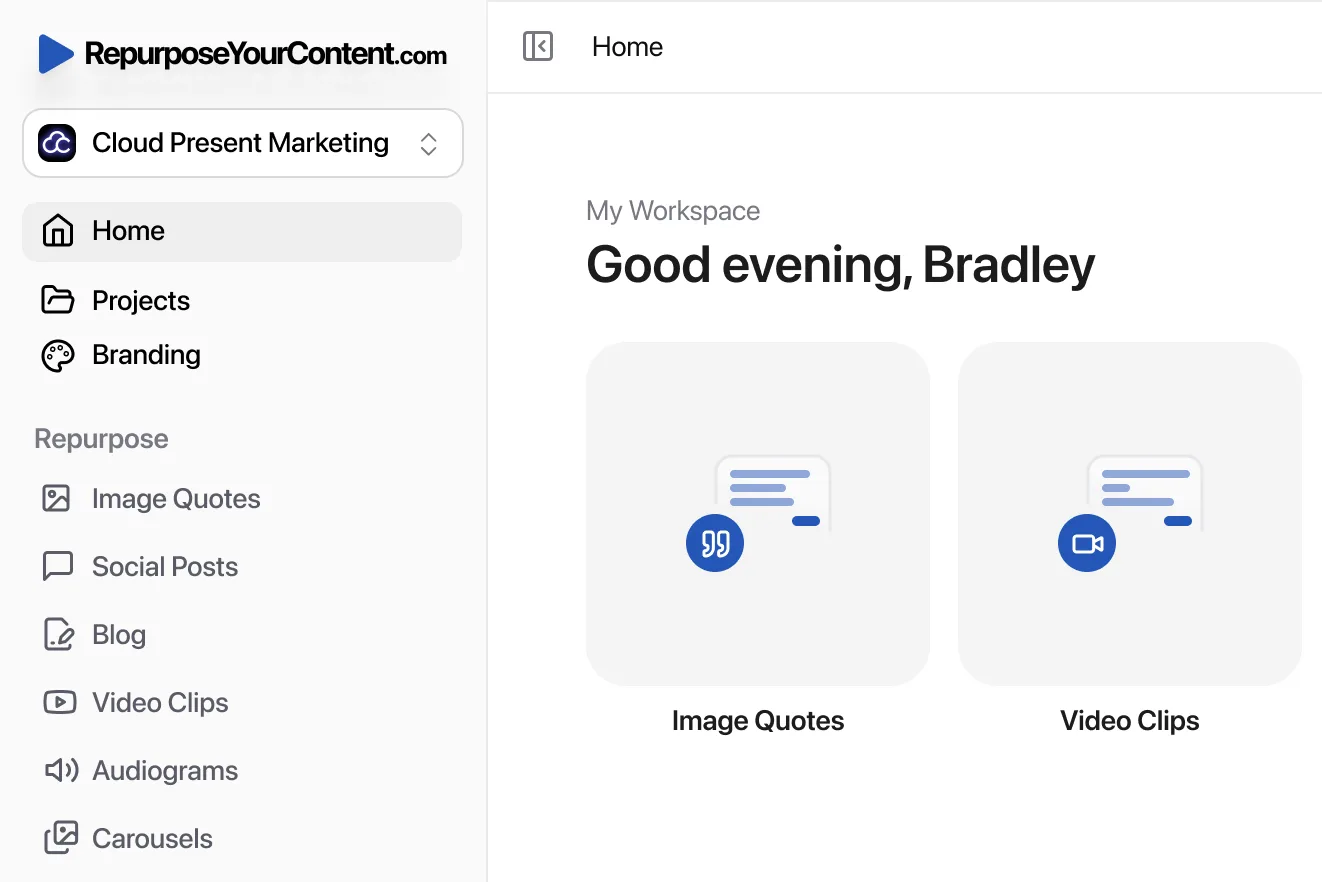
- Generate in-feed-ready formats - the platform produces video clips with burned-in captions, image carousels that tell a story slide by slide, quote cards with standout speaker insights, and audiograms with animated waveforms. Each format is designed to deliver its full message without a click.
- Pair with social post copy - every visual asset comes alongside AI-generated caption text, so you have the complete post ready to publish natively on LinkedIn, Instagram, or X.
Fill your social calendar with zero-click content from a single recording. See pricing or read how to repurpose webinar content for social media.
Zero-Click Content vs Similar Concepts
| Concept | What it means | How it differs |
|---|---|---|
| Zero-Click Content | Content that delivers full value in the feed without requiring a click | Focused on in-feed completeness and algorithmic reach |
| Native Content | Content created specifically for a particular platform's format | Native content may still link externally; zero-click content never does |
| Ungated Content | Content accessible without a form fill or login | Ungated content lives on your website; zero-click content lives in the feed |
| Micro-Content | Small, easily consumable pieces of content | Micro-content describes size; zero-click describes distribution strategy |
Frequently Asked Questions
Zero-click content is any post that delivers its complete message within the feed itself. Common examples include native video clips with burned-in captions, LinkedIn carousel posts, image quote cards, text-based threads, infographics, and audiograms. The defining characteristic is that the viewer gains full value without needing to click a link, visit a website, or leave the platform.
Social platforms generate revenue from advertising, and ads only work when users stay on the platform. When you share a link that sends people away, the algorithm limits that post's reach. Zero-click content keeps users engaged within the feed, so platforms reward it with higher distribution. LinkedIn, for instance, has confirmed that native documents and videos receive significantly more impressions than link posts.
Yes. B2B buyers increasingly consume content in-feed on platforms like LinkedIn. B2B decision-makers spend a meaningful amount of time each week consuming content on the platform. Zero-click formats like short video clips, carousels, and quote cards meet these buyers where they already are, building trust and brand awareness without requiring them to leave their workflow.
Zero-click content builds awareness and trust at the top of the funnel. When your audience consistently sees valuable content from your brand in their feed, they remember you when the buying moment arrives. Many B2B marketers pair zero-click posts with occasional conversion-focused content - for example, publishing 4 zero-click posts for every 1 post that links to a landing page or resource. The result is higher overall reach and a warmer audience when you do ask for the click.
Absolutely. Webinars are one of the best sources for zero-click content because they contain expert insights, quotable moments, and visual presentation material. A single webinar can produce dozens of zero-click assets: short video clips with captions for LinkedIn and Instagram, carousel posts summarizing key frameworks, image quotes featuring speaker insights, and audiograms for podcast listeners. Tools like RepurposeMyWebinar automate this extraction process.