What is Podcast Repurposing?
Podcast repurposing is the practice of taking one finished episode and reshaping it into other formats. A 45-minute conversation becomes a dozen short clips, a written article, several social posts, and a handful of audiograms. The audio is the source; everything else is derived from it.
The reason is simple math. Most people will never sit through a full episode, but they might watch a 40-second clip or read a quote. Repurposing meets people where they already are. It is closely related to content atomization, where one large piece is broken into many small ones.
Key characteristics
- One source, many outputs: A single recording becomes 20-30 pieces across formats.
- Format-spanning: Covers video, text, image, and audio, not just one channel.
- Audience-meeting: Reaches people who would never play the full episode.
- Repeatable: The same process runs on every episode you publish.
Why Podcast Repurposing Matters for Podcasters in 2026
Recording an episode is the hard part. Leaving it as a single audio file wastes most of the work. Repurposing multiplies the return on a recording you already made - the same hour of effort can fuel a week of posts, drive search traffic, and pull in listeners who found you through a clip rather than the feed.
Problems it solves
- Limited reach: Clips and posts find people who never open a podcast app.
- Empty content calendar: One episode fills a week of social and email instead of scrambling daily.
- No search presence: A blog version of the episode ranks where audio cannot.
Real-World Examples
From interview to a week of posts
A founder records one guest interview and ships eight short clips, three image quotes, two audiograms, and a blog recap - enough to post daily for a week from a single session.
Driving listens with clips
A show posts a 50-second clip of the sharpest moment on social. Viewers who liked it click through and subscribe, turning a clip into new feed subscribers.
Search-friendly archive
Each episode also becomes a written article with the full transcript, so the back catalog starts ranking for the questions guests answered.
How RepurposeYourContent Makes Podcast Repurposing Easy & Fast
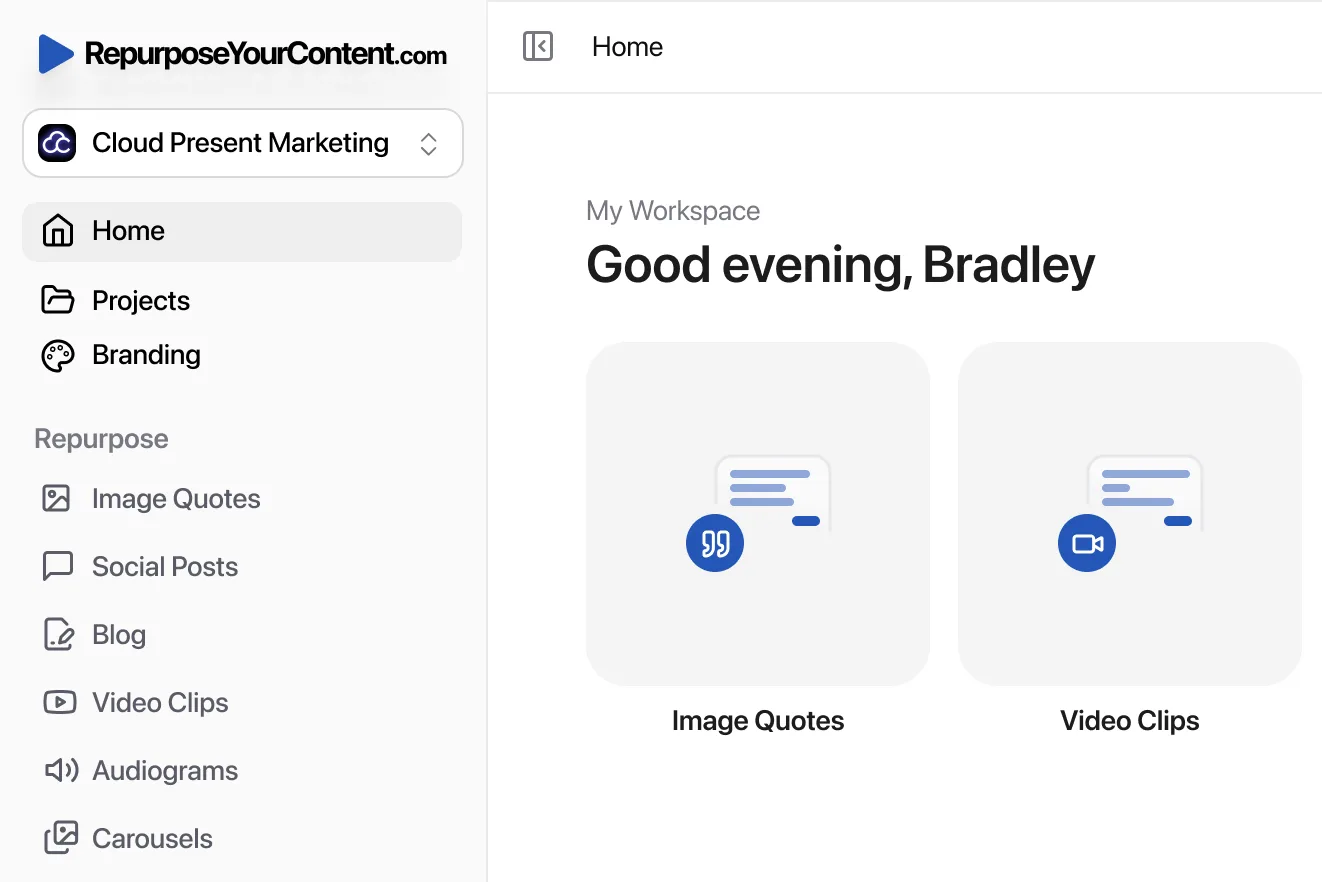
Doing this by hand means clipping video, writing posts, and designing graphics for every episode - hours of work most podcasters never get to. RepurposeYourContent runs the whole pipeline from one upload.
- Upload your episode - Drop in the recording and the system processes the audio, video, and transcript.
- Get clips and audiograms - Receive ready-to-post video clips and audiograms pulled from the best moments.
- Get written and social content - Get a blog post and a batch of social posts drawn from the episode.
- Review and publish - Edit anything you want, then schedule across your channels.
- Repeat each episode - Run the same workflow on every release so output never depends on free time.
One recording, 20-30 pieces, no manual grind. See the full output on the pricing page.
Podcast Repurposing vs Related Concepts
| Concept | What it means | How it differs |
|---|---|---|
| Podcast Repurposing | Turning one episode into many formats. | Starts from a finished audio episode as the source. |
| Content Atomization | Breaking any large asset into small pieces. | Broader idea that applies to more than podcasts. |
| Cross-Posting | Sharing the same post on multiple platforms. | Reuses one asset as-is rather than reshaping it. |
| Podcast Clip | A short excerpt cut from an episode. | One output type within a full repurposing workflow. |
Frequently Asked Questions
A typical 30 to 60 minute episode can yield 20 to 30 pieces, including short clips, audiograms, a blog post, image quotes, and a batch of social posts. The exact count depends on how much usable material the conversation holds. Tightly packed interviews produce more.
No. Repurposed content usually drives more listens, not fewer. Clips and posts act as on-ramps that send new people to the full episode, which often raises downloads rather than cannibalizing them.
Start with short video clips and audiograms, since they travel furthest on social and pull in new listeners. Add a blog post next for search traffic. Image quotes and social text posts round out a full week of content.
Yes. Audio-only episodes still produce audiograms, blog posts, image quotes, and social text. You lose the video clip format, but the transcript-driven outputs all still work from a plain audio file.
By hand it can take several hours per episode to clip, write, and design everything. With an automated workflow the heavy lifting happens after a single upload, leaving you to review and schedule rather than build each piece from scratch.