What is Channel-Native Content?
Channel-native content is content that has been specifically formatted, styled, and optimized for a particular distribution platform's conventions, dimensions, and audience behavior. Rather than publishing one generic asset across every channel, channel-native content adapts the message to fit how each platform works - its algorithm preferences, visual format, tone expectations, and user interaction patterns.
For example, a single webinar insight might become a 30-second vertical video with burned-in captions for Instagram Reels, a 4:5 carousel post for LinkedIn, an audiogram for a podcast feed, and a text-based thread for X. The underlying insight is the same, but the format is native to each channel. This matters because platforms actively reward native content in their algorithms - LinkedIn deprioritizes posts with external links, Instagram favors Reels over static images, and YouTube promotes native uploads over embedded videos from other sources.
Key dimensions of channel-native content
- Format: Video, image, carousel, text, audio - each platform has formats that get preferred distribution. LinkedIn favors PDF carousels and native video. Instagram prioritizes Reels. YouTube rewards long-form and Shorts differently.
- Aspect ratio: 9:16 vertical for Stories, Reels, Shorts, and TikTok. 1:1 square or 4:5 portrait for LinkedIn and Instagram feeds. 16:9 landscape for YouTube and webinar recordings.
- Tone and length: LinkedIn rewards professional, insight-driven posts of 150-300 words. X favors concise, punchy takes. Instagram captions skew casual and emoji-friendly. Blog posts need depth and SEO structure.
- Engagement mechanics: Each platform has its own interaction patterns - comments and shares on LinkedIn, saves and sends on Instagram, quote-tweets on X, watch time on YouTube. Native content is designed to trigger the specific engagement signal each algorithm values most.
Why Channel-Native Content Matters for B2B Marketers in 2026
B2B buyers research and evaluate vendors across multiple platforms simultaneously. Research consistently shows that B2B buyers engage across multiple touchpoints before initiating a sales conversation. If your content looks and feels native on each of those platforms, you build trust and credibility. If it looks like a copy-paste job, you signal that the channel (and its audience) is not a priority.
Problems channel-native content solves
- Algorithm penalties for non-native formats: Platforms actively suppress content that was clearly made for somewhere else. A landscape video cropped awkwardly for Instagram Reels or a LinkedIn post that is just a link to a YouTube video will get a fraction of the reach compared to native uploads.
- Audience expectations mismatch: Each platform has a culture. LinkedIn users expect professional insights. Instagram users expect visual polish. X users expect sharp, direct takes. Posting the same tone and format everywhere alienates at least some of your audience segments.
- Wasted distribution effort: If you are spending time or budget to promote content on a platform, posting non-native content means you are paying for diminished results. Channel-native content maximizes the return on every distribution effort.
- Scaling multi-channel presence: Marketing teams need to be present on 4-6 platforms but rarely have the headcount to create unique content for each. Anchor content repurposing makes channel-native output possible at scale.
Real-World Examples
One webinar, five native formats
A B2B SaaS company records a 40-minute product strategy webinar. Their content team generates: 8 vertical breakout clips (9:16) with captions for LinkedIn, Reels, and Shorts; 3 image carousels (4:5) for LinkedIn; 1 long-form blog post optimized for search; a 5-part email sequence for their nurture campaign; and a podcast episode for audio-first audiences. Every piece is channel-native. None is a copy-paste.
Agency adapting client content per platform
An agency manages social for a cybersecurity vendor. Instead of posting the same clip to every platform, they deliver: a 60-second landscape clip with a detailed caption for LinkedIn (where their audience expects depth), a 30-second vertical cut with text overlay for Instagram Reels (where visual hooks matter most), and a text-based thread with key stats for X (where the audience prefers readable data). Same insight, three native experiences - each outperforming the client's previous cross-posted approach by 2-3x in engagement.
Demand gen team optimizing for each funnel stage
A demand gen team uses channel-native content to match funnel stages to platforms. Top-of-funnel: short, punchy video clips on LinkedIn and Instagram to build awareness. Mid-funnel: in-depth blog posts and carousel breakdowns for prospects actively researching solutions. Bottom-funnel: personalized email sequences with webinar highlights for leads in the pipeline. Each asset is formatted natively for its distribution channel and funnel position.
How RepurposeMyWebinar Makes Channel-Native Content Easy & Fast
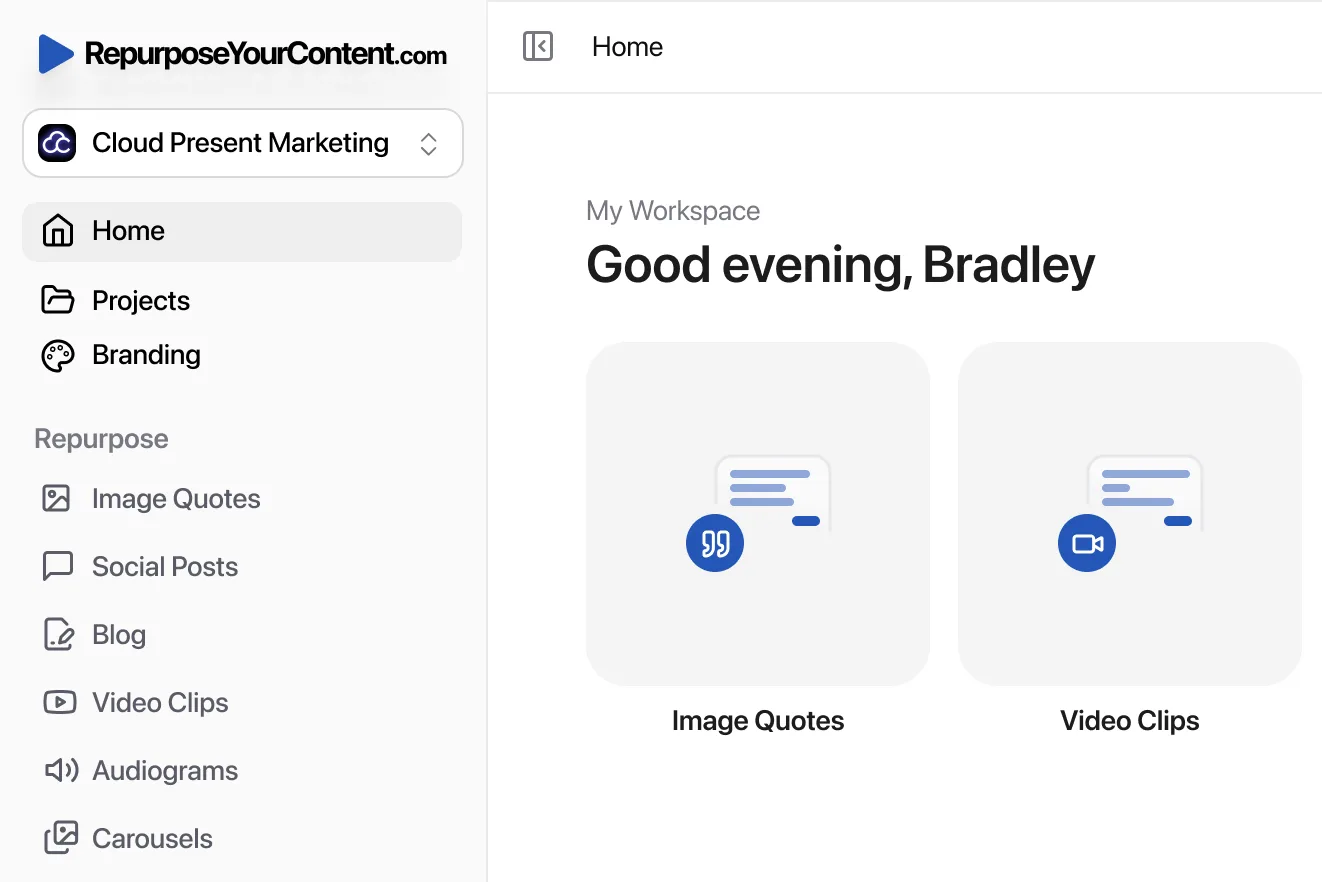
The biggest barrier to channel-native content is the production cost of adapting one idea for multiple platforms. RepurposeMyWebinar eliminates that barrier by automatically generating platform-specific outputs from a single recording:
- Upload once from any supported platform - paste a link from Zoom, Riverside, Goldcast, ON24, YouTube, or upload a file directly. This single source feeds every channel.
- Choose your target channels - select which platforms you need content for. The platform automatically applies the correct format, aspect ratio, and style conventions for each destination - 16:9 for YouTube, 9:16 for Reels, PDF for LinkedIn carousels, long-form for blog, and more.
- Brand Kit keeps it yours - your Brand Kit settings (logo, colors, fonts, tone) are applied to every output, so content looks native to the platform while staying recognizably on-brand.
- Generate native assets simultaneously - video clips, carousels, blog posts, social post captions, audiograms, email sequences, and podcast audio - each formatted natively for its destination.
- Edit and publish - fine-tune any piece in-platform, then download or share. Your team goes from one webinar to a full channel-native content library in minutes.
Stop cross-posting the same asset everywhere. Start creating native content for every channel. See pricing or learn how to repurpose webinar content for social media.
Channel-Native Content vs Similar Concepts
| Concept | What it means | How it differs |
|---|---|---|
| Channel-Native Content | Content adapted to a specific platform's format and conventions | Tailored for one platform's algorithm, dimensions, and audience |
| Cross-Posting | Publishing the same content on multiple platforms without changes | Faster but lower performance - no format or tone adaptation |
| Content Distribution | The process of publishing and promoting content across channels | Describes where content goes; channel-native describes how it is formatted |
| Format Adaptation | Converting content from one format to another | A technique used to produce channel-native content, but does not address tone or platform culture |
Frequently Asked Questions
Channel-native content is content created or adapted specifically for the format, conventions, and audience expectations of a single platform. Rather than posting the same asset everywhere, channel-native content is tailored - a vertical video with captions for Instagram Reels, a PDF carousel for LinkedIn, a text thread for X, or an SEO-optimized blog post for your website. The content delivers the same core message but in the format each platform's audience prefers.
No. Cross-posting means publishing the identical piece of content across multiple platforms without modification. Channel-native content is the opposite - it adapts the message, format, dimensions, tone, and style to match each platform individually. Cross-posting is faster but typically underperforms because platforms deprioritize content that was clearly created for a different channel.
The most efficient approach is to start with one rich source asset - like a webinar - and repurpose it into platform-specific formats. From a single 45-minute webinar, you can generate vertical video clips for Reels and TikTok, landscape clips for YouTube and LinkedIn, PDF carousels for LinkedIn, text posts for X, blog posts for your website, audiograms for podcast feeds, and email sequences for nurture campaigns. Tools like RepurposeMyWebinar automate this multi-format output so teams can produce native content for every channel without creating each piece from scratch.
Platform algorithms favor content created specifically for their format. Native video on LinkedIn gets more reach than a YouTube link. A vertical video on Instagram Reels outperforms a landscape crop. A PDF carousel earns more dwell time than a single image. Beyond algorithms, users have format expectations on each platform - meeting those expectations increases the chance they will stop scrolling, engage, and share.
LinkedIn, YouTube, and Instagram each have distinct format requirements. LinkedIn favors PDF carousels, native video (square or portrait), and long-form text posts. YouTube rewards landscape video with strong thumbnails and timestamps. Instagram prioritizes vertical Reels and multi-image carousels. For B2B teams, LinkedIn is typically the highest-priority platform, followed by YouTube for long-form and email for nurture sequences.