What is Programmatic Content?
Programmatic content is content that is generated or assembled at scale using templates, rules, or automation rather than fully manual creation. Instead of a human designing each individual asset from scratch, a system applies predefined brand guidelines, formatting rules, and structural templates to source material - producing multiple finished outputs in a fraction of the time.
In the context of content repurposing, programmatic content means taking a single anchor asset - like a webinar recording - and using automation to transform it into video clips, blog posts, social posts, audiograms, and more, all formatted to your brand specifications. The approach has become essential for B2B teams: research consistently shows that the most successful content marketers cite scalable production workflows as a top priority, and that number continues to climb year over year.
Key elements of programmatic content
- Templates: Predefined layouts, dimensions, and structures for each output format - such as a 1080x1080 quote card template or a LinkedIn carousel layout.
- Rules: Conditions that govern how content is assembled - for example, always include speaker attribution, cap video clips at 90 seconds, or match captions to your Brand Kit font.
- Automation: The technology layer - often AI-powered - that identifies key moments, extracts clips, generates text, and applies templates without manual intervention.
- Source material: The rich input asset that feeds the system. Webinars, conference talks, and long-form video are ideal because they contain enough depth to produce many distinct outputs.
Why Programmatic Content Matters for B2B Marketers in 2026
B2B buyers now engage across more channels than ever before making purchase decisions. Marketing teams are expected to publish consistently on LinkedIn, YouTube, email, their blog, and podcast platforms - yet most teams have not grown proportionally. Programmatic content bridges the gap between channel expectations and production capacity.
Problems programmatic content solves
- Production bottlenecks: Manual creation of each individual asset - designing a quote card, editing a video clip, writing a social caption - is the single biggest constraint on content velocity. Programmatic workflows eliminate repetitive production tasks so your team focuses on strategy and review.
- Brand inconsistency: When multiple team members (or freelancers) create assets independently, visual and tonal consistency suffers. Templates enforce uniform branding across every output, whether it is a video clip, an audiogram, or a blog post.
- Speed to market: A webinar that happened on Tuesday should fuel social content by Wednesday, not three weeks later. Programmatic creation compresses the time from recording to published asset from days to minutes.
- Cost at scale: Hiring designers, video editors, and copywriters for each asset is expensive. Agencies serving multiple clients benefit especially - programmatic workflows let them deliver higher content volume without proportional cost increases.
Real-World Examples
SaaS company scales from 4 posts/week to 25+
A mid-market SaaS company hosts bi-weekly product webinars. Previously, the two-person content team could manually produce about 4 social posts and 1 blog recap per webinar. After adopting a programmatic approach with templated outputs, each webinar now generates 8-12 video clips, 6-8 social posts, 2 blog articles, a set of quote cards, and an email nurture sequence - all within a day of the live event.
Agency delivers consistent output across 12 clients
A B2B content agency manages webinar repurposing for 12 clients, each with distinct brand guidelines. By building client-specific templates - covering colors, fonts, logo placement, and caption styles - the agency processes each client's recordings through the same programmatic workflow. The result: consistent, on-brand assets for every client without the overhead of custom production runs for each one.
Demand gen team fuels a 30-day campaign from one event
A demand gen team records a 90-minute virtual panel with three industry experts. Using programmatic content creation, they extract 20 short-form video clips, 15 social posts with pull-quotes, 3 long-form blog articles, and a 4-part drip campaign. Each asset is automatically branded and formatted for its target platform, filling the team's content calendar for the entire month.
How RepurposeMyWebinar Makes Programmatic Content Easy & Fast
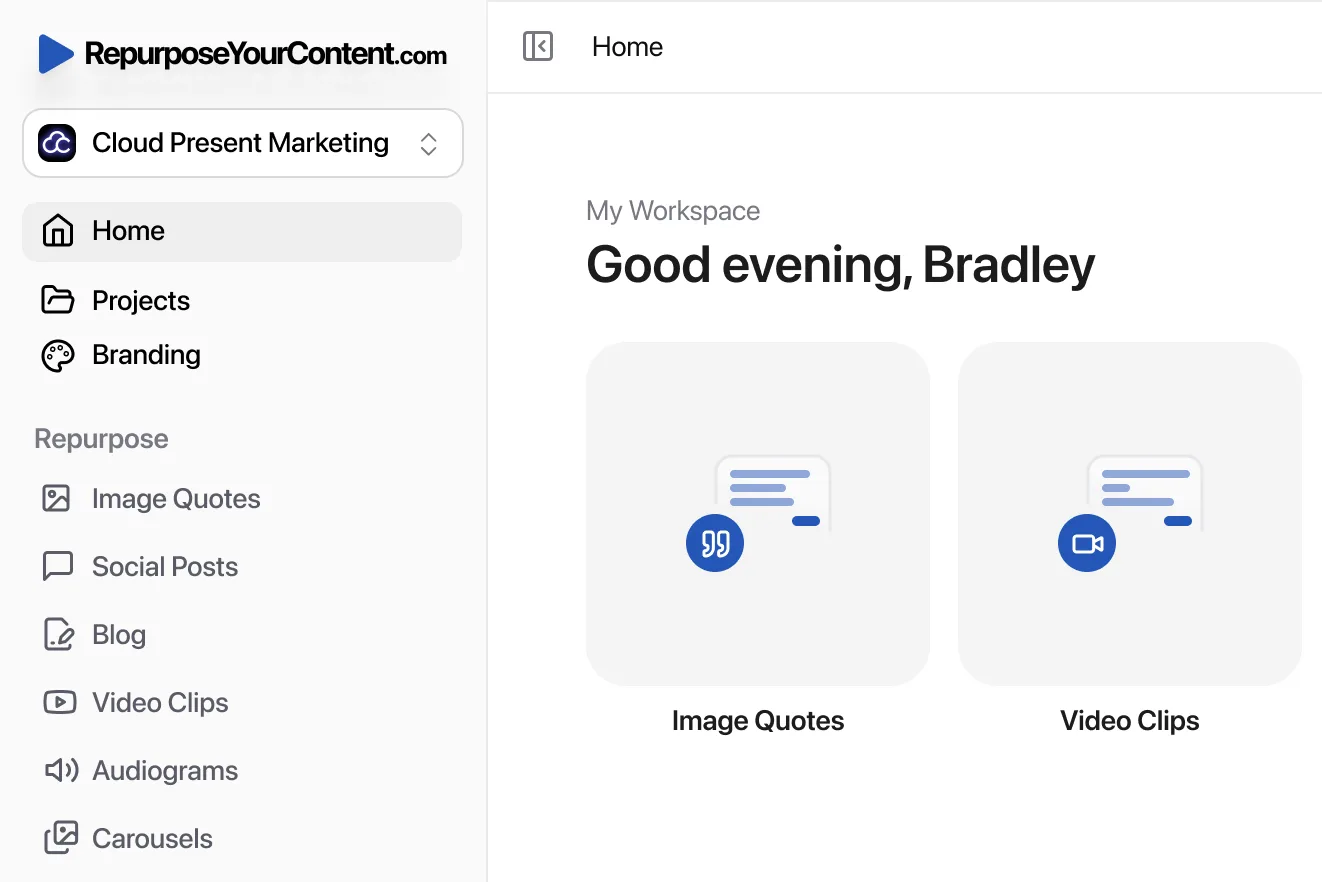
RepurposeMyWebinar is the programmatic engine for webinar content. Set up your rules once, and the platform applies them to every recording you upload - producing consistent, on-brand assets at scale without manual production:
- Set your Brand Kit and templates - configure your logos, colors, fonts, caption styles, and tone preferences once. These become the rules that govern every output the platform generates.
- Upload any recording - paste a link from any supported platform or upload a file. The AI identifies key moments, extracts clips, and writes copy based on your settings.
- Receive a full batch of assets - video clips, blog posts, social posts, audiograms, carousels, email sequences, and quote cards - all formatted, branded, and ready for review.
- Edit and approve - your team reviews and refines rather than creates from scratch. The production bottleneck disappears.
- Scale across recordings - whether you process one webinar per month or ten, the same templates and rules apply, delivering predictable output every time.
See how it works with your next webinar. View pricing or read our guide on automating webinar repurposing.
Programmatic Content vs Similar Concepts
| Concept | What it means | How it differs |
|---|---|---|
| Programmatic Content | Content assembled at scale using templates and automation | Focuses on production method - template-driven, rule-based output |
| AI Content Generation | Content created by machine learning models | Emphasizes the creation engine (AI); programmatic emphasizes the workflow and templates |
| Batch Content Creation | Producing multiple pieces in a concentrated session | Can be manual or automated; programmatic specifically implies automation and templates |
| Content Atomization | Breaking one asset into many smaller pieces | Describes the strategy of decomposing content; programmatic describes the production method |
Frequently Asked Questions
Programmatic content uses templates, rules, and structured data to assemble assets at scale - think branded video clips generated from a recording using predefined format settings. AI-generated content uses machine learning models to create original text, images, or media. In practice, modern repurposing tools combine both: AI identifies the best moments from a webinar, and programmatic templates apply your brand styling to each output automatically.
Not when the system is well-configured. The key is investing upfront in strong templates, clear brand guidelines, and quality source material. A well-structured Brand Kit ensures that every programmatically generated clip, post, or blog draft meets your visual and tonal standards. The human role shifts from manual creation to reviewing and refining outputs - which is far more efficient.
Nearly every content format used in B2B marketing can be produced programmatically from a source recording: video clips, social media posts, blog post drafts, email sequences, audiograms, image quotes, podcast episodes, and carousel slides. The source material provides the substance, while templates and rules handle formatting, branding, and platform-specific requirements.
Start by standardizing your brand assets - logos, colors, fonts, and tone guidelines - in a Brand Kit. Then choose a repurposing platform that supports template-based output generation. Upload a webinar or long-form recording as your source material, configure your output preferences once, and let the system generate multiple assets. Review, refine, and publish. Most teams see the biggest efficiency gains after the first two or three recordings, once their templates are dialed in.
Programmatic content creation is actually most valuable for small teams. A two-person content team that manually creates every blog post, social update, and email from scratch cannot keep up with multi-channel demands. With programmatic workflows, that same team can produce the output of a much larger operation by using one webinar recording to generate dozens of assets automatically.