What is Snackable Content?
Snackable content is short, digestible content designed for fast consumption in a scrolling environment. It delivers one clear idea, insight, or takeaway in a format that a viewer can absorb in under 30 seconds - without requiring them to click through, read a full article, or watch a lengthy recording. Unlike short-form video, which describes a specific video format, snackable content is format-agnostic. It encompasses images, text, audio, carousels, and video alike - any format that delivers quick value in a single scroll stop.
The term is often used interchangeably with bite-sized content and micro-content. In a content repurposing workflow, snackable assets are the primary output of content atomization - the process of breaking a substantial anchor content piece like a webinar into dozens of standalone assets across every format.
The full spectrum of snackable formats
- Quote cards: Branded images featuring a speaker quote pulled from the recording. These require zero video - just a compelling statement and good design. They are among the most shared formats on LinkedIn.
- Carousel posts: Multi-slide visual summaries of key points. Carousels encourage swipe-through behavior and tend to earn high save rates, making them especially effective on LinkedIn and Instagram.
- Audiograms: Short audio clips with visual waveforms and captions, bridging podcast and social media formats. They bring audio content to visual-first feeds.
- Social text posts: Concise social posts distilling a single insight, stat, or opinion from the webinar into a few sentences. No visuals required - just sharp writing.
- Single-stat graphics and infographic snippets: Data points from your webinar visualized as standalone images. These are highly shareable and work well in email newsletters and on social media.
- Short-form video clips: Brief video segments extracted from webinars. While short-form video has its own production considerations (aspect ratio, captioning, platform specs), it is also one type of snackable content.
Why Snackable Content Matters for B2B Marketers in 2026
The most successful B2B content strategies do not rely on a single format. They use a mix of snackable assets - visual, text, audio, and video - to reach different audience segments in the formats they prefer. Snackable content is the connective tissue that ties together your content calendar across channels.
Problems snackable content solves
- Format fatigue in your audience: If every post is the same type - all text, all video, or all links - engagement declines. A mix of quote cards, carousels, audiograms, text posts, and video clips keeps your feed visually diverse and gives followers new reasons to engage each time.
- Content calendar gaps: Marketing teams need to publish 3-5 times per week per channel to maintain visibility. Creating original content for each post is unsustainable. Atomizing a single webinar into 20-40 snackable assets across formats fills weeks of your calendar from one recording.
- Audience preference variation: Some buyers engage with visual content, others prefer text, and some are audio-first listeners. Producing snackable content in multiple formats ensures you are not missing entire segments of your ICP based on format preference.
- Top-of-funnel awareness gaps: Not everyone in your ICP is ready to attend a webinar or read a whitepaper. Snackable pieces serve as low-commitment entry points that introduce your expertise, build trust, and drive full-funnel progression over time.
Real-World Examples
30-day content calendar from one webinar
A B2B SaaS content team hosts a 50-minute webinar with two industry experts. They atomize the recording into 35 snackable assets: 12 video clips, 8 social posts, 5 quote cards, 4 carousel posts, 3 audiograms, and 3 stat graphics. Scheduled across LinkedIn, YouTube Shorts, and X, these assets fill a full month of daily posting - all from a single hour of recording.
LinkedIn engagement engine
A demand gen leader posts one snackable video clip from their latest webinar every morning for two weeks. Each clip features a counterintuitive insight or a data point that sparks conversation. The posts generate 5-8x more impressions than text-only updates, and the comment threads create organic distribution. A pinned comment on each post links to the full on-demand webinar recording.
Agency content package upsell
A marketing agency structures their pricing tiers around snackable content volume. The base tier delivers a blog post and 5 social posts from each client webinar. The premium tier adds 10 video clips, 5 quote cards, 3 carousels, and an email sequence. Clients who upgrade to the premium tier see 3x more content output with no additional recording time - just deeper atomization of the same source material.
How RepurposeMyWebinar Makes Snackable Content Easy & Fast
The hardest part of snackable content is not having the ideas - it is producing 20-40 individual assets in different formats from a single recording. RepurposeMyWebinar handles the atomization so your team focuses on scheduling and strategy:
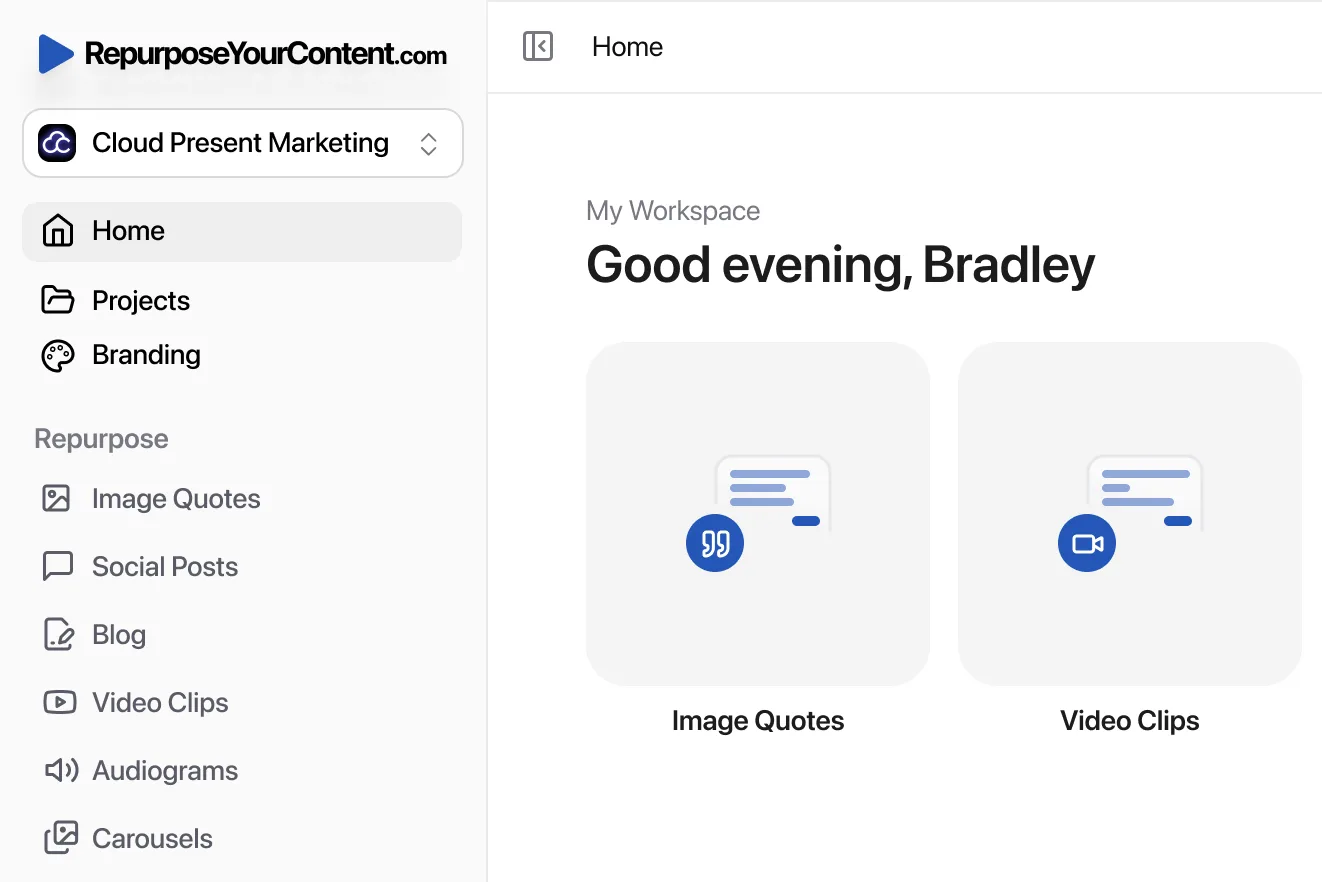
- Upload your recording - paste a link from any supported platform or upload a file. The platform analyzes the full transcript and video.
- AI generates every snackable format - from one upload, receive video clips, quote cards, carousel posts, audiograms, and social text posts. Each asset is self-contained and ready for its target platform.
- Brand Kit keeps 30+ assets looking cohesive - your logo, colors, fonts, and caption styles are applied to every output automatically, so your feed looks intentional even when you are publishing daily.
- Fill your content calendar in one session - download all assets at once, then map them to your publishing schedule. One webinar can fuel a full month of multi-channel distribution across LinkedIn, email, YouTube, and more.
Turn one webinar into a month of snackable content across every format. See pricing or read how to repurpose a webinar into multiple content formats.
Snackable Content vs Similar Concepts
| Concept | What it means | How it differs |
|---|---|---|
| Snackable Content | Short, self-contained content for fast consumption | Emphasizes the consumption experience - quick, easy, complete in one glance |
| Micro-Content | Ultra-short content pieces across any format | Emphasizes size; largely synonymous with snackable content |
| Bite-Sized Content | Content designed for quick consumption | Another synonym; all three terms describe the same category |
| Content Atomization | The process of breaking content into smallest usable units | Atomization is the process; snackable content is the output |
| Derivative Content | Any content created from a source asset | Broader category; derivative content includes long-form outputs like blog posts, not just snackable pieces |
Frequently Asked Questions
Snackable content spans every format. Common examples include short-form video clips (under 90 seconds), quote cards and image quotes, carousel posts, audiograms, single-stat graphics, tweet-length text posts, GIFs, and brief email snippets. The defining feature is not the format itself but the speed at which a viewer can consume and understand the message - typically under 30 seconds of active attention.
No. Snackable does not mean superficial. The best snackable B2B content delivers one specific, valuable insight - a data point, a framework name, a counterintuitive opinion, or a practical tip. It earns attention in the feed and often drives viewers to longer-form content like the full webinar, a blog post, or a product page. Think of snackable content as a trailer for your deeper expertise, not a replacement for it.
A 45 to 60-minute webinar typically yields 20 to 40 snackable assets when fully atomized. This includes 8 to 15 video clips, 5 to 10 social posts, 3 to 5 quote cards, 2 to 4 carousel posts, and several audiograms or stat graphics. The exact number depends on the density of the source content and how many distinct topics or insights the speakers cover.
The terms are largely interchangeable. Both describe short, quickly consumable content pieces. If there is a distinction, micro-content tends to emphasize size (very small), while snackable content emphasizes the consumption experience (easy to digest between other activities). In practice, most marketers use the terms synonymously.
Not always, but often. Some snackable pieces work best as standalone value - a quote card or a quick tip that needs no additional context. Others benefit from a clear path to deeper content: a video clip with a link to the full on-demand webinar, or a stat graphic that links to the blog post with the full analysis. The decision depends on your goal for that specific piece - awareness (standalone) versus engagement or conversion (link to deeper content).
The key is consistency through systems. A Brand Kit ensures every asset uses the same colors, fonts, logo placement, and tone. AI-powered tools like RepurposeMyWebinar apply your brand standards automatically to every output, so even when you produce 30 assets from a single webinar, each piece looks polished and on-brand. Quality control shifts from manual design work to reviewing and approving AI-generated drafts.