What is a Virtual Event?
A virtual event is any organized online gathering where participants connect through a digital platform rather than meeting in person. In B2B marketing, virtual events include webinars, online summits, panel discussions, workshops, product launches, fireside chats, and hybrid conferences with a virtual attendance option.
What makes virtual events uniquely valuable for content repurposing is that they are recorded by default. Every session captures expert insights, audience questions, and presentation material in video and audio format - creating a library of anchor content that can be broken down into dozens of derivative assets.
Most B2B organizations now consider virtual events a critical part of their marketing strategy. The format has matured well beyond the pandemic-era shift - teams now choose virtual events deliberately for their reach, cost efficiency, and content generation potential.
Common types of B2B virtual events
- Webinars: Single-session presentations on a focused topic, typically 30-60 minutes. The most common virtual event format in B2B and the core use case for repurposing workflows.
- Virtual summits: Multi-session events spanning one or more days, featuring multiple speakers and tracks. Each session becomes a separate anchor asset for repurposing.
- Panel discussions: Conversations between 3-5 experts, often moderated. Panels produce diverse perspectives and strong quote card and video clip material.
- Workshops and trainings: Interactive, how-to focused sessions that generate evergreen content with high search value.
- Product launches: Demo-heavy events that produce feature-focused clips ideal for sales enablement and paid advertising.
Why Virtual Events Matter for B2B Marketers in 2026
Virtual events sit at the intersection of lead generation, thought leadership, and content creation. When planned with repurposing in mind, a single virtual event can fuel your entire content calendar for weeks.
Problems virtual events solve
- Geographic limitations: Virtual events reach global audiences without travel costs. A B2B company can host a webinar with attendees from 30+ countries - something impractical for in-person events.
- Content scarcity: Content teams struggling to fill their editorial calendar can extract 20-40 assets from a single 45-minute virtual event, including video clips, blog posts, social posts, and email sequences.
- Expert access bottleneck: Your subject-matter experts have limited availability. One virtual event captures their expertise in a recorded format that your team can repurpose without going back to them.
- Low post-event ROI: Many B2B teams invest heavily in event production but fail to capture long-term value. Repurposing transforms a one-day event into months of content - the shift from event-led growth to content-led growth.
Real-World Examples
Annual virtual summit turned into 3 months of content
A B2B SaaS company hosts a two-day virtual summit with 12 sessions. Using a repurposing workflow, the marketing team produces: 80+ video clips for LinkedIn and YouTube, 12 blog post recaps (one per session), 60+ social posts, 4 email nurture sequences segmented by topic track, a highlight reel for the homepage, and 24 quote cards featuring speaker insights. This content fuels their channels for three months.
Monthly webinar series as a lead generation engine
A demand gen team runs a monthly webinar series where each session targets a different buyer persona. Every recording generates 10-12 video clips that are distributed on social media with links to the on-demand replay behind a registration gate. The clips act as top-of-funnel awareness content while the full recording captures leads further down the funnel.
Agency packaging virtual events for client retainers
A content agency structures each client engagement around quarterly virtual events. The agency handles event production, then repurposes each recording into a full quarter of content deliverables. This model simplifies scoping, makes deliverables predictable, and gives clients a clear content pipeline tied to their own expert voices rather than generic outsourced writing.
How RepurposeMyWebinar Makes Virtual Event Repurposing Easy & Fast
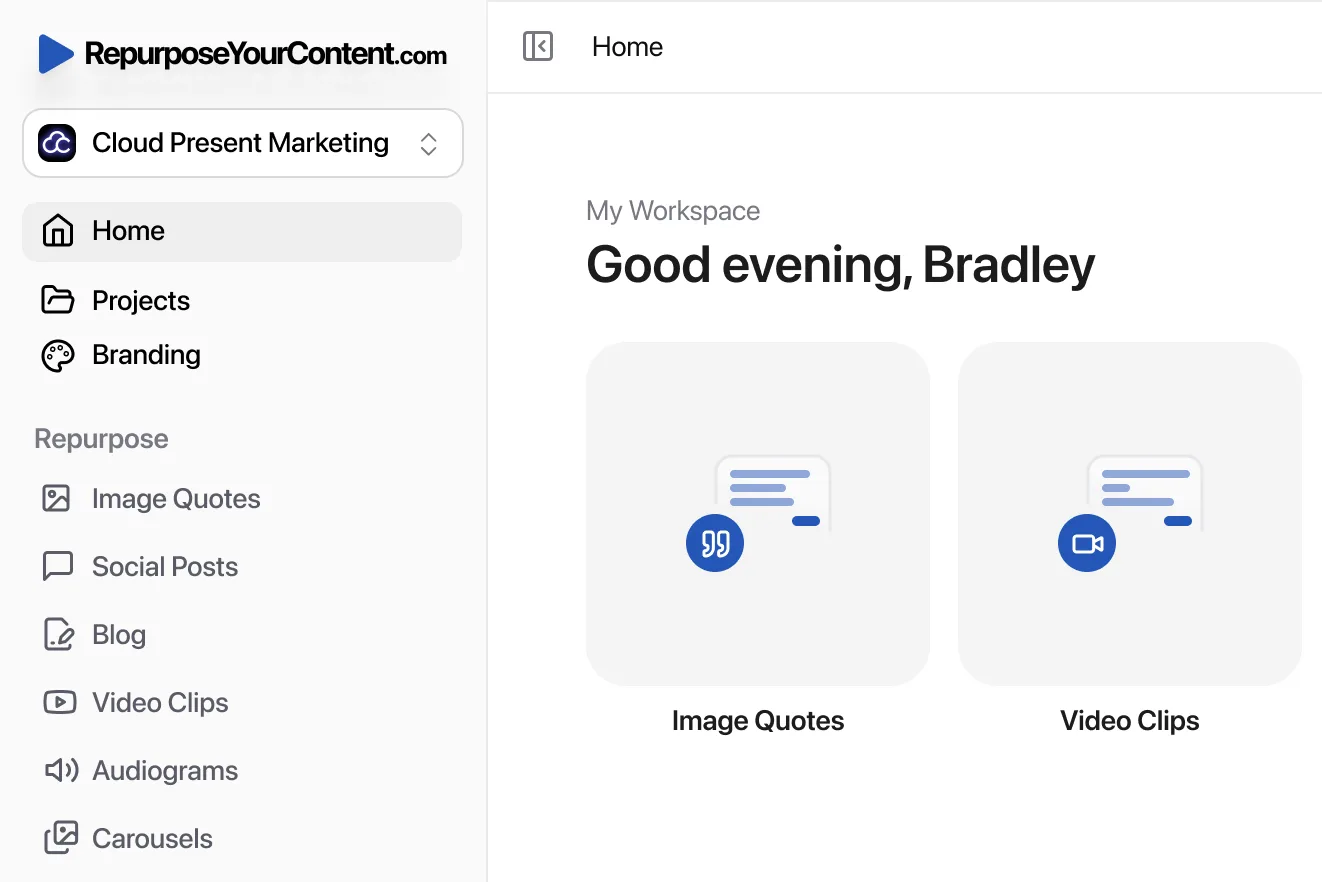
A multi-session virtual event is a content goldmine, but manually processing each recording into clips, posts, and emails can take weeks. RepurposeMyWebinar lets you process every session from a summit or webinar series in one sitting.
- Batch-import all sessions - paste links from Zoom, Goldcast, ON24, Riverside, YouTube, or any supported platform. Upload multiple sessions from the same event and queue them all for processing.
- Consistent branding across every session - your Brand Kit applies your logo, colors, fonts, and tone to every output, so content from session 1 looks just as polished as content from session 12.
- Choose your output mix per session - produce video clips, blog posts, social posts, audiograms, image carousels, email sequences, or podcast episodes from each session based on what fits your distribution plan.
- Review in-platform - preview and edit any asset before downloading. Make adjustments to trim points, copy, or formatting without leaving the tool.
- Map to your rollout calendar - download everything and schedule your post-event content over the following weeks to keep the event top-of-mind.
A full summit repurposed in hours, not weeks. See pricing or learn what to do after hosting a webinar.
Virtual Event vs Similar Concepts
| Concept | What it means | How it differs |
|---|---|---|
| Virtual Event | Any organized online gathering conducted over a digital platform | The broadest term - covers all online event formats |
| On-Demand Webinar | A pre-recorded or past-live webinar available for viewing anytime | A distribution format for past virtual events, not a live event itself |
| Simulcast | Broadcasting the same event simultaneously across multiple platforms | A distribution tactic during the live event, not a separate event type |
| Event-Led Growth | A go-to-market strategy centered on events as the primary growth driver | A strategy framework - virtual events are one execution tactic within it |
Frequently Asked Questions
Multi-session virtual summits and conferences produce the highest volume of repurposable content because each session is a separate anchor asset. A summit with 10 sessions can yield 100+ video clips, 10+ blog posts, and dozens of social posts. Single-session webinars and panel discussions are the most common format and still produce 20-40 assets each. Workshops and training sessions generate strong how-to content that performs well as evergreen material.
Start within 24-48 hours while the topic is still relevant and attendees are engaged. Publish a recap blog post and 2-3 highlight clips immediately, then roll out the remaining content over the following weeks. The initial assets serve the attendees who want a quick summary, while the drip of ongoing content extends the event's reach to new audiences over time.
A webinar is a specific type of virtual event - typically a single-session, presentation-style online meeting focused on one topic. Virtual event is the broader category that includes webinars, multi-day summits, panel discussions, workshops, product launches, town halls, and networking events. All webinars are virtual events, but not all virtual events are webinars.
Treat each session as a separate anchor content piece. Upload each recording individually and generate video clips, blog posts, and social content from each one. Then create cross-session assets like a highlight reel of the best moments, a summary blog post covering key themes across all sessions, and a quote card series featuring different speakers. This approach can yield months of content from a single multi-day event.
If your team members spoke at someone else's virtual event, you can typically repurpose your own speaker's content with permission from the event organizer. Many conference organizers share recordings with speakers specifically for this purpose. Always check the event agreement for content rights. You should not repurpose other speakers' content without explicit permission.
Yes. Most B2B organizations now consider virtual events a critical part of their marketing strategy. While in-person events have returned, virtual and hybrid formats remain popular because they reach global audiences, cost less to produce, and generate recorded content that can be repurposed. The key shift is that teams now plan for post-event content from the start rather than treating recordings as an afterthought.