Best Webinar Platform for Content Repurposing: Top 10
Discover the best webinar platform for content repurposing. We rank 10 top tools focusing on post-event features like exports & AI clips.

Most webinar buying advice is wrong. Teams pick for registration pages, polls, and live-event polish. Then the webinar ends and the problems start. The recording is compressed. Speakers are merged into one layout. Transcript access is clumsy. Export options are poor. Repurposing slows to a crawl.
That’s a bad trade for B2B marketing teams. 70% of B2B professionals actively seek webinars with industry tips and tricks, and 30% prefer watching after the live event. The replay isn’t a backup asset. It’s part of the product. That’s why the best webinar platform for content repurposing should be judged on what happens after the event, not during it.
This list does exactly that. It compares webinar platforms through one lens only. Recording quality. Speaker isolation. Transcript access. Export flexibility. Integration with repurposing workflows. If a platform makes post-event content painful, it gets marked down.
1. Zoom Webinars
Zoom Webinars is the default choice for many B2B teams. That isn’t a bad call. It’s familiar, reliable, and easy for presenters to adopt. For repurposing, Zoom becomes strong when cloud recording and AI features are switched on.
The core advantage is speed to raw material. Teams can get cloud recordings, captions, transcripts, summaries, and smart chapters in one place. That makes it easier to identify segments worth turning into clips, follow-up emails, or a recap article. For teams already using Zoom, that low friction matters.
Where Zoom works for repurposing
Zoom is good at helping teams find moments. It’s less good at turning those moments into polished assets inside the platform.
- Strong transcript access: Cloud recordings are easier to search than local files buried on a laptop.
- Useful navigation tools: Smart chapters and highlights reduce review time.
- Wide compatibility: Zoom fits cleanly into most post-event stacks, including the Zoom app integration.
The weak spot is creative control. Video clipping and formatting still need outside help. That’s why many teams pair Zoom with a dedicated workflow for repurposing webinar content.
Practical rule: If the team already runs on Zoom, keep Zoom. Fix the post-event workflow instead.
Verdict: Best for teams that want the safest live-event choice and solid post-event raw materials.
2. GoTo Webinar

GoTo Webinar is a practical choice for enterprise teams that care more about dependable operations than modern polish. Through the repurposing lens, that means stable recording archives, on-demand support, and transcript access. It does not mean slick built-in content production.
This platform suits teams that treat webinars as a long-term library. Recorded sessions can be turned into evergreen assets and kept available for replay. Searchable transcripts help. AI summaries also help busy teams move faster after the event.
Where it falls short
GoTo Webinar doesn’t pretend to be a content studio. It’s a webinar platform first. That’s fine if the team accepts that editing, clipping, and packaging will happen elsewhere.
The more important question is quality control. AI-generated webinar transcripts are only about 61.92% accurate, which makes human review essential. That matters if content teams plan to turn transcript text directly into blogs, sales follow-up, or regulated claims.
- Best fit: Enterprise teams that need reliable archives and replay support.
- Main drawback: Limited native clip-and-publish functionality.
- Repurposing stance: Good source material, weak finishing layer.
Verdict: Best for conservative teams that want operational stability and don’t mind using a separate repurposing tool.
3. Livestorm

Livestorm is one of the better options for teams that care about both demand generation and replay usability. It is browser-based, marketer-friendly, and well suited to European teams. For repurposing, the standout features are replay chapters, transcript access, and solid integrations.
That combination matters because repurposing usually breaks at the handoff point. Marketing owns the webinar. Content needs the transcript. Social needs clips. Demand gen wants follow-up assets. Livestorm reduces that friction better than most browser-based competitors.
Best use case
Livestorm is a strong fit when the webinar needs to work live and keep working afterwards. Replay chapters make it easier to pull topic sections into derivative content. Transcript access gives content marketers a cleaner path from recording to webinar to blog post workflow.
There’s still a limit. Livestorm doesn’t replace a dedicated repurposing engine. It helps teams organise source material, not turn it into a full campaign.
Replay chapters are one of the most underrated webinar features. They save the content team from scrubbing through an hour-long file.
Verdict: Best for B2B teams that want a strong browser-based platform with smoother replay navigation and cleaner post-event handoffs.
4. Demio

Demio is built for marketers who want simple webinar operations. That simplicity carries into evergreen replay workflows. Demio makes it easy to gate recorded sessions and keep them working as on-demand lead assets.
That’s useful, but it’s only half of repurposing. Demio is stronger at replay distribution than post-event asset creation. Teams can keep webinars generating leads. They still need another system to turn those recordings into clips, posts, and nurture content.
Where Demio shines
Demio is best when a team wants one webinar to keep capturing demand without much setup. Past sessions can be republished quickly as gated assets. For lean teams, that matters more than fancy production controls.
A straightforward workflow looks like this:
- Run the live webinar in Demio.
- Republish the session as gated on-demand content.
- Turn key talking points into social media posts from the webinar recording.
- Good for: Lean demand gen teams.
- Less good for: Teams that need native clipping, extensive exports, or heavy post-production flexibility.
Verdict: Best for evergreen lead capture. Not best for hands-off content repurposing.
5. BigMarker

BigMarker is a better fit for content libraries than single webinars. Its real strength is the ability to turn past sessions into a branded, persistent media destination. That matters when webinars are part of an always-on content programme.
For repurposing, BigMarker is less about clip creation and more about content management. Teams can organise replays, build hubs, and maintain a stronger archive than most webinar tools allow. That makes it a good option for companies with frequent webinars across product, thought leadership, and customer marketing.
The real trade-off
BigMarker can do a lot, but it asks for more setup and more budget discussion. It’s not the cleanest choice for a small team that just wants a webinar file and a transcript. It’s stronger when the webinar programme is already mature.
A good post-event motion is to use BigMarker as the library and pair it with a content workflow that creates derivative assets such as audiograms from BigMarker recordings.
- Best fit: Teams building a branded on-demand webinar hub.
- Watch out for: Sales-led packaging and more platform complexity.
- Repurposing angle: Excellent archive layer, average creation layer.
Verdict: Best for organisations with a real webinar library strategy, not one-off campaigns.
6. ON24
ON24 is the strongest enterprise option here if repurposing is a board-level priority. Most webinar platforms help with hosting. ON24 goes further into downstream content generation, governance, and publication workflows.
That matters for large B2B teams with multiple stakeholders. Brand teams want control. Demand gen wants assets quickly. Regional teams want reusable outputs for local campaigns. ON24 is one of the few platforms built for that scale of post-event coordination.
Why ON24 ranks high
Its post-event tooling is more ambitious than most. It can generate multiple asset types from a webinar and support distribution through hubs and curated destinations. For enterprise teams, that reduces handoff friction between events, content, and campaign operations.
It also suits organisations that need stronger guardrails. Repurposed content often touches regulated industries, testimonials, and regional requirements. Platform support alone won’t solve that. But ON24 is better positioned for governance than lighter SMB tools.
Enterprise teams usually don’t fail on webinar production. They fail on post-event workflow, approvals, and publishing speed.
Verdict: Best for enterprise B2B marketing teams that need serious repurposing capability inside the webinar platform itself.
7. BrightTALK by TechTarget

BrightTALK by TechTarget approaches webinars differently. It treats them as channel content, not isolated events. That’s useful for repurposing because discoverability matters almost as much as asset creation.
A webinar that sits in a hidden recordings folder has little value. A webinar published into a persistent channel can keep attracting attention long after the live event. BrightTALK gets that part right.
Where it wins and where it doesn’t
The platform is strongest when a team wants replay visibility and built-in distribution. It is weaker if the goal is granular content production from the recording itself. Teams won’t get the same feeling of surgical clipping or multi-format transformation found in specialised repurposing stacks.
- Strong point: Persistent content channel model.
- Weak point: Less emphasis on detailed clip generation.
- Best audience: B2B teams focused on ongoing thought leadership and lead capture.
Verdict: Best for discoverability and channel-based replay strategy. Less compelling for teams obsessed with post-event content packaging.
8. Airmeet

Airmeet is better known for event experiences than pure webinar repurposing. Still, it deserves a place here because its replay hubs and post-event workflows are stronger than many teams expect.
Airmeet works well when the webinar sits inside a broader event strategy. Recordings can live in searchable replay environments, and post-event distribution can be tied into CRM and automation flows. That makes it useful for webinar series, partner events, and community-led programmes.
Repurposing view
Airmeet is not the first choice for teams chasing perfect raw footage or native content transformation. It is a stronger choice for teams that care about extending event value after the live session.
The main question is packaging. If the team wants clips, audiograms, quote cards, and article drafts from a single recording, a dedicated repurposing layer is still needed. Airmeet gets the recordings organised. It doesn’t finish the job.
Verdict: Best for event-led teams that need replay hubs and operational follow-up, not just a webinar room.
9. Hubilo Webinar+

Hubilo Webinar+ has one of the clearest post-event positioning angles in this category. It talks directly about snackable content and AI-assisted reuse. That puts it closer to the repurposing conversation than many webinar vendors.
For time-poor marketers, that positioning matters. It signals that the platform team understands the core job isn’t finished when the live webinar ends. The recording needs to become usable campaign material.
Honest take
Hubilo looks promising for teams that want bite-sized content from webinars without building everything manually. It also offers downloadable recordings for teams that prefer external editing and reuse.
The caution is simple. AI-assisted snippet claims need close inspection in a demo. Repurposing quality varies widely across vendors. Strategic questions also matter. Multi-platform optimisation and UK compliance requirements are often ignored in repurposing workflows, even though different channels and industries need different treatment.
- Good fit: Teams that want a webinar platform already thinking about post-event snippets.
- Need to confirm: Depth of editing control, export flexibility, and review workflow.
Verdict: Best for teams that want repurposing to be part of the buying conversation from day one.
10. WebinarGeek

WebinarGeek is a sensible pick for EU and UK teams that want a browser-based platform with a clear GDPR posture. Through the repurposing lens, the useful features are AI-generated replay chapters and an easy path from live session to automated or on-demand replay.
That simplicity is valuable. Many teams don’t need a giant enterprise suite. They need a webinar platform that records reliably, republishes easily, and doesn’t create legal or operational headaches.
Best reason to choose it
WebinarGeek is good for straightforward evergreen workflows. A team can run a live webinar, create a branded replay, and keep the asset working without much friction. AI chapters make review easier for internal teams and replay viewers.
It isn’t the strongest ecosystem play. Larger providers usually have more integrations and broader downstream options. But for regional teams that want a clean browser-based setup, it’s a credible choice.
Smaller platforms often win on simplicity. That matters when a team needs the webinar published again by Friday, not rebuilt in a complex suite.
Verdict: Best for EU and UK teams that prioritise compliance posture, replay usability, and low-friction evergreen publishing.
Top 10 Webinar Platforms: Content Repurposing Comparison
| Platform | Core features | Repurposing capabilities | Best for / Target audience | Pricing & fit |
|---|---|---|---|---|
| Zoom Webinars (with Zoom AI Companion) | Live webinars, registration, Q&A, polls, cloud recordings, AI Companion (highlights & chapters) | Auto summaries, transcripts, smart chapters; basic highlights but clipping/export needs external tools | Teams already on Zoom, security/compliance‑focused orgs | Add‑on to Zoom plans, subscription tiers, widely available |
| GoTo Webinar | Mature webinar stack, automated & on‑demand sessions, registration & analytics | AI summaries & transcripts for searchable archives; limited native clip/publish tools | Enterprises needing reliable, searchable webinar archives | Traditional pricing (plans for SMBs & enterprises), predictable enterprise fit |
| Livestorm | Browser‑based, live/on‑demand/automated, API & webhooks, attendee‑based model | AI transcripts & replay chapters to find quotes; no native multi‑format generator | EU/UK teams, GDPR‑minded marketing teams, replay‑centric workflows | Attendee‑credit pricing (scales with views), clear for usage‑driven orgs |
| Demio | Marketer‑friendly UX, landing pages, timed CTAs, automated evergreen flows | Gated on‑demand replays, chat AI on higher tiers; no native “magic clips” | Marketers building evergreen funnels and lead nurture flows | SMB focused with tiered plans; advanced automation in higher plans |
| BigMarker | Branded video hubs, white‑labeling, upload MP4s, monetization options | Centralized replay libraries & hubs for ongoing distribution; clipping/AI less emphasized | Teams building a branded on‑demand content library or monetized hub | Feature‑rich, often quote‑based pricing; best for larger budgets |
| ON24 | Enterprise engagement, multi‑asset workflows, advanced analytics & governance | AI generates blogs, eBooks, FAQs, social drafts, podcasts; publish via hubs or export | Large B2B enterprises requiring governance, segmentation & analytics | Enterprise, quote‑based pricing; higher cost and longer setup |
| BrightTALK (TechTarget) | Channel model, hosted live & on‑demand webinars, lead capture & campaign tools | Hosts replays in channels; discoverability via BrightTALK network, limited granular clipping | Demand‑gen teams seeking built‑in distribution & audience discoverability | Pricing tied to enterprise contracts; discoverability trade‑off vs. control |
| Airmeet | Modern event UX, replay hubs, CRM/API integrations, clip guidance | Replay hubs and tooling for highlight clips; some features limited to higher tiers | Event teams needing good UX and automation hooks to CRMs | Quote‑based for larger packages; some 1080p/add‑ons on higher tiers |
| Hubilo Webinar+ | Snackable content hub, AI‑assisted snippets, on‑demand hosting | AI snippets and bite‑size assets, downloadable MP4s for external reuse | Teams focused on short, shareable assets and fast republishing | Pricing varies by package; demo recommended for AI depth |
| WebinarGeek | GDPR/UK‑friendly, browser‑based, AI replay chapters, automated modes | AI chapters and simple republish → evergreen flow; limited advanced analytics | EU/UK organisations prioritizing compliance and simple evergreen setups | Clear GBP pricing for UK visitors; SMB friendly |
Your Platform Matters, But Your Workflow Matters More
A webinar platform can make repurposing easier. It can’t finish the job. Even the stronger options on this list mostly help with capture, storage, transcripts, replay access, and some early-stage AI support. They do not reliably turn one webinar into a complete month of content.
That’s the gap many teams experience after procurement. The live event goes well. Registration numbers look fine. Then someone has to turn the recording into campaign assets. That usually means clipping video manually, cleaning transcripts, drafting a blog post, pulling social quotes, formatting carousels, and writing follow-up emails. The webinar platform was chosen for the event. The marketing team is left solving the content problem afterwards.
That’s why the best webinar platform for content repurposing depends on the live-event priority first.
- Choose Zoom if the team wants the safest default and already lives in the Zoom ecosystem.
- Choose Livestorm if browser access, marketer usability, and replay navigation matter most.
- Choose Demio if evergreen lead capture is the main goal.
- Choose BigMarker if the business needs a branded replay library.
- Choose ON24 if enterprise governance and built-in post-event asset generation matter.
- Choose WebinarGeek if an EU and UK-friendly browser-based setup is the priority.
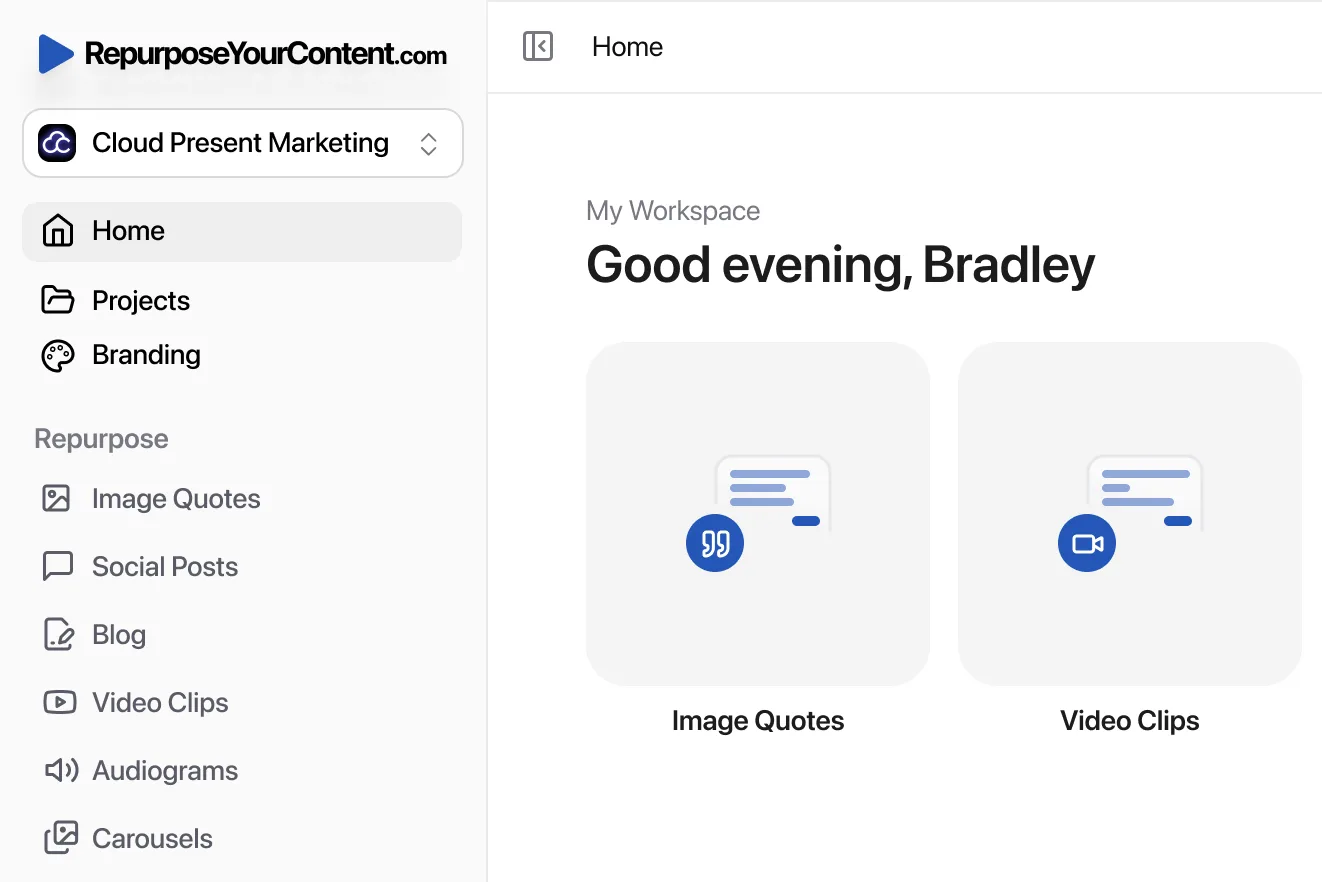
The smarter move is to pick the webinar platform for the live experience, then use a dedicated system for the post-event workload. RepurposeYourContent works across all major webinar platforms, so the team doesn’t need to compromise on hosting just to get usable content later. The platform can handle video clips, blog posts, social posts, audiograms, image quotes, newsletters, LinkedIn carousels, and timestamps from a single recording.
A simple workflow looks like this:
- Run the webinar in the platform that fits the live-event team.
- Send the recording into the RepurposeYourContent integrations hub.
- Generate the exact assets needed for the next campaign cycle.
- Review outputs for brand voice and factual accuracy.
- Publish across email, LinkedIn, blog, paid social, and sales follow-up.
That’s a better system than expecting webinar software to become a full content engine. The webinar platform provides the source file. RepurposeYourContent turns it into useful marketing output.
For teams that want stronger post-event workflows, the next step is simple. Try RepurposeYourContent and turn the next webinar into a full content calendar. For extra ideas on workflow design, review these advanced content repurposing strategies.
Start a free trial of RepurposeYourContent and turn the next webinar recording into ready-to-publish content fast.
Tags: