Master Your Demand Generation Webinar Strategy 2026
Unlock your demand generation webinar strategy 2026. A playbook for B2B marketers: planning, promotion, conversion & measurement to drive real pipeline.

Pipeline from a webinar is rarely created during the hour it runs. It is created in the days and weeks after, when the session is cut into follow-up assets that sales, lifecycle, paid, and content teams can use.
That is the shift behind a strong demand generation webinar strategy in 2026. The webinar is not a one-time event. It is the source asset. The live session captures intent, questions, objections, and proof points. The post-event system turns that material into meetings, retargeting audiences, nurture touches, and sales follow-up.
Teams that still stop at a replay page leave value on the table. Teams that build a post-event workflow get a month of pipeline from one session. If you need a practical model for that handoff, this guide on what to do after hosting a webinar lays out the process.
Your Webinar ROI Stops an Hour After it Ends
Most webinar programmes are built like campaigns from five years ago. Pick a topic. Chase registrations. Host the event. Send one replay email. Then everyone moves on to the next launch.
That model wastes effort.
A typical webinar can attract a meaningful registration pool, yet live attendance only captures part of demand. The rest sits in no-man's-land unless marketing builds a post-event system. That's why the strongest teams no longer ask, “How many came live?” They ask, “How many sales conversations did this webinar create over the next month?”
The live event is only the extraction point
The live session gives marketing one thing that's hard to fake. It captures buyer language in context. Questions from prospects. Objections from the market. Proof points from subject matter experts. Reactions to positioning.
That material is far more valuable than a single replay page.
Practical rule: If a webinar only exists as a recording link after the event, the team ran an expensive one-hour content shoot.
A stronger operating model treats the webinar as the source asset for demand creation. The best follow-up programmes turn one event into multiple touchpoints across email, paid retargeting, social, sales outreach, and organic search.
Teams that need a practical post-event workflow can review this guide on what to do after hosting a webinar.
What usually fails
Three patterns keep showing up in underperforming webinar programmes:
- Registration-first planning: The team optimises landing page copy but never defines the sales outcome.
- Weak follow-up: Everyone gets the same replay email, regardless of buying stage or engagement.
- No content system: The session ends, and all the insight stays trapped in a long video.
That's the core shift for 2026. A webinar isn't a one-off event. It's a demand asset with a live launch.
Why Webinars Still Drive Pipeline in 2026
Webinars still earn budget because they create sales opportunities, not because they fill a registration report.
The format survived the fatigue cycle for one reason. It gives teams a fast way to put expertise, proof, and product context in front of buying groups who are already researching a problem. Few channels let marketing test positioning live, collect objections in real time, and turn the result into weeks of follow-up content.
That matters more in 2026 because buying committees are larger, sales cycles are tighter, and single-touch campaign logic keeps breaking. A good webinar handles all three. It creates a reason to engage now, gives sales a useful follow-up asset, and produces content that keeps working long after the live session ends.
What still works
Webinars perform when the format matches the buying stage and when the team plans for post-event distribution from the start.
Expert-led educational sessions
These work best at problem awareness and early evaluation. The content should help buyers frame the issue, compare approaches, and avoid common mistakes. Sessions on process changes, regulatory shifts, category mistakes, and tactical execution usually outperform generic trend commentary.
They also create the best raw material for repurposing. A strong educational session can become clips, email sequences, sales talking points, retargeting ads, and search content. That is why webinar ROI often shows up after the event, not during it.
Customer-led sessions
Customer stories help when prospects need proof, not inspiration. Specificity carries the session. What changed, what blocked progress internally, how the team evaluated options, and what result mattered to finance or operations.
The trade-off is real. Customer webinars usually pull fewer top-of-funnel registrations than broad educational topics. They often create better pipeline quality because they help active deals move.
Product-focused close looks
These sessions support late-stage evaluation. They work when the presentation is built around a real use case, role, or workflow instead of a feature parade. Buyers want to see how the product fits their process and what implementation friction looks like.
This format rarely wins on raw attendance. It wins when account executives can send the replay, clips, and key moments into live opportunities.
A wider system for turning one event into multiple demand assets is covered in this demand generation content playbook.
What loses buyers now
Several webinar formats still underperform, even when promotion is strong:
- Generic panels: too many speakers, weak moderation, no clear takeaway
- Pitch-first demos: product talk starts before the audience believes the problem is worth solving
- Trend-heavy topics: broad headlines with no operational advice
- Mixed-stage messaging: early-stage prospects and late-stage opportunities get the same session
The fix is disciplined format selection. Match the session to buyer intent, then build the follow-up around what happens after the live event. Teams that treat webinars as part of a larger content strategy guide for 2026 usually get more pipeline from the same hour of production time.
Defining Your Strategic Goals and Audience
Registrations are not the strategy. Attendance isn't either.
A serious webinar programme starts with pipeline questions. Which segment should move? Which deals need support? Which objections keep showing up in calls? Those questions produce better webinars than brainstorming catchy titles.
Start with the revenue outcome
Every webinar should have one primary job. Generate new named accounts. Re-engage stalled opportunities. Support expansion. Accelerate active pipeline. If the job isn't clear, measurement won't be clear either.
Useful targets usually sit inside four buckets:
- MQL creation: Good for educational webinars aimed at new demand.
- SQL progression: Better for pain-point sessions tied to active buying groups.
- Pipeline influence: Useful when webinars support multi-touch journeys.
- Revenue support: Best for customer proof and late-stage objection handling.
When teams skip this step, they overvalue list growth and undervalue sales movement.
Build the audience from real sales friction
The best webinar topics rarely come from a keyword list alone. They come from repeated sales conversations.
Use these inputs:
- Lost deal reviews: Look for recurring objections and hesitation points.
- Sales call notes: Pull repeated questions from SDRs, AEs, and solutions teams.
- Customer success feedback: Expansion blockers often become strong webinar topics.
- Search and content gaps: Use them to sharpen wording, not to invent the pain point.
A useful external framing resource is this content strategy guide for 2026. It helps teams connect audience intent, editorial themes, and distribution planning.
Segment promotion by buying context
Audience segmentation should shape promotion before the campaign goes live.
| Segment | What they need | Best webinar angle | Follow-up path |
|---|---|---|---|
| Cold prospects | Problem definition | Educational session | Nurture and retargeting |
| Warm leads | Evaluation help | Expert workshop or customer story | SDR follow-up |
| Open opportunities | Buying confidence | Customer-led or product-led session | AE-led outreach |
| Existing customers | Expansion insight | Use-case webinar | CS and account growth motion |
Success comes quickly as teams cease promoting a single webinar to a broad, undifferentiated list with a uniform message.
Operator note: If sales wouldn't use the replay in a live deal, the topic probably wasn't strong enough.
A Webinar-First Demand Generation Framework
The most effective demand generation webinar strategy 2026 is built for reuse from the start. That's no longer optional. In the UK, 64% of marketers expect content demand to increase while 62% say budget pressure is limiting output, which is why webinar repurposing has become a practical operating model in Machintel's B2B demand generation guide.
That pressure changes how webinars should be built. The format, run of show, speaker prep, and CTA all need to support both live conversion and downstream asset creation.

Planning that improves post-event yield
A webinar-first framework starts before promotion.
Step 1
Choose one of three programme intents. Education, proof, or product depth. Don't mix all three equally. One should dominate.
Step 2
Write the agenda in clear chapters. That makes the session easier to follow live and easier to cut into clips, blog sections, and email themes later.
Step 3
Brief speakers to state takeaways directly. Long, wandering answers are harder to repurpose and weaker for buyers.
A useful companion piece on this operating model is the content multiplication framework.
Promotion by audience segment
Promotion should reflect who the webinar is for, not just when it happens.
- Cold audiences: Use paid social, partner distribution, and problem-led copy.
- Warm database segments: Use email based on topic relevance, funnel stage, and role.
- Open pipeline: Give sales a short invite template tied to current objections.
- Customers: Route through customer marketing or success teams with role-specific framing.
For teams refining the wider system, this guide to demand generation offers helpful context on how webinars fit inside a broader programme.
Conversion from registration to SQL
The conversion path needs to be designed, not assumed.
A clean workflow looks like this:
- Registration page: Promise one concrete outcome. Avoid broad claims.
- Confirmation email: Set expectations. Explain what attendees will learn.
- Reminder sequence: Reinforce urgency and relevance.
- Live CTA: Offer the next logical step, not a generic “contact sales”.
- Post-event routing: Split follow-up by attendance, engagement, and account status.
- Sales handoff: Send engaged contacts plus context, not just names.
What breaks conversion is friction. Too many fields. Vague CTA. No SDR coordination. No distinction between live attendees, no-shows, and replay viewers.
The strongest teams treat webinar ops as pipeline ops.
How RepurposeYourContent Creates 30 Days of Pipeline
A webinar that only gets watched live is underperforming by design. Across roughly 12,400 B2B webinars, the median live attend rate was 41.6%, and day-of reminder emails drive about 38% of total live attendance, according to Digital Applied's 2026 webinar attendance data. That tells demand teams two things. A large share of registrants won't consume the session live. And the funnel behaves like an always-on asset, not a single event.

That's why post-event distribution needs its own plan. The recording should feed demand creation for weeks.
A practical 30-day workflow
Here is a simple example for one expert-led webinar aimed at mid-funnel buyers.
Days 1 to 3
Pull the recording into a repurposing workflow. Extract the strongest segments, direct quotes, and thematic chapters. Prioritise points that answer common sales objections.
Create these outputs first:
- Short video clips for LinkedIn and retargeting
- Blog post draft built from the webinar transcript
- Email follow-up for attendees and no-shows
- Timestamps so sales and prospects can jump to key moments
Days 4 to 10
Push the content into channels based on intent.
- No-show email: Send the replay with chapter links
- Attendee email: Offer the next step based on CTA fit
- Paid retargeting: Promote clips to registrants and site visitors
- Sales outreach: Share one relevant clip with a personal note
- Organic search: Publish the blog version with a clear conversion path
Days 11 to 30
Turn the same source asset into repeated buying signals.
- LinkedIn carousels from the strongest framework discussed in the session
- Audiograms for audio-first snippets
- Image quotes from speakers or customers
- Newsletter copy summarising the key takeaways
- Social posts built around objections, not event promotion
One webinar then starts acting like a campaign, not an event.
How the product fits
One option for this workflow is RepurposeYourContent's demand gen solution. It takes one webinar recording and generates multiple output types including video clips, blog posts, social posts, audiograms, image quotes, newsletters, LinkedIn carousels, and timestamps.
That matters when the team needs more distribution without more production hours.
A broader content planning angle appears in this B2B webinar content strategy article.
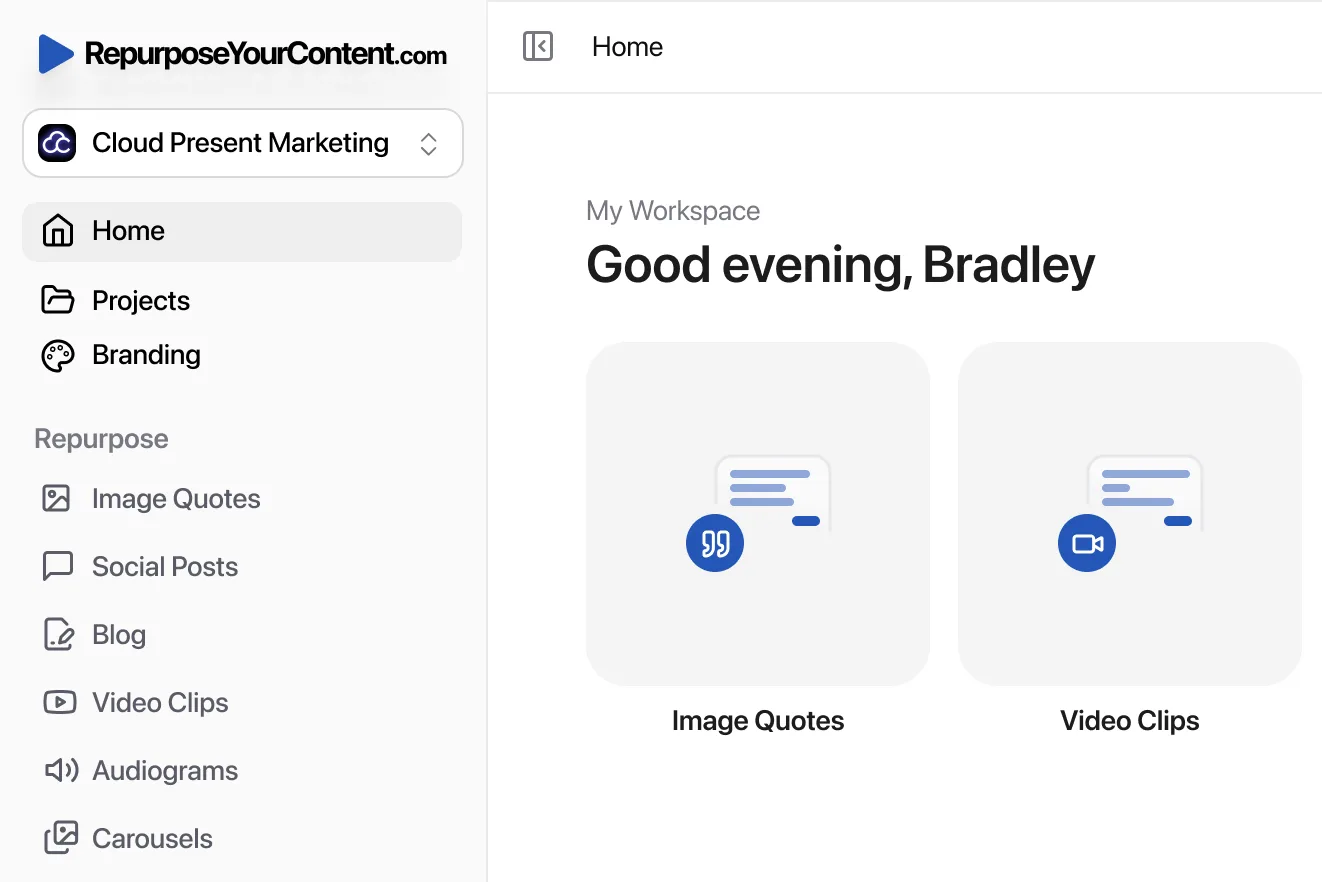
The workflow below shows what that kind of system looks like in practice.
What compounds pipeline
The post-event engine creates three advantages.
First, sales gets reusable proof. AEs can send a single clip that answers a live objection without asking the prospect to watch an hour-long replay.
Second, marketing gets channel coverage. One recording can support email, paid, organic, social, and nurture rather than forcing the team to create separate assets from scratch.
Third, the webinar keeps qualifying buyers after the event date. Replay viewers, clip viewers, blog readers, and email clickers all create new signals for routing into SDR and AE workflows.
The webinar should stop being a date on the calendar and start behaving like a content asset with a sales shelf life.
A Simple Pipeline Attribution Model for Webinars
Most webinar reporting is too shallow. It stops at registrations, attendance, and maybe influenced opportunities. That hides where the value came from.
A better model tracks both the live event and the repurposed assets that continue moving buyers. It doesn't need to be overly complex. It needs to be consistent.
The model
Use a simple weighted multi-touch view. Assign credit based on where the webinar or its child assets helped the buyer move.
This avoids two common errors:
- First-touch bias: Gives all credit to registration, even if later assets drove the meeting.
- Last-touch bias: Gives all credit to the demo request, even if the webinar built the case.
A practical starting point is to weight touches by buying progression. Early education gets lighter credit. Mid-funnel engagement gets more. High-intent conversion gets the most.
| Stage | Action | Asset | Attribution Weight |
|---|---|---|---|
| Awareness | Contact registers from paid, email, or organic promotion | Webinar registration page | Low |
| Engagement | Contact attends live or watches replay | Live session or replay page | Medium |
| Consideration | Contact consumes follow-up asset | Clip, blog, carousel, email, audiogram | Medium |
| Qualification | Contact requests next step or responds to sales | CTA page, follow-up email, SDR outreach | High |
| Pipeline | Opportunity created or advanced | Webinar programme and related assets | High |
| Revenue | Closed-won deal influenced by webinar journey | Full webinar content chain | Shared |
What to capture in the CRM
The data model should be boring and strict.
Track these fields or equivalents:
- Campaign source: Which webinar programme the contact came from
- Asset interaction: Live attendee, replay viewer, clip clicker, blog reader
- Buying stage at touch: New lead, MQL, SQL, open opportunity, customer
- Next-step conversion: Demo request, meeting booked, pricing request, AE reply
This webinar metrics and KPIs guide is a useful reference for setting the reporting layer.
What leadership actually needs
Leadership doesn't need another attendance chart. They need answers to three questions:
- Did the webinar create qualified pipeline?
- Did it accelerate existing opportunities?
- Did the repurposed assets contribute beyond the event date?
If the team can answer those clearly, webinar budget becomes easier to defend.
Your 2026 Demand Generation Webinar Checklist
Most webinar problems aren't strategic mysteries. They're execution gaps.
Use this checklist before every launch.
Before the webinar
- Tie the session to pipeline: Define whether the webinar should create MQLs, progress SQLs, or support open deals.
- Validate the topic with sales: Build the angle from real objections, not internal guesses.
- Pick one dominant format: Educational, customer-led, or product-focused. Don't split attention.
- Structure in chapters: Clear sections improve both live clarity and post-event extraction.
- Brief speakers properly: Ask for direct takeaways, examples, and concise answers.
During promotion and live delivery
- Segment the audience: Cold, warm, pipeline, and customer audiences need different invites.
- Match CTA to buying stage: Early-stage buyers don't need the same ask as active opportunities.
- Prepare sales follow-up: Give SDRs and AEs copy, context, and asset links before the webinar happens.
- Capture engagement signals: Questions, poll responses, click activity, and replay behaviour all matter.
- Record cleanly: Strong audio, clear transitions, and disciplined hosting improve reuse quality.
After the webinar
- Split follow-up paths: Attendees, no-shows, and replay viewers should not get the same message.
- Turn the recording into a content engine: Build clips, blog content, emails, social assets, and sales follow-ups from the same source.
- Track influence beyond attendance: Count webinar contribution across MQL, SQL, pipeline, and revenue stages.
- Review topic performance: Look at what generated meetings and opportunity movement, not just event engagement.
Don't ignore governance
There's one operational issue many teams still miss. In the UK, every repurposed clip, quote, or email can become a separate marketing asset under UK GDPR and PECR scrutiny, which creates a governance bottleneck according to SalesMotion's demand generation analysis.
That means the checklist also needs:
- Consent review: Registration and follow-up flows should be checked before launch.
- Speaker rights handling: Confirm reuse rights for clips, quotes, and derivative assets.
- Asset approval process: Marketing, legal, and brand teams need a workable post-event path.
A webinar programme is only efficient if the content can be reused.
If the team wants webinars to produce pipeline after the live session ends, try RepurposeYourContent.
Tags: