Content Calendar for Podcasters: Plan a Week That Works
Build a content calendar for podcasters that turns one recording into a week of assets. Includes templates, cadence tips, and a copyable weekly view.

A content calendar for podcasters turns one recording into a week of planned distribution. That matters because Buzzsprout's July 2026 data, covering 112,701 active podcasts, found that 72% publish weekly or biweekly, with 38% releasing every 8 to 14 days and 34% every 3 to 7 days (Podder's episode pacing benchmarks). The practical answer is simple: plan every episode backward from its release date, then assign each clip, post, email, and article to a specific calendar slot.
The episode shouldn't be the unit of work. The calendar slot should be. One 45-minute recording can supply a release, short-form videos, quote graphics, a carousel, a newsletter, and a blog post without creating a feast-famine cycle.
What a Podcast Content Calendar Actually Does
A podcast content calendar is a weekly distribution grid. Each column represents a publishing slot, such as the episode, a short video, a quote card, an email, a LinkedIn post, or a newsletter. Each row connects those assets to one episode.
It isn't a production schedule. It isn't an unfiltered list of ideas. It isn't a generic social media calendar borrowed from a brand team. Its job is to convert one recording into a coordinated sequence where every asset has an asset type, hook, owner, status, and link back to the episode.

The strongest calendar starts with the release window and works backward. The episode title, topic, format, recording deadline, editing deadline, guest approval, show notes, and promotion tasks all belong in one view. Outrank's guide to how to create an editorial calendar is useful for the planning principles, but podcasters need to adapt those principles around recordings and derivative assets.
Treat each slot as a deliverable
A recording can be complete while the promotion remains unfinished. That gap creates irregular publishing. The calendar closes it by defining the work precisely:
- Episode day: Publish the full episode and strongest clip.
- Following day: Share a quote post or audiogram.
- Mid-week: Publish a carousel explaining one practical idea.
- Later in the week: Send the newsletter and publish the article.
- Buffer slot: Hold space for edits, approvals, or a delayed asset.
The audience sees a consistent rhythm. The production team sees a finite list. That distinction reduces last-minute decisions.
Practical rule: If a calendar slot doesn't have an owner and a status, it isn't scheduled. It's only an intention.
A three-phase release pattern also helps. Use teasers from days -2 to 0, concentrate distribution during the first 48 hours, then sustain attention with evergreen assets through days 3 to 7. Expert guidance reports that 82% of listeners consume a newly published episode within a day, while 59% return to older episodes after liking a show (podcast content-calendar guidance from Conbersa). The calendar should therefore create immediate visibility and extend the episode's shelf life.
For a useful definition of the operating model, see this podcast content calendar framework. It captures the key idea: consistency comes from a repeatable system, not from trying to remember what should be posted next.
The Real Time Cost of DIY Repurposing
DIY repurposing looks manageable until every small task gets added together. A solo podcaster has to find useful moments, write context, edit media, create visuals, schedule posts, and check links.
A realistic breakdown looks like this:
DIY Repurposing Time Breakdown per Episode
| Task | Avg Minutes | Notes |
|---|---|---|
| Scan the transcript for three strong quotes | 12 | Requires reading for meaning, not just searching keywords |
| Write short-form captions | 15 | Each caption needs a hook and episode context |
| Cut vertical clips | 20 | Includes selecting moments, trimming, and basic formatting |
| Design quote graphics | 10 | Covers choosing text, layout, and brand styling |
| Write the email | 8 | Includes subject line, body copy, and episode link |
| Schedule each network | 5 | Applies to each publishing network |
| Weekly planning block | 30 | Often skipped when the episode runs late |
The listed work totals 100 minutes before context switching. In practice, the workload often reaches 100 to 140 minutes per episode, depending on the number of networks and revision needs. The estimates above are operational planning figures, not industry statistics.
Context switching adds another problem. Moving from transcript analysis to video editing, then to copywriting and scheduling, forces the creator to rebuild attention several times. The work feels fragmented even when the asset count stays modest.
Why the calendar changes the workload
Without a calendar, the creator often publishes three posts on Tuesday because the ideas are fresh. Wednesday and Thursday then stay empty. That bursty pattern makes the show harder to follow and leaves useful material unused.
The calendar removes the daily question, “What should be posted today?” It also makes batching possible. A creator can review quotes in one sitting, approve clips in another, and schedule the week without repeatedly reopening the recording.
A clear podcast content repurposing cost breakdown helps teams compare labour accurately. The right comparison isn't only the price of editing. It includes planning, writing, design, scheduling, revisions, and the opportunity cost of taking the host away from recording or selling.
Planning Episodes Around Themes and Search Topics
A strong episode starts before the microphone turns on. The topic should answer a real audience question and contain enough structure to produce several distinct assets.
Step 1: Collect questions before choosing topics
Pull questions from reviews, direct messages, customer conversations, and relevant Reddit threads. Group related questions into four theme clusters. Five questions per cluster creates a practical starting set, but the clusters should reflect the actual language listeners use.
For example, a B2B podcast about remote interviews might group questions into:
- Preparation: Guest research, briefing, and question design.
- Technology: Microphones, cameras, recording backups, and internet reliability.
- Conversation quality: Follow-ups, pacing, and difficult answers.
- Distribution: Clips, show notes, newsletters, and guest promotion.
This approach prevents disconnected episodes. It also gives the calendar a larger editorial shape.
Step 2: Match each cluster to search intent
A broad topic usually produces weak derivative content. A specific question produces a stronger title, clearer segments, and more useful clips.
“Podcast microphone setup” describes a general subject. “Best podcast microphone under 200” signals a decision someone is trying to make. The second query gives the host a defined answer to build, while still leaving room for supporting examples.
Search intent should guide the episode structure, not dictate every sentence. The host still needs expertise, a point of view, and a useful conclusion.
Step 3: Create named answers inside the recording
Each episode should answer a defined question in a short, self-contained segment. A segment that delivers its conclusion in under 90 seconds can often become a clean short-form clip without requiring heavy reconstruction.
That doesn't mean every segment should sound like an advertisement. It means the host should state the problem, give the answer, and explain the reasoning clearly. Editors can then extract a complete moment rather than stitching together unrelated sentences.

Step 4: Assign assets before recording
Pre-assign the derivative assets to calendar slots. This changes the transcript from a raw document into a source map.
A 45-minute episode about remote interview technology might produce:
- Monday: A 60-second short-form video answering the main setup question.
- Tuesday: A quote card featuring the clearest practical recommendation.
- Wednesday: A carousel showing the remote recording workflow.
- Thursday: A newsletter explaining the common failure point.
- Friday: A discussion prompt asking listeners about their own setup.
The host can mention the core answer clearly during the recording. The editor doesn't need to invent a campaign afterward. The team only needs to select, format, and place the right moments.
That system works for podcasts, interviews, keynotes, sales calls, livestreams, and courses. Any long-form recording can become a source episode when the theme, search question, and calendar slots are decided early.
The Copyable Weekly Calendar Template
A useful weekly template stays simple enough for a solo host to maintain. It can live in Google Sheets, Notion, or a done-for-you dashboard. The structure matters more than the software.

Use these seven columns in order:
| Day | Slot Time | Platform | Asset Type | Source Episode | Status | Link/Notes |
|---|---|---|---|---|---|---|
| Monday | Morning | LinkedIn and YouTube Shorts | Short-form video | Episode title | Draft, ready, scheduled, or published | Hook and episode link |
| Tuesday | Morning | Quote graphic | Episode title | Status | Guest tag and caption | |
| Wednesday | Midday | LinkedIn or Instagram | Carousel | Episode title | Status | Key steps or framework |
| Thursday | Morning | Newsletter teaser | Episode title | Status | CTA and show notes link | |
| Friday | Flexible | Internal | Catch-up or revision | Episode title | Status | Resolve delays |
| Saturday | Optional | Instagram or YouTube | Audiogram or repost | Episode title | Status | Evergreen angle |
| Sunday | Optional | LinkedIn or community channel | Engagement prompt | Episode title | Status | Question for replies |
The day tells the team when the asset ships. Slot time keeps the release window consistent. Platform prevents a caption from being copied into the wrong channel. Asset type makes the weekly mix visible. Source episode protects attribution. Status exposes unfinished work. Link and notes hold the hook, CTA, guest tag, and episode URL.
Use a rotation instead of filling every gap
A sustainable rotation pairs one heavy slot with two light slots and one community slot. A heavy slot might be a video clip, long quote card, or newsletter section. Light slots include a poll, quote, or repost. A community slot invites a reply, question, or direct message.
Friday should remain a buffer day, not a mandatory posting day. It absorbs a late approval, an edit, or a scheduling problem. Removing that pressure keeps the system usable during busy recording weeks.
Default production durations help batching:
- Short-form video: 20 to 30 minutes.
- Quote graphic: 10 minutes.
- Carousel: 30 to 45 minutes.
- Newsletter teaser: 15 to 20 minutes.
- Audiogram: 15 to 20 minutes.
- Engagement prompt: 5 to 10 minutes.
A weekly show can publish one asset per day while rotating formats. The strongest clip appears on episode day, quotes and posts fill the quieter days, the carousel lands mid-week, and the article or newsletter arrives within the same week. The calendar prevents bursts without requiring a new recording every day.
For broader planning patterns, this editorial calendar template for marketing teams offers useful fields that can be adapted to podcast distribution.
Tools and Where They Break Down
A calendar fails when nobody owns its upkeep. The choice between Notion, Google Sheets, and a done-for-you service should depend on who will maintain the system after launch.
| Tool | Setup Time | Ownership | Staleness Risk | Best For |
|---|---|---|---|---|
| Notion | Moderate | Host or content lead | High if the database isn't reviewed | Creators who enjoy system design |
| Google Sheets | Low | Shared by host, editor, or VA | High when cells multiply without clear ownership | Small teams needing easy collaboration |
| Done-for-you fill-in service | Low client effort | Production partner fills the calendar | Lower when each delivery includes updated assets and links | Hosts whose bottleneck is shipping |
Notion wins on flexibility. It can connect episodes, guests, assets, statuses, and performance notes. Its weakness is ownership. The podcaster still has to rebuild views, update records, and review the database each quarter.
Sheets is easier to share. A virtual assistant, editor, and host can open the same file without learning a complex workspace. The risk is familiar: after several weeks, the sheet becomes a graveyard of colours and partial statuses that nobody trusts.
“A calendar nobody opens is decoration.”
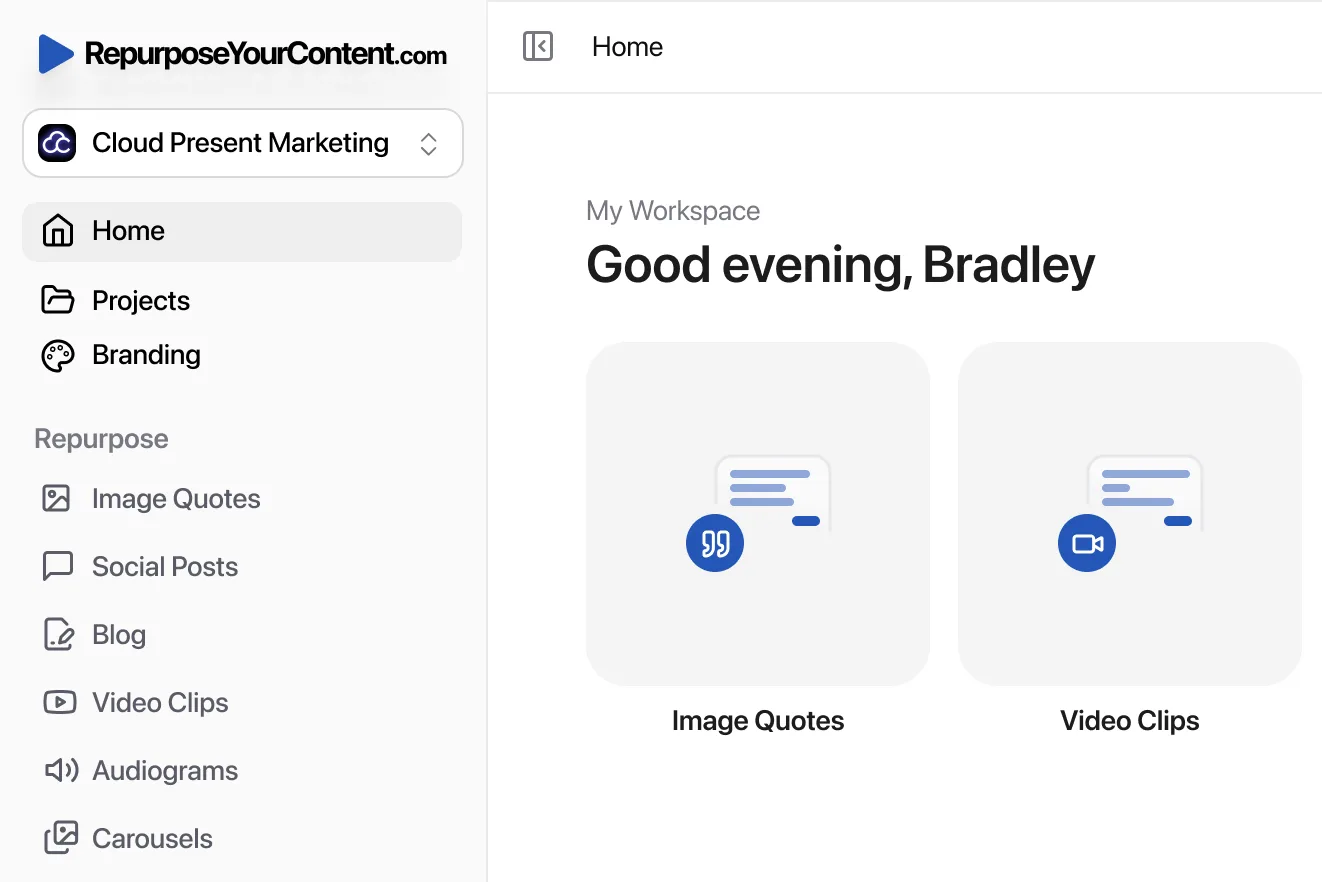
A done-for-you approach reverses the workload. The podcaster confirms themes in about 15 minutes, then receives populated assets, captions, and links within 72 hours. RepurposeYourContent fills the calendar automatically from each episode, delivering finished content rather than asking the host to manage another production system.
The decision rule is plain:
- Choose Notion if system design is enjoyable and someone owns maintenance.
- Choose Sheets if a VA or editor handles updates.
- Choose done-for-you production if the bottleneck is shipping, not organising.
Creators researching adjacent audience workflows can also review this resource on finding UGC for podcasters. The same principle applies: distribution work needs clear ownership, format decisions, and a defined handoff.
For a wider comparison of editing and repurposing workflows, see podcast repurposing tools for 2026.
Tracking KPIs and Auditing the Calendar
A calendar should show more than whether an asset shipped. It should reveal which topics, formats, and distribution choices deserve another slot.
Track five practical indicators:
- Episode downloads per release: Compare episodes using the same measurement window.
- Short-form views: Record views for clips, Reels, Shorts, and other vertical assets.
- Show-note click-throughs: Use tagged links to separate traffic from each platform.
- Email signups attributed to the podcast: Give podcast links a distinct source tag.
- Guest-driven inbound: Record enquiries, replies, and referrals connected to guest promotion.
Native analytics usually provide the first four signals. UTM-tagged links connect social posts and newsletters to show-note visits or signups. Each monthly review can stay focused if the owner records only the decision-making information.

The monthly check
Block a 30-minute review on the calendar. Compare the current month with the previous month, flag the strongest and weakest asset, then write two sentences:
- Repeat: What should appear again?
- Cut: What should be reduced or removed?
The review shouldn't become a debate about every post. It should produce one clear adjustment for the next publishing cycle.
The quarterly audit
The quarterly review needs more depth. Revisit the theme clusters, retire topics that have run their course, test one new format, and reset the rotation if publishing has slipped.
The audit also needs a rolling performance view. A single episode spike can mislead the team. Returning-listener share provides a better signal of schedule health than raw downloads alone, according to the planning methodology outlined in listener retention benchmarks.
Audit the system, not just the numbers. A weak result can come from the topic, the hook, the format, the platform, or the publishing delay.
A calendar that nobody audits becomes a static artifact. The monthly check keeps slots filled. The quarterly audit keeps the editorial system relevant.
The Done-For-You Alternative
Done-for-you repurposing is the logical endpoint of a working calendar. The production partner handles the conversion from recording to scheduled assets, while the podcaster keeps control of themes, voice, approvals, and publishing priorities.
The handoff is straightforward. The podcaster sends one podcast, webinar, keynote, interview, meeting, or other long-form recording with a one-line topic note. The client spends about 15 minutes approving the plan. The service returns 20 to 30 ready-to-publish assets within 72 hours, including video clips, LinkedIn posts, quote graphics, carousels, audiograms, and a blog post.
One 45-minute recording can become 30 assets. The service can also provide a 72-hour turnaround guarantee, or the client doesn't pay, with pricing from $14 per finished asset. Those claims and terms should be confirmed in the service agreement before work begins.
| Factor | DIY Path | Done-For-You |
|---|---|---|
| Client time | About 100 to 140 minutes per episode, plus context switching | About 15 minutes for approval |
| Output | Depends on editing, writing, and design capacity | 20 to 30 ready-to-publish assets |
| Calendar mapping | Host assigns every asset manually | Assets arrive mapped to publishing slots |
| Brand control | Direct control, but every task stays internal | Brand voice, visual standards, and revisions remain part of the review |
| Turnaround | Depends on the host's workload | Within 72 hours |
| Cost | Internal time and production overhead | From $14 per finished asset |
The trade-offs still matter. A service needs a clear brand brief, dependable source recordings, and timely approvals. A host with a highly unusual editorial style may need a review round before the voice matches consistently. The right provider should map topics to assets, format content natively for each platform, include captions and links, and offer unlimited revisions or a clearly defined revision process.
The strongest launch pattern concentrates assets. A major episode or offer launch can stack the strongest clip, guest tag, carousel, article, and newsletter within the same 48 hours. That concentration is possible only when the assets already exist.
For a practical overview of the handoff, see done-for-you podcast content. Podcasters who want to keep recording while someone else fills the calendar can book a walkthrough or request a sample week from RepurposeYourContent. Send a recording, review the proposed asset map, and decide whether the workflow fits the show.
Book a call with RepurposeYourContent or request a sample week built from one existing recording. The team can show how a single episode becomes a populated calendar, finished assets, and a repeatable publishing rhythm.
Tags: