How to Create Audiograms for Social Media: A Quick Guide
Discover how to create audiograms for social media that boost engagement with practical tools and workflows for fast, effective results.

Over 85% of social media videos are watched on mute. This makes sharing pure audio clips from your webinar or podcast pointless. Your insights get lost in the silent scroll.
So, how do you get your valuable audio heard? You create audiograms. They make your audio visual. This guide shows you exactly how to create audiograms for social media.
What is an Audiogram and Why Does it Work?

An audiogram turns audio into a short video that stops the scroll. It combines four elements into a single asset:
- A compelling audio clip, usually 30-90 seconds.
- A branded background image.
- An animated waveform that moves with the audio.
- On-screen captions that match the spoken words.
This combination works. The moving waveform signals that there is audio. The captions deliver the message even when the sound is off.
For B2B marketers, audiograms are a fast way of repurposing your best content. You have expert insights from your webinars and podcasts. Snipping these moments creates powerful, shareable social media assets. It gives your existing content a second life and a wider reach.
An audiogram packages audio for visual consumption. It ensures the key takeaways from a one-hour webinar can reach thousands who will never watch the full recording.
You get engaging social posts from audio you already have. This boosts your brand's authority and reach without extra effort.
How to Create Audiograms for Social Media

A great audiogram starts with a compelling soundbite. The clip you choose from your recording is the most important part. Without a strong audio hook, no design will save it. Listen through your recordings for moments that deliver a single, powerful idea. The best clips are 30-90 seconds long. This is short enough for a busy feed but long enough to make a point.
Find the Perfect Soundbite
You are looking for specific moments that stand out. Listen for these:
- A surprising statistic: A number that challenges a common assumption.
- A contrarian viewpoint: An opinion that goes against the grain.
- A practical, actionable tip: Advice your audience can use immediately.
- A bold prediction: A confident look into your industry's future.
The goal is to find a self-contained point that sparks curiosity. If a listener needs the full webinar for context, you chose the wrong clip. The audiogram must stand on its own and deliver value in under 90 seconds.
Manually scrubbing through an hour-long recording is a time-sink. You can speed this up by scanning the transcript for keywords. Or use timestamps to jump to key sections. Our guide on how to extract video clips from a webinar shares more advanced strategies.
Choose the Right Platform
You have your clip. Now decide where to post it. Not all social platforms are equal for audio content. Focus on channels where your B2B audience is actively learning.
- LinkedIn is prime real estate for audiograms. It is built for sharing professional insights.
- Instagram is a strong choice, especially for feed posts where you can share clips up to 60 seconds.
- Twitter (X) works well for quick, punchy audio thoughts that start conversations.
Data from UK social media statistics shows platform reach changes constantly. What works today might not work tomorrow. Tailor your audiogram's length and style to each platform. A 60-second deep dive might work on LinkedIn. A punchier 30-second clip performs better on Instagram. Being strategic ensures your content gets seen by the right people.
The Manual vs. Automated Workflow
Understanding the manual process shows you why automation is better. Creating an audiogram from scratch is a multi-step slog.
The Manual Workflow: A Step-by-Step Example
Step 1: Extract the Audio. Find your 30-90 second clip. Use an audio editor like Audacity to trim the source recording. This requires listening through the file to find that one impactful moment.
Step 2: Design the Background. Create a static background image. Use a tool like Canva or Figma. This image must feature your brand colors and logo. Size it correctly for the platform: 1080x1080 pixels for an Instagram post or 1080x1920 for a Story.
Step 3: Assemble and Export. Use an audiogram tool to combine the audio and background. Add an animated waveform using a waveform generator. Transcribe the audio and burn the captions into the video. Check the captions for accuracy. Finally, export the MP4 video file.
This manual process is time-consuming. It is not scalable for a busy marketing team. For more on finding clips, see our guide on how to clip a YouTube video.
How RepurposeYourContent Helps You Automate
This entire manual workflow is the headache we built RepurposeYourContent to solve.
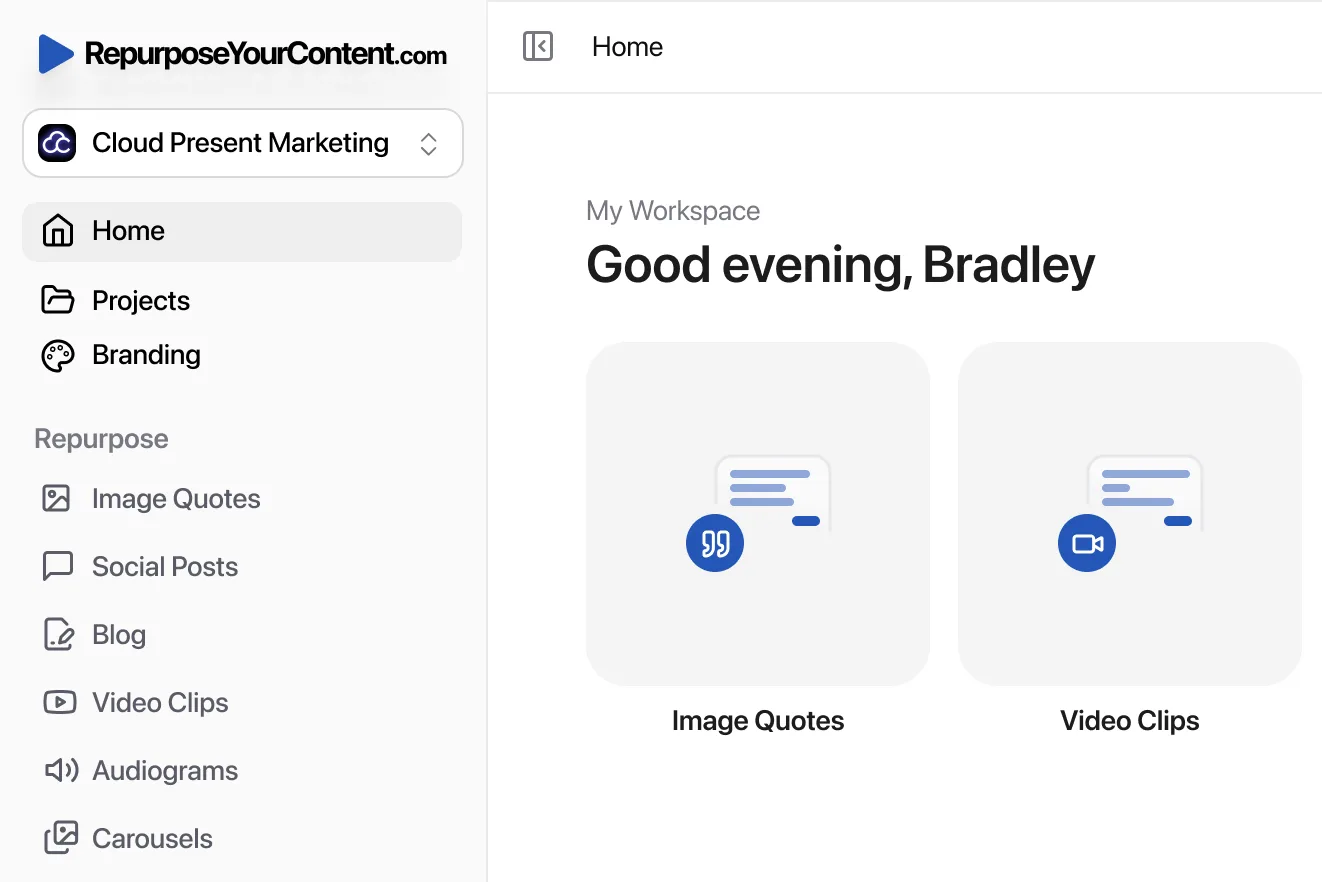
Instead of juggling four tools, you upload one webinar recording. Our platform automatically generates multiple ready-to-publish audiograms. We find the best moments, pull the audio, and apply your branding. We create the animated waveform and burn in the captions.
And it doesn't stop there. From that same recording, our system creates 7 other content formats. You get video clips, blog posts, social posts, image quotes, newsletters, LinkedIn carousels, and timestamps. One webinar can become 47 pieces of content in minutes.
Designing for Engagement: Waveforms and Captions

An audiogram's visual elements determine its success. A generic waveform or hard-to-read text means people will scroll past. Small design details stop the thumb.
The waveform is your main visual hook. It tells people this is not a static image. Do not settle for the default setting. Pick a style that fits your brand.
- Classic Lines: A solid, professional choice for corporate brands.
- Thick Bars: Bolder and more modern. Helps you stand out.
- Radial Circles: A dynamic and engaging option that feels less formal.
Whatever you choose, make sure the color contrasts strongly with your background. A faint grey waveform on a white background is invisible.
Getting Captions Right for Mobile
Most people watch your content with the sound off. Your captions must do all the heavy lifting. They must be effortless to read on a small screen. Use a clean, sans-serif font like Helvetica or Open Sans.
Aim for a font size of around 30-40 pixels for a 1080x1080 video. Control the amount of text on-screen. Showing one short phrase at a time is more effective than a large paragraph. A big block of text invites users to read ahead and scroll on.
Your goal is a visually appealing package that is effortless to watch. If the user has to squint to read your text, you have already lost them.
Choosing how words appear on screen changes the experience. This table breaks down the three main caption styles.
Audiogram Caption Style Comparison
| Caption Style | Description | Best For | Potential Drawback |
|---|---|---|---|
| Word-by-Word | Each word is highlighted as it's spoken. | Highlighting a specific, powerful phrase or quote. | Can be distracting if the pace is too fast or slow. |
| Phrase-by-Phrase | A short group of words appears at once. | General use; provides good context and pacing. | Requires careful timing to match the speaker's cadence. |
| Full Sentence | The entire sentence appears on screen. | Slower-paced clips where context is important. | Risks users reading ahead and losing interest. |
The best style depends on your clip. Pick one that feels natural for the audio. Thinking about sourcing quotes? See our tips on how to extract quotes from a webinar. Exploring other tools can also speed up your process, like the many AI tools for podcasters now available.
Automate to Scale Your Content Production
The manual way of creating audiograms is painfully slow. Busy marketing teams do not have hours to spare on a single 60-second video. To consistently create audiograms that get seen, automation is the only way forward.
Ditch the clunky, multi-tool process. An efficient workflow can turn your best webinar into a steady stream of social assets. This is how you get a batch of ready-to-publish audiograms in minutes, not hours.
This is not just about saving time. It's about having a system. A system that turns expert-led content into assets that drive engagement and create demand. You can learn more about how to automate your webinar repurposing.
The Problem with Doing It by Hand
73% of B2B marketers say webinars are their best source of leads. Yet most of that brilliant audio content sits on a hard drive. Manually creating one or two audiograms a week will not make an impact.
Automation solves the post-webinar content drought. It bridges the gap between your best expert insights and the daily content needed to capture attention on social media.
You need a system that can keep up. One that turns a single event into weeks of promotional material without adding more work to your plate.
How RepurposeYourContent Helps
We built RepurposeYourContent to solve this exact problem. Upload your Zoom or YouTube recording and let our platform handle the rest.
Our AI listens through your recording, identifies key insights, and automatically generates your assets. It pulls the audio, applies your brand kit, and creates the waveform with synchronized captions. The process is fast and hands-off. From one upload, you get a complete content engine. This includes not just audiograms but also video clips, image quotes, LinkedIn carousels, and full blog posts.
Frequently Asked Questions
You have questions. I have direct answers.
What's the best length for an audiogram?
The sweet spot is 30 to 90 seconds. This is enough time to land a single, valuable idea. It is also short enough to hold attention on a busy feed. Make one impactful point per clip. That's it.
Which social media platforms should I focus on?
Focus on LinkedIn, Instagram, and Twitter (X).
- LinkedIn: The best choice for B2B insights. Audiograms fit perfectly in the professional feed.
- Instagram: Use them for Feed posts, Stories, and Reels to reach a wider audience.
- Twitter (X): A strong contender for sharing quick, punchy audio clips.
Start with these platforms. They give you the best chance of being seen and heard by the right people.
Do I need technical skills to create an audiogram?
No. The manual process is a headache. But platforms like RepurposeYourContent remove that complexity. You upload your file. The software outputs a finished audiogram with a waveform, background, and captions. No design or editing skills needed.
Platform Specification Quick Guide
Getting dimensions right is critical. This quick reference table helps you nail the technical specs every time.
| Platform | Optimal Length | Recommended Dimensions (pixels) |
|---|---|---|
| LinkedIn Feed | 60–90 seconds | 1080 x 1080 (Square) |
| Instagram Feed | 30–60 seconds | 1080 x 1080 (Square) |
| Instagram Story/Reel | Under 60 seconds | 1080 x 1920 (Vertical) |
| Twitter (X) | 30–45 seconds | 1080 x 1080 (Square) |
Stop wasting time on manual editing. Your team is too busy for that. RepurposeYourContent turns one hour-long webinar into a full suite of content, including multiple ready-to-publish audiograms.
Ready to make your content work harder? Try RepurposeYourContent today.
Tags: