How to Create Image Quotes for Social Media That Get Noticed
Learn how to create image quotes for social media that drive real engagement. This guide gives B2B marketers actionable steps on design, sizing, and strategy.

A single one-hour webinar can produce 6 to 16 powerful image quotes. If you're not turning your expert content into graphics, you're leaving social media engagement on the table. Learning how to create image quotes for social media is a core skill for time-poor B2B marketers. This guide shows you how to do it efficiently.
First, you need powerful soundbites. Then you design them into on-brand graphics. Finally, you size them correctly for each platform.
Your Webinars Are a Goldmine for Image Quotes
Stop scrambling for new social media content. Your last webinar recording is packed with expert insights. You can turn them into engaging graphics for weeks.
This changes your approach. A webinar is not a one-time event. It is a rich content repository. This moves you from a content creation treadmill to a smart content distribution strategy.

The skill is spotting the right moments. Your goal is not to pull any quote. You need to find the ones that make people stop scrolling.
What to Look For
When you review your content, look for these three types of soundbites. They perform well on social media.
- Surprising Statistics: Find any number or data point that challenges a common assumption. A quote like, "We saw a 47% increase in lead quality after implementing this," is perfect.
- Contrarian Takes: Do not shy away from opinions that push back against standard advice. These create debate and get comments.
- Actionable Advice: Find a clear, concise tip. Your audience can use it right away. This positions your brand as a helpful expert.
The goal is to turn spoken expertise into tangible marketing assets. This is not about posting generic inspirational fluff. It’s about proving your value, one quote at a time.
This article focuses on design and distribution. Finding the quotes is the first step. For a detailed walkthrough on extraction, learn how to pull quotes from a webinar in our dedicated post.
How RepurposeYourContent Helps
Manually scrubbing through an hour-long recording is inefficient. You can automate this process.
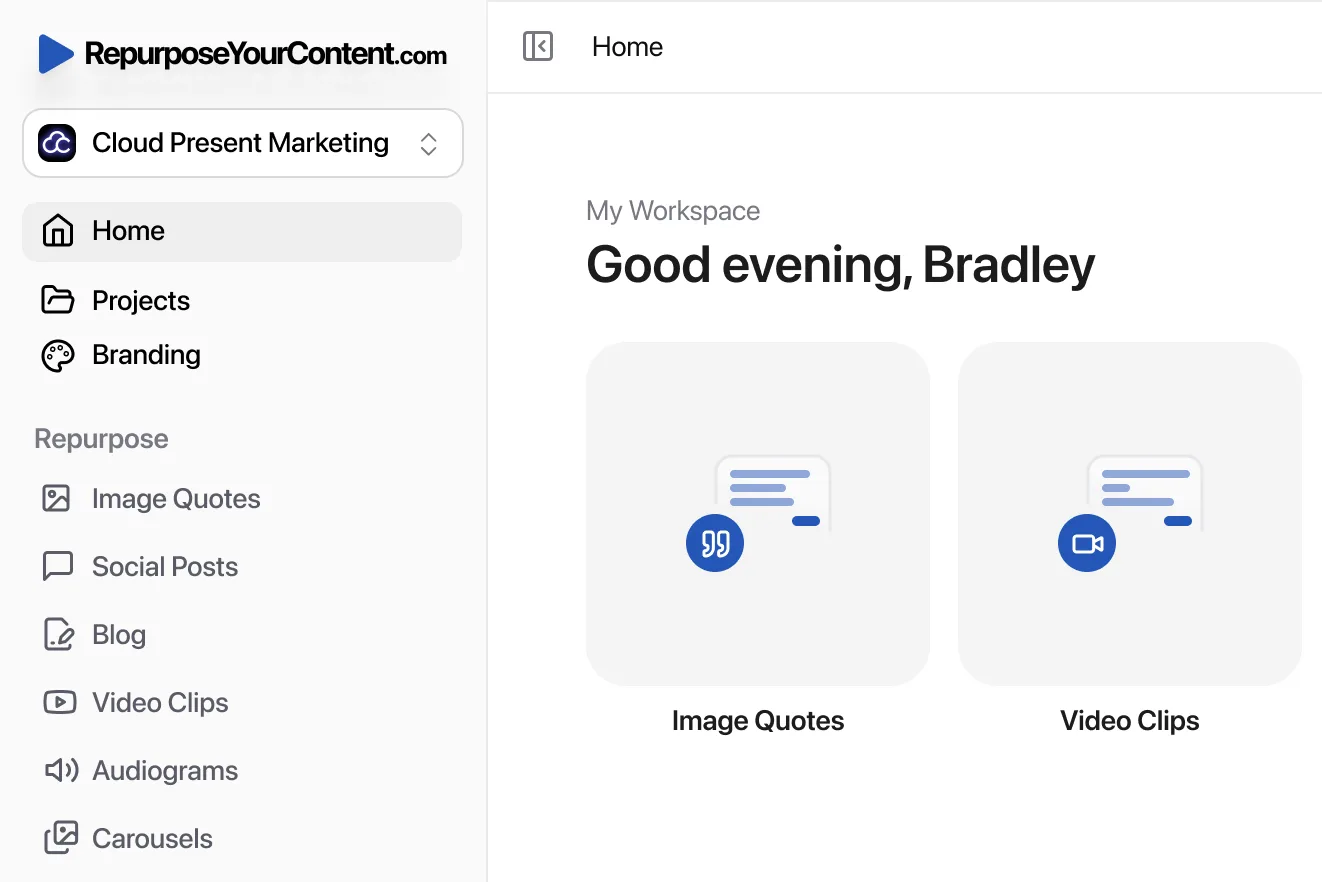
RepurposeYourContent uses AI to analyze your webinar. It automatically flags potent insights and suggests them as potential image quotes. It also generates other assets like video clips, blog posts, LinkedIn carousels, newsletters, audiograms, and timestamps from the same recording. This approach turns one piece of content into a complete campaign. It saves your team dozens of hours.
Designing Branded Quotes That Look Professional
Your image quotes need to look polished. They must be instantly recognizable as yours. Good design builds trust. Sloppy visuals look amateurish. You are a marketer, so follow a simple set of rules for professional results.
A well-designed quote card is a proven way to stop users from scrolling. Your graphics have to stand out. Those speaker quotes from your last webinar are a direct path to new leads.

Establish a Clear Visual Hierarchy
The quote itself is the star. Every design choice should guide the viewer’s eye to the text. Everything else is a supporting role.
- Font Size and Weight: Make the most impactful words larger or bolder. This adds emphasis. It makes your graphic easier to scan on a busy feed.
- Speaker Attribution: The speaker's name and title should be smaller than the quote. It must still be legible. Placing it at the bottom is a safe bet.
- Logo Placement: Your company logo needs to be subtle. Tuck it into a corner. It should not fight for attention with the main message.
A common mistake is using busy background images. They make text impossible to read. Stick to solid brand colors or simple, muted patterns. The goal here is clarity.
Stick to Your Brand Guidelines
Consistency builds brand recognition. Every image quote should feel like it came from your company. Apply your brand kit religiously.
Your primary and secondary brand colors are your best friends. A simple two-color palette often works best. For example, use your primary color for the background with white or black text.
Next, choose one or two brand fonts and stick with them. The font must be readable on small mobile screens. Do not use decorative or script fonts. A clean sans-serif font like Inter or Poppins is a solid choice.
For a deeper look at making your quote cards stand out, see these expert tips to create image quotes that captivate.
Sizing and Formatting for Each Social Platform
Using the wrong image size is a rookie mistake. It makes your brand look careless. It can also hurt your content's performance.
An image that looks great on Instagram gets awkwardly cropped on LinkedIn. That blunder dents your credibility. You need to create versions of your quote graphic for each platform. This small detail makes a big difference.
The Right Dimensions for B2B Platforms
Here are the exact dimensions for key B2B social platforms. Use these sizes as your starting point every time.
- Instagram Feed (1:1 Square): 1080 x 1080 pixels. The classic square that performs well.
- LinkedIn/X Feed (1.91:1 Landscape): 1200 x 675 pixels. This is standard for shared images on both platforms.
Here is a workflow to create your quote graphic:
- Step 1: Create the Master. Design your primary quote graphic in a versatile size, like a 1080x1080 square. Use a tool like Canva or Figma.
- Step 2: Resize for Other Platforms. Duplicate your master design. Adjust the canvas to the new dimensions (e.g., 1200x675 for LinkedIn).
- Step 3: Rearrange and Export. Tweak the layout of text, the speaker's photo, and your logo to fit the new shape. Export each version.

Social Media Image Quote Dimensions Cheat Sheet
| Platform | Optimal Dimensions (Pixels) | Best Practice Notes |
|---|---|---|
| Instagram Feed | 1080 x 1080 (1:1) | The classic square. Can also use 1080 x 1350 (4:5) for a taller portrait. |
| Instagram Stories | 1080 x 1920 (9:16) | Fills the full screen. Keep text away from top/bottom edges. |
| LinkedIn Feed | 1200 x 675 (1.91:1) | Standard landscape. Square (1080x1080) also works very well. |
| X / Twitter | 1600 x 900 (16:9) | Best for single in-feed images. Landscape (1200x675) also works. |
| Facebook Feed | 1200 x 630 | Recommended size, but square (1080x1080) often gets more engagement. |
Social media algorithms favor native formats. A correctly sized image provides a better user experience. This leads to higher engagement and more reach.
Platform-Specific Formatting Nuances
Think about how each platform displays your content. On Instagram, your image must be visually striking. For a deeper look, check this complete guide to Instagram post formats.
LinkedIn offers unique opportunities. A landscape graphic works well. You can also use square images as slides in a LinkedIn carousel. For example, break a longer quote across two or three slides. This encourages interaction as people swipe.
You can learn how to automatically turn your webinar into social media posts to save time.
Design with the platform’s UI in mind. For Instagram Stories, keep text away from the top and bottom edges. Profile icons and reply boxes might cover them. This attention to detail separates professional content from amateur content.
A Posting and Distribution Strategy That Works
You have created a batch of brilliant image quotes. That is only half the battle. A great graphic without a solid distribution plan is a missed opportunity. You need a simple, repeatable system to get your content in front of the right people.
Map out your quote cards in a content calendar. This creates a steady drumbeat of valuable insights. You will not be scrambling for what to post. You will have weeks of content ready to go.
Writing Captions That Spark Conversation
Your caption gives context to your image quote. It turns a passive scroll into an active engagement. Use your caption to elaborate, start a discussion, and guide your audience.
Check these three boxes in your caption for every quote you post:
- Tag the Speaker: Always give credit. On LinkedIn, tag the expert’s personal profile and their company page. This can expand your reach into their network.
- Use Relevant Hashtags: Use a mix of tags. Start with broad industry hashtags like #B2BMarketing. Add niche topics like #DemandGeneration. Include your own branded tags like #YourWebinarSeries. This attracts your target audience.
- Pose a Question: End your caption with a question related to the quote. This invites comments and shows the algorithm your post is engaging.
A big mistake is just posting the quote graphic alone. The most successful social feeds vary their content. Alternate image quotes with video clips, LinkedIn carousels, and audiograms. You can pull all of these from the same webinar.
This variety keeps your feed interesting and prevents follower fatigue. To learn more, read our guide on building effective content distribution strategies.
Stop the endless content scramble. Try RepurposeYourContent and turn your next webinar into weeks of high-performing social content.
Tags: