How to Host a Webinar That Converts
Learn how to host a webinar that converts UK attendees into customers. This practical guide covers webinar structure, CTAs, and follow-up for B2B marketers.

Only 2.3% of webinar attendees ever become customers. This means over 97% of your audience — and the time you spent acquiring them — goes to waste. To host a webinar that converts, you must design every decision to turn attendees into pipeline. The real measure of success is not how many people show up. It is how many people take action.

Your Webinar Attendance Is a Vanity Metric
A large registration list is not revenue. As a busy B2B marketer, you lack time for activities that do not contribute to pipeline. Chasing high attendance distracts from the only metric that matters: conversion.
Think about the standard webinar funnel. Many people register. A smaller group attends. An even smaller group engages. A tiny fraction of that group becomes a customer. Focusing only on registrations is a losing game.
Shift Your Focus from Attendance to Conversion
The average webinar attendance rate is between 40-50%. Half the people who sign up will not see your live event. If you measure success by attendance, you accept a 50% failure rate from the start.
Instead, optimize every part of your webinar for conversion. Your goal is not to host a popular online event. It is to build a predictable conversion machine.
This requires a mental shift:
- From: "How many people can we get to register?"
- To: "How many qualified leads can we generate from this one event?"
A webinar with 50 highly-engaged attendees who fit your ideal customer profile is more valuable than one with 500 attendees who are only seeking free information. Quality beats quantity.
The True Cost of a Non-Converting Webinar
Webinars demand a serious investment. You spend hours planning content, finding speakers, and running promotions. If that effort results in zero qualified leads, your ROI is negative. You have wasted time, budget, and a prime opportunity.
A non-converting webinar is more than a missed opportunity; it's a resource drain. Your team's time, promotional budget, and speaker's expertise are valuable assets. Wasting them to attract an audience that never converts is an expensive mistake.
A winning strategy re-frames the entire process. It attracts the right people. It delivers content that creates a genuine need. It then presents an offer that feels like a logical next step. This guide shows you that exact process. It explains how to structure, promote, and follow up on your webinars to drive measurable pipeline.
Remember, attendees who do not convert on the day are still valuable. They showed interest and can be nurtured over time. Repurposing your webinar into smaller assets like video clips, blog posts, and social proof is critical for this long-term nurture. You can find more details on how to get more ROI from webinars in our detailed article. This approach turns a single event into a demand generation engine.
Structuring Your Webinar for Conversion, Not Just Education
Many webinars fail for one reason. They are structured like a university lecture, not a path to a sale. An unstructured presentation guarantees low engagement and zero conversions.
You need a framework. It must guide attendees from passive learning to decisive action. A webinar built to convert does not just throw information at people. It leads them to a conclusion.
The most effective model is Educate -> Demonstrate -> Offer. It turns one hour of your time into a predictable source of pipeline. This approach respects your audience by delivering value first. This creates a natural, logical path to your solution.
First, Educate Your Audience
The first 20-25 minutes of your webinar are purely about education. This is your chance to deliver valuable, actionable insights. These insights should solve a real problem for your audience.
This is not a sales pitch. It is real thought leadership. Your goal is to shift their perspective on a problem. Help them see it in a new light. Help them understand its true cost. Or teach them a new way of tackling it. When you provide that "aha!" moment, you earn the right to present your solution. Understanding how to use webinars for lead generation is non-negotiable.
Then, Demonstrate Your Solution
Once you have established the problem and earned trust, transition to the demo. This section should last 15-20 minutes. Here, you show how your product is the most effective way to implement the solution you taught them.
A live product demo is fine. A client case study is more powerful. Instead of showing features, you show proven results. Webinars featuring case studies convert 41% higher. The average webinar conversion rate is only 2.3%. With buyers taking an average of 84 days to convert and opportunity close rates at just 6%, proving your ROI with a real-world story is critical.
Real Workflow Example: The Case Study Demo
- Set the Scene: Introduce a client with the exact problem from the "Educate" section. Use their words to describe the pain.
- Show the 'Before': Walk the audience through the clunky, expensive process the client used before your solution. Simple screenshots or diagrams are effective.
- Reveal the 'After': Show a focused, 5-minute demo of how your product solved their specific issue. Directly connect features to benefits.
- Share the Results: End with hard numbers. "They cut time spent on X by 75% and boosted Y by 30% within 60 days." This makes the value impossible to ignore.
Finally, Make a Compelling Offer
The last 5-10 minutes are for the offer. You have held their attention and demonstrated value. Now you must ask for the next step. Your offer must be clear, compelling, and time-sensitive to drive immediate action.
Do not just say, "book a demo." That is weak. Create an exclusive, high-value package only for attendees.
- Weak Offer: "Thanks for coming. Book a demo on our site."
- Strong Offer: "For the next 24 hours, everyone here can book a free strategy session AND get 15% off their first year. Click the link on your screen now."
This creates urgency without being pushy. Not everyone will convert on the spot. A solid webinar content marketing strategy is essential for nurturing those who showed interest but were not ready to buy.
How to Host a Webinar That Converts: Timing and Promotion
Getting people to register is one thing. Getting the right people to show up is another. The goal is not a vanity metric of hundreds of registrants. It is to attract high-intent prospects looking for your solution.
Your promotional plan acts as a gatekeeper. A lazy plan attracts freebie-seekers. A strategic plan filters for quality. It ensures your virtual room is filled with future customers.
For a B2B audience, timing is everything. Forget evenings and weekends. Your prime time is midweek, during the business day. People are at their desks and in a work mindset. They are more likely to engage with professional development content.
Build Your Two-Week Promotional Plan
Your promotional sweet spot is a two-week window before the event. This builds momentum without causing audience fatigue. Any shorter, and you will struggle to hit registration goals. Any longer, and people will forget they signed up.
The centerpiece is your registration landing page. It must be brutally efficient.
- Headline: Talk about the outcome, not the topic. "Fix Your Leaky Sales Funnel" beats "A Webinar on Sales Funnels."
- Bullet Points: List 3-5 concrete takeaways. What skill will they learn? Be specific.
- Speaker Bio: Keep it brief. Highlight the expertise that makes them the right person for this problem.
- Form: Ask for the bare minimum. Name and work email. Every extra field reduces conversions.
Executing Your Promotional Workflow
Once the landing page is live, start making noise. People are busy. They rarely sign up after seeing one post. You need multiple touchpoints across relevant channels. Repetition cuts through the chaos.
Here is a tested workflow:
- Two Weeks Out: Send the first announcement email to your marketing list. Post organically on LinkedIn and other social platforms. Drive traffic to your registration page.
- One Week Out: Send a follow-up email. Send it only to people who did not register from the first email. On LinkedIn, share a short video clip of your speaker teasing a key insight.
- Three Days Out: Send a final "last chance" email. Dial up the urgency. Re-share on social channels with a "don't miss out" message.
Data shows 22% of all registrations happen on Thursdays. A surprising 13% come in on the day of the event. By scheduling your webinar midweek during work hours, you can aim for top results: 50-55% poll response rates and 17.5% click-through rates on offers.
The structure you promote should promise a journey.

This visual flow—Educate, Demonstrate, Offer—is the core framework your promotion should hint at. You are promising valuable insights and a practical path forward.
Designing and Delivering an Unforgettable Call to Action
I have seen it happen countless times. A fantastic webinar, packed with value, falls apart in the final 10 minutes. All that hard work is wasted. The reason is a weak call to action.
After you have given your audience so much, this is your moment to ask for something back. A strong, compelling CTA is what separates a webinar that informs from one that converts.

Think of your CTA as a bridge. It moves someone from an interested viewer to a potential customer. It must be clear, irresistible, and give them a reason to act now.
Choosing the Right Offer
A generic “Book a Demo” is lazy. Your audience just gave you an hour of their time. They deserve better than a bland offer. The trick is to create something that feels exclusive to live attendees.
You could try a few angles:
- A time-sensitive discount: “As a thank you for joining live, you get 15% off your first year. This offer is only good for the next 48 hours.”
- An expert consultation: “Book a free strategy session with one of our senior experts. We’re only opening up 10 of these spots.”
- A supercharged free trial: “Everyone else gets a 14-day trial. For you, we’re doubling it to a full 30 days.”
You have built trust throughout the webinar. Now, you package the next logical step as a reward for their attention. Give them an offer they cannot refuse.
Designing the Perfect CTA Slide
When it comes to your CTA slide, less is more. This is not the time for fancy animations or paragraphs of text. It has one job: to get people to click.
The highest-converting CTA slides have just three things:
- A crystal-clear headline: State the offer, plain and simple. "Your Exclusive Webinar Offer."
- A few value points: Use 2-3 bullet points to quickly remind them what’s in it for them.
- One massive button: Make the button text an action. "Claim My 15% Discount" feels more urgent and personal than "Submit."
When the slide comes up, do not just leave it there. Tell people exactly what to do. Say the words: “Click the button that just appeared on your screen right now to claim your discount.” That direct instruction removes hesitation and gets people moving.
Tracking and Nurturing Every Click
Someone clicking your offer is a massive buying signal. It does not always mean they will complete the purchase right away. First, ensure your webinar platform tracks who clicks the button.
This group of "CTA-clickers" becomes your highest priority. They are hot leads. While everyone else gets a standard follow-up, this group needs a fast-track sequence. A sales rep should reach out personally within the hour.
What about those who did not click? The job is not done. This is where repurposed content becomes your secret weapon for nurturing them. Sending an email newsletter with key takeaways can re-engage them. You can learn more about how to create email newsletters from video content. These touchpoints are crucial for converting those who were interested but not ready to act today.
The Post-Webinar Strategy That Drives Revenue
The live event is over. You can breathe for a second. But the job is not done. The real work of turning attendees into customers has just begun. The majority of your pipeline comes from what you do in the days and weeks after the webinar.
A weak post-webinar plan is the biggest reason for a leaky sales funnel. You spent an hour building interest and earning trust. Now you must act on it fast. This is the moment you separate casual lookers from serious buyers.
Segment Your Audience for a Personalised Follow-Up
Blasting the same follow-up email to every person is a mistake. Your audience behaved in different ways. Your follow-up must reflect that reality.
At a minimum, you have three distinct groups:
- The Engaged Attendees: These are your hottest leads. They showed up, stayed, and engaged in the Q&A. They need immediate, personal attention.
- The Quiet Attendees: They were there but lurked in the background. These are warm leads who need more nurturing.
- The No-Shows: They were interested enough to register but could not attend. They need the recording and a good reason to watch it.
Your goal is to guide each group to the next logical step. For engaged attendees, that is a sales conversation. For no-shows, it is getting them to watch the content.
Define Your Webinar MQL and Sales Handoff
Before your sales team makes a call, everyone must agree on what a webinar-generated Marketing Qualified Lead (MQL) is. This definition stops sales from chasing dead-end leads. It also proves marketing’s contribution.
A simple lead scoring model is your best friend:
- Registered: +5 points
- Attended Live: +15 points
- Watched >75% of the webinar: +10 points
- Asked a question: +10 points
- Clicked the CTA: +25 points
Set a clear threshold, say 50 points, to qualify as an MQL. Anyone who hits that score gets fast-tracked to the sales team within the hour. The handoff must be seamless. Include their name, company, and a summary of their webinar actions.
The Follow-Up Sequence That Converts
For follow-up emails, speed and relevance are everything. Do not wait 24 hours. The first email should arrive within one hour of the webinar ending.
Here is a simple but effective sequence:
- Email 1 (1 Hour Post-Webinar): Send the recording link. For no-shows, the subject line is key: "The webinar recording you missed." For attendees, try: "Here's the recording + slides from today."
- Email 2 (2 Days Post-Webinar): Share a related piece of content. This could be a blog post summarizing key takeaways or a relevant case study. For more ideas, check our guide on what to do after hosting a webinar.
- Email 3 (4 Days Post-Webinar): Answer a great question from the Q&A in more detail. This shows you were listening and delivers more value. It is your final chance to push for your main call to action.
A smart repurposing strategy can shorten sales cycles by 30-50%. Gating your on-demand replay helps you capture leads from 32% of the original no-shows. This proves how much value is in your post-webinar plan.
Effective content repurposing strategies are essential. Even leads who don't convert from initial emails can be nurtured with repurposed clips and articles. This keeps your brand top-of-mind.
How RepurposeYourContent Helps
Most people who attend a webinar will not convert right away. You could deliver a flawless presentation with an irresistible offer. Still, only a tiny fraction of your audience is ready to buy on day one.
What about the other 98%? Your real success depends on what you do after the live event ends. Stop thinking of it as a one-off broadcast. Start treating it as a long-term conversation starter.

Manually slicing a webinar recording is a painfully slow job. You do not have the time. That’s where a tool like RepurposeYourContent helps. It handles the grunt work. It spins one recording into a full campaign of follow-up assets. It keeps you top-of-mind with people who showed interest but were not ready to commit.
A Workflow Example: One Webinar, 47 Pieces of Content
To nurture leads effectively, you need to surround them with valuable micro-content. That’s how a webinar keeps converting for weeks, not just minutes.
Here is how you turn one webinar into a multi-touchpoint nurture campaign:
- Step 1: Upload your one-hour webinar recording to RepurposeYourContent.
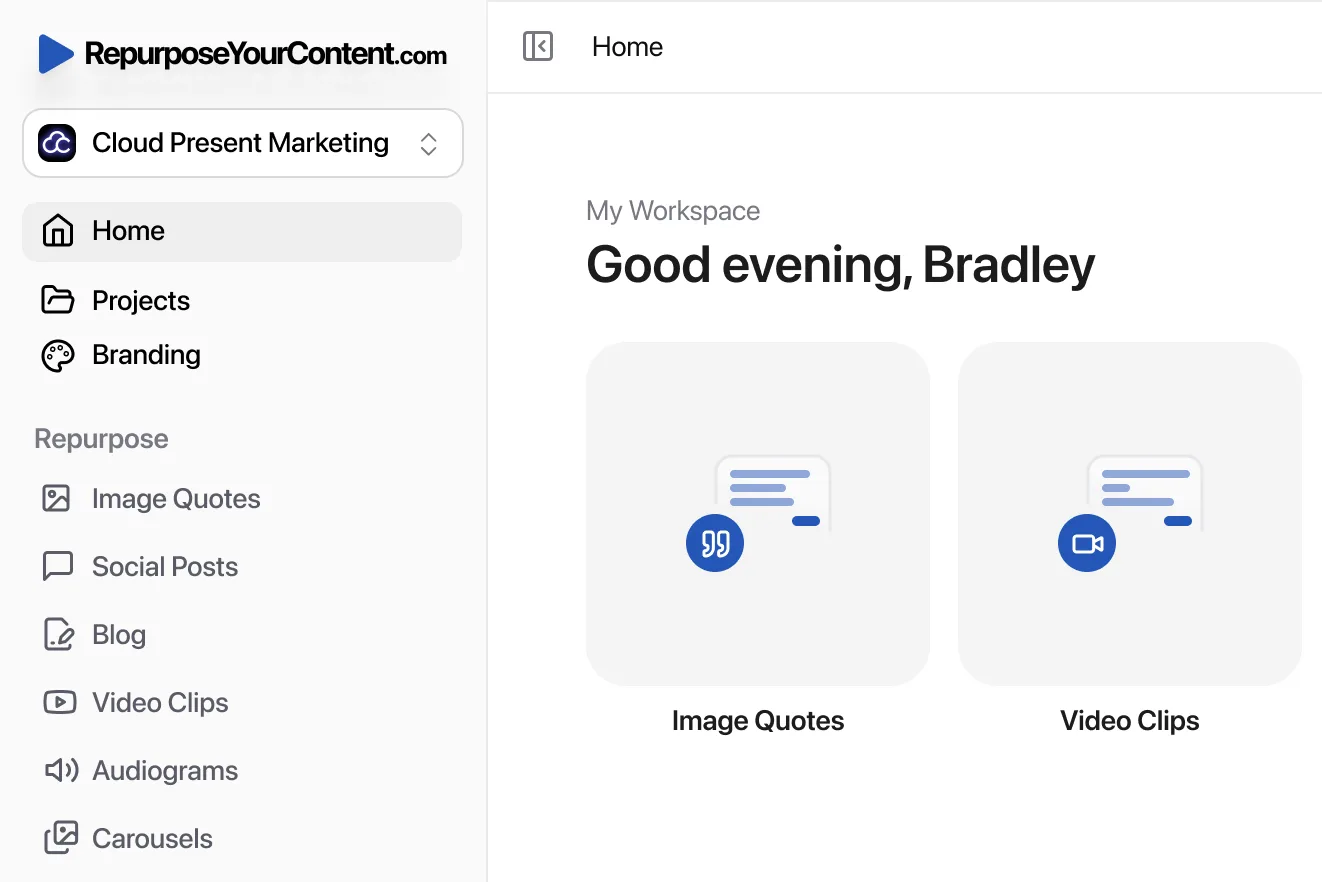
- Step 2: Select the assets you need. Tick the boxes for video clips, blog posts, social posts, audiograms, image quotes, newsletters, and LinkedIn carousels. The system also generates timestamps.
- Step 3: Let the AI work. In minutes, you have over 47 pieces of unique content ready for your nurture sequences and social channels.
Your demand gen team now has everything they need. They can re-engage every person who signed up. The goal is to create many touchpoints that keep the conversation alive.
From One Event to a Content Ecosystem
With a library of fresh assets, your follow-up can be highly strategic.
You can take those...
- Video clips of your case study and turn them into powerful social media ads. Target attendees who did not click your main offer.
- AI-generated blog post from the Q&A and email it out. Proactively tackle everyone's biggest objections.
- Branded LinkedIn carousel summarizing key takeaways. Re-engage high-value leads who registered but did not attend.
Repurposing is not about making more content. It’s about creating the right content to connect with people after your event. It turns a single webinar into an ongoing source of pipeline.
Attendees who do not convert are still valuable. They provide the raw material—the questions, the engagement—that becomes the content that converts others. You can see how this works for demand generation teams. This approach ensures no opportunity is missed. You get every drop of ROI from your events.
Frequently Asked Questions
What's a Good Webinar Conversion Rate?
A solid, achievable target is seeing between 3% and 5% of your attendees take the next step. This could be booking a demo or starting a trial. If you are hitting that, you are on the right track.
Top performers consistently hit 10-15%. They achieve this through a hyper-focused audience, an irresistible value proposition, and a compelling, time-sensitive offer. If your numbers are below 2%, it is a clear signal to revisit your audience targeting, content, or call to action.
How Long Should My Follow-Up Sequence Run?
Your post-webinar email sequence is where you turn interest into action. The sweet spot is 3 to 4 emails spread over about a week. This keeps you top of mind without being intrusive.
Here’s a simple flow that works:
- Email 1 (Within the hour): Send the recording, fast. It is for attendees who want a recap and for all the no-shows.
- Email 2 (2 days later): Nudge them with another piece of value. A blog post summarizing key takeaways or a case study works well.
- Email 3 (4 days later): Answer a great question from the Q&A in detail. This shows you listen and adds more expertise.
- Email 4 (6 days later): A final, gentle push on your call to action. This is a final reminder for anyone still on the fence.
This rhythm respects their time while ensuring the conversation continues.
Should I Gate My On-Demand Recording?
Yes. Absolutely. Not gating your on-demand recording is a huge missed opportunity. Leaving it open means you cannot capture leads from people who wanted to attend but could not. That is often up to 50% of registrants.
Think of it this way: asking for a name and email is not a barrier; it is a bridge. This strategy can capture leads from as many as 32% of your no-shows.
Gating the recording transforms your one-off live event into an evergreen lead generation machine. It is a fundamental part of hosting a webinar that drives results long after you have logged off.
Ready to turn your webinars into reliable conversion engines? Try RepurposeYourContent for free and see how you can automatically generate over 47 pieces of high-converting content from a single recording.
Tags: