8 Vertical Video Best Practices for LinkedIn That Work
Stop guessing. Get our tactical vertical video best practices for LinkedIn. Learn to create high-performing clips that drive real results on mobile.

Your LinkedIn videos get no views. You spend time and money creating them, but engagement is zero. The problem is not your content. It is your format. On a mobile-first platform, landscape video is an instant scroll-past. It fails to capture attention because it doesn't fill the screen. 91% of B2B buyers access LinkedIn on a mobile device, where vertical video takes up 100% of the screen. This immersive experience stops the scroll and holds attention.
Adopting these vertical video best practices for LinkedIn is critical. You must learn the exact specifications for 9:16 video. You need to hook viewers in the first three seconds. This guide gives you the tactical steps to make it happen.
1. Optimize for Full-Screen Vertical Viewing with 9:16 Aspect Ratio
Horizontal video on a mobile LinkedIn feed is a wasted opportunity. A 16:9 video appears small. It is surrounded by distracting black bars or other feed content. To command attention, your video must fill the screen. Adopt a 9:16 aspect ratio. This is a fundamental step for creating effective vertical video on LinkedIn. It provides a full-screen experience native to mobile viewing. This format eliminates wasted space and improves viewer retention.

This approach is about performance. LinkedIn’s algorithm favors mobile-first content. A full-screen vertical video holds a user’s attention longer. B2B brands like HubSpot already do this. They repurpose product demos into 9:16 clips. Salesforce shares vertical highlights from its events. Your content must feel like it belongs on the platform.
Actionable Tips for 9:16 Formatting:
- Center Your Core Content: When recording or repurposing webinars, position speakers and visuals in the center. This prevents important elements from being cropped when converting to vertical.
- Add "Safe Zone" Padding: For slides designed in 16:9, add 10-20% extra padding to the top and bottom. This buffer ensures no critical text is lost during re-framing.
- Always Preview on Mobile: Before you publish, check the video on a smartphone. This confirms your framing, captions, and elements appear as intended.
- Automate Re-framing: Manually editing horizontal webinar recordings into vertical clips is slow. Tools can re-frame the content for you. This saves significant production time.
2. Master the First 3 Seconds with a Powerful Hook
You have less than three seconds to stop a user from scrolling. This is the critical window where they decide if your content is worth their time. A strong hook is not optional. It is a fundamental requirement for any vertical video. It works by immediately signaling value or creating curiosity. This directly counters the 'scroll fatigue' common on mobile devices. An effective hook ensures your video is watched, not just seen.

The principle is simple: lead with your most compelling point. This could be a surprising statistic like, "73% of B2B marketers say webinars are their #1 source of quality leads." It could be a promise: "We saved 40 hours of content creation this week." Or a problem statement: "The #1 reason your webinar ROI is failing..." To truly captivate your audience, learning how to write viral hooks that stop the scroll can immediately convey value.
Actionable Tips for a Powerful Hook:
- Start with Data or a Bold Claim: Use a surprising statistic. Make a strong, counter-intuitive statement. Reinforce it with large text overlay in a contrasting color.
- Ask a Relatable Question: Frame a question that makes your target audience think, "That's me." This creates an instant connection and makes them want the answer.
- Test Multiple Hook Variations: Create 3-5 different opening variations for the same video. Test them to see which one performs best before you scale a campaign.
- Find Hooks in Your Transcripts: Manually searching webinar transcripts is inefficient. Tools can analyze content to automatically identify potent statements to use as hooks.
3. Use Burned-In Captions for Sound-Off Viewing
Relying on audio to convey your message on LinkedIn is a mistake. Over 80% of videos on the platform are viewed with the sound off. Your content must be fully comprehensible in silence. Strategic captions and text overlays are essential for an effective vertical video strategy. They ensure your message lands whether your audience is in a busy office or on public transport. This is about using bold typography to guide the viewer’s attention.

This sound-off approach is a core part of modern vertical video best practices for LinkedIn. B2B SaaS companies like Asana use bold, animated text overlays on their product demos. They highlight key features without needing a voiceover. The goal is to make your content accessible from the first frame. No viewer should be left behind because their audio is disabled.
Actionable Tips for Sound-Off Design:
- Prioritize Legibility: Use a minimum text size of 40pt. This guarantees readability on mobile screens. Choose high-contrast color combinations, like white text on a dark overlay.
- Choose Burned-In Captions: LinkedIn’s native captions are an option. But burned-in (or open) captions are baked into your video file. This gives you full control over font, size, and color for brand consistency.
- Mind Your Placement: Position captions and key text in the lower third of the frame. This prevents text from obscuring the speaker's face or other visuals.
- Automate Your Captioning: Manually transcribing and timing captions for every video is a huge time-drain. Modern tools can generate and burn them into your content automatically.
- Test on Mobile: Always review your video on a smartphone before you publish. Check that text is easy to read, correctly placed, and doesn't interfere with visuals.
4. Keep Video Length Between 30 and 90 Seconds
Your audience is scrolling a busy feed. Your video's length directly impacts its success. LinkedIn data shows a clear "Goldilocks zone" for vertical videos. It is between 30 and 90 seconds. Content shorter than 30 seconds often lacks substance. Videos longer than two minutes see a significant drop-off rate. This optimal window provides enough time to deliver value without overstaying your welcome.
This approach aligns with mobile viewing habits. Brands like HubSpot use 60-90 second clips. Salesforce packages webinar highlights into 45-second tips. Even LinkedIn Creator Fund participants average around 75 seconds per video. Shorter, value-packed content performs best. Make your point clearly and quickly. Respect your audience's time.
Actionable Tips for Optimal Video Length:
- Plan for Repurposing: When creating webinars, structure your presentations in 60-90 second segments. This makes it easier to extract distinct clips later without awkward cuts.
- Create Multiple Variations: From one key point in a webinar, extract two or three clips. Create a 30-second teaser, a 60-second insight, and a 90-second explanation. This gives you more assets to test.
- Edit Ruthlessly: Your video’s value density is critical. Cut all dead air, long pauses, and filler words like "um" or "ah." Every second must serve a purpose and move the message forward.
- Test and Measure: Don't assume one length fits all. Test durations like 45, 60, and 90 seconds. Track video completion rates in your LinkedIn analytics to find what works.
5. Use Clear Calls-to-Action (CTAs)
A video without a clear next step is a missed opportunity. Passive viewing does not drive business results. You must explicitly guide your audience from watching to acting. Effective CTAs on LinkedIn videos are specific and frictionless. Use text overlays, end-screens, and LinkedIn’s native CTA buttons. The goal is to make it simple for a viewer to take action without leaving the app.
This practice is crucial for turning views into leads. Demand generation teams at companies like Terminus build their video strategies around clear CTAs. For example, "Download the webinar guide." This links directly to gated assets. SaaS brands like Loom use "Schedule a demo" CTAs. This moves prospects down the funnel. The action must feel like a valuable next step.
Actionable Tips for Effective CTAs:
- Time Your CTA: Place your primary CTA two to three seconds before the video ends. This timing captures attention before viewers scroll away.
- Use Benefit-Driven Language: Frame your CTA around value. Instead of "Click here," use copy like "Learn the 5 strategies" or "Get your free guide."
- Prioritize Native Buttons: Use LinkedIn’s native CTA buttons when possible (e.g., Learn More, Sign Up). These often yield a higher click-through rate than a URL in the comments.
- Test and Measure: Create unique UTM parameters for each video clip. This tracks which CTAs and topics drive the most conversions. Test 2-3 CTA variations to find the highest-performing phrases.
6. Post Consistently and Use Strategic Hashtags
Sporadic posting gets ignored by the LinkedIn algorithm. The platform rewards consistency and recency. When and how often you post your vertical videos impacts their reach. Your posting schedule must align with your B2B audience's active times. You must also demonstrate a reliable content cadence.
LinkedIn’s algorithm prioritizes content that gets quick traction. This is called engagement velocity. Research from Buffer shows that posts made between Tuesday and Thursday get more engagement. For instance, B2B SaaS leaders like Notion maintain a schedule of 3-5 posts per week. This signals to the algorithm that you are a valuable contributor.
Actionable Tips for Posting:
- Target Peak B2B Hours: Schedule your videos to go live during peak professional activity. Key windows are 8-10 am, 12-1 pm, and 5-6 pm in your audience's timezone.
- Maintain a Consistent Cadence: Aim for a minimum of 3-5 video posts per week. Consistency is more important than volume.
- Use Relevant Hashtags: Use a mix of 3-5 hashtags. Include one broad hashtag (#B2Bmarketing), two niche hashtags (#DemandGeneration, #SaaS), and one branded hashtag (#YourCompanyName).
- Batch and Schedule in Advance: Planning your content calendar 4-8 weeks ahead removes daily pressure. Use batching to turn one webinar into dozens of vertical video assets. Then schedule them across the month. For a comprehensive guide, explore LinkedIn for small businesses.
7. Turn One Webinar Into 47 Pieces of Content
Posting a single vertical video is effective. But building a system to generate content at scale is how you win. A single one-hour webinar recording is a goldmine. It contains enough material for an entire month of content. The goal is to stop thinking post-by-post. You need to build a content engine that runs on your existing assets.
The most successful B2B marketers do not create more content. They create smarter content by repurposing high-value assets. One webinar can be turned into dozens of focused, high-impact videos. This is how you build authority and stay top-of-mind without burning out your team.
Real Workflow Example:
- Step 1: Upload Your Webinar. Take a 60-minute webinar recording. Upload it to a repurposing platform.
- Step 2: Generate Core Assets. The platform's AI identifies key topics. It generates 12 short video clips (30-90 seconds each), perfectly formatted for LinkedIn. It also creates a full-length blog post, 4 audiograms, and a newsletter summary.
- Step 3: Create Derivatives. From the video clips and blog post, you can create even more assets. Turn 5 key quotes into image quotes. Package 3 related video clips into a LinkedIn carousel. You now have 47 pieces of content from a single webinar.
How RepurposeYourContent Helps
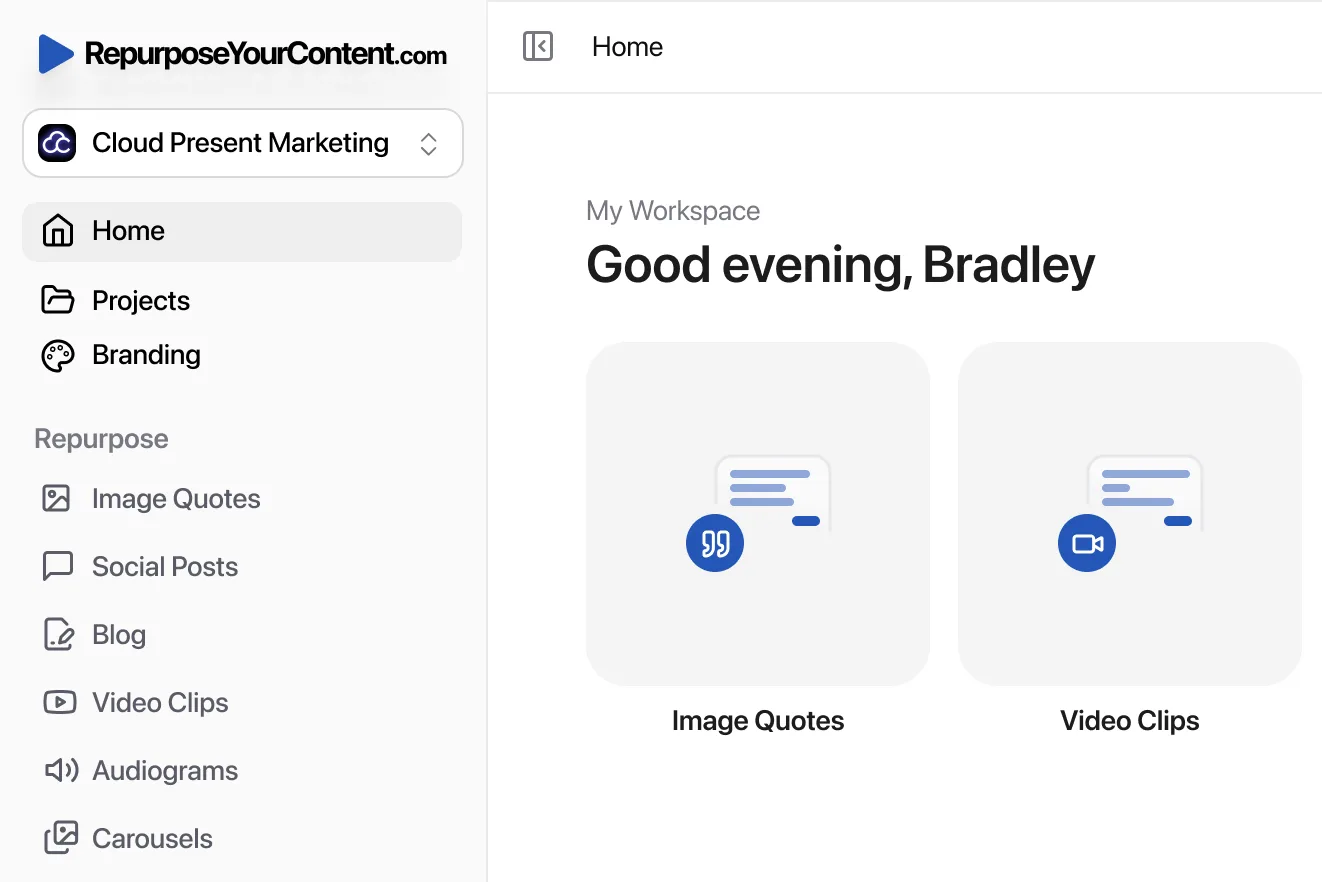
RepurposeYourContent automates this entire workflow. Upload one webinar recording. Our platform automatically identifies key moments. It generates dozens of ready-to-post vertical video clips. Each clip is perfectly formatted for LinkedIn with a 9:16 aspect ratio. The system also adds dynamic, burned-in captions to maximize engagement in sound-off environments.
Our AI can also generate:
- Full-length blog posts
- Ready-to-send newsletters
- LinkedIn carousels
- Audiograms for podcasts
- Image quotes
- Video timestamps
This means you can go from a one-hour webinar to a month’s worth of high-performing content in minutes, not days. Stop wasting your best content. Start turning it into your most powerful marketing asset.
Ready to see how it works? Try RepurposeYourContent today and transform your webinar library into a content engine.
Tags: