Your Video Marketing Strategy for B2B in 2026 Is Broken. Here's How to Fix It.
Discover a practical video marketing strategy B2B 2026 to build pipeline, boost engagement, and prove ROI with a modern framework.

You just spent £10,000 on a corporate video. It's sleek, polished, and gathering digital dust. Your lead count is zero.
This story is common. B2B marketers spend huge budgets on high-production videos buyers ignore. If this is you, your model is broken. A successful video marketing strategy B2B 2026 must abandon that old playbook.

Why Most B2B Video Fails
The problem isn't video. The problem is what buyers now expect from video. Slick corporate videos feel like ads. Buyers are experts at tuning out ads.
They don't want a sales pitch. They want you to teach them something valuable.
96% of people use explainer videos to learn about a product. They actively seek your expertise, not a polished advertisement. Your strategy must reflect this reality.
The Decline of Polished Corporate Video
For years, the B2B video playbook was simple. Hire an agency. Script a perfect message. Produce a flawless video. That playbook is now obsolete.
This high-production, low-authenticity approach fails for three reasons:
- It drains resources: A single 3-minute video can cost over £10,000. It can take months to produce. The ROI is nearly impossible to justify.
- It fails the trust test: 60% of B2B buying leads are now Millennial decision-makers. They grew up online and spot inauthentic marketing instantly. They prefer raw, expert-led content.
- It doesn't scale: You need a constant stream of content. Slow, expensive projects cannot keep up. You need content for LinkedIn, YouTube, your blog, and email.
The New Playbook: Authentic, Expert-Led Content
So what do buyers want? They want direct access to the real experts inside your company. They value unscripted conversations, live Q&As, and practical demonstrations.
Your video marketing strategy B2B 2026 must focus here.
Stop creating one-off productions. You need a system to create and distribute authentic content at scale. The most efficient source is your webinars. A single webinar gives you an hour of your best people solving real customer problems. That is a goldmine of authentic video. You can find out more about how to get more value from webinars.
This isn't about making more video. It's about making the right kind of video. Do it efficiently. Stop wasting your budget on videos nobody watches. Start building a system that turns expertise into a pipeline-driving machine.
A Six-Step Video Marketing Strategy for B2B in 2026
A successful video strategy isn't about chasing trends. It's about building a repeatable system that delivers predictable results. Stop treating video like a series of creative projects. Start building a proper engine for growth.
This framework breaks the process into clear stages. It is for busy B2B marketers who need a practical plan, not abstract theory. Follow these steps to build a strategy that moves the needle on pipeline and revenue.
The B2B Video Framework At-A-Glance
| Stage | Key Action | Primary Outcome |
|---|---|---|
| 1. Define Goals | Set specific goals tied to business results. | A clear purpose for every video you create. |
| 2. Choose Formats | Select core, high-value video formats. | A consistent source of expert content for your strategy. |
| 3. Establish Cadence | Set a realistic and repeatable production schedule. | A steady stream of content without team burnout. |
| 4. Build Pipeline | Create an automated repurposing workflow. | Maximum ROI from a single long-form video. |
| 5. Distribute | Share repurposed assets across target channels. | Increased reach and engagement with your buyers. |
| 6. Measure | Track KPIs that link directly to pipeline and revenue. | Actionable data to prove value and optimize. |
Each part of this framework builds on the last. It turns chaos into a well-oiled machine.
Step 1: Define Your Goals
Before you hit record, know your objective. Every video must have a purpose beyond views. Tie your goals to real business outcomes.
What are you trying to achieve?
- Generate qualified leads for sales?
- Build brand awareness in a new market?
- Improve product adoption and reduce churn?
- Establish your CEO as a thought leader?
Each goal requires different content and distribution. A lead generation video needs a clear CTA. A thought leadership piece needs authentic expertise. Get clear on your goals and your audience. Your video content must align with what they need at each stage of their journey.
Step 2: Choose Your Core Video Formats
You don't need to be everywhere. For B2B marketers, focus is your advantage. Efficient strategies for 2026 will use a few core video formats.
Your core formats could be:
- Webinars: The most efficient B2B format. They generate leads and give you an hour of expert content to repurpose.
- Video Podcasts: Ideal for building a loyal audience through deep-dive conversations.
- Customer Interviews: Authentic social proof from happy customers builds trust.
- Product Demos: Clear walkthroughs that show your product solving a real problem.
For most B2B teams, webinars are the smartest place to start. They generate high-intent leads and provide the raw material for your entire content calendar. They are the cornerstone of a scalable strategy.
Step 3: Establish a Production Cadence
Consistency beats production value every single time. A slightly imperfect video published weekly delivers more value than one perfect video per quarter. Your audience needs to hear from you regularly.
Establish a production cadence you can maintain. For example, commit to one high-value webinar each month. That single event becomes the heart of your content production for the next 30 days.
This approach eliminates the "what should we post today?" panic. Your cadence creates a predictable workflow. It ensures a steady flow of authentic content from your experts. It turns content creation from a chaotic mess into a manageable process.
Step 4: Build a Repurposing Pipeline
Manually cutting up a one-hour webinar is a huge bottleneck. It's slow and expensive. Valuable insights get lost. An automated repurposing pipeline is the solution. This is how you turn one webinar into a full-funnel campaign at scale.
Here is a simple workflow example:
- Step 1: Host your monthly webinar.
- Step 2: Upload the recording to a purpose-built repurposing tool.
- Step 3: The tool's AI identifies key topics and automatically generates dozens of content assets.
How RepurposeYourContent helps
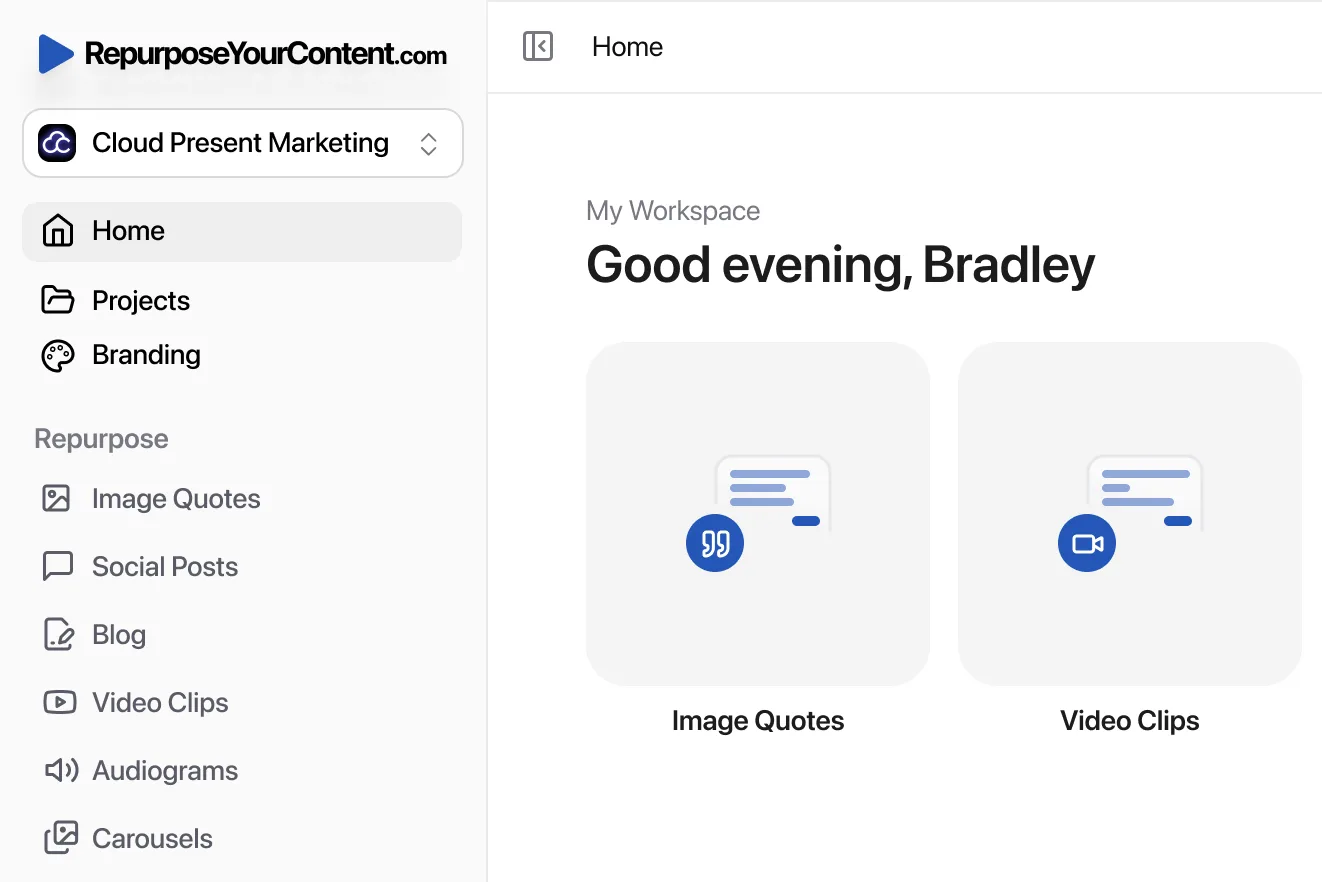
RepurposeYourContent was designed for this exact workflow. You upload one webinar recording. Within minutes, you get a complete set of marketing assets. All are automatically branded and ready to publish.
These assets include:
- Short, punchy video clips for LinkedIn, YouTube, and ads.
- SEO-optimised blog posts from your expert's spoken words.
- Ready-to-publish social posts and threads.
- Branded LinkedIn carousels that summarize key takeaways.
- Audiograms for sharing powerful audio moments.
- Image quotes, newsletters, and generated timestamps.
This system can turn one 60-minute session into 47 unique pieces of content. This is a core part of our content multiplication framework. It's how you scale output without scaling your team or budget. For more on video ad formats, see The Ultimate Guide to Video Ads in Digital Marketing.
Step 5: Distribute Across Channels
Creating content is only half the job. Your distribution plan ensures it reaches the right people. Focus your energy where your buyers are active. For most B2B companies, that is LinkedIn.
Use your repurposed assets to create a "surround sound" effect. Share video clips in the feed. Post the blog on your site. Use the carousel to spark engagement. Send the best insights in your newsletter. Check our guide on LinkedIn content strategy for B2B in 2026.
Step 6: Measure What Matters
Finally, measure what matters. Forget obsessing over views and likes. Track metrics that mean something to the business. Track lead conversions, pipeline influence, and sales cycle velocity.
Ready to build a video strategy that delivers real results? Stop wasting time on one-off videos. Start building a scalable content engine.
Why Webinars Are Your Most Efficient Video Asset
If you create webinars, you are sitting on your most valuable video asset. Too many B2B marketing teams miss this. A one-hour webinar is not a one-off event. It is a content goldmine for your video marketing strategy B2B 2026.
I see teams stuck in a painful production cycle. They pour time and budget into creating one-off videos from scratch. It's slow and expensive. You cannot keep up with the demand for content on LinkedIn.
Webinars change the entire equation. They serve a dual purpose that makes them the smartest foundation for any B2B video strategy. You get high-intent leads from the live event. You also get a long-form asset packed with your company's best thinking.

Think Efficiency, Not Just Events
Consider the effort. To produce a standalone video, you must script, schedule, film, and edit. The final product is often a short, polished video. It can feel promotional. Buyers can smell a sales pitch.
Now, think about a webinar. You get your best experts to talk about a topic they know deeply. The conversation is authentic and unscripted. It is focused on solving real problems. That is exactly what B2B buyers want.
By making webinars your core content pillar, you stop the high-effort, low-return production grind. You move to a smarter system where one hour of an expert's time fuels an entire campaign.
This single shift solves your content creation bottleneck. Instead of asking, "What will we post today?", your calendar is full. That one webinar recording can become 30+ days of marketing content. For a deeper look, check our guide on building a B2B webinar content strategy.
From a Single Event to a Content Engine
The secret is to stop thinking of webinars as one-and-done events. A webinar is not the final product. It is the raw material for your content machine. That recording is packed with dozens of potential clips, quotes, and talking points.
The process is simple:
- Step 1: Host a webinar that delivers real value.
- Step 2: Review the recording and pinpoint the best moments. Find the powerful insights, surprising stats, and customer stories.
- Step 3: Break that long-form video into smaller assets for different channels.
This process, called atomization, turns your expert's knowledge into a huge library of content. We've seen teams use advanced content repurposing strategies to turn one video into dozens of unique assets.

How RepurposeYourContent helps
Manually cutting up a webinar is a massive time sink. Editing video, writing posts, and designing graphics takes days. This is where automation gives you a strategic advantage.
We built RepurposeYourContent to do this job in minutes, not days. You upload your webinar recording. Our AI transforms it into a full suite of ready-to-publish assets.
This isn't just a few clips. You get:
- Short video clips with captions for LinkedIn.
- SEO-optimised blog posts from what your experts said.
- Engaging LinkedIn carousels that break down the main takeaways.
- Ready-to-go social posts for all your key platforms.
- Audiograms for sharing punchy soundbites.
- Branded image quotes featuring your speakers.
- A complete email newsletter ready to send to your list.
- Generated timestamps to help viewers navigate the full recording.
Instead of spending a week editing, you can turn a 60-minute webinar into 47 unique pieces of content in about five minutes. It's a systematic approach that guarantees you get maximum value from your best content. Find out how to automate your webinar repurposing.
Frequently Asked Questions About B2B Video Strategy
You have the framework. You see the value in shifting from polished videos to authentic expert content. But a few practical questions always come up.
Here are the straight answers to the questions we hear most often.
What Equipment Do I Need to Get Started?
You need far less than you think. You don't need expensive cameras or lighting rigs. For a strategy built on authentic webinars, your priority is crystal-clear audio.
- Audio is King: A good USB microphone is non-negotiable. A £100 mic like a Blue Yeti or Rode NT-USB will make your experts sound professional. Bad audio makes great advice unwatchable.
- Video is Simple: A decent webcam is all you need. Most modern laptops have a good 1080p camera. If you want a small upgrade, a Logitech C920 is inexpensive and effective.
- Lighting is Easy: Forget complex lighting setups. Have your speaker face a window for natural light. A simple ring light for around £30 is a solid alternative.
The goal is clarity, not cinematic perfection. Your audience values the expert's insights far more than the production value. Put your budget where it matters: clean audio.
How Do I Measure the ROI of Repurposed Video?
Vanity metrics like views and likes won't convince your board. You must connect your video efforts directly to business results. Track what happens after the view.
First, define a "win" for each piece of content. A short clip's goal might be driving traffic to a blog post. The blog post's goal might be capturing an email address.
Next, set up your analytics to follow the user's journey. Use UTM parameters on all your links. This shows which videos and posts drive the most valuable actions on your website.
Here is a typical journey:
- A prospect watches a repurposed webinar clip on LinkedIn.
- They click the link (with a unique UTM tag) to read the full blog post.
- On the blog, they download a related guide, becoming a new MQL.
By connecting these dots, you can attribute that new lead back to the video clip. The conversation changes from "How many views did we get?" to "How much pipeline did this webinar generate?".
How Often Should I Publish New Video Content?
Consistency beats frequency. A sustainable rhythm is more effective than frantic bursts followed by silence. For most B2B teams, a strategy centered on one monthly webinar is the most realistic approach.
This cadence sets a manageable pace.
- Month 1: Host one high-value webinar.
- The next 30 days: Use an automated tool to repurpose that recording. You can publish 2-3 repurposed assets (clips, carousels, posts) every week.
This rhythm ensures you are constantly in front of your audience. You provide valuable content without burning out your team. It creates a predictable content engine. It turns one event into an entire month of marketing.
Stop the random acts of video. Build a system that turns your team's expertise into a pipeline-driving machine. Try RepurposeYourContent today and see how you can turn one webinar into 47 pieces of content in minutes.
Tags: