What is Post-Production?
Post-production is the editing and refinement phase that occurs after content has been recorded. In a content repurposing context, post-production includes every step between the raw webinar recording and the final published assets: clipping highlights, adding captions, applying brand elements, reformatting for different platforms, writing accompanying copy, and quality review.
The term comes from film and television, where post-production traditionally referred to editing, color grading, sound mixing, and visual effects. In B2B marketing, the scope is different but the principle is the same: raw source material goes in, polished assets come out. For a typical webinar repurposing workflow, post-production is where the bulk of the time investment happens - and where automation delivers the most impact.
Core post-production tasks for webinar repurposing
- Trimming and cleaning: Removing waiting room footage, housekeeping announcements, dead air, and technical glitches from the recording.
- Clipping: Identifying and extracting the strongest 60-90 second segments as standalone video clips - key insights, quotable moments, data reveals, and audience Q&A exchanges.
- Captioning: Adding accurate subtitles to every video asset, since the majority of social media video is consumed with sound off. This includes burn-in captions for social clips and separate SRT/VTT files for platforms that support them.
- Branding: Applying logos, color overlays, intro/outro frames, lower thirds, and other visual identity elements through a Brand Kit.
- Format adaptation: Exporting assets in the correct aspect ratios and specifications for each target platform - square for LinkedIn, vertical for TikTok and Reels, landscape for YouTube.
- Copy and metadata: Writing headlines, descriptions, social captions, show notes, and SEO metadata for each published asset.
Why Post-Production Matters for B2B Marketers in 2026
Recording a webinar is the easy part. The real work - and the real value creation - happens in post-production. A raw 45-minute recording has limited distribution potential. But a well-executed post-production workflow transforms that single recording into dozens of polished, platform-ready assets that can fuel weeks of content distribution.
Problems efficient post-production solves
- Production bottleneck: Most content teams cite post-production as the biggest bottleneck in their repurposing workflow. A single webinar can take 6-8 hours of manual editing to produce all derivative assets. AI-powered post-production tools compress that to under 30 minutes.
- Inconsistent quality: When different team members handle post-production manually, the output varies in quality, branding, and formatting. Standardized post-production workflows - especially those driven by a Brand Kit - ensure every asset looks professional and on-brand.
- Missed publishing windows: By the time manual post-production is complete, the webinar content may be days or weeks old. Faster post-production means you can publish recap content, highlight clips, and social posts while the topic is still fresh and the momentum from the live event is highest.
- Underutilized recordings: Many marketing teams record webinars but never fully repurpose them because post-production feels too time-consuming. The recording sits in a drive, and the content investment goes unrealized. Streamlined post-production removes this barrier entirely.
Real-World Examples
Same-day webinar repurposing
A B2B SaaS company hosts a live webinar at 11am. By 3pm the same day, the content team has published: an on-demand replay with trimmed intro, 6 video clips with captions and branding, a blog post recap, and 4 social posts with clips attached. This speed is only possible with automated post-production - the same workflow done manually would have taken two to three business days.
Agency post-production pipeline
An agency manages webinar repurposing for 8 clients. Each client produces 2-4 webinars per month. The agency uses a standardized post-production workflow: upload recording, apply client's Brand Kit, auto-generate clips in three aspect ratios, add captions, generate blog and social copy, then send for client approval. What previously required a full-time editor now takes one person a few hours per client per month.
Conference content at scale
A demand gen team captures 12 sessions at a two-day conference. Rather than spending weeks in post-production, they run all 12 recordings through an automated workflow over a single afternoon. The result: 80+ branded clips, 12 blog summaries, and a complete content calendar of social posts ready to drip out over the following 6 weeks.
How RepurposeMyWebinar Makes Post-Production Easy & Fast
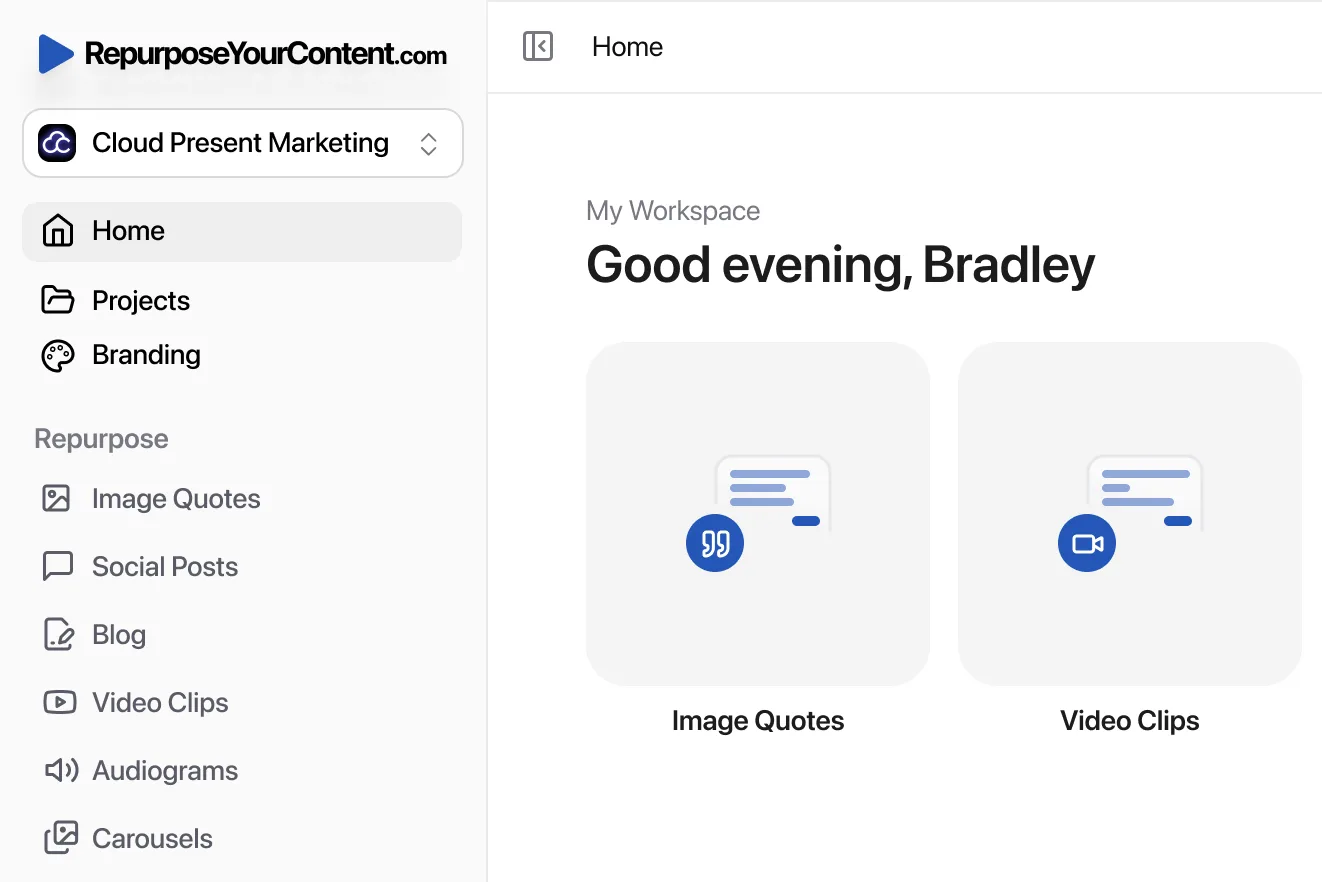
Traditional post-production means juggling video editors, design tools, transcription services, and copywriters. RepurposeMyWebinar consolidates all of that into one automated pipeline, so your team's role shifts from production to review:
- Upload your raw recording - paste a link from any supported platform or drag and drop a file. The platform handles transcription, moment detection, and content analysis in the background.
- AI handles clipping and captioning - the strongest segments are extracted as video clips in multiple aspect ratios, with burned-in captions generated automatically.
- Brand Kit ensures consistency - logos, colors, fonts, and tone settings are applied to every output, from blog posts and social posts to audiograms and quote cards. No manual branding work needed.
- Review and refine - scan the outputs, make any final adjustments in-platform, then download or schedule. Same-day turnaround on post-production that used to take a week.
Eliminate your post-production bottleneck. See pricing or learn how to edit webinar recordings for marketing.
Post-Production vs Similar Concepts
| Concept | What it means | How it differs |
|---|---|---|
| Post-Production | Editing and refining recorded content into publish-ready assets | The technical production phase; one step within a larger repurposing workflow |
| Content Repurposing | The strategic practice of adapting content into new formats | The overarching strategy; post-production is the execution phase within it |
| Clipping | Extracting short segments from a longer recording | One specific task within post-production, focused on segment extraction |
| Format Adaptation | Adjusting content for different platform specifications | Another specific post-production task, focused on platform-specific formatting |
Frequently Asked Questions
With manual editing, post-production for a single 45-minute webinar can take 4 to 8 hours - including clipping highlights, adding captions, applying branding, writing copy for each asset, and exporting in multiple formats. With AI-powered tools like RepurposeMyWebinar, the same workflow can be completed in under 30 minutes because the platform handles clipping, captioning, branding, and format adaptation automatically.
Traditional post-production tools include Adobe Premiere Pro, Final Cut Pro, DaVinci Resolve, and Descript for video editing, plus Canva or Adobe Express for graphic assets. However, these general-purpose tools require significant manual effort for each output format. Purpose-built repurposing platforms like RepurposeMyWebinar streamline the process by combining clipping, captioning, branding, and multi-format export into a single automated workflow.
Post-production is the technical process of editing, refining, and preparing content for publication. Content repurposing is the strategic practice of adapting one piece of content into multiple formats for different channels and audiences. Post-production is a step within the repurposing workflow - you repurpose by deciding what formats to create, then you use post-production to actually produce them.
It depends on your volume and budget. For teams producing one or two webinars per month, an in-house editor or AI tool is usually sufficient. For high-volume programs (weekly webinars, multiple event recordings), outsourcing to a freelance editor or agency can help scale. Many teams find the best approach is using an AI-powered platform for the bulk of the work and reserving human editors for final polish on high-priority assets.
The critical steps are: trimming dead air and housekeeping from the start and end, identifying and clipping the strongest 60 to 90-second segments for short-form video, adding captions (since most social video is watched on mute), applying brand elements like logos and color overlays, reformatting for each platform's specifications (square for LinkedIn, vertical for TikTok), and writing accompanying copy for each asset. Quality review before publishing is also essential to catch errors.