Your Content Operations Playbook for B2B: Stop the Chaos, Scale Your Output
Stop the content chaos. Use this content operations playbook for B2B to build a scalable content engine, define workflows, and prove your impact on revenue.

Your team is creating content, but the process is chaotic. Deadlines slip. Sales can't find the case study they need. Proving ROI feels impossible. This isn't a people problem. It’s a process problem. A content operations playbook for B2B turns that chaos into a calm, predictable system for planning, creating, and distributing content.
This playbook is your single source of truth. It stops the cycle of burnout and scales your output. You stop throwing more people at the problem and start fixing the system.

From Content Chaos to a Predictable System
A structured playbook has a direct impact on your bottom line. It moves your content team from a cost center to a reliable growth engine. The playbook defines your entire content supply chain. This is the end-to-end process that governs how every marketing asset gets made. It covers ideation to measurement.
Without this, you run on fragile, manual workflows. Every new campaign is a guessing game. This leads to wasted effort and inconsistent results. For a deeper look at this strategy, read Maria Deac's High Trust B2B Content Playbook.
A streamlined operation is not optional. B2B organizations generated 46% of their revenue from digital channels in 2023. That is a huge leap from 33% in 2021. Your content operation is a core driver of that revenue.
A content operations playbook forces you to answer hard questions. Who is responsible for what? How do we measure success? What does our workflow look like from start to finish? Answering these questions turns chaos into clarity.
When you document your processes, you build a system that is:
- Predictable: You know exactly how long it takes to produce and distribute content. No more guesswork.
- Scalable: You can increase output without adding chaos or doubling your headcount.
- Accountable: Everyone understands their role and how their work connects to business goals.
This operational rigor is the foundation of any modern B2B marketing function. It’s the first step in building a true content machine that delivers consistent value. We explore this further in our guide on how to build a content engine for B2B.
This guide provides the framework to build your own playbook. We will cover defining your workflows, structuring your team, and picking the right tools.
Building Your B2B Content Supply Chain
For many marketing teams, content creation is a constant scramble. It feels more like a cost center than a predictable revenue driver. What you need is a content supply chain. Think of it as the assembly line for all your marketing assets. This system takes a rough idea and turns it into a measurable result, every time. This is the core of a modern content operations playbook for B2B.
The 5 Stages of a Modern B2B Content Supply Chain
The supply chain has five distinct stages. Mapping out each stage stops valuable assets from getting lost. It ensures every piece of content pulls its weight.
This table breaks down each stage:
| Stage | Key Focus | Primary Outcome |
|---|---|---|
| 1. Ideation & Planning | Sourcing ideas that align with commercial goals and audience problems. | A prioritized backlog of validated content ideas. |
| 2. Creation & Production | Turning ideas into high-quality, on-brand pillar assets. | A polished, approved piece of pillar content (e.g., webinar, guide). |
| 3. Repurposing & Extraction | Systematically multiplying the value of one pillar asset into many. | A full suite of derivative assets for multiple channels. |
| 4. Distribution & Promotion | Getting the right assets in front of the right people at the right time. | Consistent channel presence and targeted audience reach. |
| 5. Measurement & Optimisation | Connecting content performance back to business-level KPIs. | Actionable data to improve the entire supply chain. |
Getting this right isn't just about being organized. It's about making your content a strategic, predictable part of your growth engine.
How to Get Your Supply Chain Moving
First, Master Your Ideation
Good ideas are not random. They come from a system. Your ideation process must connect to what your sales team hears. It must solve your customers' problems.
Create a central place for ideas. An Airtable base or an Asana project works well. The crucial part is tagging every idea. Tag the target audience, buyer stage, and the business goal it supports.
Next, Standardize Production
This is where most delays and budget blowouts happen. Your production workflow must be standardized. For a single blog post, define who does what, and when.
For instance:
- Step 1: Content strategist creates the brief.
- Step 2: Writer produces the first draft.
- Step 3: Internal expert checks for accuracy.
- Step 4: Editor refines voice, style, and flow.
- Step 5: Designer creates custom visuals.
- Step 6: Head of Content signs off.
For each step, you need clear ownership and expected timelines. A RACI model is excellent for this. Accountability is everything.
Then, Make Repurposing Your Highest-Leverage Step
Repurposing is the single highest-leverage activity in your supply chain. You pour immense time and budget into creating one pillar asset, like a webinar. Repurposing is how you multiply that investment.
A single one-hour webinar holds enough material for a month of content. If you aren't repurposing it, you're throwing away over 95% of its potential value.
This isn't about just trimming a video. It is about systematically pulling out different ideas and formats for different channels.
How RepurposeYourContent Helps
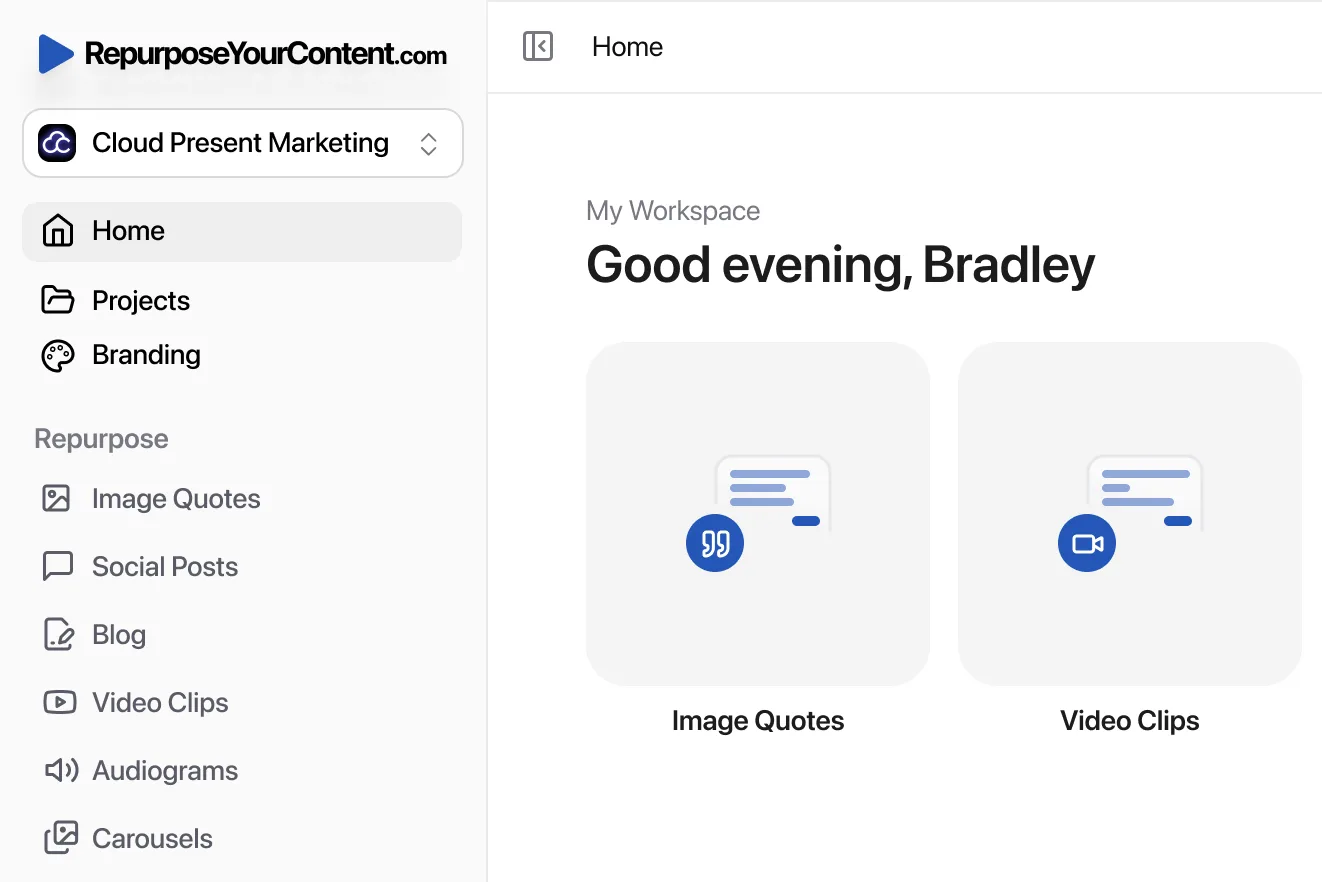
This is exactly where RepurposeYourContent fits into your supply chain's repurposing and extraction layer. You upload one webinar. Our platform generates a full campaign's worth of assets:
- Dozens of short video clips for social media and ads.
- A full-length SEO blog post with embedded timestamps.
- Ready-to-send newsletters highlighting key insights.
- Compelling image quotes for social media.
- Multi-page LinkedIn carousels to break down complex ideas.
- Clean audiograms to promote your content like a podcast.
It automates the most time-consuming part of the process. It turns one webinar into 47 pieces of content. Suddenly, you have weeks of material ready for distribution.
Finally, Distribute and Measure
Content has zero value if no one sees it. Your playbook needs a clear distribution checklist for every asset you create. Measurement closes the loop. This isn't about vanity metrics. It's about tying content performance to real business outcomes. You should track leads generated, sales pipeline influenced, and customer retention. That data then feeds back into the ideation stage. Your entire system gets smarter with every cycle.
Structuring Your Content Team For Scale
You can have the best systems and tools. But if nobody knows who does what, you just have expensive chaos. Scaling content does not mean hiring an army of writers. The key to scaling is getting your team structure right. It’s about defining clear ownership to prevent bottlenecks. This is the human side of your content operations playbook for B2B.
Core Roles in a B2B Content Team
Building a killer content marketing team structure is fundamental. Job titles can change, but the functions are consistent. On a small team, one person may wear multiple hats. These core functions always need an owner.
- Head of Content/Content Strategist: This person owns the "why". They manage the content strategy and budget. They ensure everything created ties back to business goals. They are accountable for results.
- Content Operations Manager: This person owns the "how". They are the engine of your playbook. They manage the tech stack and the editorial calendar. They make sure workflows are followed and remove friction from the process.
- Content Creator (Writer/Videographer): These are your storytellers. They turn briefs and raw ideas into high-value pillar content. This includes webinars, in-depth guides, and articles.
- Editor/QA Specialist: This person is the guardian of your brand's quality and voice. They ensure every piece of content meets your standards. They check for errors and brand consistency.

Repurposing is not a bonus task. It is a dedicated, vital stage that multiplies the value of your initial effort.
Defining Ownership with a RACI Model
Ambiguity kills efficiency. A RACI (Responsible, Accountable, Consulted, Informed) chart is the simplest way to map out who does what. It connects every task to a role so nothing falls through the cracks.
The golden rule of RACI: only one "A" (Accountable) per task. If two people are accountable, no one is. This single point of accountability is the secret to a workflow that flows.
Here is a sample RACI for a webinar repurposing workflow:
| Task | Head of Content | Content Ops | Creator | Editor |
|---|---|---|---|---|
| Select webinar to repurpose | A | R | I | I |
| Upload to RepurposeYourContent | I | A, R | I | I |
| Generate video clips & blog | I | A | R | I |
| Review & edit generated assets | C | I | R | A |
| Schedule assets for distribution | I | A, R | I | C |
| Report on performance | A | R | I | I |
This chart removes guesswork. The Creator knows who reviews their work. The Head of Content knows who is on the hook for getting assets scheduled. This clarity is a non-negotiable step for any team looking to grow. Our solutions for content teams show how the right platform can help.
Structure creates freedom. When your team isn't burning energy figuring out who to ask or what to do next, they can focus. They can create brilliant content that moves the needle.
Assembling Your Content Operations Tech Stack
The right tools make or break your team's efficiency. A solid tech stack isn't about collecting every new app. It's about building an integrated system that automates grunt work and breaks down silos. Your stack should provide a single source of truth.
Think of your stack as a content supply chain. Each tool is a different station. Your content assets must flow smoothly from one to the next.
Project Management & Ideation
This is your mission control. It keeps everyone aligned and manages the entire process from a single dashboard. A good project management tool is non-negotiable.
- Project Management & Editorial Calendar: Tools like Asana or Trello turn your editorial calendar into a living workspace. You can assign tasks, set deadlines, and spot bottlenecks.
- Ideation & SEO: Great content starts with knowing what your audience is looking for. SEO tools like Ahrefs or Clearscope help you find valuable keywords and analyze competitors.
Content Creation & Production
This is where you turn ideas into content. The tools in this layer must make collaboration easy and on-brand. They must help you get maximum value from your pillar content.
- Content Creation: Google Docs is the standard for collaborative writing and editing. For visuals, Canva or Figma empowers your team to create social graphics without a designer.
- Repurposing & Extraction: This is the engine of your tech stack. After you create a pillar asset like a webinar, the job isn't done. The next step is to break it down into dozens of smaller assets.
How RepurposeYourContent Fits In
We built RepurposeYourContent specifically for this "Repurposing & Extraction" layer. You upload your webinar recording. Our platform generates all the derivative assets you need to fuel your marketing channels.
It turns your one-hour video into:
- Engaging short video clips for social media.
- An SEO-optimized blog post with timestamps.
- Ready-to-go social posts and LinkedIn carousels.
- Audiograms, image quotes, and a newsletter series.
It automates the most time-consuming part of the process. It turns one asset into 47 pieces of content. This is how you fill your distribution channels without burning out your team. You can explore more best webinar repurposing tools in our other guides.
Distribution & Analytics
Finally, you need to get content in front of your audience and measure what happens. This part of the stack closes the loop. It gives you the data to make smarter decisions.
- Distribution & Scheduling: Platforms like Buffer or HubSpot let you schedule repurposed assets across social channels. This maintains a consistent presence without manual effort.
- Analytics: You must measure what matters. Google Analytics and HubSpot’s reporting tools connect content performance to business goals like leads, pipeline, and revenue. That is the data that proves your value.
Repurposing is the workhorse of any smart content operation. It turns a single, high-effort piece of content into a steady stream of material. A tool like RepurposeYourContent slots into your tech stack to maximize the value of your best assets.

This is how you stop creating one-off pieces. You start building multi-channel campaigns from a single source of truth. It’s a core part of any effective content operations playbook for B2B.
A Real-World Workflow Example
You just finished a webinar on "Scaling Account-Based Marketing". The old way involves posting the recording and asking someone to pull a few clips. That is not a system; it's a bottleneck. Here’s the new, streamlined workflow.
- Step 1: Your Content Ops Manager uploads the Zoom recording to RepurposeYourContent. They select the assets they need: 10 video clips, 1 blog post, 1 LinkedIn carousel, and 5 image quotes.
- Step 2: Within minutes, the AI identifies the best soundbites and structures the blog post. It pulls the most compelling quotes and applies your brand kit automatically.
- Step 3: Your team reviews and distributes the assets. The writer polishes the blog's intro. The social media manager schedules the clips in Buffer. The entire process is done in under an hour, not days.
By automating this extraction process, you free up your team to focus on analysis and planning. This is how you build a predictable content engine that delivers.
Frequently Asked Questions
Here are common questions from Heads of Content about formalizing their content operations.
How Do I Get Buy-In to Invest in Content Operations?
You must speak the language of leadership: revenue and efficiency. Show them the numbers. A content operations playbook for B2B makes their existing investment work much harder.
Do a 'before and after' calculation. For instance: "Our last webinar cost $5,000 and gave us one video asset. With a repurposing workflow, that same $5,000 investment will produce 47 assets." You are not asking for more money. You are showing them how to multiply the ROI of what they already spent. This connects your playbook directly to pipeline and lead generation goals.
What Is the First Step if My Team Has Zero Formal Processes?
Do not try to document everything at once. You will get overwhelmed. Start small and focused. Pick your last major content campaign, like a webinar or guide. Map out every step it took to get that campaign from idea to launch.
Ask yourself:
- Who was involved at each stage?
- What did each person do?
- How long did each step take?
- Where did things get stuck?
This exercise will highlight your biggest bottleneck. Your first standard operating procedure (SOP) should fix that one problem. Nine times out of ten, it’s the gap between creating a pillar piece and distributing it. This makes repurposing the highest-impact place to start.
The goal is not a perfect system from day one. The goal is to find one broken cog in your content machine and fix it. That first win builds the momentum you need to tackle the rest.
How Often Should We Update Our Content Operations Playbook?
Your playbook must be a living document. A PDF filed away in a shared drive is useless. I recommend a formal review every quarter.
In that review, ask the team three key questions:
- Friction: Where is this process causing frustration or delays?
- Tools: Is our tech stack still helping us? Could new tools improve efficiency?
- Roles: Are our roles and responsibilities still clear?
A quarterly check-in is the sweet spot. It is frequent enough to stay agile. It also gives you enough time to see if your processes work. You're turning your process into a system that learns and adapts.
Your first content operations playbook for B2B will have flaws. That is fine. The real value is having a documented starting point that you can improve. Start small, prove the value with one workflow, and build momentum from there.
Ready to make your content work harder? Turn your next webinar into a full campaign with one click. Try RepurposeYourContent and get started today.
Tags: