Stop Guessing. Start Systemizing: An Editorial Calendar Template for Marketing Teams
Tired of the content scramble? Use our proven editorial calendar template for marketing teams to strategically plan, repurpose, and scale your content.

Your team published 17 pieces of content last month. Your calendar looks packed. So why does every week feel like a frantic scramble to get something out the door?
This is a classic symptom of a broken content workflow. An editorial calendar template for marketing teams is the fix. But it's not about just scheduling posts. It's about a fundamental shift in strategy: from creating content from scratch to repurposing content first.
Your Calendar Is Full But Your Pipeline Is Empty
It's a strange paradox. Your team manages dozens of content pieces, and the schedule looks full. But the creative process feels like putting out one fire after another.
You are not alone if this is your reality. You are starting from scratch with every blog post, social update, and email. This is inefficient.
The fix is a ‘repurpose-first’ mindset. Anchor your entire month's content around a single, high-effort event, like a webinar. Instead of asking "what new thing should we create today?", you ask "what can we create from our webinar?". This simple change moves your team from reactive to strategic and efficient.

Think of it this way: one webinar can become the wellspring for a month's worth of content. It can fill every channel you have. We built our downloadable editorial calendar template around this exact workflow. It ensures every piece of content has a clear purpose and a source. This eliminates guesswork and last-minute panic.
From Scramble to System
Webinars are powerful. 73% of B2B marketers name them as their top source for high-quality leads. But running the webinar is the easy part. The real work is what happens next. Many teams spend days manually chopping up one webinar into different formats.
A webinar-centric calendar moves your team from asking 'what are we posting today?' to 'how does this post support our monthly webinar theme?'
Suddenly, you're off the content treadmill. You no longer create for the sake of it. You build a proper content engine. One hour of a recorded webinar can fuel dozens of assets. Your messaging stays consistent. You surround your audience with valuable, related content across all channels. The result is a predictable and scalable content operation, not just a series of disconnected tasks.
Here is a content calendar that works for you, not against you.
A Walkthrough of the Repurpose-First Calendar Template
This isn't just another blank spreadsheet. It’s a strategic framework built for a repurposing-first content model. It gives your marketing team a single view of what’s happening, when, and why. It turns one big piece of content into a month’s worth of assets.
First, grab your copy of the Google Sheets Editorial Calendar Template here. Make a copy and save it to your Google Drive.
Now, let's break down the columns.
Editorial Calendar Template Column Breakdown
This table walks you through each column in the template. I’ve included its purpose and a simple example. This structure transforms a spreadsheet into a content command center.
| Column Name | Description | Example |
|---|---|---|
| Publish Date | The date the content asset goes live. Locking this in creates accountability and rhythm. | 25/10/2024 |
| Content Title | The working title or headline. This keeps everyone aligned on the angle. | 5 Ways to Repurpose Your Next Webinar |
| Content Type | The specific format of the asset. This helps you balance your content mix. | Blog Post |
| Target Keyword | The main SEO keyword you're optimizing for. Crucial for search-focused content. | webinar repurposing tips |
| Funnel Stage | Where this piece fits in the customer journey (TOFU, MOFU, or BOFU). Ensures strategic purpose. | TOFU (Top of Funnel) |
| Source | The key column. Is this piece Original (the source) or Repurposed from something else? | Original |
| Distribution Channels | All the places this single piece of content will be published. | Blog, LinkedIn, Twitter |
| Owner | The one person responsible for seeing this asset from idea to 'Published'. No more confusion. | Sarah P. |
| Status | A dropdown menu to track progress at a glance (Planned, In Progress, Published). | In Progress |
These fields give every piece of content a clear job to do. No more creating content for content's sake. The Source column is where the repurposing magic happens. By labeling content as Original (your webinar) or Repurposed, you see exactly how hard your pillar content works for you. Owner and Status are vital. Assigning one owner stops things from falling through the cracks. The status dropdown gives you an instant pipeline view.
When you distinguish between Original and Repurposed assets, you stop guessing. You start measuring. You can see how your team turned one webinar into a full month of content.
How RepurposeYourContent helps
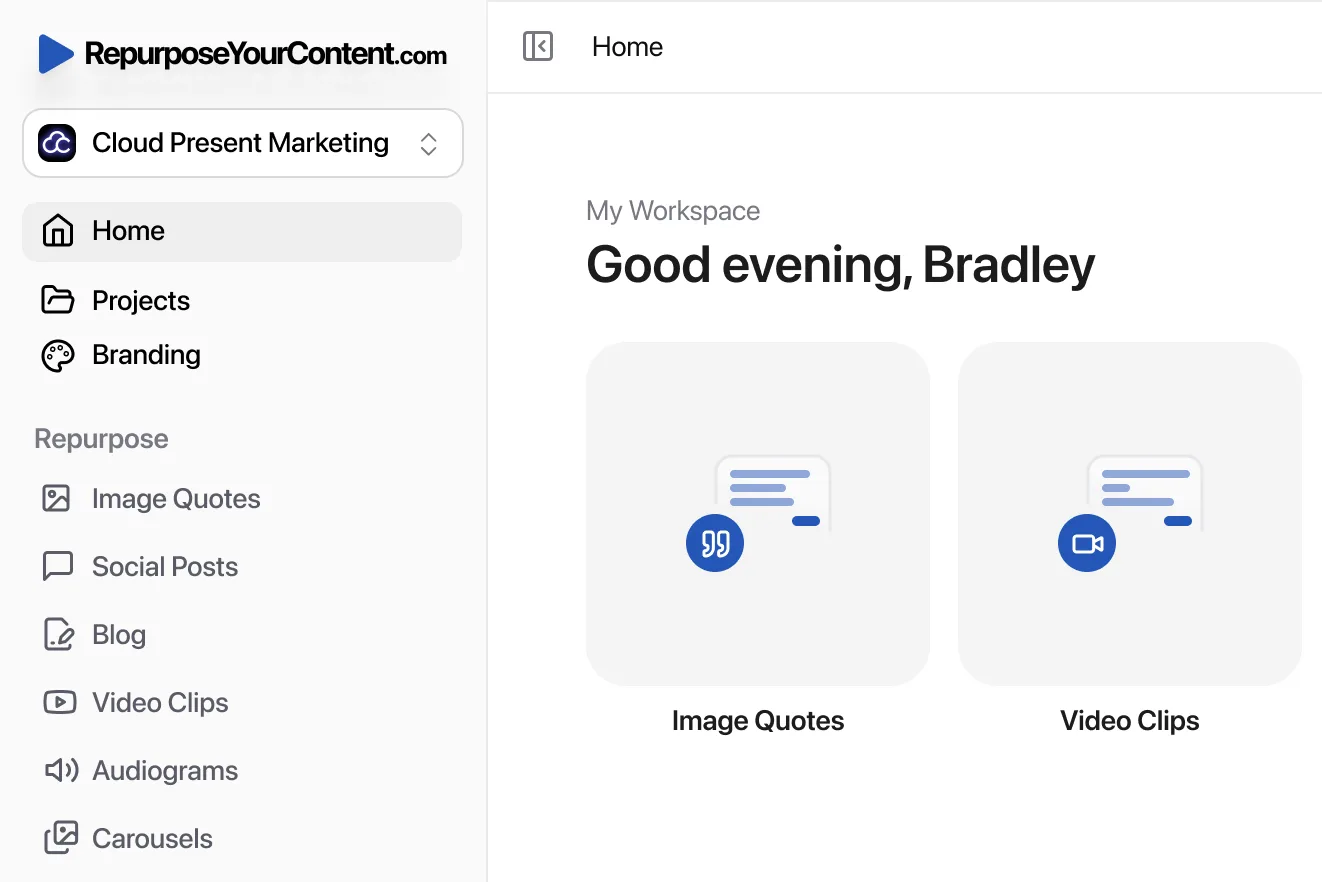
How do you fill all those 'Repurposed' rows without spending all week on it? This is where you upgrade your workflow. After you run your webinar, upload the recording to RepurposeYourContent.
Instead of manually chopping up video or transcribing audio, the platform automatically generates assets:
- Short, punchy video clips for social media.
- An SEO-optimized blog post from the transcript.
- Ready-made social posts.
- Branded image quotes and LinkedIn carousels.
- Audiograms with speaker quotes.
- A draft for your next newsletter.
- AI-generated timestamps to find key moments fast.
Your team’s job shifts from tedious creation to strategic scheduling. You take the assets and plug them straight into your calendar. An effective video content calendar template is the perfect home for this new content. What used to be days of work now takes 20 minutes. That is how you populate weeks of your editorial calendar from a single one-hour webinar.
How One Webinar Fuels a Month of Content
Let’s get practical. What does the "repurpose-first" idea look like day-to-day? I’ll walk you through how to use our editorial calendar template for marketing teams to turn one webinar into a month of content.
Picture this: your team just finished a webinar called 'Q3 Lead Generation Tactics'. The hour-long event is done. Now the real work begins. Your job is to take that one recording and create a multi-week campaign.
It’s a simple, repeatable process. You set up your calendar. You fill it with content mined from your webinar. You execute the plan.

Think of it as an assembly line: set up, fill, and execute.
A Sample Month in Action
Here’s a real workflow example for your calendar. Every piece of content stems from that one webinar.
Step 1: The Pre-Event Buzz (Week 1) This week is about getting registrations for the live event. Everything you post is 'Original' content in your calendar.
- Content: 3x LinkedIn posts, 2x email blasts to your list, and 1x LinkedIn event page.
- Goal: Drive as much live attendance as possible.
Step 2: The First Content Wave (Week 2) The webinar is done. You have the recording and transcript. Now you deploy the big assets.
- Content: Send the on-demand webinar to all registrants. Publish a 1,500-word SEO-friendly blog post from the transcript. Snip 3-5 short video clips of the best moments for LinkedIn.
- Goal: Grab the attention of people who attended the event and drive them to your blog.
Your editorial calendar needs to map out distribution for 2-4 weeks post-event. This is the sweet spot for engagement.
Step 3: The Mid-Funnel Nurture (Week 3) Time to dig deeper. You break the webinar into smaller, snackable formats.
- Content: Design and share a LinkedIn carousel with key stats. Your newsletter features the top 3 takeaways. Create 2-3 audiograms with powerful speaker quotes.
- Goal: Nurture leads who showed interest in Week 2’s content.
Step 4: The Long Tail (Week 4) Squeeze out every last drop of value. Create evergreen assets for your social feeds.
- Content: Post 4-5 image quotes from the speaker. Write another blog post on a specific question from the Q&A.
- Goal: Keep the conversation alive and build a library of easy-to-share content.
In one month, you turn one hour of work into over 20 unique pieces of content. Each one is tracked in your calendar with an owner and a deadline. This isn’t just churning out content; it’s building a strategic system.
This is the core of an effective B2B webinar content strategy that gets results. It’s how you stop scrambling for ideas and start building a content engine.
Putting Your Content Repurposing on Autopilot

You have the template and a solid workflow. The final piece is automation. Manually filling all those ‘Repurposed’ slots in your editorial calendar template for marketing teams can be a bottleneck. This is where you remove that manual hurdle. Your team's time is too valuable to be spent transcribing audio or chopping up video clips.
How RepurposeYourContent Feeds Your Calendar
This is how you get your new editorial calendar firing on all cylinders. You upload one webinar recording. The tool generates a suite of content assets, all branded and ready to go.
In minutes, you get a full content package from one recording:
- SEO-optimised blog posts created from the transcript.
- Dozens of short, punchy video clips with timestamps.
- A batch of ready-to-publish social posts.
- Branded image quotes highlighting key moments.
- Audiograms perfect for sharing on social media.
- A pre-built LinkedIn carousel to drive engagement.
- A solid draft for your next newsletter.
All these assets are generated with your brand kit applied. Your team can then take this content and populate the ‘Repurposed’ rows in your calendar for the next three to four weeks. An efficient content strategy is knowing how to repurpose content effectively and transforming a single source into dozens of assets. We've seen users turn 1 webinar into 47 pieces of content.
A job that would take a skilled video editor a full day can now be done in under 20 minutes. This is about reallocating your team’s brainpower to strategy and creative work.
Your New 20-Minute Workflow
Your process becomes simple, fast, and repeatable. What used to be a multi-day scramble now becomes a short, focused task.
- Host your webinar: Concentrate on delivering a high-value session.
- Upload the recording: Drop the video file into RepurposeYourContent. Let it generate your content assets.
- Populate your calendar: Grab the finished content. Fill in your editorial calendar for the next month.
- Schedule and publish: Use your scheduling tool to queue everything up.
This systematic approach is the fastest way to turn a webinar program into a lead generation machine. If you want to dig deeper, learn more about how to automate webinar repurposing.
Keeping Your Editorial Calendar a Living Document
A great plan is useless if it gathers digital dust. An editorial calendar's power is not in the initial setup. It's in how you use it every day. Your calendar needs to become the living heart of your content operation.
The biggest mistake is treating it as a 'set and forget' document. It should be the first thing your team opens every morning. This doesn't require hours of new meetings. It requires one disciplined, 30-minute content session each week.
Running Your Weekly Content Huddle
Think of this meeting as a quick, focused huddle. The goal is simple: review, adjust, and clarify. Keep it sharp and action-focused.
Your agenda should hit three points:
- Look at the week ahead. Is everything on track? Are there roadblocks? Update the 'Status' column in real-time.
- Check your backlog. Has something timely happened in your industry? Pull a repurposed asset from the 'Content Backlog' tab and slot it in.
- Assign work for two weeks out. Confirm who owns what for content scheduled in a fortnight. This gives everyone notice and a clear view of their pipeline.
This short, consistent meeting turns the calendar from a static plan into a dynamic tool. It builds accountability. It ensures the whole team is pulling in the same direction.
Managing the Content Backlog and Seasonal Shifts
In the template, you’ll find a 'Content Backlog' tab. This is your strategic reserve of content. It is filled with pre-made assets and repurposed clips from your webinars. When a gap appears in your schedule, pull a ready-to-go video clip from the backlog. No fuss.
It’s also crucial to make seasonal adjustments. Plan ahead for key dates like bank holidays or industry awareness months. Proactive planning, combined with a solid content operations playbook for B2B, means you are always prepared. When your team uses the calendar daily, you will feel the momentum build. It stops being a chore and becomes the tool that drives your strategy forward.
Stop the Scramble and Start Scaling
Staring at an empty content calendar is stressful. It leads to reactive, last-minute marketing that never hits the mark. A planned-out calendar fuels predictable growth.
Learning how to create a content calendar is non-negotiable for strategic marketing teams. But the secret is using a repurpose-first editorial calendar template for your marketing team, with webinars as the cornerstone. This is the smartest way to scale output without burning out your team. You have the template. You have the workflow. Now you just need to put it into action.
The value you create in your webinars should not disappear after the live event. Stop the scramble. Build a content engine that does the heavy lifting for you.
Got Questions? We’ve Got Answers
Once you have your calendar running, a few common questions always pop up. Let's tackle them so you can keep your content engine running smoothly.
How often should we update this?
Think of your calendar as a living part of your team. The sweet spot is a 30-minute weekly check-in. It's enough time to review upcoming content, check owners, and pivot if needed.
Beyond that meeting, updates must happen in real time. When a draft is finished or a post goes live, the owner must change its status. This keeps the calendar accurate and useful for everyone.
Isn’t this just a content calendar?
That's a great question. The distinction is crucial. A simple content calendar maps out what gets published, where, and when. It’s a basic schedule.
An editorial calendar is about strategy. It tracks the why behind your content: target keywords, funnel stage, owner, and source material. Our template is an editorial calendar, built for planning that drives results, not just filling slots.
How do you handle last-minute requests?
They will happen. But a well-oiled editorial calendar is your best defense. It cuts down on those "we need this now!" emergencies. When your team and stakeholders can see the pipeline, they learn to plan ahead.
For truly unavoidable emergencies, your 'Content Backlog' is your secret weapon. This is your library of repurposed assets from past webinars. Need a quick social post? Grab a relevant video clip or quote graphic from the backlog. You can satisfy the request without derailing your entire week.
A proper content engine isn’t just about creating new things. It's about having a ready-to-deploy arsenal of high-quality content you can pull from at a moment's notice.
Ready to see how fast you can fill your new calendar? Try RepurposeYourContent today and watch your next webinar become a month’s worth of strategic content in minutes.
Tags: