How to Create Podcast Show Notes From Recordings That Grow Your Audience
Learn how to create podcast show notes from recordings that drive traffic. Our guide covers SEO, templates, and automation for busy B2B marketers.

Only 15% of brands create content from their recorded webinars or podcasts. That means 85% of valuable conversations are left to collect dust. Your show notes are the fastest way to fix this. They turn a single audio file into a search-optimized asset that finds new listeners while you work on other things.
This guide shows you exactly how to create podcast show notes from recordings. You will learn what to include, how to format them, and how to optimize them to attract organic traffic. The same process works perfectly for webinar recap pages.
Why Your Podcast Show Notes Aren't Driving Traffic

You recorded a great episode. The insights were sharp and the guest was brilliant. But after you publish, you get no new listeners. The problem is almost always your show notes.
Most marketers write a short, uninspired paragraph. This does nothing to attract listeners or search engines. Your podcast is a powerful content engine. Weak show notes keep that engine switched off.
The True Cost of Weak Show Notes
For a busy B2B marketer, manually creating detailed notes is a huge time sink. The valuable insights are trapped in your audio file. Pulling them out is a chore. This leads to rushed, ineffective show notes that hurt your growth in three specific ways:
- Missed SEO: Search engines cannot listen to your audio. They rely on text. A short paragraph gives them nothing to index. Your episode remains invisible to people searching for your topic.
- Poor Engagement: New listeners scan show notes to decide if an episode is worth their time. Vague descriptions give them no reason to press play.
- Zero Lead Generation: Good show notes guide listeners to resources, your website, or your services. Without clear links and calls-to-action, you cannot convert listeners into leads.
This problem is growing. The UK podcast market has over 16 million weekly listeners. A massive 93% finish most episodes they start. The audience is engaged. But the manual work of creating show notes is a bottleneck. B2B marketers know webinars produce 73% of their best leads, yet the recordings often just sit there. No notes. No timestamps. No value.
Your show notes are not a summary. They are the sales page for your podcast. Their job is to convince someone that pressing play is the best use of their next 45 minutes.
From Audio File to Traffic-Driving Asset
Thinking of your show notes as a standalone content asset changes everything. The same principles apply to webinar recap pages. Both turn a one-time recording into an evergreen resource that drives organic traffic for years.
This requires a shift in process and better content distribution strategies. Instead of a quick summary, you need a structured page with a summary, timestamps, key takeaways, and resource links.
This does not have to take hours. The right process turns a necessary task into a strategic advantage. It extracts the full value from every recording you produce.
What to Include in High-Performing Show Notes
Effective show notes are not just a summary. They are a standalone piece of content built to attract search traffic. They turn casual visitors into loyal listeners.
Think of your show notes as the sales page for your audio. Their primary job is to convince someone that listening to your episode is worth their time. This exact logic applies to webinar recaps. Both formats spin a single recording into an evergreen asset.
Here is a template for show notes that perform.
1. A Compelling Summary
This is your hook, not a boring description. Your summary must grab your ideal listener by speaking to a specific pain point. It must be clear about the problem the episode solves.
Aim for 100-150 words. Weave your main keyword into the first few sentences. Give away enough to show the value, but not so much that they don't need to listen.
2. Precise Timestamps
You are busy. Your audience is too. Timestamps make your content easy to navigate. They let listeners jump directly to the parts that matter most to them. This greatly improves the user experience.
For SEO, Google often shows timestamps in search results as "Key Moments." This can significantly boost your visibility and click-through rate.
Use a clean format:
- (02:15) The biggest mistake B2B marketers make with event follow-up.
- (11:40) A 3-step framework for turning webinar attendees into sales leads.
- (24:05) How to calculate the true ROI of your virtual events.
3. Bulleted Key Takeaways
Most people scan online content. A bulleted list is the fastest way to communicate your episode's value. Each bullet point should be a clear, actionable insight.
Treat these like mini-headlines. Be specific and compelling. Avoid vague points like "Learn about marketing." Instead, write something like, "The 4-part email sequence that converts 23% of webinar leads."
4. Links to All Mentioned Resources
If you mention a tool, article, or book, link to it. This simple act turns your show notes into a valuable resource hub. It encourages people to bookmark the page and return later.
It is also a great networking tool. When you link to another company, let them know. This builds relationships and often encourages them to share your episode. For SEO, use descriptive anchor text. You can see an example in our guide on turning a webinar into a high-performing blog post.
5. Guest Bio and Links
If you have a guest, their bio is mandatory. Include a professional headshot, a short bio of 50-75 words, and links to their website and LinkedIn profile.
This adds credibility to your episode. It is also a simple way to thank your guest. A proper bio makes it easy for them to share the episode with their network, exposing your content to a new audience.
6. A Powerful Transcript Excerpt
You should include the full transcript for SEO and accessibility. But you should also feature a short, powerful excerpt in the main body of the notes. Choose a 100-200 word section that is particularly insightful or challenges a common belief.
This gives readers a taste of the conversation's quality. It can be the final nudge someone needs to stop reading and start listening.
A Simple Show Notes Template
Use this checklist to create comprehensive show notes every time.
| Component | What It Is | Why It Matters |
|---|---|---|
| Compelling Summary | A 100-150 word hook that frames the episode's core value. | Grabs attention and convinces people to listen. |
| Precise Timestamps | Clickable time markers for key topics in the episode. | Improves user experience and earns "Key Moments" in search. |
| Bulleted Takeaways | A scannable list of the most important, actionable insights. | Quickly communicates value to skimmers and boosts engagement. |
| Resource Links | Links to all tools, articles, or people mentioned. | Turns your page into a valuable hub and helps with networking. |
| Guest Bio | A short bio, photo, and links for your episode guest. | Adds credibility and encourages guests to share with their network. |
| Transcript Excerpt | A short, powerful quote or section from the conversation. | Previews the episode's quality and tone. |
A Practical Workflow For Creating Show Notes From Recordings
Creating show notes can feel like a chore. With a repeatable system, you can turn this task into a valuable asset. This workflow shows you exactly how to create podcast show notes from your recordings, fast.
Step 1: Start With an Automated Transcript
Never start from scratch. Your first move is to get an automated transcript of your recording. This text file is the foundation for everything else. It is far easier to edit existing text than to create it from memory.
A clean transcript lets you scan an entire conversation in minutes. You can search for keywords, spot themes, and pull quotes without scrubbing through the audio. Learn how to transcribe your video automatically to make this step nearly instant.
Step 2: Extract Themes and Memorable Quotes
With your transcript ready, read through it to find the best parts. Highlight the core arguments, surprising statistics, and actionable advice.
Look for sentences or short paragraphs that are clear and punchy. These are the raw materials for your key takeaways and social media snippets. As a rule, aim to pull 5-7 core concepts from a 45-minute episode.

Step 3: Structure and Write the Notes
Now you can build the show notes page. Use the themes you identified to write a compelling summary. Turn your highlighted quotes and stats into a bulleted list of key takeaways. Make everything easy to scan.
- Craft the Summary: Write 100-150 words that state the core value of the episode.
- List Takeaways: Turn your highlighted points into a clear, bulleted list. Use short sentences.
- Add Resources: Gather all links to tools, articles, or books that were mentioned.
Step 4: Add Timestamps and Final Touches
Listen to the audio one last time to add timestamps. Note the exact time when the topic shifts. This small step makes a huge difference to the user experience.
Finally, add your guest's bio, headshot, and links. End with a clear call-to-action that tells the reader what to do next. A good system ensures you deliver consistent quality every time.
Don't just summarize what was said. Structure your notes to answer the question: "Why should I spend my time listening to this?" Every element should convince the reader to press play.
How RepurposeYourContent Helps
Manually transcribing, finding themes, and pulling timestamps from a 60-minute recording can take over an hour.
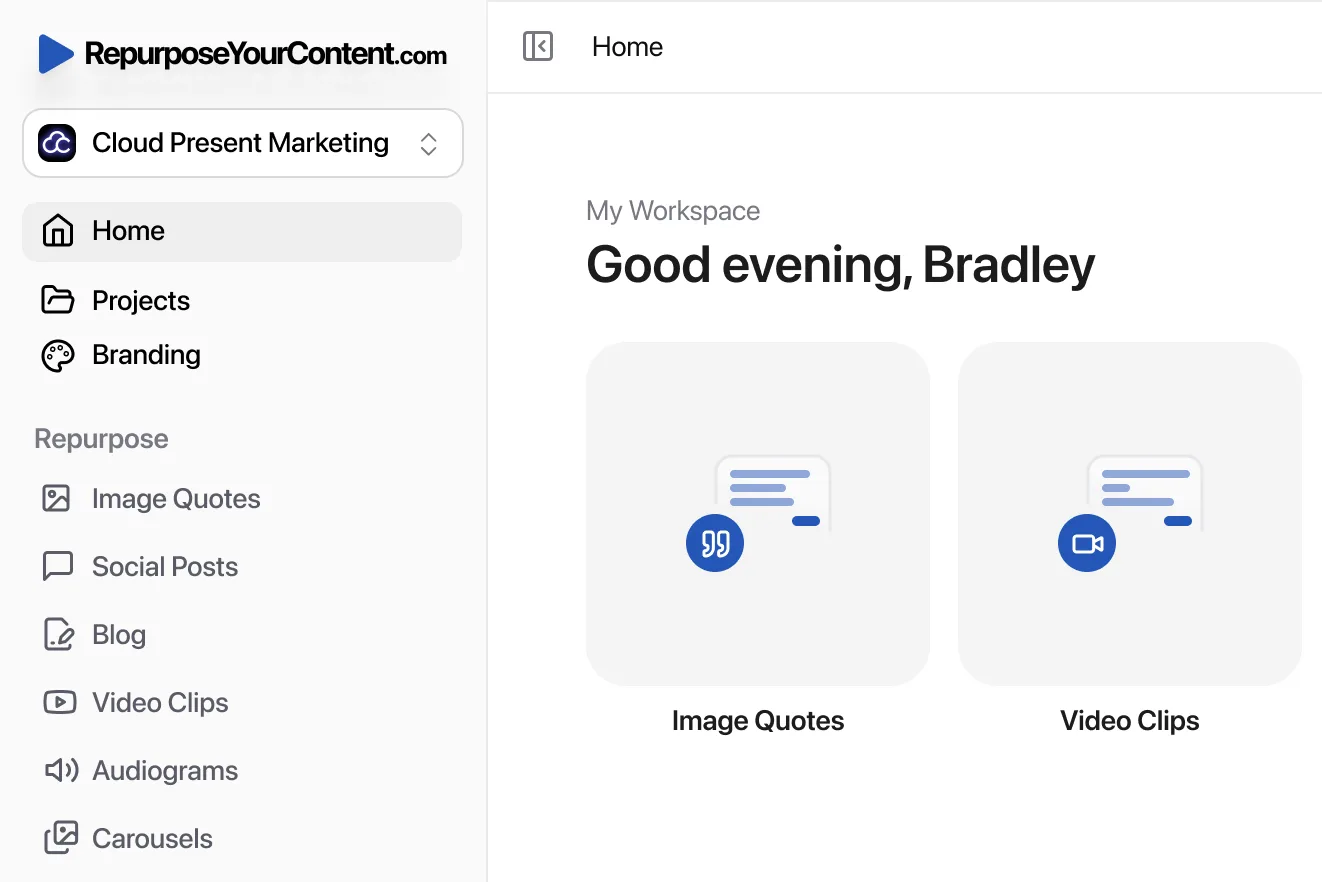
With RepurposeYourContent, you just upload your recording. Our AI automatically generates a complete transcript and a structured summary with the main topics and takeaways. It provides the timestamps for key moments.
From there, you can generate:
- A complete blog post to use as your show notes page
- Dozens of short video clips for social media
- Social posts with AI-generated copy
- Engaging audiograms
- Image quotes of key insights
- A draft for your next newsletter
- Multi-page LinkedIn carousels
This turns 1 webinar into more than 47 pieces of content.
How To Optimize Show Notes For Search Engines
Your podcast might be brilliant, but search engines see it as a black box. Google cannot listen to your audio. It relies completely on the text on your show notes page to understand what your episode is about.
Each page is an indexable asset that can attract new listeners through search. With UK search interest for "podcast" at 49,500 monthly queries, failing to optimize gives free traffic to your competitors.
Target One Primary Keyword
Before you write, think about what your ideal listener is typing into Google. Each episode must target one main keyword that reflects a specific problem.
If your episode is about webinar attendance, your keyword is not "webinars." It's a long-tail keyword like "how to increase webinar registrations."
Use a keyword tool to find search terms with decent volume that you can rank for. Focus on the questions your episode solves.
Place Keywords Where They Count
Once you have your keyword, put it in these critical spots:
- Page Title: This is your most important SEO element. Lead with your primary keyword. For example: "How to Increase Webinar Registrations | The B2B Growth Podcast".
- URL Slug: Keep your URL short and clean. Use
yourwebsite.com/create-podcast-show-notes. - H1 Heading: The main headline on your page must be your H1. It must contain your keyword.
- H2/H3 Subheadings: Weave your keyword or variations into at least one H2 subheading.
Write a Meta Description That Gets Clicks
The meta description is the text snippet under your title in search results. It does not directly affect rankings, but it heavily influences click-through rates.
A good meta description is an advertisement for your episode. Aim for 155 characters. Include your keyword and create enough curiosity to earn the click.
Your show notes are not just for your existing audience. They are a net for catching new listeners. Every optimized page becomes another entry point to your brand.
Build an Internal Linking Web
Internal links connect one page on your website to another. They help search engines understand the relationships between your content and spread authority across your site.
In your show notes, link to other relevant podcast episodes or blog posts. For example, if you mention YouTube, link to a detailed guide on correctly time-stamping your YouTube videos.
This keeps people on your site longer. It also makes your website easier for search engines to crawl. As AI plays a larger role in search, understanding how to optimize content for AI search is critical for getting your show notes found.
UK podcast ad revenues reached nearly £68 million in 2024. That success depends on show notes that attract search traffic and retain the projected 15.5 million UK listeners in 2025. You can find more data on the UK podcast market on Statista.com.
Stop Creating Show Notes Manually

A manual workflow for podcast show notes is slow. If you are a B2B marketer, spending 90 minutes on notes for one episode is not a good use of time.
You need a system that delivers high-quality, SEO-optimized notes without consuming your week. Automation is essential. It lets you skip the tedious steps. No manual transcriptions. No scrubbing through timelines for timestamps. No staring at a blank page.
Technology does the heavy lifting. You can focus on refining the content to match your marketing goals.
Automation does not replace your work; it amplifies it. It transforms a single 60-minute recording from one piece of content into over 40 distinct marketing assets, giving you scale without adding headcount.
RepurposeYourContent was built to eliminate these manual bottlenecks. The goal is to turn your raw recording into a full suite of marketing assets, including structured show notes, in minutes.
The workflow is simple:
- Upload Your Recording: Drop in your video or audio file.
- Let AI Work: Our AI generates a full transcript, a structured summary, and identifies key moments with precise timestamps.
- Generate Your Content: With one click, create an SEO-optimized blog post for your show notes. From the same recording, generate video clips, social posts, audiograms, and LinkedIn carels.
What used to take 90 minutes is now done in about 5 minutes. You go from one audio file to over 8 different content formats instantly. For UK demand generation teams, this turns a single webinar into weeks of assets. You get clean audio episodes and notes that boost your reach on platforms like Spotify (33% UK listener preference) and YouTube (20%).
Your show notes stop being an admin task. They become the hub of your content engine. The page drives search traffic. The video clips and audiograms promote the episode on social channels. It all works together.
You can read our complete guide on how to automate webinar repurposing for a deeper look at this workflow. The goal is to build a system that consistently turns your expertise into pipeline.
Stop spending hours creating show notes. Create a month's worth of marketing assets and a perfectly optimized page in the time it takes to drink a coffee.
Try RepurposeYourContent today.
Tags: