How to Grow on LinkedIn as a B2B Company: A Growth Playbook
Learn how to grow on LinkedIn as a B2B company with a practical growth playbook. Master content, employee advocacy, and turn webinars into pipeline.

Your LinkedIn page gets fewer than 100 views a month. Your team isn't posting. You have zero system for creating content. This isn't working. To grow on LinkedIn as a B2B company, you need a predictable engine, not random acts of marketing.
This playbook gives you that engine. It covers optimizing your Company Page to convert visitors. It provides a content strategy that works. It shows you how to turn your team into a growth channel. Follow these steps to build a system that drives predictable growth.
Your Foundation: The Optimised Company Page
Your LinkedIn Company Page is your digital storefront. Most B2B pages are dusty brochures. They talk at people, not to them. Your page must be an asset. It must turn curious visitors into engaged followers and leads.
Every piece of content you share points back to this page. If the page is a dead end, your effort is wasted. A properly optimized page ensures potential customers get it. They understand what you do. They know who you do it for. They know why they should care.

Nail the First Impression
You have three seconds. That's it. Your banner image and headline must tell a compelling story together.
- Your Banner Image: Do not use generic stock photos. This is prime real estate. Use it to show a clear outcome. A tagline like, “Turn 1 Webinar into 47 Pieces of Content” is powerful. It sparks curiosity. Your logo is not enough.
- Your Headline (Tagline): This isn't just your company name. It's a short, keyword-rich statement. It must answer the customer's question: “What’s in it for me?” For example: “Helping B2B Marketers Scale Content Creation Without Scaling Headcount.”
The 'About' Section is a Search Goldmine
Many businesses fill their 'About' section with vague corporate speak. This is a huge missed opportunity. This section is a massive lever for getting found on LinkedIn.
Write it for your customer. Use their words. Use the phrases they use to describe their problems. It must be a clear summary of the pain you solve and the results you deliver. You can repurpose existing video content into written assets to get started.
Your LinkedIn page isn’t for you; it’s for your customer. Every element must answer their unspoken question: "Why should I pay attention?"
Go Deeper: Showcase Products and People
LinkedIn provides tools to add depth to your page. Ignoring them means leaving trust on the table.
Use the Product Pages feature. Spotlight your core offerings here. Include social proof and customer testimonials. Add direct calls-to-action to learn more.
Activate the ‘Life’ tab. Show your company culture here. This is key for attracting top talent. A strong employer brand has a halo effect on your commercial brand. It signals you are a successful, growing company.
Your Content Engine: Webinars on Autopilot
You feel stuck on a content hamster wheel. You create content. It vanishes from the feed in a day. The cycle repeats. The answer isn't creating more content. It's working smarter with the content you already have.
One monthly webinar can provide 20-30 LinkedIn posts. This is how you build a content engine. A single 60-minute recording holds enough ideas to fuel your strategy.

A Proven Content Mix from a Single Webinar
One webinar can be sliced into a full content calendar. This keeps your feed fresh and interesting. You pull out unique moments for specific goals.
Here’s the content mix from one webinar:
- Educational Posts (10-12): Pull specific tips or frameworks. A single point can become a text post or a 3-slide carousel.
- Thought Leadership Snippets (5-7): Find the most insightful statements. These make for punchy text posts or short video clips.
- Product-in-Action Moments (3-4): Clip parts of your demo that solve a pain point. These are "show, don't tell" moments that prove your value.
- Culture & Behind-the-Scenes (2-3): Post a clip from the Q&A. Show a candid moment from the pre-webinar chat. This builds connection.
This breakdown turns one hour-long session into more than 20 pieces of content. Your feed educates, builds authority, and nurtures leads. It never feels repetitive. You can learn how to use AI for webinar repurposing in our detailed guide.
How RepurposeYourContent Helps
This manual process takes hours. It can be shrunk to minutes. You don't need to scrub through videos to find timestamps. You don't need to clip them or design graphics.
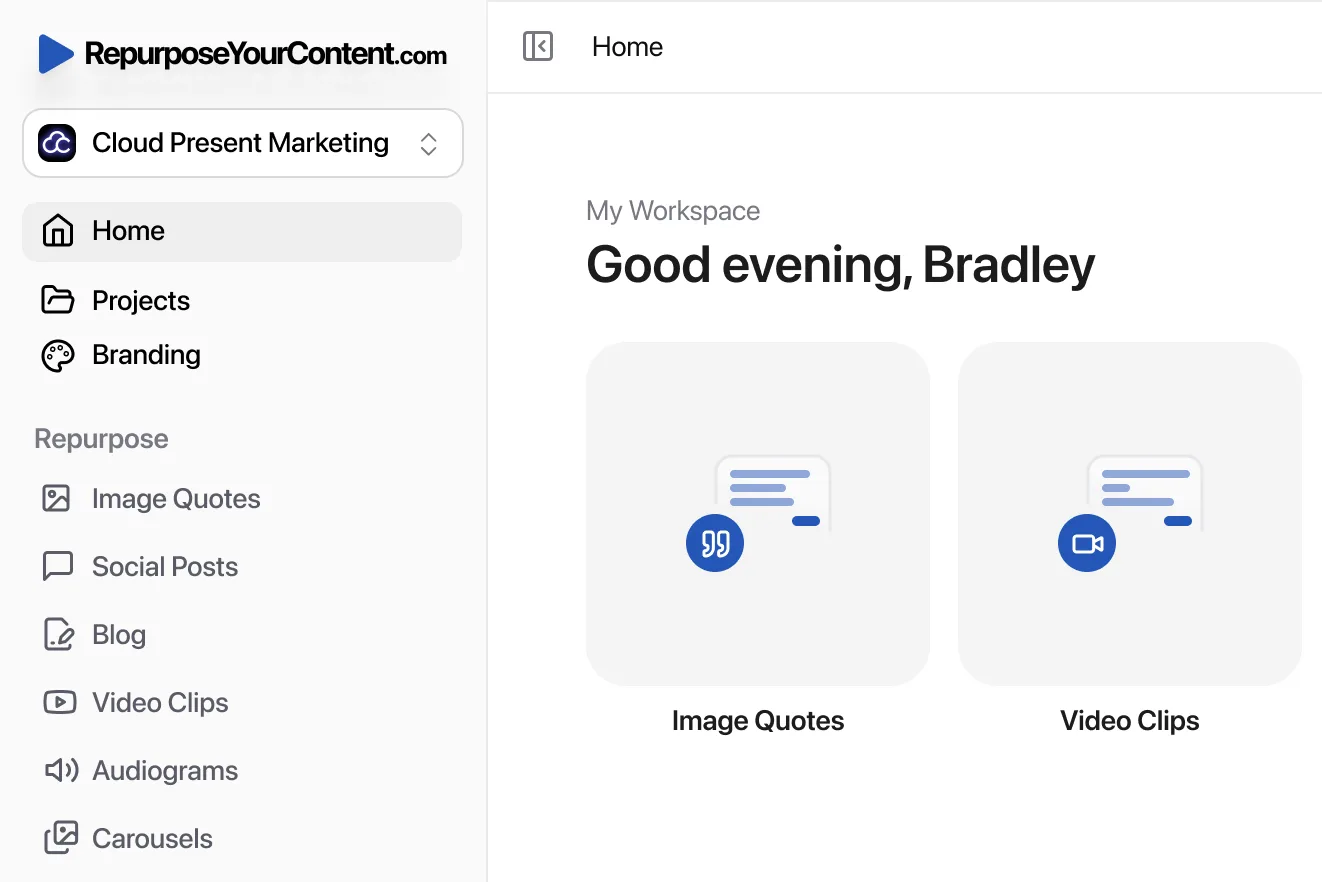
Upload your webinar to RepurposeYourContent. Our AI identifies the most compelling moments. From there, you generate all the formats you need for LinkedIn with one click:
- Video Clips: Short, shareable clips with animated captions.
- Blog Posts: Full articles based on webinar transcripts.
- Social Posts: Ready-to-publish text posts to spark discussion.
- Audiograms: Audio snippets turned into visual video.
- Image Quotes: Graphics with your speaker's best quotes.
- Newsletters: Email summaries ready for your list.
- LinkedIn Carousels: Branded slide decks that break down ideas.
- Timestamps: A full list of key moments for easy reference.
This turns a time-sucking task into a scalable system. You get a library of ready-to-publish social posts from every webinar. See how easy it is to create social posts from your video content.
Turn Your Team Into a Growth Engine With Employee Advocacy
Your company page has limited reach. Your employees' collective network is a massive, untapped audience. This is where an employee advocacy program is crucial. This isn't about forcing your team to share generic posts. It's about making it easy for them to get involved.
You give them great content. It makes them look smart and insightful. People trust people, not logos. This is how you build brand trust and spread your message.

A Real Workflow for Employee Advocacy
Friction kills advocacy programs. If sharing is a hassle, your team won't do it. You must remove every obstacle. A clear system makes participation easy.
Here is a straightforward workflow:
- Step 1: Create a Central Hub. Use a dedicated Slack channel (e.g., #linkedin-content). This is where your team finds content.
- Step 2: Stock the Hub Weekly. Drop in 5 different posts from your latest webinar. Include a mix of video clips, quote graphics, and text takeaways.
- Step 3: Provide Pre-Written Copy. Draft 2-3 caption options for each post. This gives your team a starting point they can quickly edit.
- Step 4: Notify the Team. Post a simple message: "This week's content is ready. Five new posts on [Webinar Topic] are in the folder for you to share."
This system removes guesswork. Your team knows where to go and what to post. Employee-shared content gets 8x more engagement.
Give Your Leadership the Spotlight
Put extra focus on your leadership team. Posts from founders and C-suite executives punch above their weight. Their seniority lends instant authority.
Coach them to be active thought leaders. They don't need to write posts from scratch. Arm them with the best snippets from your webinar content. Help them frame it with their unique perspective.
Ensure their personal branding is on point. Point them to tools that help create the perfect AI headshot for LinkedIn. Small details add professionalism. If you're looking for content formats that pop, check our guide on how to create compelling LinkedIn carousels.
Maximise Reach: Engagement and Paid Amplification
Great content is half the battle. If no one sees it, it doesn't matter. You need a plan for engagement and amplification. This is how you turn a post into a conversation, and a conversation into a lead.
Why Engagement Pods Will Kill Your Growth
Avoid engagement pods. These are groups where people like and comment on each other's posts. They try to game the algorithm. It is an empty tactic that will harm your growth.
The LinkedIn algorithm spots this low-value activity. Engagement from random people sends the wrong signals. You want to reach your ideal customers, not more random people.
The goal isn't just engagement. It's the right kind of engagement. One thoughtful comment from a prospect is worth 100 generic likes.
The First-Hour Rule and Organic Engagement
The first 60 minutes after you post are critical. Strong early engagement tells LinkedIn your post is valuable. The algorithm then pushes it to a wider audience.
- Post when people are listening. Schedule content when your audience is active. For B2B, this is often mid-morning and lunchtime. Our guide on the best times to post on LinkedIn has specific insights.
- Reply to every comment. Get back to people quickly. This doubles your comment count and encourages more discussion.
- Always ask a question. End your posts with a question. Give people a reason to respond.
A Smarter Paid Amplification Strategy
Organic reach is powerful. A small, strategic ad spend can put your best content in front of your perfect customer. Be selective. Do not boost every post. Let the data guide you.
- Publish consistently. Let content run organically for a few days.
- Spot your winners. Find the top 1-2 posts of the week with the highest organic engagement.
- Amplify with a small budget. Put a targeted budget (e.g., $50-$100) behind these proven posts.
This method means you only pay to promote content that works. You aren't guessing. You are amplifying what already resonates.
UK B2B firms see real returns from LinkedIn ads. The average CPC is between £4.50-£7.50 for SaaS companies. 57% of marketers are happy with their ROI. The best approach combines this with strong organic content. Find more stats on LinkedIn ad performance over on leverdigital.co.uk.
How to Measure What Actually Matters on LinkedIn
Hundreds of likes feel good. But likes don't pay bills. Follower numbers don't equal revenue. You must look past these vanity metrics.
Track the numbers tied to business outcomes. Analyze what drives tangible results. Then do more of what works. LinkedIn becomes a predictable pipeline engine.
Your LinkedIn Growth Dashboard
You don't need expensive software. A simple spreadsheet is enough. Track a few core KPIs weekly to build a clear picture.
Here’s what you should track:
- Engagement Rate: Total engagements (likes, comments, shares) divided by total followers. This shows what percentage of your audience pays attention. Aim for a rate between 2-5%.
- Click-Through Rate (CTR): For posts with a link, track how many people clicked. This measures how compelling your call-to-action is.
- Inbound Leads from LinkedIn: The ultimate proof. Add a "How did you hear about us?" field to your forms. When "LinkedIn" appears regularly, you're on the right track.
Use UTM variables in Google Analytics to track which posts send traffic and convert into leads.
LinkedIn is a lead generation machine. It drives 80% of all social media B2B leads. It is 277% more effective than other platforms. See more powerful LinkedIn statistics on charle.co.uk.
Measuring Your Team’s Impact
For your employee advocacy program, track more than just participation. The real impact is the growing influence of your team members.
Are their follower counts growing? Are their posts sparking conversations with your ideal customer profile? When you see that happening, their personal authority is building. This reflects directly onto your brand. This data-driven approach proves the ROI of your LinkedIn strategy.
Ready to create content that drives these metrics? Try RepurposeYourContent today.
Frequently Asked Questions
Here are straight-to-the-point answers to common questions from B2B teams.
How Often Should a B2B Company Post on LinkedIn?
The sweet spot is 3-5 valuable posts per week. Consistency is more important than volume. It is better to post three great pieces of content than seven forgettable ones. A content engine, like turning one webinar into 20+ posts, removes the daily pressure.
What’s More Important: A Company Page or Employee Profiles?
This is a false choice. You need both. They work together.
- Your Company Page is your brand’s home base. It is the official source for news and your corporate identity.
- Employee Profiles are for authentic, human-to-human connection. This is where you build trust at scale.
An effective LinkedIn strategy combines an active company page with an energized employee advocacy program.
What Kind of Content Performs Best for B2B?
Content that helps your audience wins. Teach, don't sell. Share a unique perspective or a clear solution to their problem.
Short videos (under 2 minutes) and carousels work well for breaking down complex topics. Resist the urge to hard-sell in every post. Build authority and trust. The sales conversations will follow.
Your goal on LinkedIn isn't to sell. It's to become the go-to resource in your niche. When people see you as the authority, sales opportunities will find you.
Tired of the content guesswork? Try RepurposeYourContent today.
Tags: