How to Write Twitter Threads from Long Form Content That Works
Learn how to write Twitter threads from long form content. This guide offers actionable steps for turning webinars and blogs into high-performing X threads.

Your 60-minute webinar contains at least 10 high-engagement Twitter threads. Most marketers let that content gather dust. Learning how to write Twitter threads from long form content gets more value from assets you already own.
Stop the endless search for new ideas. Start using the value you already created.
Your Best Content Is Already Written
You host a brilliant webinar, post the recording, and move on. This is a massive missed opportunity. Your best insights are locked inside existing webinars, podcasts, and blog posts. Your team scrambles for new content while proven ideas sit unused.
This guide shows you how to pull out those golden nuggets and spin them into compelling threads. You don't need more content. You need a smarter process for using what you have. Exploring different content repurposing strategies can refine your workflow.

Mine Your Transcripts for Gold
Webinar transcripts are your secret weapon. They capture the natural, conversational language that works on social media. People don't talk in formal business-speak, so your tweets shouldn't either.
Dig through a transcript to find these treasures:
- Surprising Stats: A single data point mentioned by a speaker can be a perfect hook for a new thread.
- Strong Opinions: One counter-intuitive statement can fuel an entire discussion and get people talking.
- Actionable Advice: A three-step process from the Q&A is a ready-made listicle thread.
Stop seeing your webinar as one asset. Think of it as a container with dozens of smaller, high-value assets. Your job is to find them, pull them out, and polish them.
This changes your approach to content creation. You start with material you know is solid. The ideas were the core of your webinar or blog post. To understand this source material better, see our guide on what constitutes long-form content.
This is not just about efficiency. It's about higher quality. Specific insights from a subject matter expert are more valuable than generic tips. Turning these moments into threads demonstrates real thought leadership. You prove your expertise instead of just claiming it.
How to Find and Extract Thread-Worthy Insights for Twitter
Before you write a thread, you need the right raw material. Sift through your existing webinars, podcasts, and blog posts. Find the specific, surprising, or counter-intuitive ideas.
Your webinar transcripts are the best place to start. They capture real, unscripted conversation, making them a goldmine for authentic-sounding tweets. If you don't create them yet, learn how to transcribe a video automatically.
Scan transcripts for these key things:
- Strong Opinions: Look for moments where a speaker makes a definitive statement.
- Audience Questions: The Q&A section is a direct line to your audience's biggest pain points.
- Data Points: A single, powerful statistic makes a great hook for an entire thread.
- Actionable Frameworks: Any mention of "three steps" or "five mistakes" is a ready-made thread structure.
Pinpoint High-Impact Segments
For audio and video, timestamps are your best friend. Note the exact time a speaker lands a powerful quote or explains a complex idea clearly. These are the moments you will use repeatedly.
The best material for a thread challenges common wisdom. It offers a genuine shortcut to a solution. Don’t just look for what’s informative. Look for what’s memorable.
Once you have potential insights, test them. Is this point interesting enough to stand alone? Does it tie into your current marketing focus? The goal is a system for mining your content library. This ensures you always have a backlog of proven ideas.
How RepurposeYourContent Helps
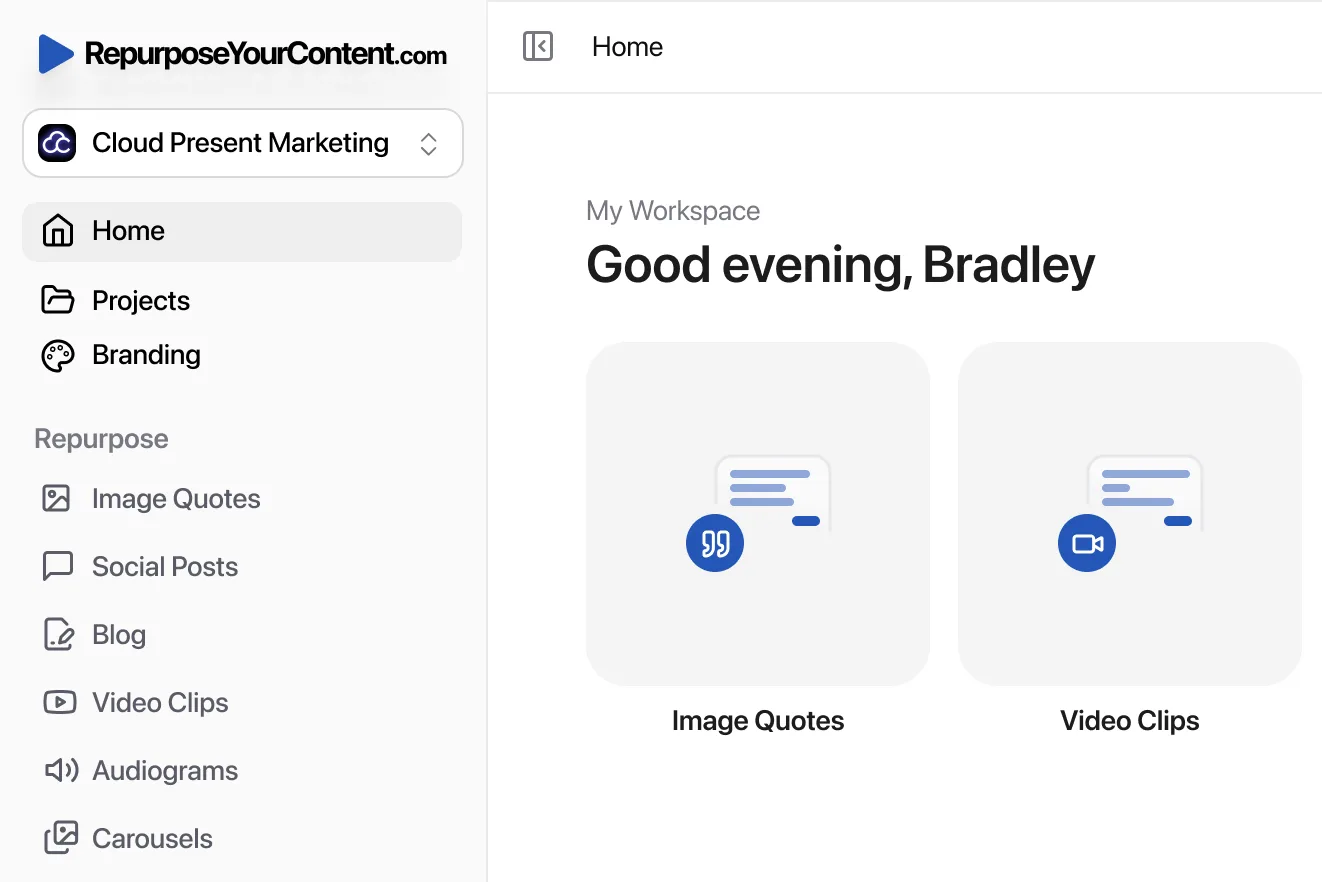
Manually scrubbing through hours of recordings is not a good use of your time. RepurposeYourContent automates this extraction process. Upload a webinar recording. Our AI scans the transcript to pinpoint key quotes, insights, and data points perfect for a Twitter thread.
The platform serves up a list of potential thread ideas for you. You see the key timestamps and exact text, making it easy to pick the strongest points. Our AI is trained to spot moments with high social engagement potential. It can pull them out as short video clips or audiograms to embed in your tweets, which can boost engagement.
This overhauls your workflow. You go from hunting for ideas to choosing the best ones from an AI-generated shortlist. You can pull 5-10 distinct thread concepts from one 60-minute webinar. From a single webinar, we once created 47 pieces of content, including blog posts, social posts, newsletters, and image quotes.
How to Structure Threads People Actually Read

A great Twitter thread is not a brain dump. It's a story. A well-built thread pulls a reader in and holds their attention to the end. It guides them through a complete thought.
This is how you turn a casual scroller into an engaged reader.
The thread's anatomy impacts its performance. The sweet spot is 7-15 tweets. This gives you enough room to unpack an idea without your audience losing interest. Every tweet must earn its place.
The first tweet, your hook, is the most critical part. If you can’t stop the scroll, the rest of your thread is invisible. You can learn more about the power of a great hook in our content glossary.
Crafting the Hook Tweet
Your hook must be sharp and compelling. It makes a promise about the value you will deliver. Don't waste this space with a weak opening.
These formulas work well for grabbing attention:
- A Provocative Question: "What if everything you knew about lead scoring was wrong?"
- A Startling Statistic: "93% of B2B marketers struggle with content repurposing. Here's how to join the top 7%."
- A Bold Statement: "You don't need more content. You need a better system."
Your opening tweet has one job: promise a clear benefit. The reader must know what they will get by investing 60 seconds.
Building the Narrative Arc
You've hooked them. Now you must deliver. The body of your thread builds a logical story with a beginning, middle, and end. Tweets 2 through 6 break down your main idea into bite-sized points.
A thread is not a blog post. Use short sentences, plenty of white space, and numbered or bulleted lists. Make it scannable on a small screen.
Each tweet should flow naturally into the next. Use transition phrases to keep the reader on track. If your webinar was about "3 Common Mistakes in Email Marketing," dedicate one or two tweets to each mistake. This structure makes complex topics feel simple.
Your final tweets should summarize everything and include a clear call-to-action (CTA). While post impressions might be falling, engagement rates are climbing. This shows people will interact with valuable content like a good thread. You can read more about these X statistics and trends to see the opportunity.
Your CTA is your chance to direct that focused attention. Ask a question, encourage a follow, or link back to the full webinar.
Two Thread Templates You Can Use Today
Staring at a blank screen to write a Twitter thread is a time-sink. There is no need to reinvent the wheel every time. Have a few solid frameworks ready. This is the secret to creating great threads quickly from your long-form content.
Think of these as starting points, not rigid rules. They help you organize insights from your webinars and blog posts into a story that flows.
Here are two go-to templates you can use immediately.
The "Problem-Agitate-Solve" Framework
This template is perfect for turning a customer pain point into a thread that offers a solution. It builds empathy by showing you understand their struggle before you offer an answer.
Here’s the breakdown:
- The Hook (Tweet 1): State a common, frustrating problem. "Most B2B teams spend $7,000 on a webinar, only for it to gather dust. A huge waste."
- The Agitation (Tweets 2-5): Go deeper into the consequences. Talk about the burnt budget, missed content opportunities, and constant pressure for fresh ideas.
- The Solve (Tweets 6-8): Introduce the solution. Explain your high-level approach. "The answer isn't more content. It’s systematically repurposing high-value assets you already own."
- The CTA (Final Tweet): Give them a next step. Link to the full webinar, a related blog post, or a guide that unpacks your solution.
The "Listicle Breakdown" Framework
This template works well for "Top 5 Tips" sections from a blog post or a speaker's takeaways. It’s straightforward, easy to scan, and shareable. Webinar transcripts are a great source here, especially when a speaker gives clear, step-by-step advice.
Here’s the flow:
- The Hook (Tweet 1): Announce your list and its benefit. Be specific. "I found 3 quotes in one webinar transcript that became a full week of social content. Here’s the breakdown:"
- The Body (Tweets 2-6): Give each point its own moment. Use one or two tweets per item. Use numbered emojis (1️⃣, 2️⃣, 3️⃣) for visual clarity. Keep the explanation for each point punchy. This is a great place for images or short video clips.
- The Summary (Tweet 7): Briefly recap the key takeaways to drive the main message home.
- The CTA (Final Tweet): End with a question ("Which of these tips will you try first?") or link to the original blog post for more details.

You can find more ideas in our free playbooks for creating high-quality social posts from your webinars.
From Webinar to Thread: A Real-World Workflow
Theory is one thing; action is another. Let's get practical. Here is how you can take one webinar and spin it into a high-value Twitter thread. This is a repeatable process.
Step 1: Identify a Thread-Worthy Insight You just finished a 45-minute webinar on 'Advanced Demand Generation'. You upload the recording into RepurposeYourContent. Our AI scans the transcript and flags a two-minute section where your guest expert detailed three common lead scoring mistakes.
Step 2: Draft the Thread Structure The platform doesn't just flag the moment; it automatically drafts a Twitter thread summarizing those three points. The hook highlights the problem. The body tweets explain each of the three mistakes. The final tweet provides a summary and a CTA.
Step 3: Add Media and Finalize The AI also snips out a punchy, 30-second video clip of your expert explaining the most critical mistake. You copy the drafted text, add the video clip into the right tweet, and schedule it.
In less than 10 minutes, you’ve created a complete, value-packed Twitter thread directly from your webinar. This is how you scale content output without scaling your team.
This workflow is powerful. The rapid growth of text-first platforms creates a huge audience for this content. With users spending an average of three minutes per day on apps like Threads, a concise, insightful thread is the perfect format to grab attention. You can dive deeper into these platform statistics over at The Social Shepherd.
Having a solid structure makes the writing process faster. Stop letting brilliant insights from your webinars disappear.
Automate Thread Creation with RepurposeYourContent
Manually sifting through hours of webinar recordings is a task you don’t have time for. To get from long-form content to a great Twitter thread, you must cut the friction. You need a process that finds the best insights for you.
This is where automation helps. With RepurposeYourContent, we take your single webinar recording and use AI to instantly pull out the most valuable moments. Forget listening back and transcribing quotes. You get ready-to-publish drafts in minutes. The platform automatically spots key points, speaker quotes, and data mentions from your webinar's transcript.
You just pick the AI-identified snippets to form the backbone of your next Twitter thread.
Turn a 60-Minute Webinar into a 5-Minute Task
This isn't just about saving time. It's about creating better, more engaging content, faster. This system turns a multi-hour manual task into a quick, 5-minute job. One webinar can become dozens of content pieces.
Here’s how our platform helps you build a complete thread:
- Video Clips: The AI snips short, shareable video clips of your speakers explaining key ideas. These are perfect for dropping into a thread to grab attention.
- Image Quotes: It creates branded image quotes from the most powerful statements in your webinar. This gives you a strong visual for your hook tweet.
- LinkedIn Carousels: The same key points for your thread can be instantly repurposed into a LinkedIn carousel. This hits multiple platforms with the same core message.
This workflow is designed to stop great content from gathering dust. Every webinar contains at least 5-10 high-quality thread ideas. Our job is to find them for you, instantly.
Of course, our platform isn't the only tool. You can leverage AI tools like ChatGPT to help summarize your long-form pieces or brainstorm angles for your threads. The goal is to build a system that minimizes grunt work.
By generating high-quality social posts from your best content, you shift your role from creation to curation.
Stop letting your best insights die in old recordings. Try RepurposeYourContent today.
Fine-Tuning Your Thread Game
You have the process and the templates. But a few questions always pop up when turning big content into a high-impact Twitter thread. Let's tackle the most common ones.
How Long Should My Twitter Thread Be?
The sweet spot is between 7 and 15 tweets. This range gives you enough room to share real value without your audience getting fatigued.
Anything shorter than seven tweets often feels shallow. Anything past 15 sees a serious drop-off in readership. People have short attention spans. Remember, your hook is the single most important part.
What About Adding Images and Videos?
Yes. Do not just rely on text. You can add media to any tweet as you build your thread. A compelling image, GIF, or custom graphic in your first tweet is a fantastic way to stop the scroll.
To bring a point to life, embed short video clips (under 60 seconds) from your webinar into the thread. It breaks up the wall of text and adds a dynamic element. This is where RepurposeYourContent helps by automatically snipping those shareable video clips for you.
What’s the Best Call to Action to End With?
Do not let your thread fizzle out. Your final tweet needs one, clear call-to-action (CTA). You held your audience's attention. Guide them on what to do next.
Pick one specific action. Trying to do too much confuses people. Good options include:
- Sparking a conversation: "What’s your biggest challenge with X?"
- Encouraging a follow: "If you found this useful, follow me for more B2B marketing insights."
- Driving traffic: "For a deeper dive, you can watch the full webinar here."
A strong, simple CTA turns a casual reader into a follower, subscriber, or lead.
Putting this all into practice is faster with a solid system. RepurposeYourContent turns a multi-hour manual task into a five-minute job. It helps you produce high-value content consistently.
Try RepurposeYourContent today and stop leaving valuable content on the table.
Tags: