A Practical Short Form Video Strategy for B2B
Stop guessing and build a short form video strategy for B2B that works. Learn the right formats and workflows to turn existing content into leads.

Your B2B buyers now make major purchase decisions based on 60-second clips. This is the reality. Ignoring it means you're leaving leads on the table. A practical short-form video strategy for B2B isn't about dancing on TikTok. It's about extracting expert insights from content you already have—like webinars—and serving them to professionals on LinkedIn and YouTube Shorts. It delivers value in a format that respects their time.
Your B2B Buyers Are Already Watching Short-Form Video

The idea that short-form video is only for B2C brands is a costly misconception.
Think about your buyer. The same person scrolling TikTok for recipes is looking for business insights during a coffee break. A C-suite executive does not become a different person at work. They still value quick, clear information. This format is a required part of a modern content strategy. It boils down complex ideas into memorable clips. Ignoring short-form video is no longer an option.
The Data Proves It
The numbers are clear. 73% of UK B2B marketers report significant ROI from short-form video.
It is a powerful tool for lead generation. Video marketing drives a 66% increase in qualified leads. 93% of marketers have landed new customers directly from video. UK B2B buyers manage £1.7 trillion in annual business turnover. They are swamped with choices. Short-form video cuts through the noise. It delivers an 85% higher brand recall than text alone.
Your audience wants short video to learn about products and industry trends. You must meet them where they are with content that provides immediate value.
B2B Buyer Video Consumption By Platform
Knowing where your audience spends their time is crucial. They use different platforms for different reasons. Your content must match their mindset.
Here is a breakdown of where your B2B audience consumes short-form video.
| Platform | Primary Use Case for B2B Buyers | Optimal Content Focus |
|---|---|---|
| Industry news, expert analysis, career development, networking. | Thought leadership clips, expert Q&As, webinar takeaways, company culture. | |
| YouTube | "How-to" guides, product tutorials, in-depth problem-solving. | Actionable tutorials, product demos, customer success stories, explainers. |
| TikTok | Behind-the-scenes glimpses, industry humour, trend-spotting. | Humanising your brand, quick tips, myth-busting, showing your team. |
Understanding these differences is what makes a strategy work. For more detail, see how short-form VSL ads are performing on social media.
Remember this: your buyers' content habits don't change when they switch to a professional mindset. They still value brevity, clarity, and authenticity. A strong short-form video strategy for B2B meets this need.
Your Best Video Content Already Exists

The thought of creating a steady stream of short-form video for B2B can feel exhausting. The idea you need a big budget or a production crew for every clip is likely holding you back.
But your best source of expert-led video content is in your archive. It’s your past webinars.
Think about it. Every product demo, panel discussion, or presentation you've hosted is full of valuable clips. You have your own executives, industry experts, and customers on camera. They are sharing genuine insights and answering tough questions. Those are the moments that build trust with a professional audience. The production work is done. The challenge is not creating more content. It's pulling the value from what you already have.
Webinars Are Your Content Goldmine
For B2B marketing, webinars are the perfect raw material for short-form video. They are educational and packed with high-value advice. This is the content people search for on platforms like LinkedIn. Here, you capture your subject matter experts speaking with authority.
Instead of organizing new video shoots, your team can package the best moments from existing content. You can extract video clips from a webinar and build your content pipeline overnight.
Your marketing team's job changes. You stop being a content producer. You become a content strategist. The new focus is finding the strongest arguments and getting them in front of the right people.
Choose Video Formats That Build Professional Credibility

A dancing mascot will not close your next six-figure deal. In B2B, your short-form video strategy needs to be built on credibility and authority.
You must pick formats that deliver tangible value. Your buyers are short on time. They are looking for solutions, not distractions. The right video format shows you understand their world and have the expertise to help.
Put Your Experts in the Spotlight
The quickest way to build credibility is to get your experts on camera. You have this content in your webinar recordings. These are short, focused clips where an expert makes a single, powerful point.
- What they are: 45-90 second videos where a team member answers one question or shares a strong opinion.
- Why they work: B2B buyers want to learn from real people with real experience, not a faceless brand.
- How to do it: Find Q&A moments or powerful statements in your webinar recordings. Frame it with a clear headline and add captions.
Visualize Your Data and Processes
Some things are hard to explain with words. This is where short-form video turns complex data and processes into something simple. Data visualizations can transform a dry statistic into a compelling story. Instead of saying "we boosted efficiency by 75%," show it with an animated graph. The impact is immediate.
Process breakdowns are just as powerful. A 60-second clip can walk through a complicated workflow, making it feel intuitive. This shows how your product makes a customer's job easier. For more impact, combine these with other formats. Our guide on how to create LinkedIn carousels explains how to mix video clips with static slides.
Use Customer Testimonials That Feel Real
Peer approval is one of the most persuasive tools in B2B marketing. Your prospects need proof you have delivered results for similar companies. Short-form video testimonials are the most authentic way to show it. Forget overly polished, scripted videos. Authenticity is what matters.
Pull a 30-second clip from a webinar where a customer on a panel talks about a specific challenge your product solved. That unscripted moment is more powerful than any marketing slogan.
Match Video Length to the Platform
Where you post matters. A video that works on LinkedIn might fail on TikTok. Your content must feel native to its platform.
Here is a guide that works:
- LinkedIn: Aim for 45-90 seconds. Professionals here will invest time for substantial insights.
- YouTube Shorts: Keep it under 60 seconds. Viewers are in a rapid-scroll mindset. Get to the point instantly.
- TikTok: Aim for 15-30 seconds. The content must be concise and visually engaging from the first frame.
The data backs this up. 73% of all UK business videos are two minutes or less. 68% of videos under 60 seconds are watched to completion. Buyers will make time for value-packed shorts that get to the point. You can find more data in this detailed report.
Your short form video strategy for B2B must be intentional. Choose formats that build credibility. Tailor their length to each platform. This creates content that builds the trust needed to drive business growth.
A Simple Workflow From Webinar to Published Clips
Theory is one thing, but execution is what matters. A winning short form video strategy for B2B requires a repeatable, efficient process. You don't need a bigger team or complex new software. The best workflows are the simplest ones. You already ran the webinar. Now you just need a system to pull out the best parts.
Here is a real workflow example:
Step 1: Identify and Extract Key Moments A single one-hour webinar recording is packed with clips. You need to know what to look for. Scan the transcript for these triggers: strong opinions, audience questions, key statistics, and process explanations. Once you spot these, isolate them into individual clips. Each clip should focus on a single, powerful idea.
Step 2: Brand and Optimize for Each Platform A raw clip needs polish. It must reflect your brand and be optimized for its platform. Use this checklist for every clip:
- Add your brand kit: logo, colors, and fonts.
- Burn in captions: Over 90% of people watch videos on mobile with the sound off. Captions are essential.
- Write a compelling headline: Your headline is a hook. It must tell the viewer exactly what they will learn.
Step 3: Distribute and Measure Schedule your clips across LinkedIn and YouTube Shorts. Post consistently to build momentum. Use UTM parameters in every link in your video descriptions. This allows you to track website traffic and demo requests back to a specific video. Feed this data into your CRM to see how many viewers become qualified leads.
The aim is to make every clip feel native to the platform. A clip for LinkedIn should feel professional. A clip for YouTube Shorts might be a quick "how-to." For more planning help, see our guide on a content repurposing workflow for small teams.
How RepurposeYourContent helps
Manually finding, editing, and branding dozens of clips is slow. It’s where most video strategies fail. We built RepurposeYourContent to automate this entire process.
You just feed it your webinar recording. Our AI scans the transcript to automatically find the most valuable moments. It generates ready-to-publish assets. You get a library of video clips in minutes. The platform also creates blog posts, social posts, audiograms, image quotes, newsletters, and LinkedIn carousels from the same webinar. We've seen clients turn 1 webinar into 47 pieces of content.
What used to take a team member days of editing now takes about five minutes. This turns your short form video strategy for B2B into a smooth, efficient content engine.
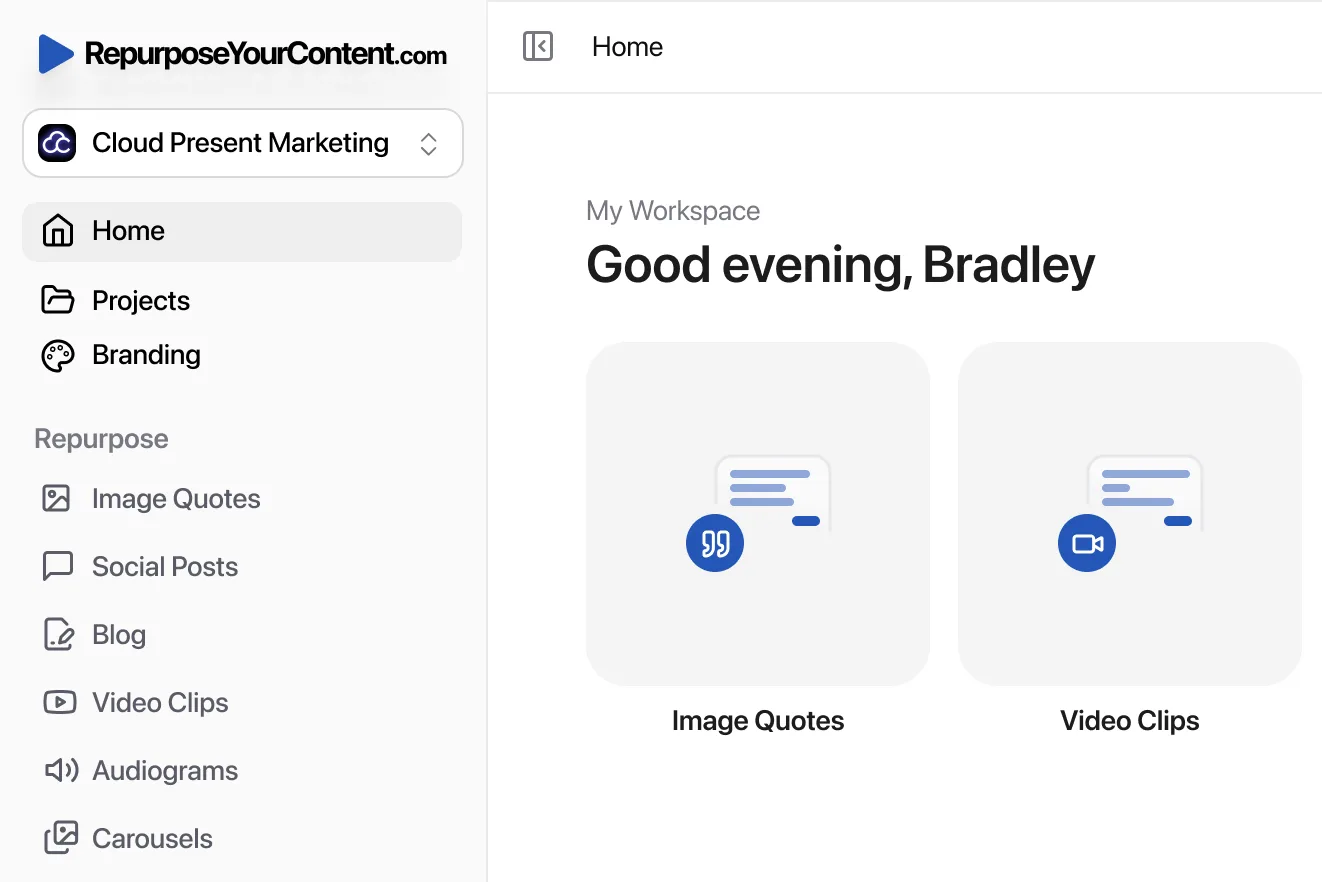
The screenshot shows how our platform presents AI-generated clips from one webinar. Each is titled, transcribed, and ready for you to download. It makes repurposing a tangible library of assets you can use right away. For more tips, our guide on using a webinar clip generator has extra advice. You can also turn to tools like AI for marketing content repurposing to streamline this further.
Your Top Questions on B2B Short-Form Video, Answered
I hear the same questions from B2B teams about short-form video. Here are direct answers.
Is Short-Form Video Really Professional Enough for My B2B Brand?
Yes, if you do it right. Professionalism is about the value you deliver. A sharp, 45-second clip of your CEO breaking down an industry trend respects your audience's time. Focus on sharing genuine expertise with polished branding. Create content that cements your authority.
How Do I Measure the ROI?
Do not focus on vanity metrics like views. You must connect your video efforts to business results.
Use UTM parameters in every link in your video descriptions. This lets you trace website traffic and demo requests back to a specific video. Make sure this data flows into your CRM. This gives you a clear picture of how many viewers become qualified leads or customers.
We Don’t Have a Video Team. How Can We Produce This Content?
You don't need a dedicated video team if you run webinars. The production is already done. Your job is not creating content from scratch. It's about clever extraction.
Your team's role shifts from producer to strategist. The goal is to find valuable moments in existing content and get them to the right audience.
Think of your webinar as a gold mine. The short clips are the nuggets you pull out.
Which Platform Should I Prioritize for B2B Short-Form Video?
Start with LinkedIn. It is the natural habitat for B2B professionals. Insightful video content performs well for building authority there.
Your second stop should be YouTube Shorts. YouTube is the world’s second-largest search engine. Shorts help you reach a wider audience looking for answers to business problems. Master these two platforms first. Then you can experiment elsewhere.
What's Next?
You have the strategy, the formats, and the workflow. You know how to turn long-form webinars into a stream of valuable video content. The biggest hurdle is getting started.
You are sitting on a goldmine of potential video clips in your webinar archive. Stop letting that valuable content go to waste. Put it to work attracting the people you want to reach. This is about creating a scalable, smart video presence that connects with your audience on the platforms they use every day.
Ready to put this on autopilot? Try RepurposeYourContent and turn your next webinar into dozens of polished video clips in minutes.
Tags: