Master Video SEO Best Practices 2026
Get the top video SEO best practices 2026 for B2B. Optimize webinars, use schema, boost YouTube rankings, & drive traffic with our guide.

53% is the number to pay attention to. Google has long given video strong visibility in search, and pages that combine video with useful supporting content have a better shot at earning that visibility than a standalone upload.
B2B teams still waste that advantage. They run a strong webinar, upload the recording, give it an internal title, and leave the asset to decay on a generic landing page or YouTube channel.
That approach misses the full opportunity.
Video SEO best practices in 2026 are not about chasing isolated YouTube tricks. The smarter play is to turn one webinar into a search asset with multiple entry points. One full recording. Several focused clips. A transcript. A blog post. A page with schema markup. Distribution that fits Google, YouTube, and LinkedIn instead of treating them as separate jobs.
For demand gen, content, and events teams, this is a practical growth channel because your subject matter experts are already producing the raw material. The webinar already exists. The buyer questions are already in the session. Your job is to package that material so search engines can index it and buyers can find the exact answer they need.
Start with a simple rule. Every webinar needs a text layer around it. Give the recording a page worth ranking. Add a transcript, a summary, clear sectioning, and clips built around distinct search intents. That turns one event into an asset that can capture discovery traffic, support nurture, and extend shelf life well beyond the live date.
For UK B2B teams, the timing is good. Buyers search before they book demos. Google keeps surfacing rich media. LinkedIn rewards sharp expert clips. If you still treat webinars as one-off events, you are leaving search demand on the table.
Use a workflow, not a one-time upload.
1. Optimise Video Titles with Primary and Secondary Keywords
Your title does two jobs. It tells the algorithm what the video is about. It tells a human whether to click.
Most B2B webinar titles fail at both.
“Q2 Product Webinar” “Demand Gen Session” “Panel Discussion with Sales Leaders”
Those titles waste intent. They say what happened internally. They don’t match what buyers search.
Write titles for search, not for your events calendar
Start with one primary keyword. Then add a secondary modifier that sharpens intent.
Good examples:
- B2B webinar SEO UK
- Video schema markup for webinars
- YouTube SEO for SaaS demos
- Webinar clips for LinkedIn leads
Then turn that into a title someone would click:
- Video SEO Best Practices 2026 for B2B Teams
- How to Add Video Schema Markup to Webinar Pages
- YouTube SEO for SaaS Webinars That Need More Pipeline
- Webinar Clips That Work on LinkedIn and Google
Keep the front half of the title clean. Put the main keyword early. Don’t stuff it. Don’t write for internal stakeholders.
Practical rule: If your title reads like an event registration page, rewrite it.
For clips, give each segment its own search angle. Don’t publish five highlights called “Webinar snippet 1”, “Webinar snippet 2”, and “Webinar snippet 3”. A clip about captions should target captions. A clip about schema should target schema.
That’s where consistency helps. Use the same keyword theme across the clip title, the embedded blog post, and the social post that promotes it. Search engines see alignment. Buyers see clarity.
RepurposeYourContent can give you draft titles from the recording itself. Use those drafts as a starting point. Then tighten them around one keyword and one promise.
Add this image near your production brief so your team stops publishing vague titles.

2. Write Detailed, Keyword-Rich Video Descriptions
70% of B2B buyers watch video before they speak to sales, according to Google and Bain research. If your description is thin, generic, or written like admin copy, you waste that attention.
Descriptions help your webinar rank in three places at once. Google can read the page context. YouTube can understand the topic and related queries. LinkedIn viewers who land on the clip get a clear reason to click through to the full asset. That matters if you are turning one webinar into a search asset, a blog post, and a set of clips.
Start with the first 125 characters. Write them like search copy.
Bad: “Welcome to our latest webinar where the team discusses several trends affecting modern B2B marketing.”
Better: “Video SEO best practices 2026 for B2B teams. Learn how to turn one webinar into ranked clips, transcripts, and schema-ready pages.”
That opening does two jobs. It states the topic fast. It tells the buyer what they get.
Then build the rest of the description with intent. Do not paste a loose summary from the event page. Write for the exact query behind the video.
- Lead with the outcome: Tell the viewer what problem this video solves.
- Use close keyword variations: Add phrases such as “YouTube SEO for webinars”, “video schema markup”, “webinar transcript SEO”, and “LinkedIn video clips for B2B”.
- Add timestamps: Long webinars need chapter points so viewers can jump to the part they need.
- Point to the next asset: Send traffic to the blog post, landing page, or demo page created from the same recording.
- Add speaker credibility: Include the host’s name, role, and why their perspective matters.
A webinar replay and a clip need different description formats.
For a replay, map the full session. Add a short summary, chapter timestamps, and a CTA to the related page. For a clip, stay narrow. If the clip is about captions, the description should focus on captions, not the whole webinar. Give each segment its own search intent and its own promise.
That is the B2B advantage. One webinar can become a ranked YouTube video, a Google-indexed page with transcript text, and several LinkedIn clips that reinforce the same keyword theme. The description is the connective tissue between those assets.
Use RepurposeYourContent to draft the first version from the recording. Then edit it hard. Tighten the first line. Remove filler. Add timestamps. Make the CTA specific.
Treat the description like part of the asset production workflow. It drives discoverability, clarifies the offer, and helps one webinar perform across Google, YouTube, and LinkedIn.
3. Implement Structured Data Markup
Pages with video schema give Google clear instructions. Pages without it force Google to infer what the asset is, which often means weaker visibility and missed video rich results.
For a B2B webinar page, that is a waste. You already have the recording, the thumbnail, the publish date, the runtime, and the landing page. Add the markup and make the page easier to index correctly across Google Search.
Use VideoObject schema in JSON-LD. Match it to the page exactly. If the title on the page says “Revenue Operations Webinar for SaaS Teams,” the schema should say the same. If the thumbnail changes, update the schema. Sloppy markup creates avoidable errors.
What to include in VideoObject schema
Start with the fields Google expects on a real video landing page:
- name: The final published video title.
- description: A useful summary that matches the page copy.
- thumbnailUrl: A stable image URL.
- uploadDate: The actual publish date.
- duration: ISO 8601 format, such as
PT42M13S. - embedUrl or contentUrl: The live video location.
- publisher: Your brand name and logo.
- hasPart: Chapter markup for key sections, if the page supports it.
That last field matters for webinars. One 45-minute session usually covers several distinct search intents. Pricing strategy. Attribution. CRM hygiene. Pipeline forecasting. Chapter-level markup helps search engines understand that range and gives you more ways to surface the same source asset.
Here is the rule. Put schema on pages you want to rank, not on thin pages that exist only to host an embed.
A strong setup looks like this:
- A search-focused URL
- A specific headline tied to one buyer problem
- The embedded webinar near the top
- Supporting copy that frames the topic for search
- A transcript, summary, or takeaways below the player
- Clean
VideoObjectschema in the page code
This is how you turn one webinar into a multi-surface SEO asset. The full recording lives on a page built for Google. Short clips can support YouTube and LinkedIn. If you are also producing cutdowns, use a clear workflow for adding captions to video clips so every version stays usable and indexable.
If you host on YouTube, still build the page on your own site. YouTube can win YouTube search. Your site should win branded and commercial search around the webinar topic. If you use Wistia or self-hosting, schema matters even more because you control the full page context.
Validate the markup before publishing. Then test it again after launch in Google’s Rich Results Test. Broken schema does nothing. Accurate schema gives your webinar page a better chance to appear as a proper video result instead of just another blog URL.
4. Create SEO-Optimised Transcripts and Closed Captions
80% of people are more likely to finish a video when captions are available, according to Verbit’s captioning statistics roundup. That matters for SEO. It also matters for B2B buyers who watch webinars with the sound off between meetings, on trains, or in open-plan offices.
Use both assets every time. Add closed captions to the video. Publish an edited transcript on the page. That combination gives Google more text to index, gives YouTube stronger engagement support, and gives LinkedIn viewers a usable version without audio.
For webinar-led video SEO, this step does more than improve accessibility. It turns one long recording into searchable text you can repurpose across channels. A clean transcript gives you raw material for the page summary, chapter headings, short clips, quote posts, and follow-up articles. That is how one webinar starts ranking in more than one place.
Do not publish raw auto-transcription.
Edit every transcript for:
- speaker names
- product names
- acronyms
- industry terms
- punctuation
- timestamps where they help the reader scan
B2B webinar transcripts usually break in predictable places. RevOps becomes random words. Product names get mangled. Integration terms get split apart. Fix that before publishing. If your transcript is messy, your page looks low quality and your keyword coverage gets weaker.
Structure matters too. A transcript should read like a resource, not a meeting log.
Use this format:
- Add speaker labels for panels, interviews, and roundtables
- Insert section headings that match buyer questions
- Cut filler language without changing meaning
- Keep selected timestamps for long training or demo content
- Link tools and resources mentioned during the session
Here is the practical workflow. Record one webinar. Generate the transcript. Edit it into a readable page asset. Then use that edited text to draft a blog post, clip captions, LinkedIn posts, and email copy. If your team is testing tooling for that step, review these AI blog writing tools for turning transcripts into usable drafts. Better prompts help too. This guide on What Is Prompt Engineering is a useful reference for tightening transcript-to-content workflows.
If you’re improving clips, this guide on how to add captions to video clips is worth keeping in your team SOP.
Use this visual standard. Your transcript should feel edited, not dumped.

5. The Easiest Win Is a Blog Post From Every Video
Video alone is hard to rank. A page built around the video gives Google text to index, gives buyers context, and gives your team one asset to reuse across search and social.
For B2B teams, this is the highest-return move in video SEO best practices 2026. Do not publish a webinar as a standalone upload and hope the platform does the work. Turn it into a page that can rank on Google, support YouTube discovery, and give you useful native posts for LinkedIn.
A webinar should become three things at once. A search asset on your site. A video asset on YouTube. A distribution asset for LinkedIn and email. That is the workflow generic video SEO guides miss.
Turn one webinar into a ranking asset
Start with the full recording. Then build the page around buyer intent.
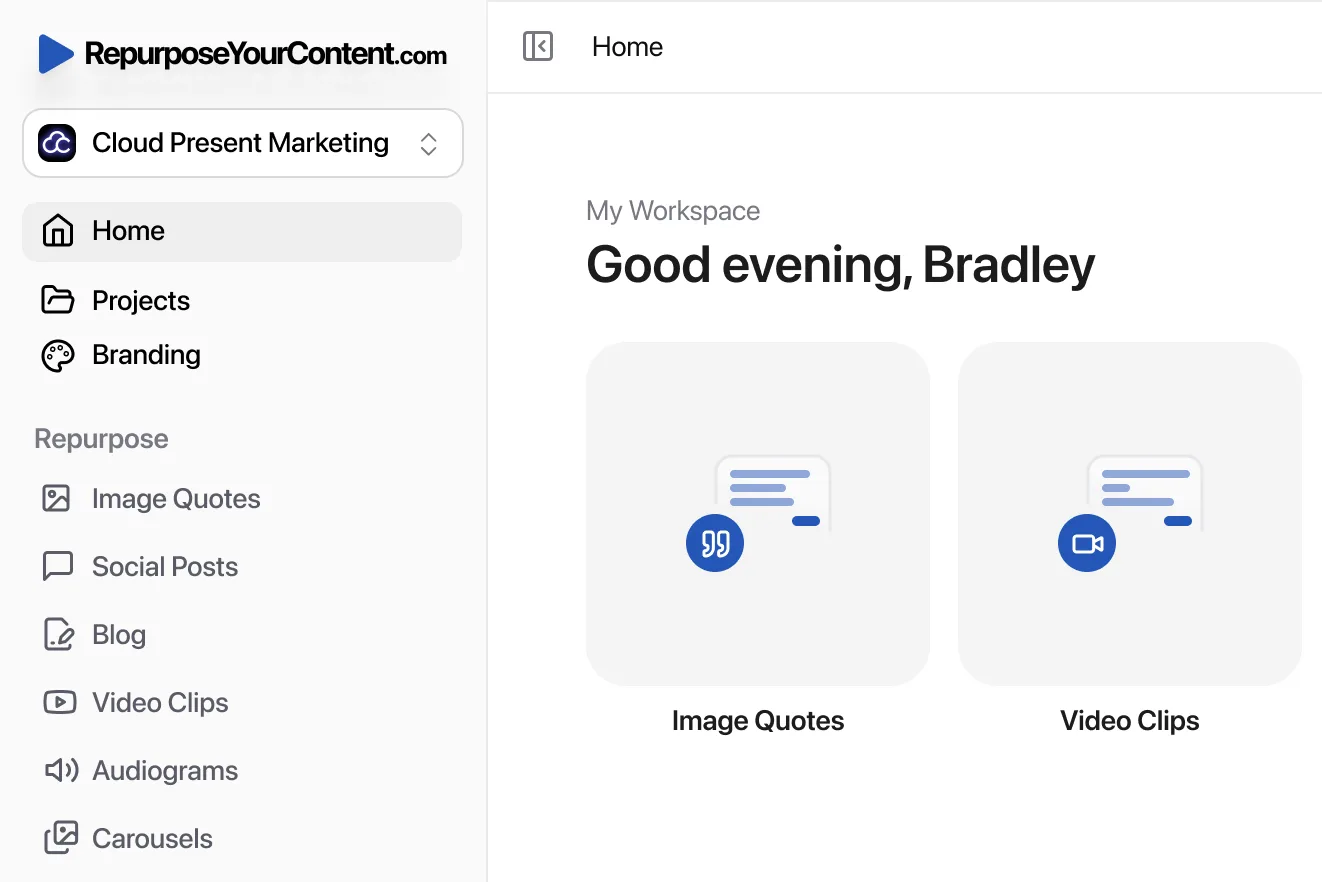
Step 1: Upload the webinar recording to RepurposeYourContent.
Step 2: Generate draft outputs such as blog posts, clips, social posts, newsletters, audiograms, image quotes, LinkedIn carousels, and timestamps.
Step 3: Pick one primary keyword for the article and two or three closely related secondary terms.
Step 4: Rewrite the draft so it reads like an expert resource, not a transcript.
Step 5: Add a clear summary, section headings, internal links, and one embedded clip that supports the page.
Step 6: Publish the article on your site, then distribute supporting video assets to YouTube and LinkedIn.
That process turns one webinar into an indexed article, a watchable video, and multiple supporting touchpoints.
What the blog post needs to include
Do not paste the transcript and call it done.
A useful post opens with the business problem, answers the core questions raised in the webinar, and pulls out the strongest examples or proof points. If your webinar is about video schema, the post should explain what schema to add, where to add it, and what common implementation mistakes to avoid. Give the reader a reason to stay on the page even if they never press play.
RepurposeYourContent helps with the production step. It creates draft blog posts and supporting assets from the same source recording, which cuts manual work for lean marketing teams. If you want to tighten the post-production workflow around clips as well, review these AI video editing tools for marketers.
If your team is comparing writing workflows, this review of AI blog writing tools comparison is a useful starting point. If you need cleaner prompts during editing, read What Is Prompt Engineering.
One more practical point. The article and the video should support each other visually. If you are creating supporting video assets and planning promotion, study examples of strong thumbnail framing like this YouTube thumbnail face. Clear visuals help the click. Strong page copy helps the rank. You need both.
For teams still publishing webinar recordings with no supporting page, this is the fix.
6. Optimise Video Thumbnails and Test Them
90% of the result is the click. If your thumbnail fails, your webinar replay will not get the play, the watch time, or the downstream rankings you want on YouTube, Google, or LinkedIn.
For B2B teams, this is not a design detail. It is a distribution decision.
A webinar thumbnail needs to sell one clear outcome in one glance. Use the speaker’s face. Use a tight crop. Use short text that states the payoff. “Fix Video Schema” beats a vague title slide every time. Default webinar screenshots look cheap and get ignored.
Use these rules:
- Show a person: Faces beat interface shots and slide grabs for most webinar clips.
- Write 2 to 4 words: State the benefit, not the topic.
- Push contrast hard: If it does not stand out on mobile, redo it.
- Keep branding light: A small logo is enough. Do not turn the thumbnail into a template prison.
- Match the search intent: “How to add video schema” needs a practical, specific thumbnail. “2026 video SEO trends” can carry more visual tension.
Quality still matters. A clean HD source frame gives you more options for crops, expressions, and overlays. That matters when you turn one webinar into multiple assets with different search intents and different platforms. The replay page thumbnail does one job. A YouTube clip does another. A LinkedIn promo cut needs its own treatment.
Test thumbnails by content type, not by guesswork. How-to clips usually respond to direct benefit language. Opinion clips often work better with a stronger facial expression. Product walkthroughs need clarity first.
Change one variable at a time. Test the face, the crop, or the text. Do not change all three and call it a result.
If you are turning one webinar into a replay page, short clips, and LinkedIn posts, build thumbnail testing into your content repurposing workflow for 2026. That is how one source recording becomes a search asset instead of a forgotten upload.
If your team needs better visual framing, review this breakdown of a YouTube thumbnail face.
Never publish with the auto-selected frame.

7. Build Topic Clusters Around Every Core Video
One webinar should not produce one page. It should produce a cluster.
That’s how you build topical authority. One broad asset. Several focused support pieces. All internally linked.
A webinar on video SEO can become:
- A pillar blog post
- A page about YouTube titles
- A page about transcripts and captions
- A page about schema markup
- A page about hosting choices
- Several short clips
- LinkedIn carousel summaries
- Email recaps
Use the webinar as the source of truth
Start with the main page. That’s the broad guide or replay page. Then break the subtopics into support content.
Example:
- Pillar page targets “video SEO best practices 2026”
- Support page targets “video schema markup for webinars”
- Support page targets “how to embed video on blog posts”
- Support page targets “YouTube chapters for B2B videos”
Then link them both ways. The pillar page links out to the subtopics. The subtopics link back to the pillar.
Your internal linking should mirror how the buyer learns. Broad topic first. Specific problem second.
This works especially well for B2B teams because webinar content is naturally structured. Most sessions already have agenda sections, questions, examples, and tactical segments. Those become your cluster pages.
RepurposeYourContent makes this easier because it can create multiple content formats from one source recording. If you need a broader planning model, keep this guide to content repurposing strategy 2026 in your content ops docs.
Don’t scatter isolated assets across your site. Connect them. That’s how the whole topic gets stronger.
8. Optimise for YouTube Search and Engagement Signals
YouTube rewards videos that keep attention. A slow webinar replay will lose that fight fast.
Treat YouTube as a discovery channel with its own ranking signals. Your page can rank on Google because the transcript, schema, and supporting copy are strong. Your video ranks on YouTube when people click, keep watching, and take the next action.
That matters for B2B teams repurposing webinars. A single recording should not go up as one untouched asset. It should become a trimmed replay, several focused clips, a clear chaptered archive, and supporting content built around buyer intent on Google, YouTube, and LinkedIn.
Edit for retention, not archive value
Start with the first 30 seconds. Remove housekeeping, late starts, and internal introductions. Lead with the problem, the promise, or the strongest takeaway.
Then tighten the rest.
Use this checklist:
- Cut dead air and repeated points
- Move the best insight earlier
- Add on-screen pattern changes every few minutes
- Break long sections with slides, demos, or speaker switches
- End with a clear next step, such as a related clip, replay page, or demo
For example, a 45-minute webinar on video SEO usually performs better as one edited replay plus three short clips like “How to write YouTube descriptions for B2B videos” or “What webinar schema to add to your landing page.” That gives you more chances to rank for specific searches instead of forcing every viewer into the full session.
This video is a useful example format for YouTube-first structuring:
Use chapters to match intent
Chapters do more than improve usability. They help viewers jump straight to the section they care about, which is exactly how B2B buyers behave.
A VP of Marketing may want the strategy section. A content manager may want the workflow. A demand gen lead may skip straight to schema or distribution. Chapters let one webinar serve all three without forcing them through the full timeline.
A clean chapter list might include:
- Why video SEO matters in 2026
- Title and description workflow
- Schema markup for webinar pages
- Transcript and caption process
- Turning the webinar into a blog post
- Q and A
If your team needs a repeatable process, use this guide on adding YouTube timestamps and chapters.
Watch YouTube Analytics closely after publishing. Focus on click-through rate, average view duration, retention drops, and end-screen clicks. Those metrics tell you where the packaging is weak and where the edit needs work. Make changes quickly. On YouTube, small improvements in title, thumbnail, structure, and chaptering can turn one webinar into an asset that keeps getting found.
9. Optimise for Voice Search and Conversational Queries
Voice queries are longer, messier, and closer to how buyers talk. That matters for video SEO because B2B prospects do not search like keyword tools suggest. They ask specific questions with clear intent, especially after they have watched part of a webinar and want one answer fast.
Write for that behaviour.
Match the way buyers phrase the problem
A demand gen lead will not search "video SEO captions webinar". They will ask, "How do I get a webinar ranking in Google?" A marketing ops manager will ask, "What schema should I add to a video landing page?" Those are different queries, and they need different answers.
Use full-question phrasing in three places:
- the page copy around the embedded video
- the transcript and captions
- the repurposed blog post built from the webinar
Put the answer near the top of the page or section. Keep it tight. One clear sentence first. Then expand if needed.
Good examples:
- How do I optimise a webinar page for Google?
- Should I host B2B videos on YouTube or Wistia?
- What belongs in a video description?
- Do transcripts improve video rankings?
Use webinar Q and A as search-ready content
This is one of the easiest wins for B2B teams. Your webinar already contains the language prospects use. The Q and A section is usually the best part because it captures real objections, real terminology, and real buying-stage questions.
Turn those moments into assets that can rank across Google, YouTube, and LinkedIn:
- short clips titled as direct questions
- blog subheads written in question format
- FAQ blocks on the webinar page
- description copy that mirrors buyer phrasing
One webinar can do far more than generate one long video. It can produce a search-focused page, multiple answer clips, and a set of question-led sections that cover commercial intent from several angles.
Build answers for all three platforms
Google wants a page that clearly answers the query. YouTube wants a video that satisfies the search. LinkedIn wants native content that earns clicks and discussion from the right audience.
So do not stop at "add natural language." Build a workflow. Pull 5 to 10 high-intent questions from the webinar. Answer each one in the transcript. Turn the strongest answers into clips. Add those same questions as on-page headings around the embedded video. Then support the page with FAQ schema if it fits the content and the page format.
That is how one webinar becomes a stronger search asset across channels instead of a single upload that disappears after launch.
Voice search optimisation is not a separate project. It is a smarter way to structure the webinar, the page, and the repurposed content around the exact questions B2B buyers already ask.
10. Keep Updating Your Video SEO Assets
A webinar page that ranks in Q1 can slide by Q3 if you leave it alone.
B2B teams publish the recording, paste in a short description, and move on. That wastes the asset's value. One webinar should keep producing search traffic, better watch time, and stronger conversion paths long after launch.
Treat every video page like a living revenue asset. Review it on a schedule. Fix what is underperforming. Expand what buyers clearly want more of.
Update the page based on real performance
Start with what changed after publish:
- Rewrite the title if impressions are high and clicks are weak
- Replace the thumbnail if the video gets seen but ignored
- Expand the description if the page is thin or the topic has shifted
- Add new internal links when related product, use case, or comparison pages go live
- Tighten timestamps if viewers drop at the same point
- Refresh the transcript and on-page copy to match the language sales calls now use
- Turn strong Q and A moments into new clips, FAQs, and supporting sections on the page
As noted earlier, video now plays a central role in B2B buying. That is exactly why old webinar pages deserve maintenance, not neglect.
Update the full asset stack, not only the video file
The ranking asset is bigger than the recording. It includes the page, transcript, schema, metadata, clip strategy, and repurposed content around it.
That matters in B2B because your webinar is rarely a one-channel asset. The same source video can rank on Google through the hosted page, on YouTube through search and engagement, and on LinkedIn through native clips built from the same session. If one part gets updated and the rest stays stale, performance stalls.
A practical workflow looks like this:
- Rewatch the webinar and pull out new buyer questions that matter now
- Update the blog post or landing page with clearer answers and stronger subheads
- Refresh VideoObject schema if the page structure, upload date, or clip details changed
- Cut one or two new LinkedIn clips from the best commercial moments
- Update the YouTube description and pinned comment to reflect the current CTA
- Check that captions, transcript text, and on-page copy still match the offer and positioning
Choose hosting based on the job
Use YouTube for reach. Use your own site for rankings and conversion control.
That setup works for B2B because it covers discovery and demand capture at the same time. YouTube helps the webinar get found. Your site gives you the page authority, schema control, transcript depth, and conversion path that YouTube cannot.
Wistia can be a strong fit if your team cares about embedded experience, lead capture, and player control. Self-hosting gives maximum control but adds more technical work. Pick the setup your team will maintain well.
Set a quarterly review cycle. Revisit older webinar pages. Improve the metadata, add missing supporting content, and republish the asset where needed.
That is how one webinar becomes a durable search asset across Google, YouTube, and LinkedIn, instead of a recording that fades after launch.
10-Point Video SEO Best Practices Comparison (2026)
| Strategy | Implementation complexity | Resource requirements | Expected outcomes | Ideal use cases | Key advantages | Key limitations |
|---|---|---|---|---|---|---|
| Optimise Video Titles with Primary and Secondary Keywords | Low–Medium, copywriting + keyword research | Keyword tools (SEMrush/Ahrefs), time for A/B tests | Higher search visibility and CTR | Short-form clips from webinars across YouTube/LinkedIn | Improves organic discovery; easy to A/B test | Risk of keyword stuffing; trade-off between SEO and readability |
| Write Comprehensive, Keyword-Rich Video Descriptions (300–500 words) | Medium, structured writing and linking | Time, analytics, keyword research, transcript access | Better topical relevance, improved rankings and internal traffic | Long webinars and B2B content needing context and CTAs | Stronger semantic signals; drives watch time via timestamps | Time‑intensive; easy to over‑optimise; needs updates |
| Implement Structured Data Markup (VideoObject Schema) | High, technical JSON-LD implementation | Developer support, validation tools (Rich Results Test) | Eligibility for rich results, improved SERP CTR and indexing | Hosted video pages, site-embedded webinar clips | Rich snippets, thumbnails, carousel eligibility | Technical errors can confuse search engines; maintenance required |
| Create SEO-Optimised Transcripts and Closed Captions | Medium, AI transcription + manual editing | Transcription tools (Descript/Otter), editor time | More indexable text, higher accessibility and watch time | B2B webinars repurposed into blog posts and knowledge bases | Accessibility, repurposing content, long-tail keyword gains | AI errors for technical terms; manual cleanup required |
| AI-Powered Blog Posts from Video (RepurposeYourContent) | Low–Medium, AI draft generation + human review | AI platform access, editor review time | Multiple blog ranking opportunities; reduced content creation time | Converting webinars into multi-angle blog series quickly | High productivity; strengthens internal linking and topical coverage | Requires human fact-checking; duplicate content risk |
| Optimise Video Thumbnails with AI and A/B Testing | Medium, design plus testing workflow | AI thumbnail tools, design templates, traffic for tests | Significant CTR lift and better placement in recommendations | On-camera webinars or speaker-led clips for YouTube/social | Rapid iteration; large CTR improvements with face-based thumbnails | Needs on-camera speakers; statistical significance needs volume |
| Build Topic Clusters and Internal Linking Strategy | High, strategic planning and large content volume | Content team, mapping tools, many cluster assets | Increased topical authority and broader keyword rankings | Pillar webinars used as cornerstone content with many assets | Concentrates authority; improves crawl efficiency and UX | Resource intensive; complex to execute and maintain |
| Optimise for YouTube's Algorithm and Engagement Metrics | Medium, editing for hooks and retention | Video editing, analytics monitoring, testing resources | Higher YouTube rankings, more suggested/autoplay traffic | Short (5–15 min) webinar highlights for YouTube | Engagement-driven visibility; clear optimization signals | Algorithm changes; metrics take weeks to stabilise |
| Leverage Video Content for Voice Search & Conversational SEO | Medium, structure Q&A and transcripts for voice | Transcripts, FAQ/HowTo schema, conversational keyword research | Better chance at voice snippets and position zero | Q&A-heavy webinars and FAQ-focused content | Captures long-tail conversational intent; lower competition | Featured snippet placement unpredictable; evolving intent |
| Progressive Video Enhancement & Dynamic SEO Updates | High, automation, monitoring and CMS integration | Technical infrastructure, automation tools, monitoring | Improved SERP appearance over time; fresher metadata | Large video libraries needing continuous optimisation | Continuous performance gains; reduces manual audits | Complex setup; risk of automated errors; CMS limitations |
Stop Creating Net-New. Start Optimising What You Have.
Most B2B teams don’t have a content creation problem. They have a content extraction problem.
The expertise already exists. Your team recorded it in webinars, demos, panels, workshops, and customer sessions. The issue is what happens after the event. Too often, the recording gets uploaded, shared once, and then ignored. That leaves search traffic, buyer education, and long-tail pipeline value sitting idle.
That’s why video SEO best practices 2026 need to be treated like an operating system, not a publishing checklist.
You need a repeatable workflow.
One webinar should become a full search asset. That means a keyword-focused title. A description that says something useful. Chapters for longer sessions. Captions and a clean transcript. A proper page on your site with VideoObject schema. A blog post built from the same source content. Internal links into the rest of your topic cluster. Clips for YouTube and LinkedIn. A thumbnail someone will click.
That sounds like a lot until you stop doing it manually.
The practical shift is simple. Stop asking your team to invent more topics every week. Start extracting more value from the topics you’ve already covered. That change improves output quality and search coverage at the same time.
If you run demand gen, this helps you extend campaign life. If you run content, this gives you a scalable publishing engine. If you run webinars, this turns each session into months of useful assets. If you run an agency, this gives clients more value from work they already paid for.
The easiest place to start is still the most overlooked one. Publish a blog post from every meaningful video. It’s the cleanest bridge between video engagement and search visibility. The text gets indexed. The embedded video makes the page more useful. The page gives you somewhere to add schema, links, and conversion intent. It also gives sales and customer teams a better asset to share than a raw replay link.
Then build from there.
Use one webinar as your weekly source asset. Turn it into a main article. Pull clips by subtopic. Add a transcript. Create timestamps. Post a LinkedIn carousel. Send a short newsletter summary. Link every asset back to the core page.
That’s how you build compounding visibility without constantly chasing net-new production.
RepurposeYourContent fits neatly into that system. It takes one webinar recording and creates multi-format outputs such as video clips, blog posts, social posts, audiograms, image quotes, newsletters, LinkedIn carousels, and timestamps. If your team wants a faster way to turn recorded expertise into search-ready assets, it’s a relevant option. You can also use it to generate SEO-focused blog drafts for each webinar at /product/blog-posts.
You do not need more unused recordings. You need a workflow that makes each one rank, get watched, and drive action.
Try RepurposeYourContent and turn your next webinar into weeks of ready-to-publish SEO content.
Tags: