How to Scale Content Production Without Hiring in 2026
Learn how to scale content production without hiring. Discover three practical strategies for B2B marketers to 3x their content output with zero new budget.

Your content demand just tripled. Your budget did not. The CEO wants you on every social platform, sales needs more assets, and your team is already at capacity. This feels impossible.
The typical response is to work longer hours or search for a perfect, but non-existent, freelance hire. Neither is a strategy. Both lead to burnout.
You must change your production model. To learn how to scale content production without hiring, you need a system. An engine that turns one high-effort asset into dozens of smaller pieces with minimal work.
A single content writer produces about four original posts per week. A repurposing workflow can turn one webinar into over 30 content pieces in minutes. The math is clear. This guide provides the framework.
Three Strategies to Scale Content (Without New Hires)
To meet impossible content demands, your focus must shift from creation to multiplication. It comes down to three pillars:
- Radical Repurposing: This is your highest-return activity. Squeeze every drop of value from existing content like webinars. You skip the blank page and endless ideation.
- AI-Assisted Creation: Use AI as a junior team member. It handles drafting, summarizing, and formatting. Your experts focus on strategy, insights, and final polish. It's about assistance, not replacement.
- Strategic Templatizing: Stop reinventing the wheel. Create repeatable formats with pre-built checklists and designs. You slash the time it takes to get from idea to published asset.
These methods form a modern content operations playbook. This is how you meet aggressive targets and prove marketing's value. All without adding payroll.
Strategy 1: The Radical Repurposing Workflow
Repurposing is not just chopping up a video. It is a strategic system for multiplying your impact. It is the single highest ROI approach to scale content production without hiring.
The math is simple. A good writer might produce four original articles in a week. A smart repurposing workflow can spin a single one-hour webinar into over 30 distinct pieces of content. This is not a week's work. It takes minutes.
This strategy eliminates the most time-consuming part of content creation: ideation. Your subject matter experts have already done the heavy lifting. Your job is to extract that value and distribute it across all your marketing channels.

It starts with repurposing core assets. This gives you raw material for AI to create new formats. Templates make it all consistent and repeatable. It’s an efficient cycle.
The Content Atomization Model
The core idea is to take one large, valuable asset and break it down into smaller, native pieces. This is content atomization.
Your latest webinar is a pillar asset. It is a goldmine. It contains all the raw material you need for a month of content. From that single source, you can launch an entire campaign.
For instance, one 60-minute webinar can become:
- SEO-Optimized Blog Posts: Transcribe the session. Use key talking points to structure a detailed article. This captures long-tail keywords.
- Short Video Clips: Pinpoint the 3-5 most impactful moments. Turn them into short, subtitled videos for LinkedIn, X, and Instagram.
- LinkedIn Carousels: Visualize a key concept or list from the webinar as a multi-slide carousel. These are engagement drivers on LinkedIn.
- Email Newsletters: Summarize the webinar’s top three takeaways. Send it to your email list to drive traffic.
- Image Quotes: Pull out the most powerful quotes. Drop them onto branded templates for quick, shareable social graphics.
The goal is to create content in formats native to each platform. You meet your audience where they are. You give them content how they like to consume it. We detail this in our content multiplication framework.
Stop thinking in one-off content pieces. Start thinking in campaigns that spring from a single pillar asset. This shifts you from a creation treadmill to strategic distribution.
How RepurposeYourContent Helps
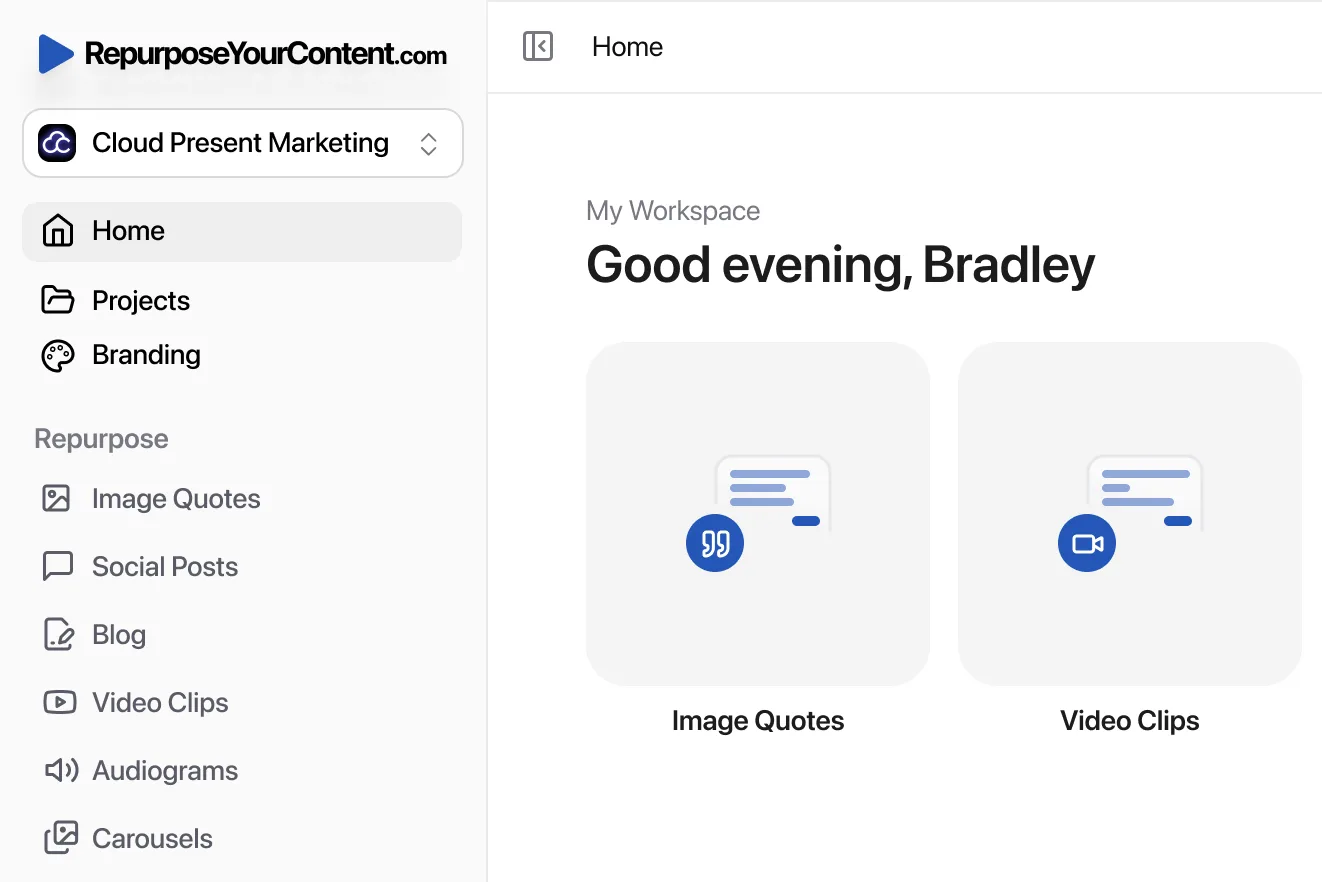
A repurposing workflow must be faster than doing it manually. This is where you solve the problem of scaling content production without hiring. A tool like RepurposeYourContent turns a single recording into a full month of assets. It makes the manual production line obsolete.

The system is built for in-house content teams and busy agencies needing to deliver more value.
Here is the workflow:
Step 1: Upload Your Recording Upload any video or audio file. You can also paste a link from Zoom, YouTube, or Vimeo. The AI immediately transcribes the entire session with over 95% accuracy. It identifies speakers and timestamps every word. This creates the foundation for every asset.
Step 2: Select Your Content Assets Instead of manual work, you tell the system what you want. A B2B marketing team might request these assets from one webinar:
- 8 Short video clips
- 1 SEO-optimized blog post
- 15 Social posts
- 4 Audiograms
- 15 Image quotes
- 1 Email newsletter
- 2 LinkedIn carousels
- Automatic timestamps for the video description.
This is a 30-second decision, not a multi-day project.
Step 3: Generate and Publish Hit generate. The AI analyzes the transcript to find the most valuable insights, questions, and data. It then generates every asset you requested. It also applies your brand kit—logo, colors, and fonts—to every piece. Videos get branded intros and subtitles. Image quotes appear on branded templates. The blog post is formatted with your H2s and H3s.
In about five minutes, you get a folder with 30+ platform-ready content assets. The system bypasses the need for separate video editors, graphic designers, and copywriters. It collapses a week of work into one automated workflow. For any team with a hiring freeze, this is the most direct way to scale output.
Strategy 2: AI-Assisted Content Creation
Once your repurposing system is running, you have a stream of raw material. Now use AI to help create new content faster. This acts as a force multiplier for your current team.
This is not about firing your writers. It is about eliminating the 80% of their work that is tedious. Think of AI as a fast junior team member. It handles the heavy lifting. Your human experts can focus on strategy, unique insights, and final polish.
Where AI Actually Helps
The real value of AI is not writing articles from a single keyword. The value is using it for specific tasks that smooth out your workflow. AI shines when given a clear job and good source material.
Here is where AI makes a real difference:
- Creating First Draft Outlines: Give AI your SEO research and competitor analysis. It can produce a comprehensive outline in minutes. This saves your writer hours of planning.
- Turning Rough Notes into Drafts: Your subject matter experts are busy. Ask them for a 10-point bulleted list. An AI can turn that brain dump into a coherent first draft.
- Handling Tedious Formatting: Use AI to turn a dense wall of text into a scannable bulleted list. Ask it to reformat a blog post intro into snappy social media posts. The time saved adds up.
By slotting AI into these parts of your process, you preserve your team’s brainpower. They start with a draft that is already 60% complete. Their job shifts from "creator" to "editor and strategist"—a more scalable role.
A Real-World AI Workflow Example
You need a technical blog post from an engineer. The old way was painful: interviews, transcribing, and endless edits. The AI-assisted way is leaner.
The Workflow:
- The Input: Ask your engineer for 15 minutes of raw thoughts in a doc. Just a list of bullet points, key data, and the main takeaway.
- The AI Prompt: Feed that text into your AI tool with a specific prompt. For example: "Act as an expert B2B copywriter. Turn these notes into a 1,000-word blog post for technical marketing managers. Use a confident, direct tone. Structure it with clear H2 and H3 headings."
- The Human Touch: The AI generates a structured draft in 60 seconds. It will not be perfect. Your writer now refines the language, adds examples, and ensures the tone is on-brand.
You turned a multi-day project into a task that takes a few hours. The engineer provides the knowledge. The writer provides the polish.
To see how this applies to video, check out our AI webinar repurposing guide for more ideas.
AI’s biggest gift to content scaling is eliminating the setup time. It handles the outlining and initial drafting that consumes a writer's day. For more efficiency, explore the best AI tools for podcasters and creators. Many automate editing and show note generation, freeing you to create core content.
Strategy 3: Create Repeatable Formats to Work Faster
Stop reinventing the wheel every time you create content. It is a massive time-suck. Create repeatable content formats that your team can execute on near-autopilot.
The goal is to conquer the blank page. A creator should start with a proven framework that is already 80% complete. This is about systemizing what works and keeping your brand consistent.

This one change can cut the time from idea to publication in half.
Turning One-Offs into a Production Line
A content format is a pre-defined content series with its own goal, structure, and style. It turns content creation into a predictable production line.
Develop a handful of core formats to cycle through your editorial calendar. This adds predictability and makes planning simple. Your team knows what’s coming, which eliminates decision fatigue.
Here are a few examples:
- Monthly 'Expert Q&A' Blog Post: A structured interview with a team member or external expert.
- Weekly 'Data Point' LinkedIn Post: A single statistic turned into a simple graphic with a standard copy format.
- Bi-weekly 'Myth vs. Fact' Carousel: A recurring LinkedIn carousel that busts common industry myths.
For each, you build a system around the entire production process.
Assembling Your Format "Production Kits"
Every format needs its own "production kit." This package contains everything a creator needs to get the job done. It’s the key to letting anyone on your team produce a high-quality, on-brand asset.
Your production kit for each format should have three key items:
- A Production Checklist: A step-by-step guide listing every task, from briefing to scheduling.
- A Design Template: Set this up in Canva or Figma. For the carousel, this means pre-designed slides with placeholders for text and images.
- A Pre-written Copy Shell: A document with placeholder copy and clear instructions. For the 'Data Point' post, this might include three opening hooks and a caption structure.
Once this kit is ready, creating the next piece feels like assembling a kit. The guesswork is gone. The workflow moves much faster. A solid template builds a consistent brand experience. Your audience learns to recognize your formats, which builds trust.
Example Repeatable Content Formats
| Format Type | Key Elements to Templatize | Estimated Time Saved Per Piece |
|---|---|---|
| Monthly Expert Q&A | Standardized interview questions, blog post structure, promotional email copy. | 3-4 hours |
| Weekly Data Point Graphic | Canva/Figma template, pre-written social media caption shells. | 45 minutes |
| Bi-weekly 'Myth vs. Fact' Carousel | 10-slide carousel template, copy framework for each slide, production checklist. | 2-3 hours |
| Customer Story Snippet | Video clip template (intro/outro), social post copy formula, quote graphic template. | 1-2 hours |
This approach allows a high publishing rhythm without a massive increase in effort. It is a core discipline for any team that needs to do more with less. Using an editorial calendar template for marketing teams is a great place to organize your content formats.
By combining radical repurposing, AI assistance, and strategic templatizing, you build a resilient content engine. You stop relying on individual efforts and start depending on a smart, scalable system. This is the only sustainable way to meet increasing content demands without a bigger team.
Scaling Content Production Without Hiring FAQ
Questions always come up when discussing scaling content without growing the team. Here are answers to the most common ones from B2B marketers.
How Do I Justify This Approach to Leadership?
Getting buy-in from leadership requires speaking their language: numbers. Frame this strategy around efficiency and ROI.
Show them the math. A new content writer costs $60,000+ per year to produce maybe 6 assets a week. A repurposing workflow, powered by a tool like RepurposeYourContent, costs a fraction of that. It can turn a single webinar into 30+ pieces of content.
Talk about business impact:
- Reduced Costs: "We can triple content output for 20% of the cost of one new hire."
- Increased Speed: "We can launch a full campaign in one day, not three weeks."
- Better Asset Value: "We can turn one webinar into assets for sales, demand gen, and social teams."
This changes the conversation. You are presenting a plan to achieve more with what you have.
Will Quality Suffer if We Use AI and Templates?
No, if you use them correctly. The idea is not to have a robot write your thought leadership. It is to free up your human experts from repetitive work.
Quality drops when you ask AI to be a strategist. It is not. It is a fast assistant.
Here is how to think about it:
- AI does the first 60%: It handles transcribing or turning notes into a structured first draft.
- Your team does the last 40%: They add nuance, unique insights, and brand voice. This is high-value work only people can do.
Templates ensure consistency, not mediocrity. A good template means every post has the right brand colors, font, and logo. Your designer can focus on making the insights look incredible. Your team's time shifts from starting at a blank page to providing the final, strategic polish.
How Do I Measure the Success of a Scaled Content Engine?
You must measure success to prove the value of this system. Move beyond counting published articles. Track metrics that matter to the business.
Focus on these key metrics:
- Content Velocity: How many assets do you produce per week or month? This is your new baseline.
- Time-to-Publish: How long does it take to get from a live webinar to a finished asset? This should drop significantly.
- Cost Per Asset: Divide your total content budget by the number of assets created. This number should plummet.
- Asset Engagement Rate: Are people watching the repurposed clips or sharing the carousels? This tells you if the quality is hitting the mark.
- Content-Sourced Pipeline: Are these assets helping generate leads and drive revenue? Track demo requests or trials traced back to your repurposed content.
When you focus on these metrics, you build a clear picture of how scaling production fuels business growth. Scaling content output without adding headcount is possible. It requires shifting from manual creation to an efficient, repeatable system.
Ready to see how much content is hiding in your last webinar? Try RepurposeYourContent and turn one recording into 30+ assets in minutes.
Tags: