Mastering the LinkedIn Algorithm 2026 for B2B Marketers
Reach dropping? Master the LinkedIn algorithm 2026 for B2B marketers. Get evidence-backed tactics to convert expertise into pipeline, not just likes.

LinkedIn reach got harder because the platform changed the rules. Median organic reach for B2B posts has dropped roughly 65% from peak levels, with company-page visibility often only 1–2% of follower feeds, according to Digital Applied's 2026 LinkedIn engagement guide. That's the pain point. It also explains why old posting habits stopped working.
The practical problem for B2B teams is bigger than vanity metrics. LinkedIn still sits at the centre of B2B social lead generation. If reach falls and content quality stays flat, pipeline suffers. That's why the linkedin algorithm 2026 for b2b marketers matters. It isn't a social media curiosity. It's a distribution problem tied directly to demand generation.
The fix isn't “post more”. It's the opposite. Post fewer things. Make them more useful. Put real expertise in the feed. Keep people on-platform. Give them something worth saving, sharing, and discussing.
Why Your LinkedIn Reach Plummeted and What to Do
Company-page posts now reach only a sliver of the audience they used to. If your LinkedIn performance fell even though your team kept posting, the problem is distribution mechanics, not effort.
Many B2B marketers mistakenly attribute weak reach solely to weak content. That misses the significant shift. LinkedIn has become far less generous with generic brand updates, especially posts written to satisfy internal stakeholders instead of helping buyers understand something useful.

Here's the hard truth. Corporate noise is getting filtered out. Safe company news, recycled campaign copy, and posts designed to push people off-platform are weak inputs for the 2026 algorithm. The feed now rewards content that sounds like it came from someone who knows the subject, has a point of view, and can hold attention long enough to start a real professional discussion.
That changes what B2B teams should publish and who should publish it.
What changed in practical terms
The strongest reach now comes from visible expertise. That means individual voices, native formats, and posts built around a clear idea instead of a corporate announcement.
For UK B2B teams, the immediate moves are straightforward:
- Move beyond company-page dependency. Executive and subject-matter-expert profiles now carry more weight than brand broadcasting.
- Use native assets. Carousels, short video clips, and discussion posts fit LinkedIn's ranking logic better than link-led updates.
- Optimise for depth of attention. Posts people pause on, save, and discuss outperform posts that collect a few fast likes and disappear.
Practical rule: If a post sounds like it came from legal, brand, and campaign ops all at once, it will usually underperform.
This is why webinar-sourced content has become so efficient. A good webinar already contains expert opinion, objections, examples, and language buyers use in real conversations. That gives you raw material for clips, carousels, quote posts, and sharp text posts that feel human because they started with an actual expert saying something worth hearing.
Timing still matters. It just ranks below substance. If your team is tightening distribution, pair better content with a smarter schedule using this guide to the best times to post on LinkedIn in 2026.
What to do now
Stop treating LinkedIn like a noticeboard. Use it as an expertise channel.
Cut the volume of promotional posts. Publish more insight-led posts from specialists inside the business. Turn webinars into native LinkedIn assets instead of letting that expertise die in a registration page, a recording library, or a one-off event recap. That is the simplest way to match what the 2026 algorithm wants: credible people sharing useful ideas in formats the platform wants to distribute.
The Core Algorithm Shift From Volume to Value
LinkedIn is no longer rewarding presence alone. It's rewarding proof of expertise.
A 2026 strategy summary describes LinkedIn as prioritising authentic engagement over reach, video over static posts, and personal connections over company-page posting, with native video said to generate 5x more engagement than static posts on average and dwell time now used as a ranking signal, according to LA Growth Machine's LinkedIn marketing strategy 2026 summary. That's not a small tweak. It's a full shift in what the platform wants to surface.
LinkedIn wants knowledge, not noise
This is the part many teams still miss. The platform isn't trying to reward whoever publishes the most. It's trying to rank who adds the most useful professional context.
That changes the hierarchy of engagement signals. Likes still exist, but they're weak. Real comments carry more weight because they signal thought. Saves matter because they suggest future reference. Shares, especially private shares, indicate relevance strong enough to pass to a colleague.
Posts that teach, clarify, challenge, or frame a problem well are better suited to this model than campaign-led updates.
Why external links keep losing
LinkedIn makes money by keeping users on LinkedIn. That's why native video, native documents, and text-led discussion posts have an advantage over content designed to send people elsewhere.
B2B marketers don't need algorithm “hacks”. They need alignment. If the platform favours content that keeps attention in-feed, then the content plan should do exactly that.
Useful content now beats frequent content. A single sharp expert insight will outperform a week of corporate filler.
That's why webinar-sourced content works so well in 2026. A webinar already contains the ingredients LinkedIn wants. Human delivery. Specific expertise. Natural phrasing. Real examples. Strong opinion. Those assets feel less manufactured because they usually are.
The strategic implication
The winning play is not more output. It's stronger source material, repackaged into native formats.
B2B teams should build around subject expertise and repeat core themes often enough that LinkedIn can associate each person with a clear topic area. That makes educational video, insight-led carousels, and executive commentary far more effective than broad content calendars packed with low-value updates.
The LinkedIn Algorithm 2026 for B2B Marketers Explained
The linkedin algorithm 2026 for b2b marketers is easier to work with once the mechanics are clear. Reach isn't random. Distribution now follows a stricter test.
LinkedIn's March 2026 feed overhaul uses a quality gate followed by a 60-minute engagement evaluation window. Strong early engagement can expand reach beyond followers, while weak signals suppress distribution. Repeated topical consistency helps the model map an author to a content's semantic field, according to Vulse's breakdown of the 2026 LinkedIn algorithm.

Stage one quality gate
Every post faces an initial filter. Low-value promotion, vague thought leadership, and content that looks disposable are vulnerable here. So are posts that feel like a wrapper around an external click.
This is why many branded posts die early. They don't look like professional insight. They look like distribution assets.
Good posts pass this stage because they're clear, relevant, and anchored to a recognisable topic.
Stage two first-hour evaluation
If the post gets through the gate, LinkedIn tests it in the first hour. That window matters because the platform is deciding whether the content deserves broader exposure.
B2B marketers should treat that hour like a launch sequence:
- Publish from the right profile: Expertise reads better from a person than a logo.
- Use a tight topic: One post should cover one idea, not five weak ones.
- Stay available: Replies in the thread help sustain momentum.
- Encourage real discussion: A considered comment beats a passive reaction.
The first hour decides whether a post stays local or travels.
Semantic matching matters more than follower count
Many teams still play the wrong game. They chase audience size when they should be building topical consistency.
LinkedIn is trying to understand what each creator is known for. That means repeated publishing around one subject area helps the system match posts to the right readers. One webinar on attribution should become several posts on attribution, not one post on attribution, one on culture, and one on office life.
Teams building pipeline from LinkedIn should also connect content to outreach and selling motions. For marketers supporting sales, these actionable LinkedIn B2B sales strategies are useful because they show how content and prospecting work better together when both stay focused on the same buyer problems.
Four Content Formats That Win in 2026
Posts that hold attention keep getting distributed. Posts that read like recycled brand filler do not. That is the sorting mechanism now, and it is why webinar-sourced content has become such an efficient advantage for B2B marketers.

The winning formats all do the same job. They keep people on LinkedIn longer, make expertise easy to verify, and give the platform clear signals about topic relevance. If you need a practical menu of B2B video content formats for LinkedIn in 2026, start there. Then build around the four formats below.
Native video clips
Short native video is still the strongest format for earned trust. Buyers can hear conviction, spot rehearsed nonsense, and judge whether the speaker knows the subject.
The best clips usually come from webinars, customer Q&As, and live sessions where someone explains one hard point clearly. That source material matters. It produces sharper content than a scripted brand monologue because it starts with a real buyer question and a real answer.
Keep each clip focused on one claim, one mistake, or one lesson. If a webinar gives you ten useful moments, publish ten separate clips.
Document carousels
Carousels work because they reward attention. Every swipe is a small commitment, and that extra interaction gives strong educational content more room to hold the reader.
Use them for frameworks, teardown posts, before-and-after process changes, and distilled webinar slides. A good carousel should feel like a mini workshop, not a designed brochure. If the slides only repeat generic advice, the format will not save the idea.
Webinar content consistently delivers results. One live session can turn into a clean sequence of slides with a tight argument, practical examples, and language your buyers already use.
Insight-led text posts
Text posts still perform when they carry a clear point of view. They fail when B2B marketing teams use them to publish soft opinion, culture fluff, or safe summaries everyone has already read.
Strong text posts usually include three parts:
- A sharp opening line: State the problem or shift immediately.
- A real point of view: Explain what changed and what B2B marketers should do about it.
- A discussion prompt with substance: Ask for experience, disagreement, or examples. Do not beg for engagement.
For teams using AI to speed up drafting, these ChatGPT marketing prompts are useful for generating angles and hooks. The final post still needs an operator's judgment, not AI-polished mush.
Quote cards and expert visuals
Quote cards still work, but only when the idea is specific enough to stop the scroll. Generic inspiration is dead. Sharp expert framing still travels.
“Substantive expertise beats posting volume. One thoughtful clip can do more than ten forgettable updates.”
Use quote cards to capture a strong line from a webinar, panel, or interview. Pair it with a short caption that adds context or challenges a common assumption. That combination works because it feels earned. It came from someone saying something worth repeating, not a design team filling a content calendar.
The broader rule is simple. Corporate noise gets ignored. Authentic expertise gets distributed. Webinar-sourced content fits that reality better than almost any other input because it starts with real teaching, real specificity, and real voice.
Your New LinkedIn Publishing Cadence and Workflow
Many teams are still over-posting weak material and under-managing the response window. That's backwards.
LinkedIn drives 80% of all B2B social media leads, and its visitor-to-lead conversion rate is 2.74%, compared with 0.77% for Facebook and 0.69% for Twitter/X, according to Brenton Way's LinkedIn marketing stats roundup. For B2B marketers, LinkedIn discipline isn't optional. It's pipeline work.
The cadence that makes sense now
The old “publish constantly” model creates more low-signal content than useful distribution. A cleaner cadence works better.
A practical operating rhythm looks like this:
- Choose one core topic per quarter: Attribution, onboarding, RevOps, compliance, whatever matters to buyers.
- Publish one strong post per day at most: Quality has to survive the first-hour test.
- Use personal profiles first: Company pages can support, but people carry the authority.
- Reply quickly: Comments and replies keep the post alive and show the algorithm the discussion is real.
Teams trying to calibrate consistency without flooding the feed should review these LinkedIn posting frequency best practices for 2026.
A real workflow example
A simple workflow beats a bloated calendar.
Step 1. Record one customer-facing webinar on a narrow topic.
Step 2. Pull out one short native video clip with a strong opinion.
Step 3. Turn the webinar slides into a document carousel.
Step 4. Write one text post from the speaker's profile around a controversial lesson from the session.
Step 5. Block time after each post to answer every relevant comment.
That creates a coherent topic cluster instead of random content.
LinkedIn 2026 do's and don'ts
| Do This | Don't Do This |
|---|---|
| Publish from executives or subject experts | Rely only on the company page |
| Build posts around one clear idea | Cram multiple weak points into one update |
| Use native video, documents, and discussion posts | Lead with outbound links |
| Reply to comments in the first hour | Post and disappear |
| Repeat key themes consistently | Jump between unrelated topics every day |
How RepurposeYourContent Automates This Playbook
This playbook is straightforward. Producing it manually isn't.
Most B2B teams already have the raw material. It's sitting in webinars, customer sessions, demos, and expert panels. The bottleneck is turning that long-form expertise into platform-ready assets without burning a week on editing, copywriting, design, and approvals.

A practical production workflow
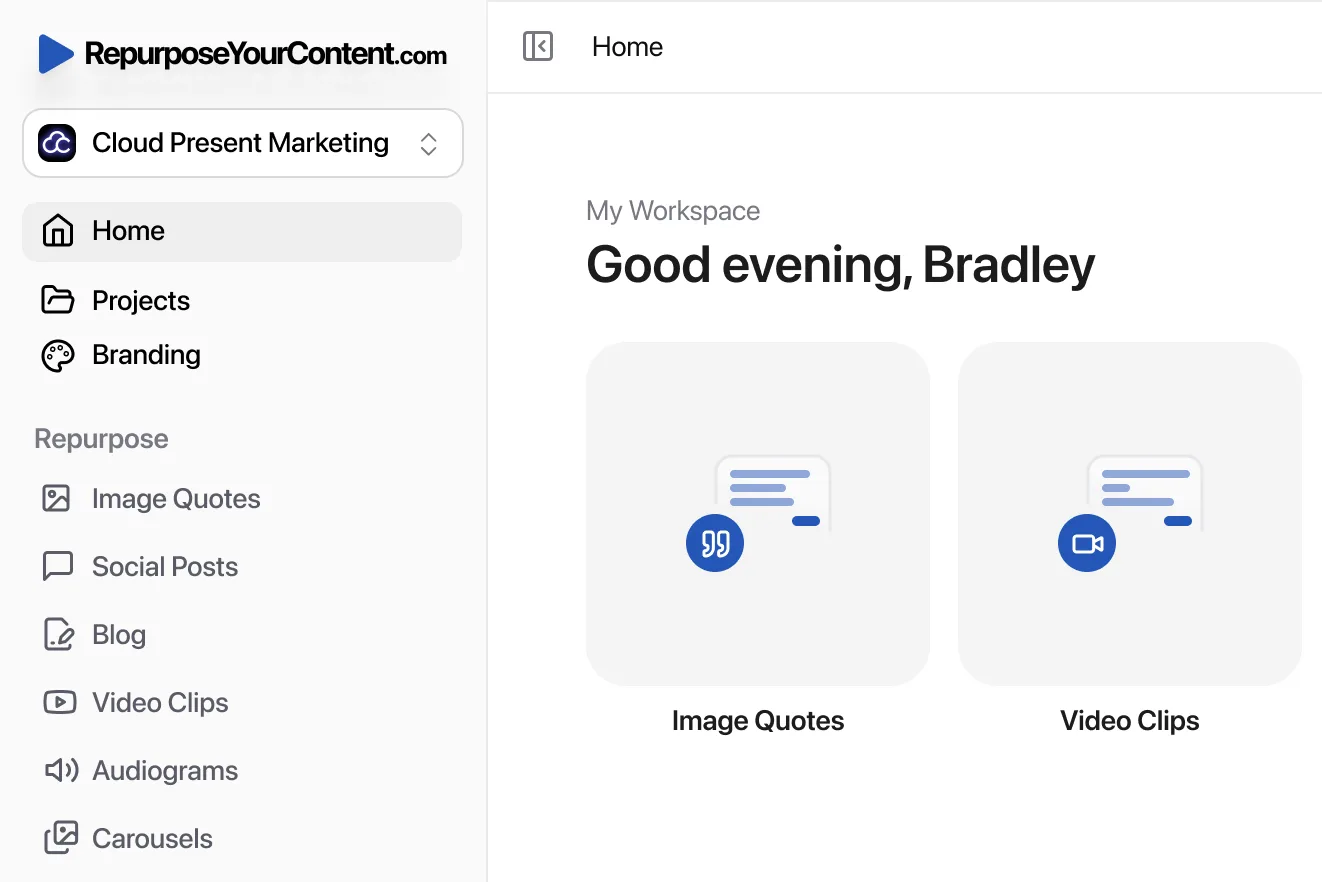
One workable approach is to use RepurposeYourContent, which takes a webinar recording and turns it into multiple formats including video clips, blog posts, social posts, audiograms, image quotes, newsletters, LinkedIn carousels, and timestamps.
A simple workflow looks like this:
- Upload one webinar recording: A file or recording link becomes the source asset.
- Choose the output types needed: Clips for LinkedIn, carousels from slides, quote cards from speaker moments, blog content from the transcript.
- Set the volume and review: The team selects how many pieces to generate, applies branding, then edits for final polish.
Why this matches the algorithm
This workflow fits the current feed because it starts with actual expertise. That matters. Webinar content is usually richer than content written from a blank page because it includes explanation, nuance, and unscripted phrasing.
It also solves the consistency problem. One webinar on a defined topic can produce a cluster of related posts. That supports semantic relevance, keeps the subject tight, and avoids the common trap of publishing disconnected content just to fill a calendar.
Teams focused on video-first LinkedIn output can also review the platform's video clips workflow to see how one long session can become several native assets without manual editing from scratch.
Strong LinkedIn content doesn't need more brainstorming. It needs a better source and a faster production path.
Measuring Performance Beyond Vanity Metrics
Vanity metrics mislead B2B teams on LinkedIn. Reach can signal distribution, but it does not tell you whether the right buyer paid attention, trusted the point, or took the next step. Likes are weaker still. They often reflect lightweight agreement, not commercial interest.
Track contribution instead. Teams that want to understand marketing contribution properly already know that surface engagement misses the actual effect of a post.
The metrics worth tracking
Use metrics that show whether your content earned attention strong enough to travel, stick, and influence:
- Saves per post: Saves usually mean the post had practical value worth returning to.
- Comment quality: Detailed comments from relevant people matter more than a high count of generic reactions.
- Profile clicks: This is a strong signal that the post created enough credibility for someone to check the source.
- Private sharing patterns: Buyer interest often shows up in DMs and internal forwarding before it shows up in pipeline reports.
Context matters. A post with modest reach and strong saves can beat a high-reach post that disappears after a day. A carousel that sparks thoughtful comments from buyers, partners, or category peers is doing more strategic work than an update that collects easy likes from existing followers.
This matters even more for webinar-sourced content. Webinars produce explainers, opinions, and proof points with enough depth to earn saves and serious comments. That is exactly what the 2026 algorithm keeps rewarding because it filters out corporate filler and pushes credible expertise higher in the feed.
If your team needs a tighter reporting model, use a content marketing ROI measurement approach that connects content signals to sales conversations, influenced pipeline, and topic-level performance. That is how you prove LinkedIn is shaping demand, not just producing dashboard noise.
Tags: