Marketing Automation for Content Teams: Scale Your Output, Not Your Workload
Discover marketing automation for content teams. Scale output, prove ROI, and stop manual work with real workflows, tools, and ROI calculations in this guide.

Your team spends 10 hours turning one webinar into social clips and a blog post. That's a £400 cost in team time every single time you hit "record". This manual grind of reformatting, resizing, and scheduling is killing your team's capacity for strategic work. Marketing automation for content teams isn't about replacing people. It's about replacing the repetitive tasks that drain their creativity and focus. It's how you scale your content engine without burning out your best talent.
What is Marketing Automation for Content Teams?
Marketing automation for content teams means using software to handle repetitive, low-value tasks. This frees your content creators to focus on what humans do best: strategy, creativity, and brand voice.
Think of it as an assembly line. Your team are the strategists and master craftspeople. The automation tools are the robotic arms doing the cutting, formatting, and packaging. This is how you produce more content without increasing headcount.
Your goal is to build a system that connects your tools. This creates a smooth workflow from idea to analytics, eliminating the manual hand-offs that create bottlenecks.

What to Automate vs. What to Keep Human
Knowing what to hand over to machines is crucial. You automate the predictable work to free up brainpower for creative problem-solving.
Automate This (The Machine's Job):
- Repurposing: Turning 1 webinar into 47 pieces of content. This includes video clips, blog drafts, and social posts.
- Formatting: Resizing images and applying brand templates across all assets.
- Scheduling: Publishing posts to your blog and social channels at optimal times.
- Distribution: Sending email newsletters and pushing content to various platforms.
- Reporting: Pulling basic performance data from analytics tools into one dashboard.
Keep This (The Human's Job):
- Strategy: Deciding what content to create and who it’s for.
- Original Thinking: Developing core concepts, stories, and unique brand angles.
- Brand Voice: Ensuring every piece of content sounds like your company.
- Data Analysis: Interpreting reports to understand why something worked and inform future strategy.
Automating the machine, not the human, is the core principle. This approach lets your team stop managing tasks and start driving strategy. You can explore frameworks for this in our content operations playbook for B2B teams.
Your B2B Content Automation Stack
An effective automation setup is a "stack" of connected tools. Each tool handles a specific job before passing the asset to the next. This creates a smooth workflow from creation to analysis. Here is a simple four-layer stack for B2B content teams.
1. Content Hub (e.g., WordPress, Contentful) This is your content library.
- What gets automated: Publishing scheduled posts and organizing your content archive.
- What stays human: Writing the original articles and defining the content plan.
2. Repurposing Tool (e.g., RepurposeYourContent) This is your content multiplier. It delivers the highest time savings.
- What gets automated: Extracting video clips, drafting blog posts, and creating social media assets from a single video. This turns hours of manual work into minutes.
- What stays human: Reviewing AI-generated assets for accuracy and adding a final layer of brand voice.
3. Distribution Engine (e.g., Buffer, Hootsuite) This is your megaphone.
- What gets automated: Pushing approved content to social channels at the scheduled times.
- What stays human: Writing platform-specific captions and engaging with your audience in the comments.
4. Analytics Platform (e.g., Google Analytics, HubSpot) This is your report card.
- What gets automated: Gathering traffic, engagement, and conversion data into clean dashboards.
- What stays human: Analyzing the reports to find insights, calculate ROI, and refine your strategy.
By connecting these four layers, you build a system that scales content output without scaling your team's workload. Explore the latest options in our guide to content workflow automation tools for 2026.
How RepurposeYourContent Helps
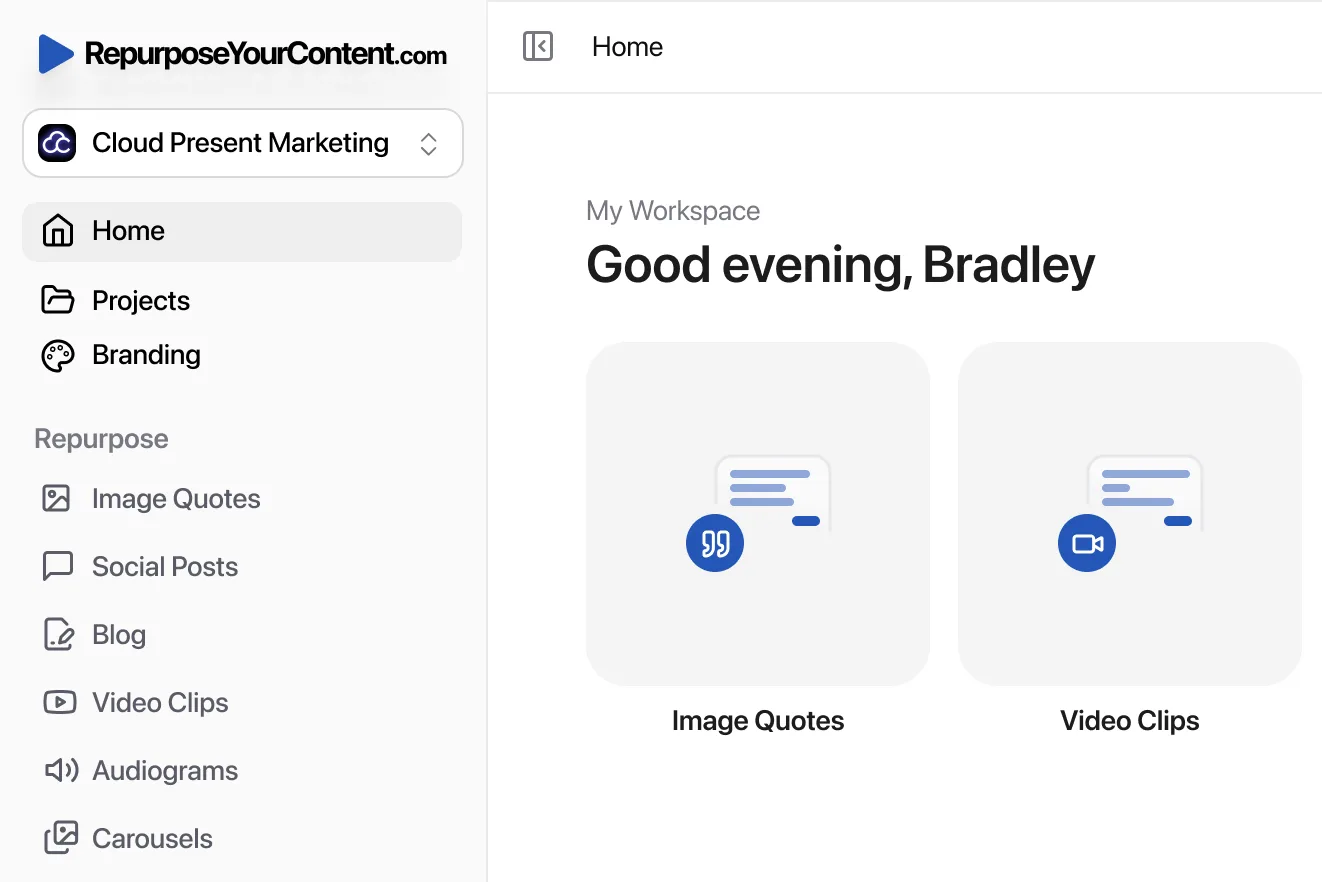
The biggest time-sink for content teams is manually repurposing video. Your webinars are full of valuable insights, but extracting them is a bottleneck. RepurposeYourContent automates this entire process.
You upload one webinar recording. The AI analyzes the content and automatically generates up to eight different types of content assets in minutes.

Here is what the tool creates from a single recording:
- Video clips: Short, shareable clips with animated captions for social media.
- Blog posts: An SEO-optimized article draft based on the webinar's expertise.
- Social posts: Ready-to-publish captions for platforms like LinkedIn and X.
- Audiograms: Branded audio snippets with moving captions.
- Image quotes: Shareable graphics highlighting key speaker quotes.
- Newsletters: An email draft summarizing the webinar’s key takeaways.
- LinkedIn carousels: Branded, multi-slide posts designed for engagement.
- Timestamps: A list of key topics for your YouTube description.
The system applies your brand kit automatically. This ensures all assets, from video clips to image quotes, are consistent. This single feature provides a massive efficiency boost for busy content teams.
A Real Workflow Example
Here’s what this looks like in practice. You just finished a 60-minute webinar.
- Step 1: Copy the recording link from Zoom and paste it into RepurposeYourContent. (Time: 30 seconds)
- Step 2: Select the assets you need. For example: one blog post, 10 video clips, and five LinkedIn carousels. (Time: 30 seconds)
- Step 3: The AI generates all 16 branded assets. (Time: ~5 minutes)
In under six minutes, you have a library of content ready for review. This automated step replaces days of coordination between writers, designers, and video editors. The content is now ready to be loaded into your social scheduler and CMS.
Calculating the ROI of Your Automation Investment
You can justify automation with simple math. This shifts the conversation from cost to value.

First, calculate your current cost. Manually repurposing one webinar takes about 10 hours of team time.
- 10 hours × £40 hourly rate = £400 cost per webinar
With a tool like RepurposeYourContent, that 10-hour task becomes a 15-minute review. You save 9.75 hours per webinar.
- 9.75 hours saved × £40/hour = £390 saved per webinar
If you produce two webinars a month, your annual saving is £9,360. This number doesn't include the value of the extra content you now produce or the creative energy you give back to your team.
The return isn't just financial.
- Less Burnout: Your best people focus on high-value strategic work.
- More Creativity: Your team has time to work on ambitious new projects.
- Consistent Output: You can finally execute a true multichannel strategy.
The business case is clear. Automation saves money and reinvests your team’s most valuable asset: their time. For more on this, check our guide on key webinar metrics and KPIs to track.
Stop the manual grind. Try RepurposeYourContent and turn your next webinar into a month of content.
Tags: