Webinar Sales Funnel Guide for B2B: Boost Your Pipeline
Unlock B2B pipeline growth! This webinar sales funnel guide for b2b covers strategy, benchmarks, sales handoff, and converting recordings into revenue.

Most webinar advice gets the priority wrong. It treats the live session as the main event, then treats the recording like admin.
That's backwards.
A webinar sales funnel guide for b2b should start with a harder truth. The webinar itself is only a small part of pipeline impact. The bigger win comes from what happens after the recording stops. If a team runs a polished session, uploads the replay, and moves on, the funnel shrinks to a single touch.
Your Webinar Sales Funnel Guide for B2B Starts Here
The biggest mistake in B2B webinar strategy is simple. Teams optimise for registrations, then judge success by live attendance. That approach misses where most commercial value sits.
A practical benchmark makes the point. 50% to 60% of total B2B webinar views now happen on-demand, according to webinar strategy and sales funnel alignment guidance from TENEVENTS. For UK teams, that changes the operating model. The live event is only one conversion moment. The replay, the follow-up, the sales handoff, and the reused content carry the rest.

The full funnel, not the event
A working B2B webinar funnel moves through these stages:
| Stage | What actually matters |
|---|---|
| Awareness | Reaching the right accounts and roles |
| Registration | Converting interest into committed sign-ups |
| Attendance | Getting people into the live room or replay |
| Engagement | Capturing intent signals through behaviour |
| Post-event nurture | Continuing the conversation with relevant content |
| SQL | Moving qualified contacts into sales action |
| Opportunity | Opening active deals with clear next steps |
| Closed-won | Proving the webinar influenced revenue |
Teams typically lose control at this point. They build the top half, then improvise the rest.
Practical rule: If sales can't see what a prospect watched, clicked, asked, or replayed, the webinar didn't create a usable buying signal.
Benchmarks that keep the funnel honest
Webinars are widely used in B2B. In the UK, 55% of B2B marketers used webinars as a distribution channel in the last year, based on Cvent's webinar statistics roundup. That matters because webinars aren't an edge tactic anymore. They're part of the operating system.
The same source also points to typical B2B stage benchmarks. Lead-to-MQL runs at 25% to 35%, MQL-to-SQL at 13% to 26%, SQL-to-opportunity at 50% to 62%, and opportunity-to-close at 15% to 30%. Those ranges don't tell a team whether one webinar was “good”. They do give a useful planning model for the path from event engagement to revenue.
A webinar funnel should be measured against those downstream stages, not just event metrics. Attendance is useful. Pipeline movement is what counts.
What works and what doesn't
What works:
- Topic selection tied to buyer pain. Broad thought leadership creates noise. Specific operational problems create intent.
- Tight sales alignment before launch. SDRs and AEs need handoff rules before registration opens.
- Replay-first planning. The on-demand page, nurture assets, and snippets should be planned before the webinar runs.
- Post-event content distribution. The recording should feed email, LinkedIn, sales follow-up, and enablement.
What doesn't:
- Counting registrations as success
- Sending one generic replay email
- Handing sales a list of attendees with no context
- Treating the webinar like a one-off campaign
Teams that need a stronger external view on event economics can also review strategies for profitable virtual events, especially when webinar production and pipeline goals need tighter alignment.
The right mental model is simple. A webinar is not a broadcast. It's a structured way to create first-party engagement, content assets, and qualified sales conversations.
Pre-Event Strategy to Attract High-Intent Buyers
A full webinar funnel starts long before the live date. Bad pre-event planning creates noisy leads, weak questions, and poor follow-up. Good pre-event planning filters for buyers who have a reason to care now.
Start with audience fit, not list size
Registration volume is easy to admire and hard to monetise. Intent is harder to earn and easier to convert.
A strong webinar topic does three things at once. It speaks to a specific role. It frames a concrete business problem. It implies a next step that your team can support after the session.
For example, “AI trends in B2B” is weak. It attracts curiosity. “How demand gen teams can route webinar engagement into sales follow-up” is narrower and more commercial. The second topic helps the right people self-select.
Use channel mix to reinforce that positioning. Email, LinkedIn, partners, communities, and retargeting should all carry the same promise. The message shouldn't be “join our webinar”. It should be “this session solves a problem you already have”.
Build registration pages for quality
Registration pages fail when they try to sound impressive. Busy buyers want relevance fast.
Use this structure:
- Headline: State the business outcome clearly.
- Subhead: Explain who the webinar is for.
- Bullets: List practical takeaways, not vague themes.
- Form fields: Ask only for data that will influence follow-up or routing.
- CTA: Use a direct action. Keep it simple.
A few trade-offs matter here.
| Choice | Better for pipeline | Worse for pipeline |
|---|---|---|
| Topic framing | Specific operational pain | Broad industry commentary |
| Form design | Short and useful | Long and curiosity-killing |
| Promotion | Multi-channel with role fit | Last-minute blast emails |
| Social proof | Proof of relevance | Generic claims |
Broad promotion can fill a room. Focused promotion fills the CRM with people sales actually wants to call.
Teams looking to sharpen event promotion can borrow ideas from this guide to winning event attendees, especially around positioning and channel discipline. For a tighter campaign cadence, this week-by-week webinar promotion timeline is useful for sequencing reminders and value-led touchpoints.
Use promotion copy that pre-qualifies
Promotion should filter, not just attract.
That means writing copy with friction in the right place. Mention the role, the situation, and the intended outcome. Someone outside the target audience should feel that the webinar isn't for them.
Useful pre-event angles include:
- Problem-led invites: Focus on a process breakdown buyers recognise.
- Role-specific messaging: Call out demand gen, sales enablement, RevOps, or marketing operations directly.
- Partner distribution: Use co-hosts and communities that already reach the right audience.
- Calendar commitment language: Remind registrants why showing up matters, not just when it starts.
Pre-event strategy sets the quality ceiling. If the wrong people register, no follow-up sequence will rescue the pipeline later.
Running the Live Event to Maximise Intent Signals
The live webinar shouldn't be judged like a presentation. It should be judged like a data capture moment.
Many teams spend all their time on slides. They spend too little on signals. Sales doesn't need applause. Sales needs evidence of interest, urgency, and fit.
Engineer engagement deliberately
Every interaction in the session should reveal something useful. Polls should segment the room by priority, maturity, or current challenge. Q&A should surface buying objections. Calls to action should tell the team who wants the next conversation.
The most useful live signals usually come from:
- Poll responses that reveal team priorities or adoption stage
- Questions that show urgency, budget pressure, or implementation concerns
- Chat messages that expose current workflows or pain points
- CTA clicks that indicate movement from education to evaluation
Don't ask throwaway questions just to “boost engagement”. Ask questions that change follow-up.
Structure the hour for downstream use
A good run-of-show gives marketing and sales clear markers.
Open with the business problem. Move into the practical framework. Add examples that help buyers picture rollout inside their own team. Save the most conversion-relevant material for the second half, when more qualified attendees are still watching.
Then close with one clear next step.
The best live webinar CTA isn't broad. It's specific enough that only serious prospects will take it.
If the team needs a better event structure, this guide on how to host a webinar that converts is a useful reference for tightening the path from audience attention to commercial action.
Sales should get context, not just names
A raw attendee export doesn't help much. The live event should produce a short handoff view for sales:
- who attended live
- who stayed engaged
- which questions they asked
- what content they clicked
- whether they took the next-step CTA
That context changes the quality of the first outreach. It also reduces wasted follow-up on passive contacts who still need nurture instead of a sales call.
Turning Your Webinar Recording into a Revenue Engine
The recording is the primary asset. Not because replay pages are exciting, but because the recording contains enough material to power the next phase of demand generation.
That's the central shift many teams still miss. A webinar is not finished when the stream ends. It has just produced the source file for follow-up, nurture, distribution, and sales enablement.
A useful framing comes from Nexus Marketing's view of webinar content and the sales funnel. The strongest webinar funnel may not be the one with the highest live attendance. It may be the one whose recording produces the most useful derivative content for the next 30 days of demand generation.
A simple process view helps:

The recording should feed every funnel stage
One webinar recording can support different needs across the funnel:
| Funnel stage | Webinar-derived asset |
|---|---|
| Awareness | Short LinkedIn video clips and image quotes |
| Consideration | Blog posts, carousel summaries, audiograms |
| Nurture | Email sequences and newsletter content |
| Sales enablement | Timestamped clips, objection-handling snippets, recap notes |
| Conversion | Replay pages with focused next-step CTAs |
Asset underutilization often occurs when teams post the full replay and stop. This gives the audience one format, one channel, and one chance to care.
A better model breaks the recording into pieces designed for different moments. A short clip can earn a click from someone who ignored the original invite. A blog post can capture search demand. A sales rep can send a timestamped answer instead of rewriting the same explanation.
This walkthrough shows the principle in action:
A practical post-webinar workflow
This is a clean workflow for teams that want the webinar to keep producing pipeline after the live date:
- Upload the recording from Zoom, Vimeo, YouTube, or another webinar platform.
- Choose output formats based on the campaign need.
- Map each asset to a channel before generating anything.
- Route sales-ready moments to SDRs and AEs first.
- Publish the rest in sequence over the following weeks.
A concrete example:
- Step 1. Upload the Zoom recording link.
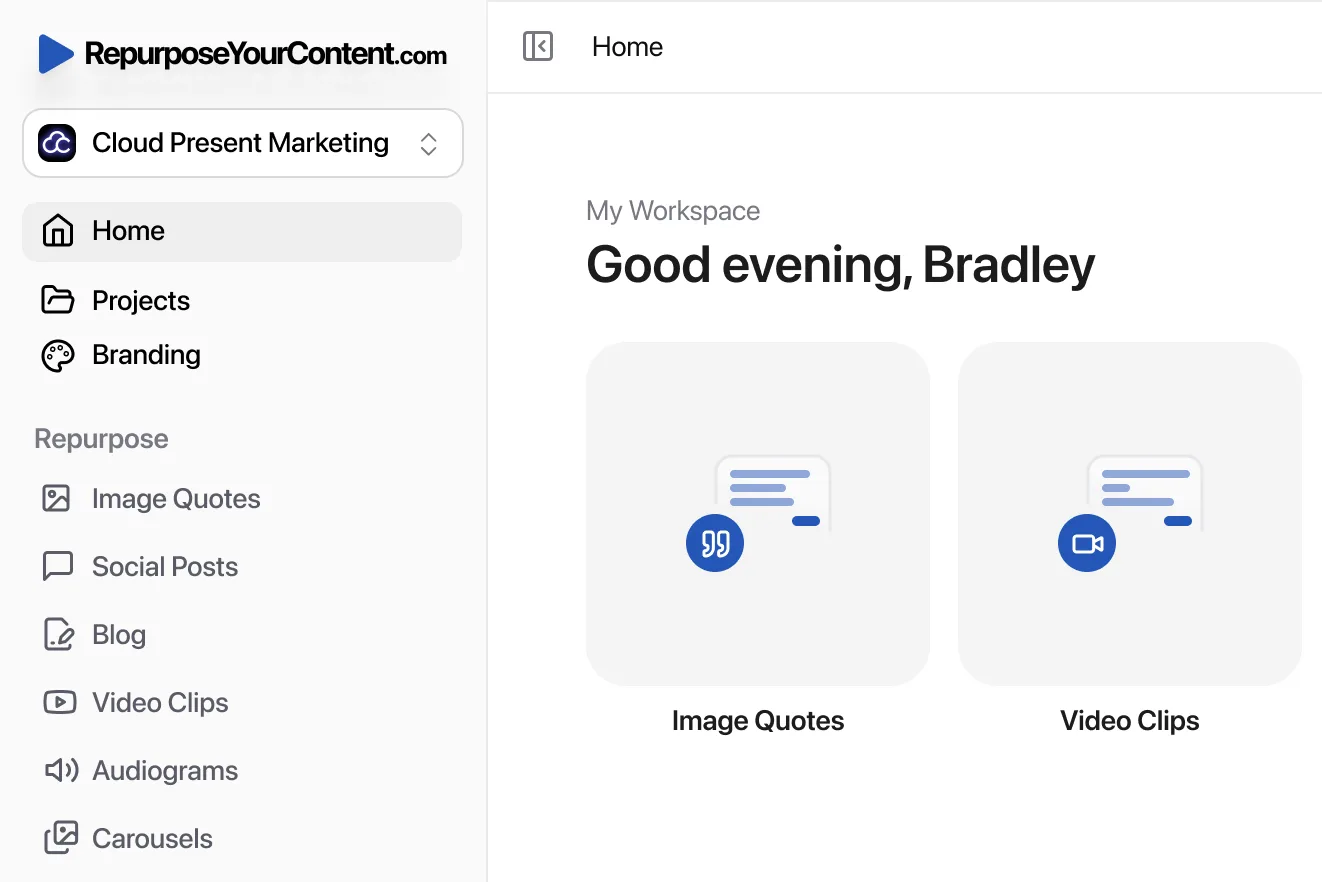
- Step 2. Select outputs such as LinkedIn video clips, a blog post, social posts, audiograms, image quotes, newsletters, LinkedIn carousels, and timestamps.
- Step 3. Generate the assets and assign them to email nurture, organic social, replay-page support, and sales follow-up.
For teams that want a system rather than a manual editing queue, RepurposeYourContent's demand gen workflow and this guide on how to repurpose a live webinar recording show how one recording can be turned into multi-format campaign assets with less production work.
What works after the webinar
The teams that keep momentum usually do three things well:
- They publish in sequence. They don't drop everything on one day.
- They segment by behaviour. Attendees, no-shows, and engaged viewers get different assets.
- They equip sales. Reps get clips and timestamps, not just replay links.
What fails is also predictable. Generic replay emails underperform. Full-length recordings without chaptering underperform. Content teams that wait weeks to cut highlights lose timeliness and buying intent.
A webinar recording isn't content storage. It's campaign inventory.
The webinar created raw material. Revenue comes from packaging and distributing it properly.
Building Nurture Sequences and Sales Handoffs that Work
A webinar can generate attention and still produce no pipeline. The gap usually sits in nurture and handoff.
Marketing sends one replay email. Sales gets a spreadsheet. Nobody knows who deserves a call, who needs another educational touch, or which message fits which contact.
Operational discipline is critical.

Segment before sending anything
Not everyone should get the same sequence. Behaviour already tells the team what to do next.
A simple segmentation model works well:
| Segment | Follow-up angle | Sales action |
|---|---|---|
| Attended and engaged | Recap plus next-step content | Fast review for sales outreach |
| Attended but passive | Educational follow-up | Keep in nurture unless other intent exists |
| Left early | Short summary and key clip | Review only if fit is strong |
| Registered but missed | On-demand version with clear reason to watch | Nurture first |
| Asked direct questions | Personalised follow-up tied to the question | Prioritise for rep action |
The message should match what the person did. That sounds obvious, but many teams still send one replay email to everyone.
Define MQL and SQL in webinar terms
The webinar funnel should be judged by movement through the sales process, not by event activity alone. Independent guidance for B2B funnels benchmarks lead-to-MQL at 25% to 35%, MQL-to-SQL at 13% to 26%, SQL-to-opportunity at 50% to 62%, and opportunity-to-close at 15% to 30%, as outlined in SPOTIO's B2B sales funnel benchmark guidance.
Those ranges help frame the handoff. They don't replace internal criteria.
A practical webinar-based MQL often includes the right role, company fit, and meaningful engagement. A practical SQL usually adds evidence of buying intent. That could be a request for follow-up, a question about implementation, or strong engagement paired with existing account activity.
What matters is speed. If the handoff lags, buying intent fades.
Marketing should never send sales a cold list dressed up as webinar success.
Build the sequence around useful assets
Good nurture uses webinar-derived content to answer the next question in the buyer journey.
That usually means:
- For engaged attendees: Send the key clip, a concise recap, and a direct path to speak with sales.
- For passive attendees: Send a narrower takeaway and a supporting asset that goes deeper.
- For no-shows: Lead with the strongest moment from the session, not a generic replay ask.
- For sales follow-up: Provide timestamped moments, objection-relevant snippets, and a short summary of what the contact engaged with.
The sales team should not have to watch the whole webinar. They need the useful fragments.
This complete guide to webinar email nurture sequences is a practical reference for structuring those follow-ups around behaviour rather than broad list sends.
What a clean handoff looks like
A strong handoff record includes:
- contact and account fit
- attendance status
- engagement notes
- assets consumed
- recommended next action
- owner and response window
That structure reduces friction between marketing and sales. It also makes webinar sourcing easier to trust later when revenue reporting comes under scrutiny.
Measuring Webinar Pipeline and Proving ROI
A webinar programme that reports registrations and attendance is easy to cut.
Pipeline reporting changes that conversation. It shows whether the event and the content produced from it created qualified demand, influenced active deals, and generated revenue after the live session ended. That last part matters more than many teams admit. The live webinar is often the production cost. The replay clips, follow-up assets, and sales-useful fragments are where the return keeps compounding.
The dashboard should look beyond event counts:

The metrics that matter
Track webinar performance at the stage where revenue teams make decisions.
A practical ROI view should include:
- Qualified leads generated: Contacts that match agreed MQL or SQL criteria.
- Pipeline sourced: Opportunities created from webinar-driven engagement.
- Pipeline influenced: Existing opportunities that progressed after webinar or post-webinar asset consumption.
- Closed-won revenue: Revenue tied to sourced and influenced deals.
- Cost per qualified lead: Spend divided by leads sales would accept.
- Opportunity conversion rate: Whether webinar-driven opportunities move to the next stage.
- Content-assisted pipeline: Opportunities influenced by clips, recaps, and replay-based nurture, not only by live attendance.
This guide to webinar metrics and KPIs to track helps when building reporting across CRM, webinar software, and marketing automation.
Attribution needs a fixed rule set
Attribution breaks down when every team uses a different definition of success.
Set the model before launch and keep it stable long enough to compare performance across webinars. First-touch can help if the goal is to measure audience creation. Multi-touch usually gives a fairer view for B2B teams with longer sales cycles. A position-based model can work well if the webinar introduces the contact, the nurture qualifies interest, and sales creates pipeline later.
The trade-off is clarity versus completeness. Simpler models are easier to explain in forecast reviews. Multi-touch models better reflect how webinar content contributes across a long buying process.
A few reporting habits make the numbers more credible:
| Reporting habit | Why it matters |
|---|---|
| Track contact-level and account-level behaviour | It ties individual engagement to buying group activity |
| Push attendance and content consumption data into CRM | It connects webinar interactions to opportunity stages |
| Report by cohort over 30, 60, and 90 days | It captures delayed impact from replay, clips, and nurture |
| Separate sourced, influenced, and assisted pipeline | It reduces credit disputes and makes trend lines easier to trust |
Measure the post-webinar engine, not just the event
Many teams underreport value. A prospect skips the live session, watches a three-minute clip two weeks later, clicks into a related asset, and then books a meeting after a rep follows up. If the reporting only credits the live event, the programme looks weaker than it is. If the reporting only credits the meeting source, marketing loses the proof that the webinar content moved the deal.
Include asset-level reporting for the recording and everything built from it. Track replay views, clip engagement, CTA clicks, influenced meetings, and opportunity progression after content consumption. That gives the team a better read on what the webinar produced.
Speed matters too
ROI is not only a volume question. It is also a timing question.
Good webinar programmes create faster movement through the funnel because the team leaves the event with usable content, stronger intent signals, and cleaner follow-up paths. If those assets reach buyers quickly, opportunities advance sooner. If they sit unused, the programme absorbs cost without creating enough sales momentum.
Teams that need a finance-friendly framework can use LinkJolt on marketing ROI as a reference for connecting campaign cost, contribution, and revenue outcomes.
A webinar proves ROI when the team can show which contacts and accounts progressed, which post-webinar assets influenced that movement, and what revenue followed.
The strongest webinar funnel usually does not come from the biggest live audience. It comes from a reporting model that captures the full content engine after the event, because that is where a large share of pipeline gets created and converted.
If the team wants the webinar to act like a pipeline engine instead of a one-hour event, try RepurposeYourContent. It turns one recording into the follow-up assets that keep the funnel moving.
Tags: