8 Client Success Stories from One Recording
Explore 8 client success stories showing how one recording became ready-to-publish content, measurable results, and less production work.
Client success stories work best when they connect a specific client problem to a documented repurposing workflow, a finished asset mix, measurable outcomes, and a credible client quote. The strongest versions don't just say a recording performed well. They show how one podcast, interview, keynote, sales call, or course recording turned into useful content buyers could see and judge.
Recorded content already pulls serious weight in B2B. MarketingCharts lead generation reporting says 73% of marketers name webinars as their best-quality lead source, while 42% say generating quality leads is a challenge and 33% say generating enough leads is the bigger issue. That gap matters because strong long-form recordings already contain the raw proof, language, objections, and expertise you need.
The problem is production. A 45-minute audio podcast usually takes about 1.5 to 3 hours to edit, and a 60-minute video podcast often takes 4 to 8+ hours, according to podcast editing time benchmarks from The Home Recording Studio. A separate Riverside editing guide says a 60-minute episode can require roughly 2 to 5 hours of manual editing. For a more detailed workflow, Pristine Podcasts breaks a two-person 60-minute video episode into six to nine working hours.
That's why one recording shouldn't end as one post. It should become a system.
A simple workflow looks like this:
- Step 1: Send one recording in about 15 minutes.
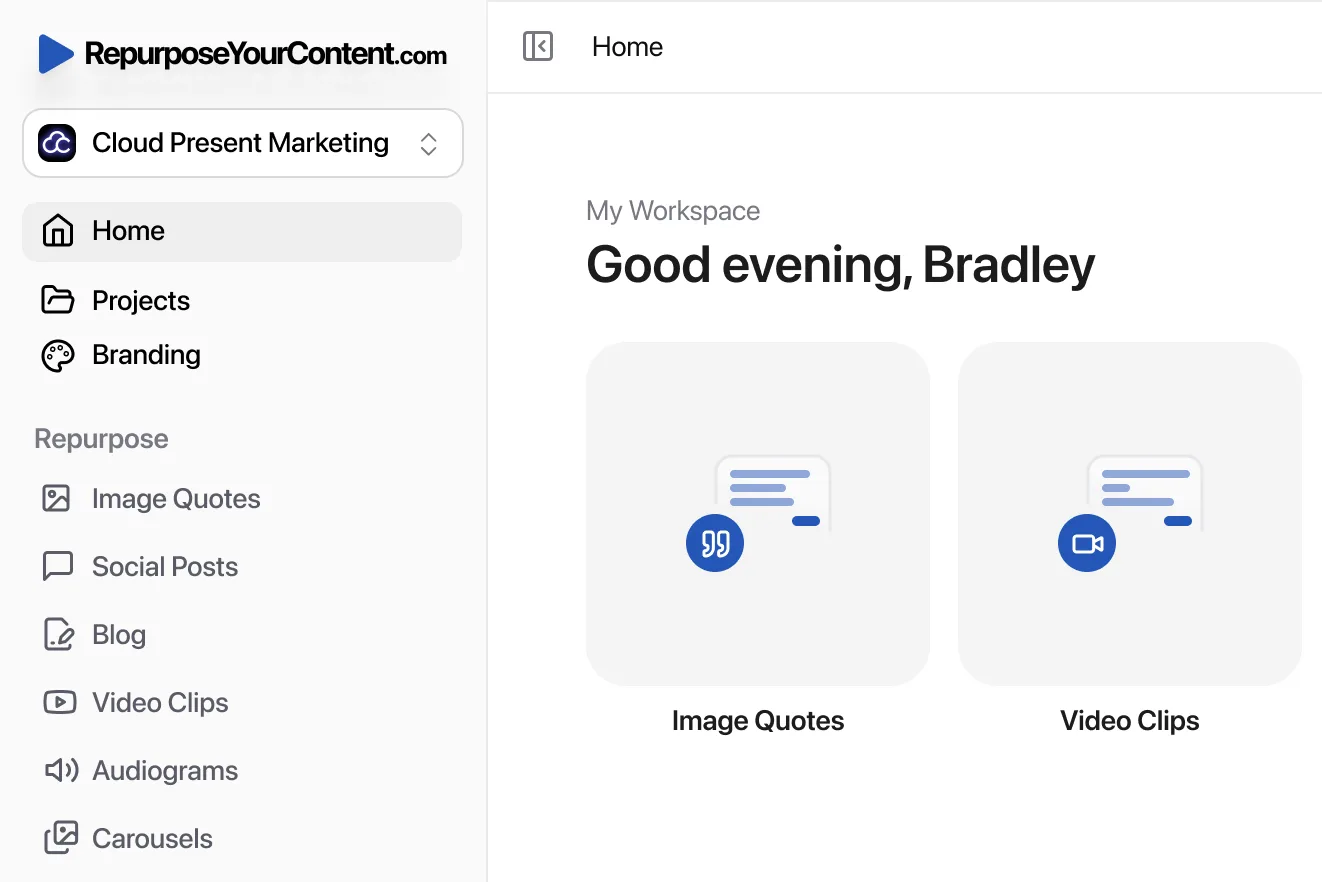
- Step 2: RepurposeYourContent creates 20 to 30 branded assets.
- Step 3: The client reviews the set and requests unlimited revisions.
- Step 4: The finished assets go live with a posting playbook.
For teams building a repeatable process, these SuperX repurposing techniques for creators are also useful as a distribution reference.
The eight formats below show how client success stories become more convincing when they include client context, production detail, proof points, quotes, and a practical publishing path. They focus on podcasts, interviews, keynotes, sales calls, livestreams, courses, and other long-form recordings. Not generic webinar advice. If a team wants this built around its own recordings, the next step is simple. Book a call or request a sample.
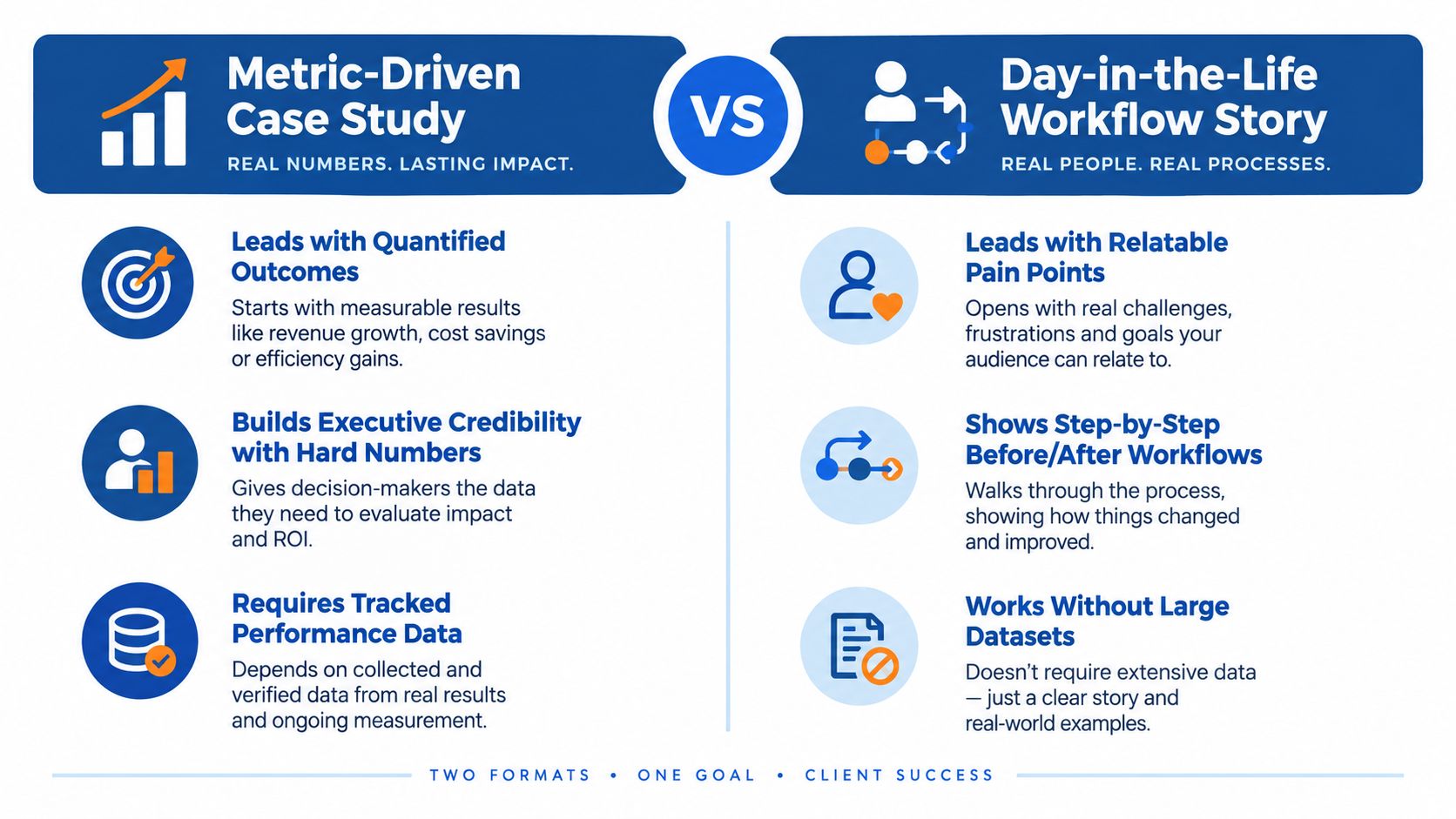
1. The Metric-Driven Case Study

Busy buyers scan for numbers first. That's why a metric-driven client success story starts with the outcome, then works backward to the workflow.
A good version sounds like this. A founder records one 45-minute customer interview. Instead of posting the full video once, that recording becomes short clips, quote graphics, LinkedIn posts, carousels, and a blog post. The story then shows what changed in publishing cadence, cost per asset, or lead efficiency.
The strongest support for this format comes from actual repurposing outcomes. In one SaaS example, Organic Growth Studio's content repurposing case study reported that turning one webinar into five blog posts, three short videos, and ten social snippets increased engagement by 35% in one quarter, raised impressions from 50,000 to 150,000, lifted CTR from 0.5% to 1.2%, increased trials from 27 to 65, reduced CPL from $185.19 to $76.92, and improved ROAS from 1.5x to 3.2x.
What makes the numbers believable
The baseline matters as much as the result. Without it, the story reads like polished promotion.
A strong metric-driven story should include:
- Starting point: What the client was doing before. Usually one recording and one post.
- Asset mix: What got produced from the source recording.
- Timeline: When the first signs appeared and when the full effect showed up.
- Business meaning: Why the metric mattered to pipeline, reach, or team output.
RepurposeYourContent fits this format well because the math is easy to understand. One 45-minute recording can become 20 to 30 assets. Pricing can start from $14 per finished asset. Teams that need an ROI lens can also connect the story to content marketing ROI measurement.
Practical rule: Lead with the number the buyer cares about most. Put the production method right after it.
For teams stuck with bland proof, this guide on how to transform boring case studies is a useful contrast. The fix is simple. Show the number, show the workflow, show the asset output.
2. The Day-in-the-Life Workflow Story
A workflow story works when a buyer can map it to Tuesday at 2 p.m.
The setup is ordinary. A marketing manager records a podcast interview or customer call in the morning and plans to turn it into a week of content by Friday. Then the work starts. Someone has to find the sharp moments, trim clips, clean audio, format video, write captions, draft post copy, route approvals, and load everything into the scheduler. The recording is done in under an hour. Post-production takes the rest of the day.
That gap makes this format useful. It shows where time goes, who gets pulled in, and which steps create delays.
One client version of this story is simple. The team already had good raw material. They were not struggling to come up with topics. They were struggling to turn finished recordings into published assets at a repeatable pace. Podcasts, interviews, keynotes, sales calls, and webinar replays kept piling up in folders because every asset required another round of manual work.
RepurposeYourContent changes the shape of the week. The client records once, sends the file, reviews the first pass, and approves the final package. One source recording becomes 20 to 30 branded assets instead of a single episode page and a few rushed social posts. The output usually includes short clips, quote graphics, captions, post copy, and blog-ready material. The value is not just volume. It is fewer handoffs and fewer context switches.
Here is what buyers need to see in a strong day-in-the-life story:
- Who owned the work before the handoff
- Which steps kept getting delayed or skipped
- What type of recording fed the system
- How many assets came back from each recording
- What the client still reviewed internally, if anything
The trade-off matters. This format should not pretend the client does nothing. Teams still need to record clearly, give brand guidance, and approve final assets. Some also want tighter review on sales-call clips or founder-led content. But that is a light operational role compared with handling editing, design, copywriting, and packaging from scratch.
A good version of this story ends with a changed operating rhythm. The backlog shrinks. Approvals get faster because the team is reacting to finished assets instead of building them piece by piece. Internal specialists get their time back for research, distribution, and campaign work. The process behind that shift is easier to understand when paired with a documented content repurposing workflow for small teams.
The best proof in this format is concrete. Show the recording type, show the production handoff, show the asset mix, then show what the client's week looked like after the change.
3. The Founder or Creator Personal Journey
Some client success stories need a more human angle. Not softer. Just more personal.
This format works when the buyer's real objection isn't cost. It's control. Founders and creators often believe quality will drop the moment they stop doing post-production themselves. That belief keeps them stuck.
A useful personal journey story follows the inner shift as much as the production shift. The opening moment is specific. A founder has hours of interviews, panels, sales conversations, or keynote recordings sitting in folders. None of it becomes consistent content because editing and publishing always lose to higher-priority work.
The moment the bottleneck becomes obvious
The turning point usually isn't dramatic. It's repetitive. Another strong recording gets published once, then disappears.
That's where this format gets traction. It shows the founder trying partial fixes first. Maybe basic editing software. Maybe a freelancer. Maybe a virtual assistant. But the core problem isn't one task. It's needing a coordinated content team around a single recording.
RepurposeYourContent gives this story a clean turning point. The founder sends a recording. The agency returns a full set of ready-to-publish assets in the founder's brand voice. The shift isn't just volume. It's reliability. The founder stops being a one-person post-production department.
A related example for visual-first creators appears in this guide to repurposing vlog content, which shows how a recorded idea can travel across multiple formats without losing the original voice.
“I thought I had to do all the post-production myself to maintain quality” is the kind of line that makes this format credible.
The best personal journey stories end with a new identity. Not just a new workflow. The founder becomes consistent. The show becomes visible. The audience starts seeing a real publishing engine instead of occasional bursts of activity.
4. The Before and After Side-by-Side Comparison
A side-by-side comparison works because buyers can audit it fast.
One recording goes in. Two outcomes sit next to each other. The old version shows what happened before a real repurposing system existed. Usually that means a full video upload, a rough transcript, and maybe one post pulled together in a hurry. The new version shows what RepurposeYourContent produces from the same raw material. A branded content set of 20 to 30 assets built from a podcast, interview, keynote, sales call, or webinar.
That contrast makes the service tangible. Buyers do not have to infer the value. They can see the production difference, the channel coverage, and the editorial judgment in one frame.
Good comparisons also show trade-offs. More output alone is not persuasive if quality drops or approvals become messy. The stronger story shows that the asset count increased while brand control stayed intact. Copy still sounds like the client. Visuals still match the brand kit. Human review still happens before delivery.
A useful layout is a scorecard instead of another standard list. For example:
Before
- One long-form upload
- Limited reuse across channels
- Inconsistent visual branding
- Manual editing and posting
- Content ideas trapped inside the recording
After
- 20 to 30 branded assets from the same recording
- Short clips, carousels, quote graphics, audiograms, posts, and article-ready copy
- Channel-specific formatting
- Centralized production and review
- Clear publishing inventory for the next few weeks
The point is not volume for its own sake. The point is usable surface area. One strong conversation starts working across more buyer touchpoints without asking the founder, marketer, or sales lead to become an editor.
That standard matches how B2B teams already evaluate proof. As noted earlier, strong client stories now need measurable outcomes and visible execution, not just a short testimonial and a logo wall.
This section also benefits from showing the distribution decision clearly. Some assets should stay native to the platform they were built for. Others can be adapted from the same source with only light changes. This guide on native content vs repurposed content performance gives that comparison a practical frame.
A short visual explanation works well here:
The best before-and-after stories make one claim, then prove it on the page. Same recording. More reach. Better packaging. Less internal lift.
5. The Specific Use-Case or Vertical Story
Generic stories get ignored. Vertical stories get forwarded.
A vertical client success story works because it speaks the buyer's language without wasting time on broad explanations. The details should match the audience. For B2B SaaS, that means long sales cycles, buyer education, recorded demos, founder interviews, customer calls, and content that supports trust over time.
A B2B SaaS example
A SaaS founder records one customer interview every week. The recording contains objections, implementation detail, use cases, and actual customer language. But the company only turns it into one LinkedIn post and one email. Everything else stays buried in the recording.
That's a missed opportunity because case studies still carry unusual weight in B2B. Techstiks' roundup of case study statistics cites a widely referenced finding that 73% of B2B buyers said case studies are the most influential content type for purchase decisions and 66% of B2B marketers ranked them among the top three lead generation formats. The same summary adds that in 2025, 75% of surveyed B2B marketers used case studies or customer stories in the previous 12 months, and 53% said case studies, customer stories, and videos were among the formats delivering their best results.
That's why a vertical story should show a category-specific workflow. For SaaS, one client interview can become social proof clips, objection-handling posts, founder commentary, quote graphics, and a blog article designed for a target buying problem. A page like content marketing for B2B SaaS companies supports that angle because it connects content output to a longer buying cycle.
Buyers in long sales cycles don't just want praise. They want context, implementation detail, and signs that the vendor understands their world.
The same structure works in other niches too. Healthcare podcasts. Sales team call reviews. Speaker keynotes. But each version should feel native to the audience, not dragged from a generic template.
6. The ROI Calculator or Numbers Breakdown
A numbers-first case study works because hidden production cost adds up fast.
One recorded conversation can trigger editing, transcript cleanup, clip selection, copywriting, design, approvals, scheduling, and QA. If that work stays in-house, the expense gets spread across a founder, a marketer, a freelancer, and whatever time the team meant to spend on pipeline, client work, or distribution strategy.
That is the core calculation.
A strong ROI story does not stop at “we saved time.” It shows what the team bought back and what they received in return. With RepurposeYourContent, the clean version of the math is simple. One podcast, interview, keynote, or sales call can turn into 20 to 30 branded assets. The client's role is usually limited to a short handoff and review cycle. That shifts the economics from labor-heavy production to asset output per recording.
The comparison should read more like an operating decision than a testimonial.
On the manual path, a team may publish a few usable pieces after a long chain of editing and coordination. On the done-for-you path, the same recording becomes a full content batch sized for multiple channels. That includes clips, quote graphics, written posts, and other finished assets built from the original source material. In some plans, the cost can work out to about $14 per finished asset.
A broader performance example helps here. Organic Growth Studio's 2026 repurposing performance report tracked a multi-format campaign where webinar series delivered 180,000 impressions at 2.8% CTR and 450 leads at $35 CPL, while short-form video delivered 320,000 impressions at 2.1% CTR and 220 leads at $40 CPL. The full mix generated 1,250 leads at an average $34.40 CPL.
Those results will vary by audience, distribution, and offer. The point is narrower. Buyers who care about finance want to see production inputs, asset volume, channel spread, and downstream efficiency in one view.
Use this format when the buyer asks, “What do we get from each recording?” It answers with context, workflow detail, output count, and economics, not general claims.
7. The Transformation Timeline Story
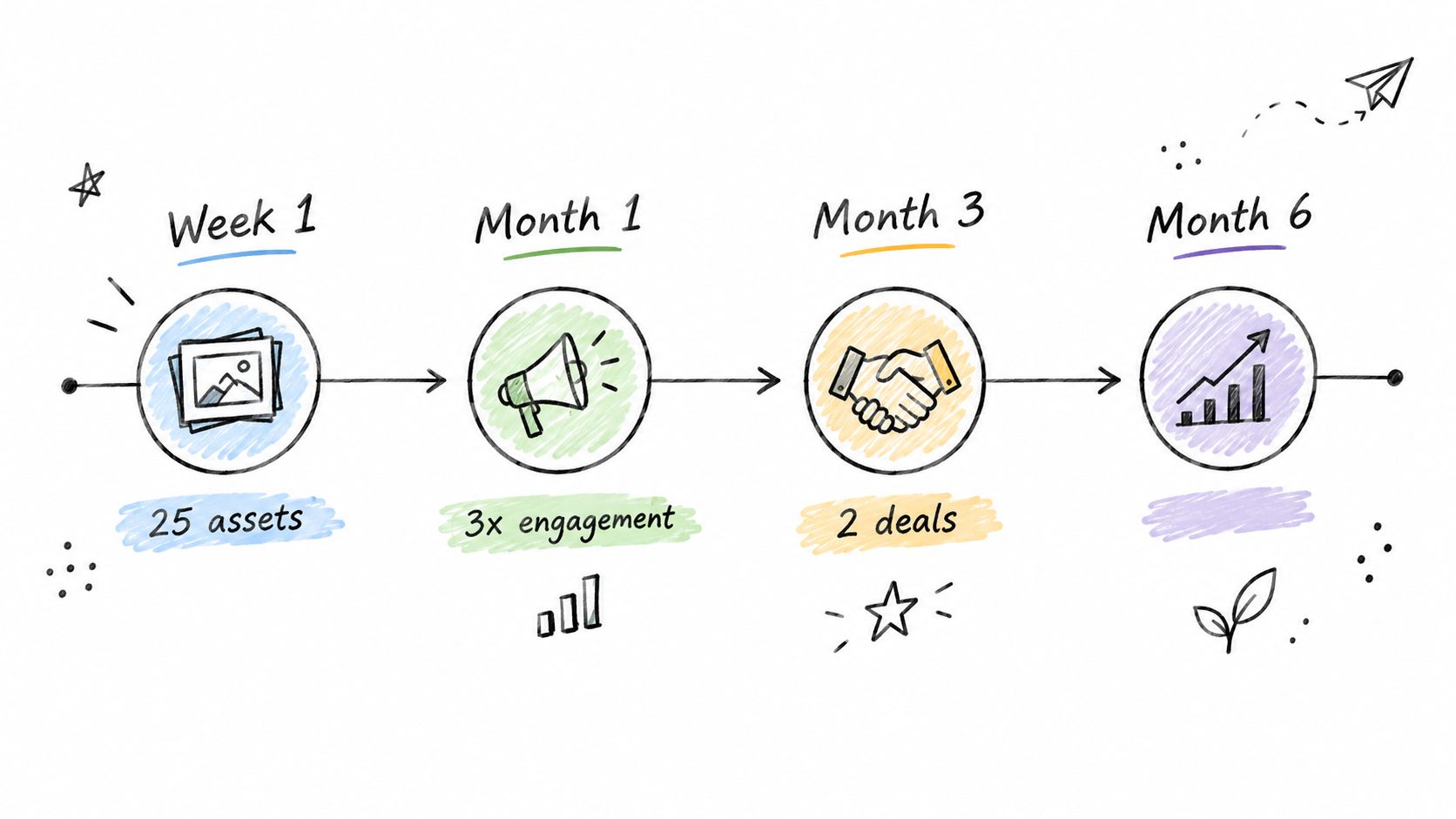
Compounding value rarely shows up in a single publish cycle. It shows up after four, eight, or twelve recordings, when one source format keeps turning into 20 to 30 branded assets and the backlog of usable proof starts to grow.
That makes timeline stories a strong fit for podcasts, interviews, keynotes, sales calls, customer conversations, and internal thought leadership sessions. The format works because it tracks what changed at each stage, not just the final result. A good version reads like an operating record. It shows the client context, what was produced, how the cadence held, where the content went, and what improved after repetition did its work.
What changes over time
Week one is usually about trust in execution. The client sends a recording, reviews the first batch, and sees whether the clips, written posts, quote graphics, and supporting assets sound like the brand. For teams using RepurposeYourContent, that first delivery often answers the practical concern fast. Can one podcast episode, keynote, interview, or call really turn into a full content package without creating another review headache?
Month one should show cadence. Four recordings in, the story gets more useful because patterns start to appear. The team is no longer judging one batch. They can see whether the process holds across topics, speakers, and channels. That is where a timeline format gets stronger than a one-off testimonial. It can show that the output stayed consistent across multiple source recordings, not just on a good week.
By month three, the story should shift from production to business use. Sales has clips to send before calls. Marketing has a bank of customer language to reuse in posts and landing page copy. The founder stops asking, "What do we post this week?" because the raw material already exists. Search visibility can improve over time as more written assets go live, but the stronger point is operational. The team now has a repeatable system for turning spoken expertise into published proof.
The best timeline stories also include friction. Approval delays. A speaker who rambles. A week where the recording quality drops. Those details make the outcome more credible because they show how the process handled normal production issues instead of assuming perfect inputs.
A timeline story gets stronger when it shows early hesitation, a stable production rhythm, and later proof that the content is being used across the business.
Use this format when the buyer needs to see how repeated recordings become a working content system. It gives them the progression. First batch. First month. First quarter. Then the larger payoff of turning recurring conversations into a library of branded assets the team can keep publishing and reusing.
8. The Constraint-Breaking Story
This is often the strongest format for small teams. It starts with the limiting factor and stays there.
The constraint might be time. It might be no internal editor. It might be no designer, no writer, no headcount approval, or no appetite for managing freelancers. Whatever the block is, the client success story works when the solution removes that specific bottleneck instead of pretending all problems matter equally.
When the story should focus on the obstacle
A founder with a weekly podcast may already have valuable content. But if every episode gets posted once and forgotten, the core issue isn't idea quality. It's production capacity.
That's where a constraint-breaking story becomes believable. It shows the domino effect of the bottleneck. No clips means weak social reach. No quote graphics means less proof. No blog article means less search visibility. No regular posting means the show feels like a side project.
RepurposeYourContent solves that kind of constraint at the source. The client sends one recording. The agency handles clipping, writing, design, formatting, and packaging. No software setup. No hiring process. No editing backlog. The result is 20 to 30 ready-to-publish assets, typically delivered in 72 hours, with unlimited revisions.
This kind of story also aligns with broader trust behavior. Wyzowl's overview of testimonial impact reports that 92% of consumers read reviews and testimonials when considering a purchase, 95% say reviews influence their decisions, 90% of buyers who read positive customer success content say it affected their decision to buy, 9 out of 10 people trust what a customer says more than what a business says about itself, and 77% of people who watched a testimonial video said it helped convince them to buy.
That's why removing the production constraint matters. It doesn't just create more content. It creates more visible proof in the formats buyers already trust.
Comparison of 8 Client Success Story Types
| Title | Implementation complexity | Resource requirements | Expected outcomes | Ideal use cases | Key advantages |
|---|---|---|---|---|---|
| The Metric-Driven Case Study | Moderate–High (data collection & validation) | Client performance data, analytics access, third‑party verification, design | Quantified ROI (revenue, leads, time savings); executive credibility | SaaS, demand‑gen teams, founders selling to businesses | Proves ROI quickly; shortens sales cycle; highly shareable |
| The Day‑in‑the‑Life Workflow Story | Low–Moderate (interviews + process mapping) | Client interviews, time estimates, process diagrams | Clear time‑savings demonstration; actionable workflow changes | Productivity tools, agencies, operations‑focused services | Highly relatable; highlights reclaimed time; actionable steps |
| The Founder/Creator Personal Journey | Low–Moderate (single interview, narrative work) | Willing, articulate client; interview time; writing/editing | Strong emotional connection and authentic endorsement | Founder‑led brands, personal brands, agencies | Builds authenticity; memorable and shareable; positions partner relationship |
| The Before/After Side‑by‑Side Comparison | Low–Moderate (asset gathering and design) | Permission to publish assets, design resources, optional engagement metrics | Visual proof of volume and polish; easy to grasp impact | Agencies, content services, design‑first solutions | Shows results visually; communicates polish and reach quickly |
| The Specific Use‑Case / Vertical Story | Moderate (research + tailored messaging) | Industry knowledge, vertical metrics, client tool context | Niche relevance and higher conversion from targeted audience | Industry‑specific buyers (B2B SaaS, healthcare, creator economy) | Speaks industry language; better SEO for long‑tail queries; credible |
| The ROI Calculator / Numbers Breakdown | Moderate–High (data modeling, defensible assumptions) | Labor cost data, conversion benchmarks, finance input, calculations | Clear payback period and financial justification | High‑ticket services, CFOs, cost‑conscious buyers | Appeals to financial decision‑makers; removes guesswork |
| The Transformation Timeline Story | Moderate–High (longitudinal tracking & checkpoints) | Ongoing client metrics, timeline visuals, milestone data | Demonstrates momentum and compounding results over time | Coaching, SaaS, content platforms where consistency matters | Sets realistic expectations; highlights early wins and long‑term impact |
| The Constraint‑Breaking Story | Low–Moderate (identify constraint and craft narrative) | Client example with explicit constraint, comparative cost data | Shows new possibilities once a constraint is removed | Bootstrapped founders, solopreneurs, small teams | Positions solution as an enabler; resonates with resource‑limited buyers |
Turn Your Next Recording Into Proof
The best client success stories all follow the same pattern. There's a clear starting constraint. There's one useful long-form recording. There's a deliberate asset mix. There's human review before publishing. Then there's a measurable outcome the buyer can understand.
That structure works because buyers don't trust polished praise on its own. They trust proof with context. They want to know what the client started with, what changed in the workflow, what got produced, and what happened next. If the story skips those steps, it usually reads like self-promotion.
A few practical takeaways matter more than the rest:
- Baseline first: Show what the client was doing before. Usually that means one recording becoming one post.
- DIY time is real: Manual editing alone can take hours. Full post-production can consume most of a day.
- Asset volume changes the economics: One 45-minute recording becoming 30 assets creates a very different publishing operation.
- Approval keeps quality credible: Human review and unlimited revisions matter more than speed alone.
- Attribution needs discipline: Only claim results the team can connect to the recording, the distribution plan, or the publishing cadence.
Recent industry coverage supports that more rigorous style. Brixon Group's discussion of impactful B2B success stories highlights the shift toward measurable impact, implementation detail, and more data-rich, multi-format proof. Big Moves Marketing's take on case study performance makes the same point from another angle. Buyers increasingly want the full customer journey, including obstacles and real execution detail.
The done-for-you alternative is straightforward. Send one podcast, webinar, keynote, interview, or meeting recording. Receive 20 to 30 ready-to-publish video clips, LinkedIn posts, quote graphics, carousels, audiograms, and a blog post in 72 hours, in the client's brand voice, with unlimited revisions. Client time is about 15 minutes. There's a 72-hour turnaround guarantee or the client doesn't pay. Pricing starts from $14 per finished asset, and one 45-minute recording can become 30 assets.
That's the core point of strong client success stories. They shouldn't just describe success. They should package expertise into proof buyers can inspect across multiple formats.
If that process needs to happen without adding more work to the team, RepurposeYourContent is one relevant option. Clients send a recording, and finished branded assets come back ready to publish.
Book a call or request a sample if the next recording should become proof instead of a forgotten upload.
Tags: