Content Pillar Strategy for Webinar Marketing: A Playbook
Build a content pillar strategy for webinar marketing that drives SEO. This playbook shows how to turn one webinar into a pillar and dozens of content pieces.

Most webinar teams have the same problem. They spend weeks planning the event, then publish the replay and move on.
That wastes the strongest long-form content asset in the calendar. A webinar recording already contains expert opinion, audience questions, objections, examples, and language buyers use. That makes it ideal source material for a content pillar strategy for webinar marketing, especially for teams trying to build topical authority around a few core themes.
The business case is already clear. 68% of UK-based B2B firms using structured content pillars for webinar repurposing reported a 42% increase in lead generation compared to those without (Sprout Social). The shift is simple. Stop treating webinars as campaigns. Start treating them as pillar assets.
Your Webinars Are Wasted SEO Potential
Most webinar recordings die after the follow-up email.
That's a bad use of a strong asset. A webinar is already long-form. It's already structured. It already includes original thinking from subject matter experts. For SEO-focused content marketers, that's the raw material needed to build a hub-and-spoke system around a core topic.
A practical content pillar strategy for webinar marketing starts with one mindset change. The live event is not the finished product. The recording is the source file for the rest of the content programme.
Why webinars make strong pillar source material
Webinars tend to cover a narrow topic in depth. That matters because pillar content needs substance. It needs enough depth to support related subtopics, internal links, and multiple search intents without feeling thin.
A solid webinar also contains language that static blog briefs often miss:
- Real objections from Q&A
- Clear terminology used by prospects
- Examples and stories from the presenter
- Natural segment breaks that can become cluster articles
That's why a single recording can support a full pillar page and a set of connected cluster pieces. The pillar covers the main topic. Each segment, question, or argument becomes a supporting article, email, or social asset.
Practical rule: If the webinar topic can support repeat questions from sales, customer success, and demand gen, it can probably support a pillar.
Teams also need to think beyond Google. Video search and on-platform discovery matter too. For marketers planning cluster topics around webinar themes, ShuttleSEO can help uncover profitable YouTube long-tail keywords that align with replay clips and supporting videos.
For teams publishing webinar replays publicly, video indexing matters as well. This guide to video SEO best practices is useful for tightening metadata, page structure, and discoverability around those assets.
What usually goes wrong
The common failure is broad reuse with no architecture.
Teams cut a few clips, post them on LinkedIn, then stop. Nothing links back to a central page. No article owns the main topic. No cluster supports the primary keyword. The result is activity without compounding value.
A proper pillar model fixes that. It gives every webinar a role inside a larger authority plan.
How the Pillar and Cluster Model Builds Topical Authority
A pillar and cluster model is a hub-and-spoke structure. One central page covers the main topic in depth. Supporting assets explore narrower subtopics and link back to that central page.
For webinar marketers, the webinar becomes the hub source. The finished content system includes a pillar page, cluster articles, supporting video clips, and nurture content built from the same recording.

What the hub-and-spoke model looks like in practice
The pillar page targets the broad topic. It should be the best page on the site for that theme. In this case, the theme might be content pillar strategy for webinar marketing.
The cluster content targets narrower intents that sit underneath the main theme. These pieces might cover:
- Planning topics such as choosing webinar themes from recurring campaigns
- Production questions such as turning webinar segments into blog articles
- Distribution angles like using clips, emails, and LinkedIn posts to support the pillar
- Measurement topics around tracking performance by cluster and source asset
Each cluster links back to the pillar. The pillar also links to the strongest clusters. That internal linking pattern helps search engines understand topical relationships and helps readers move from broad education to specific answers.
For a clearer definition of the model itself, this content pillar glossary entry is a useful reference point.
Why webinars fit this model better than most source content
A webinar recording has one advantage many blog-first workflows don't. It captures depth before formatting starts.
That matters because the strongest pillar pages don't sound assembled from keyword fragments. They sound like someone knows the subject. Webinar recordings preserve that authority. They contain sequencing, explanation, examples, and emphasis in a way scattered notes rarely do.
A weak pillar page reads like keyword coverage. A strong pillar page reads like a clear point of view.
That's why webinars work so well as the source. The team starts with expert-led, long-form content, then shapes it into structured written assets.
The internal linking pattern that works
Keep the structure simple.
| Asset type | Role in the model | Linking rule |
|---|---|---|
| Pillar page | Owns the broad topic | Links to priority clusters |
| Cluster article | Answers a narrow question | Links back to the pillar |
| Supporting media page | Extends reach and engagement | Links to the pillar where relevant |
The mistake is overbuilding. Teams create too many weak clusters, or they spread one webinar across unrelated topics. The better approach is tight relevance. Every cluster should strengthen the same topic area.
When to expect SEO impact
This isn't a same-week result. For 3 to 6 months, many organizations find a realistic window to see meaningful lift from a focused pillar and cluster strategy. That timeline depends on publishing consistency, internal linking quality, competition, and domain strength.
The payoff comes from compounding relevance. One webinar becomes one pillar. Then that pillar gains supporting pages, stronger interlinking, and broader search coverage over time.
How to Build Your Content Pillar Strategy for Webinar Marketing
Most teams already have the raw material. They just haven't organised it.
A practical content pillar strategy for webinar marketing starts with the webinar calendar, not a blank content sheet. Recurring themes usually reveal the pillar opportunities.

Start with the webinar archive
A 2024 UK study by the CMI reveals a 7-step process that yields 42% higher lead conversion rates for B2B webinar campaigns using pillar strategies. A key step is auditing webinar data to identify 3-5 pillar topics with high audience engagement (Kaltura).
That first step matters more than many organizations realize. Old webinars show what the company already talks about with authority. They also reveal where the audience keeps showing intent.
Audit the last few quarters and group webinars by recurring theme. For example:
- Sales enablement
- ABM
- Customer onboarding
- Demand generation operations
- Product education
If a theme appears repeatedly, it's a pillar candidate. If it appears once but triggered strong engagement, it may still deserve a pillar if it matches the company's positioning.
Validate the pillar before writing
Not every webinar topic should become a pillar.
Use keyword tools to test whether the theme has search demand, clear subtopics, and business relevance. The goal isn't just to find volume. The goal is to find a topic broad enough for a hub, but narrow enough to own.
A simple filter helps:
- Recurring business relevance. Sales and customer teams hear this topic often.
- Search depth. The theme supports multiple related queries.
- Original insight. The presenters can add more than generic advice.
- Content runway. One pillar can support several cluster pieces without filler.
For teams that also want to repurpose transcripts into support and enablement use cases, FOMOchat's guide to converting video content for AI support is a useful example of how one recording can feed multiple knowledge workflows.
Build clusters from segments, not from guesswork
The easiest way to create weak cluster content is to brainstorm headlines with no source material.
The stronger method is to open the recording and map the segments. Each substantial section can become a cluster article if it answers a distinct question. Q&A can supply more. Poll discussions can supply more. Objections can supply more.
Working rule: Clusters should come from moments in the webinar where the speaker shifted topics, explained a process, or answered a specific challenge.
A practical cluster map might look like this:
| Webinar segment | Cluster angle |
|---|---|
| Opening problem framing | Why the topic matters now |
| Framework section | Step-by-step how-to article |
| Example section | Common mistakes and fixes |
| Q&A | FAQ-style cluster posts |
Worked example with an ABM webinar
Assume a B2B SaaS company runs a quarterly webinar on ABM.
The recurring theme is clear. That becomes the pillar topic. The webinar recording then supports a structured content set.
Step 1
Create the main pillar page around the broad ABM theme. It should cover strategy, planning, execution, measurement, and common pitfalls.
Step 2
Pull cluster articles from the recording. One segment on target account selection becomes one article. Another on sales and marketing alignment becomes another. A Q&A answer on measurement becomes a third.
Step 3
Link every ABM cluster back to the main ABM pillar. Then update the pillar page with links to the strongest supporting pieces.
Step 4
Use clips and emails to distribute each cluster over time. Each asset should point readers back to the relevant article or pillar page.
Teams usually realise at this point that the primary constraint isn't ideas. It's workflow discipline.
Automating Your Pillar and Cluster Content Creation
The strategy is sound. Manual execution is where teams stall.
Turning one webinar into a pillar page, cluster articles, clips, emails, and social assets is a lot of production work if every step depends on separate tools and handoffs.

The manual workflow breaks in the same places
Most content teams already know the pain points:
- Transcript cleanup takes time before writing even starts
- Segment selection depends on someone reviewing the full recording
- Format switching creates handoff delays between writers, designers, and social teams
- Publishing prep slows everything down with resizing, rewrites, and brand edits
The result is partial repurposing. The team might publish one article and two clips, but the full pillar system never gets built.
That matters because webinar strategy often stops at live performance. It misses post-event sequencing. As noted by eWebinar, most guidance focuses on live engagement and neglects asynchronous re-engagement after the event. A pillar strategy works because it turns the recording into sequenced content clusters such as email nurtures and social threads that extend authority and help track what moves prospects forward (eWebinar).
How product workflow changes the economics
Automation matters when the source file is rich and repeatable. Webinar recordings fit that perfectly.
A purpose-built workflow can take one recording and generate the main formats needed for a real pillar system:
- Video clips for social distribution
- Blog posts built from key sections
- Social posts tied to specific insights
- Audiograms for audio-first snippets
- Image quotes from strong speaker moments
- Newsletters for replay promotion and nurture
- LinkedIn carousels based on the webinar framework
- Timestamps that speed review and publishing
Teams looking for a closer view of that process can review this guide on automating webinar repurposing.
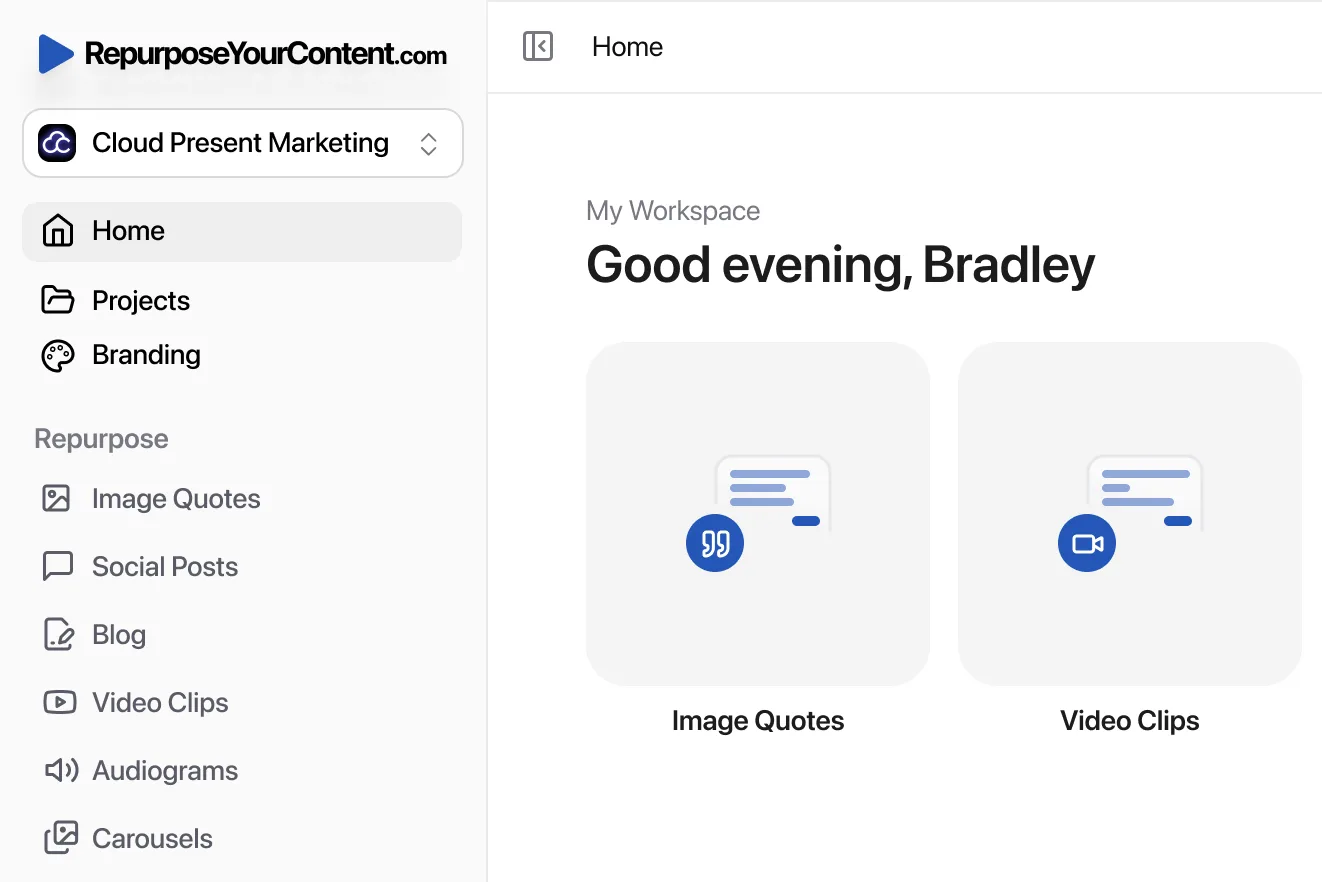
A clear example helps. RepurposeYourContent takes a webinar upload, lets the team choose formats and output volume, then generates platform-ready assets in minutes. That includes outputs for blog posts and workflows built for content teams.
The workflow is simple:
- Upload the webinar from a file or hosted link.
- Select the outputs needed for the pillar campaign.
- Generate the assets with brand treatment applied.
- Review and publish the pillar, clusters, and distribution content.
Later in the workflow, seeing the process matters more than reading about it.
How RepurposeYourContent helps
The strongest use case isn't generic repurposing. It's building a repeatable pillar engine from every webinar.
That means one upload can produce the pieces needed to support the full content pillar strategy for webinar marketing, not just isolated assets. The team gets the pillar blog post, supporting cluster articles, short clips, social posts, audiograms, image quotes, newsletters, LinkedIn carousels, and timestamps from the same source. The work that normally takes days can move in about five minutes.
Create and Manage Your Webinar Content Calendar
Creating the assets is only half the job. Publishing cadence is what turns a webinar into a month of useful distribution.
Many marketing groups struggle at this stage because they post all content simultaneously. That approach shortens the webinar's lifespan and weakens the cluster effect. A better method is a staggered release. Publish the pillar first, then roll out supporting pieces across the month.

A simple 30-day release pattern
This structure works because it mixes search, nurture, and social distribution without asking the team to invent new topics daily.
| Day | Asset | Purpose |
|---|---|---|
| Day 1 | Pillar page goes live | Establish the main topic hub |
| Day 3 | Short video clip | Drive awareness and replay traffic |
| Day 5 | Newsletter mention | Bring subscribers into the topic |
| Day 8 | Cluster article one | Capture narrower search intent |
| Day 11 | LinkedIn carousel | Repackage the webinar framework |
| Day 15 | Cluster article two | Deepen topical coverage |
| Day 19 | Image quote or audiogram | Keep the theme visible |
| Day 23 | Email nurture follow-up | Re-engage attendees and non-attendees |
| Day 27 | Cluster article three | Expand internal linking depth |
| Day 30 | Round-up social post | Recirculate the pillar and replay |
What to schedule first
The pillar page should go first because it gives every later asset somewhere to point.
After that, sequence based on buyer intent:
- Awareness assets such as clips and social posts early in the month
- Consideration assets such as cluster articles in the middle
- Decision-support assets such as emails, FAQs, and replay reminders later
This keeps the topic active without repeating the same message.
The content calendar shouldn't ask, “What should the team post today?” It should ask, “Which asset best supports the pillar this week?”
For teams tightening their planning process, RedactAI's guide to content planning is a useful external reference for organising recurring themes into a workable publishing rhythm. There's also a practical editorial calendar template for marketing teams that fits this kind of webinar-led schedule.
Keep one owner accountable
The calendar breaks when ownership is vague.
One person should own the pillar campaign. That doesn't mean writing everything. It means tracking the release order, checking internal links, aligning distribution copy, and making sure each cluster points back to the core topic.
Without that owner, teams publish assets. They don't build authority.
Key Metrics to Measure Pillar Strategy Success
Marketing teams often track total outputs. Fewer can demonstrate that the pillar system is delivering results.
That's the hard part because content guidance rarely explains how to measure ROI when webinars become the source for pillar clusters. Perfectly Planned Content points to that gap directly. There's little framework for showing how repurposing effort across pillar clusters proves value, which is why systematic creation and tracking from one source matters (Perfectly Planned Content).
Track leading indicators first
A webinar-led pillar strategy usually shows early movement before it shows pipeline impact. That's normal.
The first metrics to watch are:
- Keyword coverage for the pillar topic and related cluster terms
- Organic entrances to the pillar and cluster pages
- Internal click paths from clusters to the pillar
- Engagement by asset type across replay pages, clips, and email
These metrics show whether the structure is gaining traction. They also show which cluster angles deserve more investment.
Then connect content to pipeline signals
Once the structure is live long enough, move to business outcomes.
A simple dashboard can include:
| Metric group | What to check | Why it matters |
|---|---|---|
| Visibility | Rankings and search entrances | Shows topical traction |
| Engagement | Time on page, clicks, replay interactions | Shows asset relevance |
| Conversion | Form fills, demo interest, MQLs | Shows commercial impact |
| Efficiency | Output per webinar and publishing speed | Shows team productivity |
Keep attribution simple at first. Tag the pillar and all related clusters consistently. Track which webinar they came from. Then compare performance by pillar theme over time.
Measurement rule: Don't evaluate a pillar strategy by one post. Evaluate it by the combined performance of the pillar, clusters, and supporting distribution assets.
Set expectations properly
This model needs time. A focused content pillar strategy for webinar marketing usually needs 3 to 6 months before the SEO impact becomes clear enough for internal reporting.
That's why the right reporting cadence matters. Review weekly for production and distribution issues. Review monthly for trend lines. Review quarterly for business impact by pillar.
For teams refining that dashboard, this guide to webinar metrics and KPIs to track is a helpful starting point.
The winning pattern is straightforward. Pick a recurring webinar theme. Build one strong pillar. Publish tightly related clusters. Link them properly. Track the topic as a system, not as isolated assets.
If the team wants to turn one webinar into a pillar page, cluster articles, clips, emails, audiograms, image quotes, newsletters, LinkedIn carousels, and timestamps without days of manual work, try RepurposeYourContent.
Tags: