Repurpose Online Course Content for Marketing: A Playbook
Stop letting course videos collect dust. Learn to repurpose online course content for marketing to attract students and grow sales with this step-by-step guide.

To repurpose online course content for marketing, audit the curriculum for standalone lessons, pull out the teachable parts, and turn them into clips, posts, and articles. Done well, that free content auditions the course. It builds trust and drives sales instead of hurting them.
The popular advice says to keep the best material locked behind the paywall. That sounds safe. It also keeps the course creator invisible.
A hidden course can't build demand. A visible lesson can.
Course creators and education-led SaaS teams already have the raw material. The issue isn't ideas. It's knowing what to give away, what to protect, and how to turn one lesson into useful marketing without losing a week to editing.
Why Giving Away Course Content Sells More Courses
The fear is simple. If people can learn from the free content, they won't buy the course.
That fear misses how buyers decide. Buyers don't buy a course because the topic exists. They buy because they trust the teacher, the structure, and the path to the result.

Free content is the audition
Free course content works best when it teaches the what and the why in public, then sells the how and the full system inside the paid offer.
That means public content should do one of these jobs:
- Clarify the problem: Name the mistake, myth, or bottleneck the buyer already feels.
- Deliver a small win: Give one framework, one fix, or one insight they can use today.
- Show the teaching style: Let prospects experience how the instructor explains ideas.
- Create momentum: Make the next step feel obvious, not forced.
Free content from a course doesn't compete with the course. It auditions it.
A lesson clip that solves a narrow problem doesn't replace a structured curriculum. It proves the curriculum is worth paying for.
That matters because repurposing a single long-form asset into multiple formats can increase total reach by 12x while reducing per-piece production cost by 80% compared with creating unique content for every channel, according to content repurposing statistics collected here. More reach means more people can encounter the teaching before they ever see a sales page.
What to give away and what to keep paid
The line is clearer than many course creators think.
Give away:
- A complete concept: one framework, one beginner lesson, one myth-busting point
- A satisfying result: a short fix, checklist, or diagnostic
- An aha moment: the part students often repeat back in reviews or Q&A
Keep paid:
- The full implementation path
- Templates, sequencing, and accountability
- The complete system that turns isolated lessons into a transformation
A creator who shares nothing stays invisible. A creator who shares selected wins becomes memorable.
That is why ungated teaching often supports pipeline, especially in education-led B2B marketing. For a broader view of that model, this guide on ungated content strategy for B2B webinar marketing shows the same logic in a different format.
The real risk isn't giving too much away
A significant risk is giving away random fragments with no strategy.
Posting disconnected clips without context can make the course feel shallow. Posting one strong lesson with a clear frame does the opposite. It shows authority, builds trust, and gives future students a reason to pay attention.
How to Audit Your Course for Marketing Gold
Most courses already contain months of marketing content. The problem is that it isn't tagged, prioritized, or shaped for discovery.
A strong audit starts by isolating standalone lessons, then prioritizing topics by search intent, then mapping a publishing calendar with one substantial piece each week and social derivatives around it, based on this course repurposing methodology.

Use the give-away test
Not every lesson should become marketing.
A lesson passes the give-away test if it delivers a complete, useful win on its own without handing over the course's full transformation. The best candidates usually fall into familiar patterns.
| Lesson type | Why it works in marketing |
|---|---|
| Beginner introduction | It helps cold audiences enter the topic fast |
| Common mistakes | It creates urgency and relevance |
| Myth-busting segment | It challenges old assumptions and earns attention |
| Quick framework | It gives structure without giving away the whole system |
| FAQ answer | It addresses objections in the buyer's own language |
Where to look first
The fastest audit starts in three places.
The first lesson of each module
These lessons often frame the module clearly. They also tend to stand alone better than deep implementation lessons.Segments students quote back
If students repeat a line in reviews, calls, or Slack messages, that's usually a signal. The market is telling the creator what resonates.Q&A and support questions
Student questions expose friction points. They also give creators language that future buyers already use.
Practical rule: If a lesson can help someone today and still leave them wanting the full method, it's strong marketing material.
The honest DIY time cost
The audit itself isn't hard. It still takes time.
For one course, a manual pass usually looks like this:
- Module review: about 45 to 60 minutes to skim lesson titles, slides, and transcripts
- Clip selection: about 60 to 90 minutes to mark strong excerpts and note hooks
- Keyword matching: about 30 to 45 minutes to align lessons with real search intent
- Calendar mapping: about 30 minutes to assign weekly themes and derivative assets
That front-end work is strategic. It is worth doing. But it also explains why many teams never get past the idea stage.
A similar principle applies when turning recordings into structured educational content in reverse. This article on content refresh strategy for webinar content helps sharpen the same selection instinct.
A simple audit workflow
Step 1. List every module and lesson title in a sheet.
Step 2. Mark each lesson with one label. Standalone, support, or paid-only.
Step 3. Pull out any lesson that teaches a full concept in plain language.
Step 4. Highlight the lines that create a visible shift in understanding.
Step 5. Match each selected lesson to a format. Clip, carousel, blog post, checklist, or email.
One strong module can seed a week of content. A strong course can feed marketing for a long time without repeating itself.
A Workflow from One Lesson to a Lead Magnet
One short lesson can do more work than most creators expect.
Start with a single 10-minute lesson. In this example, the lesson topic is Three Common Mistakes in Project Management. The lesson already exists inside the course. The job is to extract the parts that travel well outside it.
A visual map helps show the conversion path.

Step 1 to Step 3
Step 1. Isolate one clean idea
Don't start with the whole module. Start with one lesson that solves one problem. In this case, each mistake can stand on its own, and the full lesson can anchor the week.
Step 2. Pull the lead magnet angle
The transcript becomes a short checklist. Not a transcript dump. A cleaned-up, outcome-focused asset such as "Project Management Mistakes Checklist."
Step 3. Create the channel cuts
One lesson can become a short video clip, a carousel, quote graphics, an audiogram, and a blog post. That is the point of repurposing. One source. Multiple buying contexts.
A practical walkthrough sits well alongside this process in turn one piece of content into many formats.
Here is the embedded video referenced in this workflow.
What the finished asset set looks like
For a lesson like this, the weekly package might look like:
- One short-form clip: one mistake, one sharp hook, one subtitle-driven edit
- One LinkedIn carousel: screenshots or slides with concise takeaways
- Three quote graphics: short lines pulled from the strongest teaching moments
- One checklist lead magnet: a downloadable summary with action steps
- One blog post: a search-friendly article built from the lesson's topic
Turning a lesson transcript into a proper SEO blog post usually takes 1 to 2 hours manually. That includes restructuring for search intent, cleaning spoken language, adding headers, and writing FAQs. Visual lessons take longer because the transcript misses context.
The social post format that works
Don't fabricate a new voice for the creator. Build from the lesson.
Use this structure:
- Hook line: state the problem the lesson solves
- Three to five takeaway lines: keep them tight and drawn from the actual teaching
- Soft close: something like "This is one lesson from module 2"
- Visual: clip, slide, or screenshot from the course itself
A strong teaser teaches enough to be useful, then points to the larger system without sounding needy.
The CTA matters too. Generic "enroll now" copy usually falls flat in cold feeds. Curiosity-gap CTAs tied to a specific outcome tend to fit better, such as pointing viewers to a free lesson preview or a focused resource. The right move is to test two or three CTA variants and let the campaign data decide.
Turn Your Curriculum into a 90-Day Content Plan
Creators waste time when they treat content planning as a blank page problem. The curriculum already solved that problem.
If the course has three modules, that can become three monthly themes. If each module has four lessons, that can become a weekly cadence. The content plan writes itself once the structure is visible.
Map the curriculum by theme
A simple version looks like this.
| Course structure | Marketing use |
|---|---|
| Module 1 | Month 1 theme |
| Lesson 1.1 | Week 1 anchor topic |
| Lesson 1.2 | Week 2 anchor topic |
| Lesson 1.3 | Week 3 anchor topic |
| Lesson 1.4 | Week 4 anchor topic |
That structure does two useful things. It keeps messaging consistent, and it helps the audience build understanding in the right order.
A practical quarterly rhythm
For course creators and education-led SaaS teams, the quarter often works better than a monthly scramble.
A usable rhythm:
- Month 1: foundational lessons, myths, and beginner mistakes
- Month 2: implementation lessons, process improvements, decision criteria
- Month 3: advanced judgment, edge cases, and buyer objections
Each week, one lesson becomes the anchor. From that anchor come the supporting assets. A blog post, short clips, social posts, a checklist, or an email.
This is also where student Q&A becomes fuel. When learners ask the same question repeatedly, that question earns a place in the calendar. It can become a clip, a post, or a short article.
Keep the sequence intentional
Random posting creates random demand.
A sequenced plan builds topical authority. It also makes the sales message easier because the audience has already moved through the same logic the course uses.
For teams planning around launches, customer education, or founder-led content, this broader guide to virtual event content repurposing shows how a themed content engine can support a longer publishing cycle.
The Done-for-You Alternative
DIY works. It just isn't cheap when time is fully accounted for.
Manual repurposing of a single 45-minute recording typically takes 10 to 16 hours, while automated or done-for-you services can save 60 to 80% of creation time and boost output by 40%, based on these content repurposing benchmarks. That gap is why many course creators know what to do and still don't do it consistently.

What DIY actually includes
That 10 to 16 hour range disappears fast once the work is broken apart.
- Transcription and cleanup: pulling the raw text into usable shape
- Clipping and editing: usually the slowest part if the creator wants polished short-form video
- Post writing: adapting the spoken lesson for LinkedIn, email, or a blog
- Design work: quote graphics, carousels, thumbnails, and brand formatting
- Review passes: fixing tone, trimming repetition, and checking CTA placement
For creators with a small team, content frequently stalls. The lesson exists. The calendar exists. The outputs don't.
What the service model changes
The done-for-you option is simple. Send one recording. Get finished assets back.
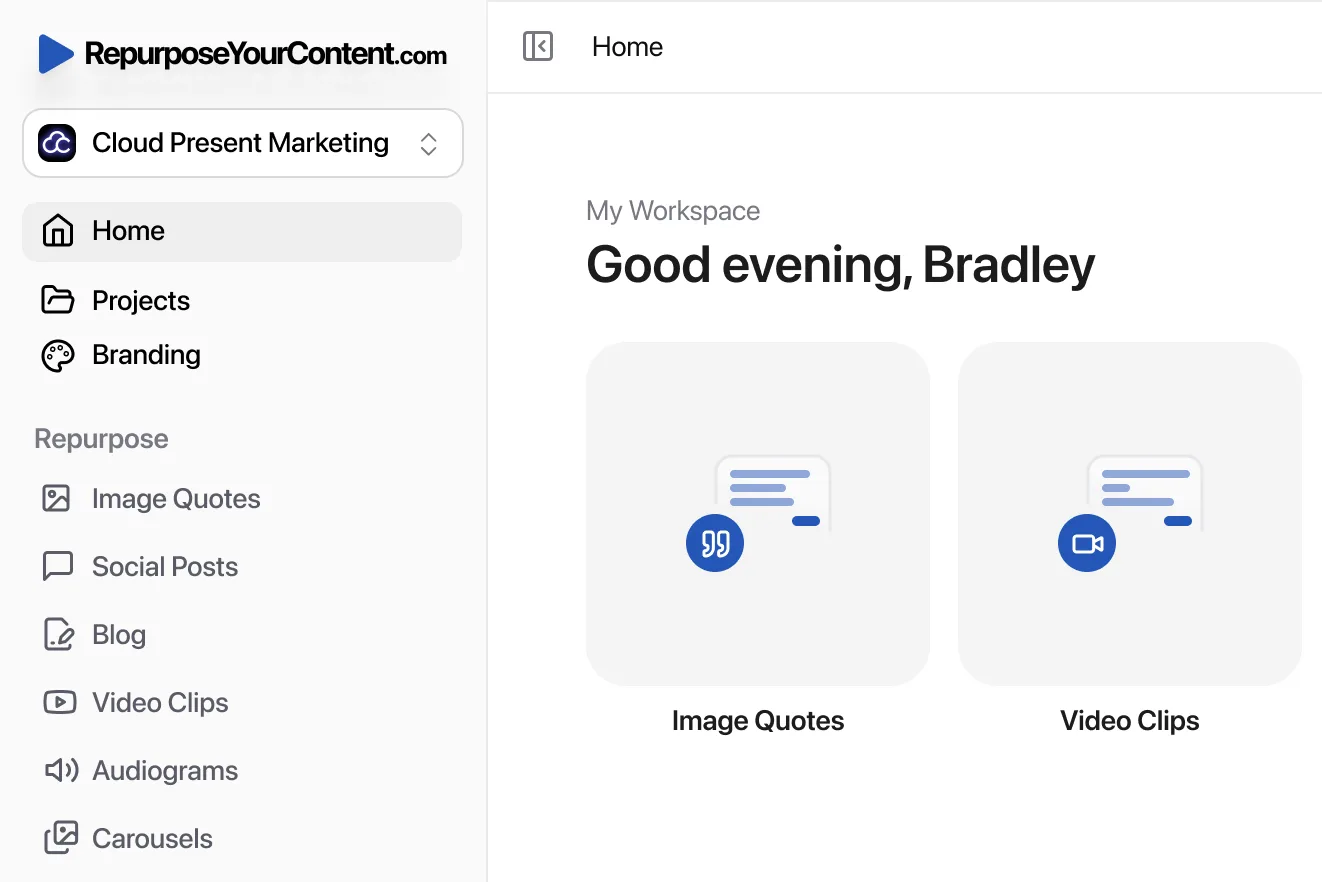
That recording can be a podcast, webinar, keynote, interview, sales call, meeting recording, or course lesson. The output can include 20 to 30 ready-to-publish assets in 72 hours. That means video clips, LinkedIn posts, quote graphics, carousels, audiograms, and a blog post, all in the creator's brand voice, with unlimited revisions.
The creator's time is about 15 minutes.
Some teams choose this because they need consistency. Others choose it because they don't want a founder or course lead spending a day inside CapCut, Descript, Canva, or Google Docs.
For teams comparing paths, outsource content repurposing covers the trade-offs more directly.
Done-for-you doesn't remove strategy. It removes the production bottleneck.
The practical economics are straightforward too. One 45-minute recording becomes 30 assets. Pricing can start from $14 per finished asset. And with a 72-hour turnaround guarantee or you don't pay, the risk sits with the service provider, not the creator's schedule.
Measure What Works and Let Data Guide You
Production matters. Feedback matters more.
Many teams already know recordings produce strong raw material. 73% of B2B marketers say recordings are their primary source of quality leads, yet only about one in three teams have a scalable system to turn them into marketing content, according to this source on the recording-to-content gap. The teams that close that gap still need one more habit. They need to measure which asset types move the audience.
Track by asset type, not just by channel
Looking only at platform-level performance hides useful patterns.
A better view separates content by asset type:
| Asset type | What to watch |
|---|---|
| Short clips | comments, watch behavior, saves |
| Carousels | shares, saves, swipe-through quality |
| Quote graphics | lightweight engagement and message resonance |
| Blog posts | search entry points, time on page, assisted conversions |
| Lead magnets | landing page response and follow-up quality |
This makes the next content decision easier. If clips attract attention but carousels drive more shares, that changes the mix next month.
Test the CTA, not just the topic
The same lesson can perform very differently based on the close.
A generic hard sell often asks too much of a cold audience. Curiosity-gap CTAs tied to a clear outcome usually fit better. "The full 4-step system is in the free lesson" is stronger than "enroll now" because it connects the next click to a specific payoff.
Test a small set of CTA variants per campaign. Keep the lesson topic stable. Change the close. Then keep what consistently earns better downstream action.
Student questions are market research in plain English. Treat them like content prompts.
Use student Q&A as an endless source
Q&A is one of the best content inputs because it comes from real friction.
When students ask where they got stuck, what they misunderstood, or why a step matters, they hand the creator future content topics. Those questions can become:
- A short myth-busting clip
- A FAQ-style social post
- A clarification email
- A blog post answering a precise objection
That loop keeps content relevant. It also keeps messaging grounded in buyer language instead of internal jargon.
If a course creator wants to repurpose online course content for marketing without guessing, this is the simplest rule to keep. Publish the lessons that create clarity. Measure which formats and CTAs convert that clarity into action. Then repeat.
If turning one course lesson into a week of content keeps slipping down the list, book a call with RepurposeYourContent or request a sample. Send one recording, and the team sends back finished content.
Tags: