How to Repurpose Podcast Episodes into Blog Posts: The Definitive Workflow
Learn how to repurpose podcast episodes into blog posts with a proven workflow. Turn your audio into high-performing SEO content that attracts new readers.

Your podcast episodes are packed with expert insights. The problem? Google is deaf. Your audio content is a black box to search engines, making it invisible to the 90% of B2B buyers who use search to find solutions. This means every episode you publish without a text version is a missed opportunity for organic traffic.
The solution is to repurpose podcast episodes into blog posts. It's not about creating more work. It’s about making the work you've already done generate lasting results. A single 45-minute episode can become a 2,000-word SEO-optimized post, plus 5-8 social posts and multiple quote graphics. This guide provides the exact workflow.
Why Repurpose Your Podcast into a Blog Post?
Audio content has a short shelf life. A blog post turns a fleeting audio moment into a permanent, traffic-generating asset. Your podcast is great for audience connection, but it's not indexable. A blog post opens up your content to Google, allowing you to capture long-term organic traffic.

From Unsearchable Audio to a Traffic-Driving Asset
The ROI is high. A 45-minute interview contains enough material for a 2,000-word article. This captures the audience that prefers to read, not just listen. By turning audio into text, you serve your existing listeners and open a new stream of organic traffic.
The core issue is simple. Your audio content is a black box for search engines. A blog post opens that box. It allows Google to index every idea, quote, and data point you shared. You stop creating temporary content and start building a library of long-term assets.
A Blog Post is Not a Transcript
Do not just post a raw transcript. No one wants to read a wall of unformatted text. A proper repurposed article organizes the conversation into a logical narrative. It has clear headings, pull quotes, and actionable takeaways. It's designed for reading and skimming.
This is where the benefits appear:
- Discoverability: Your ideas rank for target keywords. They pull in new readers from search engines daily.
- Shareability: It’s easier to share a blog post link than an audio file. No more telling people to "listen at the 23:15 mark."
- Lead Generation: You can add CTAs, service links, and lead magnets. This turns readers into potential customers.
To do this right, apply solid SEO content writing best practices. Structure the content for human readers first. This also makes it more appealing to search engines.
Podcast Audio vs. Blog Post Performance
| Attribute | Podcast Episode (Audio) | Repurposed Blog Post (Text) |
|---|---|---|
| Discoverability | Low (only searchable by title/description) | High (fully indexable by search engines) |
| Shareability | Moderate (links to full episode) | High (easy to share links, snippets, quotes) |
| Skimmability | Low (requires listening to find key points) | High (headings, lists, and bold text) |
| Content Lifespan | Short-term (peaks on release, then drops) | Long-term (generates traffic for years) |
| Lead Generation | Limited (verbal CTAs, show notes) | High (embedded forms, links, and CTAs) |
The table is clear. Your podcast builds a deep connection. The blog post gives that content longevity and reach.
The 4-Step Podcast-to-Blog Workflow
Forget staring at a blank page. Follow these steps. This is how you systematically turn one recording into valuable written content.

Step 1: Transcribe the Audio
Everything starts with a clean transcript. Raw AI output is messy. It's full of filler words and false starts. Your first job is to clean it up. You don't need a perfect word-for-word record. Edit the transcript for clarity and readability. Turn spoken sentences into clean, polished text. Capture the core message, not the conversational fluff. You can learn how to automate the transcription process here.
Step 2: Extract Key Themes
With your clean transcript, it’s time to find the gold. Your mission is to find the main arguments and most compelling ideas.
Look for 3 to 5 central themes. These become the main sections of your blog post. They are your H2s and H3s. While reading, highlight any:
- Surprising statistics or data points.
- Powerful one-liners or memorable quotes.
- Actionable tips or step-by-step instructions.
These are your article's building blocks. Pulling them out first gives you a clear structure.
A 45-minute podcast is packed with content. Your job isn't to cram every word in. Find the top 10% of ideas. Present them in a fresh, structured way for a reader.
Step 3: Restructure into an SEO-Optimized Format
Now you have your core themes. It's time to build the blog post's skeleton. Your podcast chat might have jumped around. Your blog post needs a clear, linear path. Arrange your themes into a logical sequence for a new reader.
For each theme, write a clear, benefit-driven heading.
- Main Themes: These become your H2 headings.
- Supporting Points: These become your H3 headings.
Make sure your primary keyword, "repurpose podcast episodes into blog posts," is in at least one H2. This structure helps readers and search engines understand your content. Thinking beyond podcasts, understanding broader content repurposing strategies helps you get more value from all your assets.
Step 4: Add Headers, Links, and CTAs
It’s time to write. Use your outline and extracted nuggets to flesh out each section. Do not just copy and paste from the transcript. Rewrite and expand on the ideas.
This is your chance to add more value. If your guest touched on a concept briefly, add a paragraph of explanation. Drop in relevant internal links to your services or other blog posts.
Finally, finish the post with visuals and a clear next step.
- Add Assets: Embed the original podcast episode player. Use powerful quotes to create blockquotes or branded image graphics.
- Add a Call-to-Action: What should the reader do next? Don't leave them hanging. A clear CTA turns a passive reader into an engaged lead.
This process is your factory line for content creation. It ensures you produce high-quality articles from your audio library consistently.
How RepurposeYourContent Helps
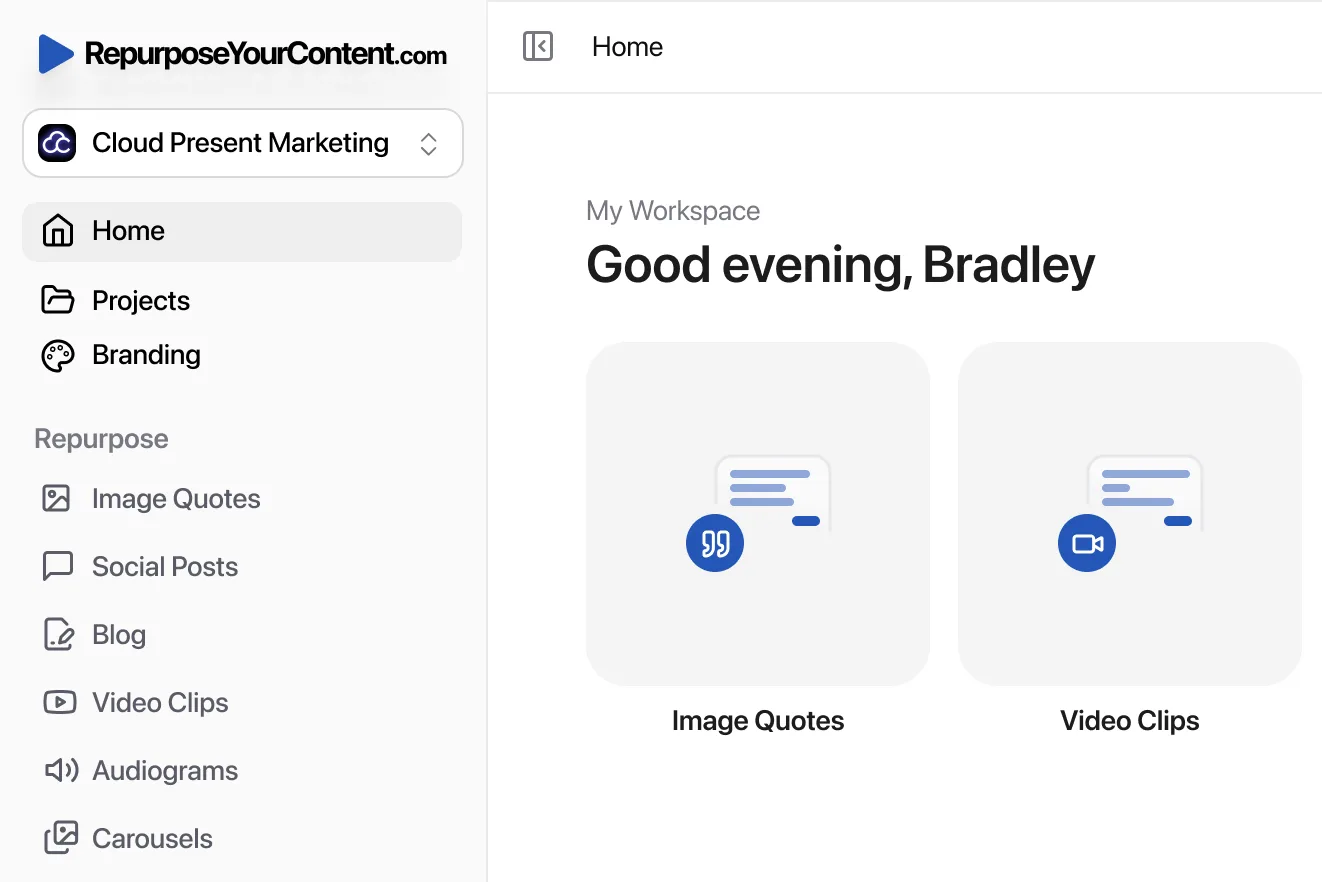
This entire workflow is what our platform automates. While our name says webinars, the process is identical for podcasts and other recordings.
You upload a recording. RepurposeYourContent handles the heavy lifting.
- AI-Generated Blog Posts: Get a full, SEO-optimized blog post draft in minutes. Our AI identifies key themes and structures them into headings for you.
- Automated Social Content: The platform also pulls out dozens of social posts, LinkedIn carousels, and image quotes from the same recording.
- Other Assets: It also creates video clips, audiograms, image quotes, and newsletter copy.
It takes this manual process and completes it in about 5 minutes. You get a complete content campaign from one episode without the hours of manual work. It turns one recording into 47 pieces of content.
Ready to stop doing this the hard way? Try RepurposeYourContent today.
Example: A 45-Minute Episode into a 2,000-Word Article
How does a 45-minute B2B podcast interview become a 2,000-word article? This is not about giving you more work. It’s about ensuring your audio content pays off.
Deconstructing the Episode
Stop seeing your 45-minute episode as a giant block of audio. It's a collection of smaller ideas, stories, and takeaways.
A typical interview structure:
- The Intro (Minutes 0-5): Host welcomes guest and sets up the topic. Perfect for your blog post's opening paragraphs.
- The Main Chat (Minutes 5-40): The heart of the episode. You'll find 3-5 major themes here. These become your main H2 headings.
- The Wrap-Up (Minutes 40-45): The final summary and CTA adapt easily into your article's conclusion.
This approach turns a daunting task into a simple connect-the-dots exercise.
Expanding Spoken Points into Written Depth
Here’s where you add real value. A point made on a podcast is often quick. In writing, you have space to give it substance.
Imagine your guest says, "We saw a 25% increase in qualified leads after implementing the framework."
On the podcast, that’s a quick soundbite. In the blog post, you can build an entire section around it. You can find research to back up the claim. You can explain why the framework is effective. You can link to another article that walks readers through implementation. You elevate a casual chat into a pillar piece of content.
You are the expert curator. Take the guest's insights as your foundation. Build a more detailed, valuable resource around them. Turn their spoken authority into your SEO asset.
This workflow shows how straightforward it can be.
From One Episode to a Full Content Campaign
The real win is realizing how much you get from a single recording. That one 45-minute episode isn't just one article. It’s fuel for an entire week's worth of content.
From just one episode, we typically generate:
- One 2,000-word SEO-optimized blog post: The main asset that brings in search traffic.
- Five to eight social media posts: Key stats and quotes to promote the article.
- Two or three quote graphics: Powerful lines from your guest for Instagram and LinkedIn.
- One newsletter snippet: Driving your subscribers to the new post on your website.
One recording session fills your content calendar. The same logic applies to other long-form content. We use a similar model for turning video into written content. You can read more in our guide on turning a webinar into a blog post.
This is how you get off the content hamster wheel. Start building a library of assets that works for you 24/7.
Post-Publishing Checklist to Maximize Reach
When you hit 'publish' on your new post, don't stop. Your work isn't finished. What happens after you publish determines its success. Creating the content is only half the battle. You need a simple, repeatable plan to ensure your repurposed content gets the visibility it deserves.

This checklist breaks down on-page essentials and a promotion strategy.
Finalize On-Page SEO Essentials
Run through these final on-page SEO checks. These small details have a massive impact on how Google ranks your content.
- Title Tag & Meta Description: Is your title compelling? Does it include your keyword near the beginning? Your meta description is an ad for your post in search results. It must make someone want to click.
- URL Slug: Keep it short and descriptive. A good slug should be
/repurpose-podcast-into-blog-posts. - Internal Links: Add at least 2-3 internal links. Link to other relevant articles or pages on your site. This signals site structure to search engines and keeps readers engaged.
- Featured Image & Alt Text: Pick a high-quality featured image. The alt text must be descriptive. Write what the image shows. Example: "A checklist for promoting a repurposed podcast blog post."
Once these are locked in, your post is ready for Google.
Submit and Promote
With on-page elements handled, it's time to promote. Don't wait for people to find your content. Take it to them.
Publishing is not a promotional strategy. You need a consistent distribution plan for every piece of content. Without it, you’re relying on luck.
Here’s a simple plan to follow every time:
- Submit to Google Search Console: Use the "URL Inspection" tool to request indexing. This gives Google a direct nudge to crawl your new content. It often speeds up your appearance in search results.
- Email Your Subscribers: Your email list is your most valuable audience. Send an email announcing the new post. Give them a teaser and a clear link to read it.
- Schedule Social Media Posts: Don't just share the link once. Plan 3-5 different posts for LinkedIn over the next week. Use different hooks: a quote, a stat, or a question. Varying the angle captures more attention.
- Reach Out to Your Guest: Send a personal email to your podcast guest. Include the link to the finished article. Make it easy for them to share by providing a pre-written social post they can copy and paste.
Finally, smaller assets can drive traffic to your main post. Short, animated audio clips promote both the episode and the article. Our guide on how to create powerful audiograms for social media can help. This approach ensures maximum return from every episode you repurpose.
Frequently Asked Questions
When B2B marketers start turning podcast episodes into blog posts, these questions arise. Here are the direct answers.
How long should a blog post from a podcast be?
Aim for a minimum of 1,500 words. A standard 30-45 minute podcast episode has enough content for a 1,500-2,500 word article. The goal is not hitting a word count. It's about creating a useful resource that can rank in search. You do this by breaking down talking points into detailed sections. Pull out direct quotes for authority. Expand on ideas your speakers only touched on. This is how the blog post delivers value beyond a transcript.
Should I post a full transcript or a summary blog post?
Always create a summary blog post. A raw transcript is a terrible reader experience and a dead-end for SEO. It has no structure, no narrative, and is impossible to skim. A proper blog post reframes the conversation into a well-structured article. It has a clear beginning, middle, and end. This lets you add context, weave in internal links, and include strong CTAs that generate leads. If you want to offer the full transcript, package it as an optional PDF download at the end of your polished blog post. You can also use it to create detailed show notes. Our guide on how to create podcast show notes from recordings shows you how.
How do I match my brand's tone if the podcast is conversational?
The first editing pass is for tone of voice. Transform conversational language into the direct, professional prose that defines your brand.
For example, a speaker might say, "So, yeah, I guess what I'm trying to say is that the main hurdle is really just getting started..."
In your blog post, that becomes: "The primary challenge is implementation."
Use blockquotes to keep your guest's authentic voice. Let their direct quotes shine. The main body of the article, however, should be written in your established brand voice.
How do I handle multiple speakers in a repurposed blog post?
Clear attribution is non-negotiable. Use blockquotes to highlight the most powerful insights from each person. Always introduce the quote with their name and title. This gives them credit and adds authority. Do not simply alternate paragraphs between speakers. That is a script, not a blog post. Your job is to be the editor. Synthesize the best ideas from the conversation into a single, cohesive argument. Weave the different perspectives together to build a strong, unified narrative. This turns a multi-person chat into a single, authoritative article.
The same logic applies to your webinar recordings. While we are called RepurposeYourContent, our platform automates this entire process for any video or audio file. You get an AI-generated blog post, plus dozens of social posts, video clips, and quote graphics in minutes.
Ready to turn one recording into a full content campaign? Try RepurposeYourContent today.
Tags: