The 10 Best Livestream Clipping Tools for 2026
Searching for the best livestream clipping tools? We review 10 top options for VODs and live content, comparing AI features, speed, and total editing time.

A livestream can run for an hour and still produce only a handful of clips worth publishing. That gap is why clipping tools matter, and why many teams overestimate what they save.
The first decision is not which app to buy. It is whether your team should do this work at all.
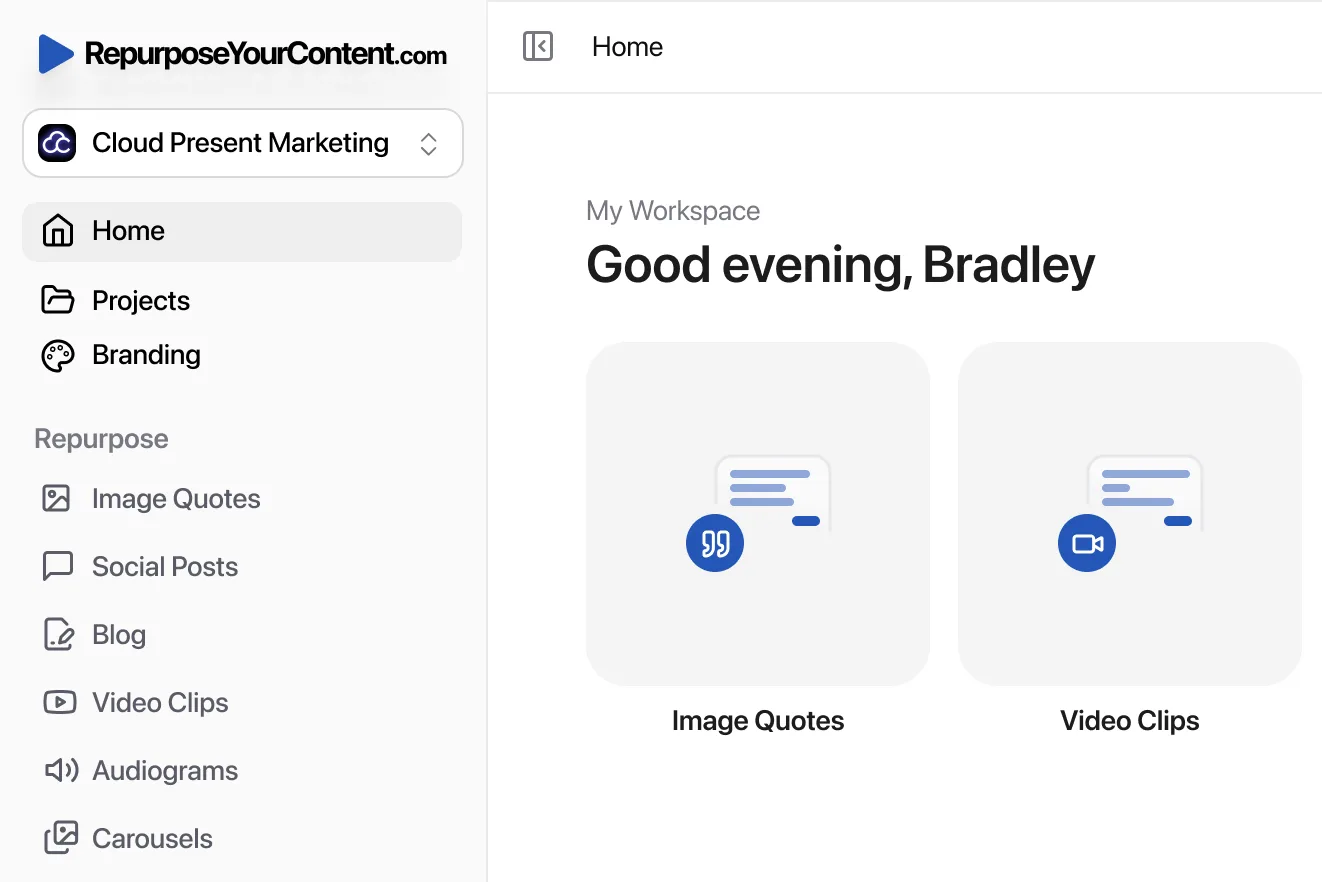
DIY software usually looks cheaper on paper. In practice, someone still has to pull the recording, review suggested moments, fix captions, adjust framing, trim weak openings, export multiple versions, and publish. A done-for-you service shifts that work off your team. RepurposeYourContent starts at $999 per month, which is a meaningful line item. It also replaces hours of editing and review with finished assets delivered back to you.
A typical DIY flow still requires significant time. Downloading files and organizing the session can take 15 to 30 minutes. Reviewing AI suggestions often takes 45 to 90 minutes. Cleaning captions, fixing crop issues, tightening intros, and exporting final cuts can add another 2 to 4 hours. For B2B marketing teams and creators publishing every week, that time cost matters more than the monthly tool price.
AI clippers also have a clear limitation. They are good at spotting noise. They catch reactions, volume spikes, fast visual changes, and obvious hype moments. They are less reliable at finding the clips that perform well with buyers, clients, or niche audiences. A strong takeaway, a sharp opinion, or a clean explanation often beats the loudest moment in the stream.
Practical rule: Fast to draft is not fast to publish.
Use this framework before comparing tools.
- Choose software: if budget is tight, your team already edits video, and someone can spend hours each week reviewing output.
- Choose done-for-you: if you want publish-ready clips without adding more production work to your team.
- Choose hybrid: if you want a tool to surface rough selects, then hand off final polish to editors or a repurposing partner.
For many teams, the best process is simple.
- Record the livestream, webinar, interview, podcast, keynote, or panel.
- Use a clipping tool to surface possible moments.
- Let a human pick what matters, then polish for channel, caption, and brand.
- If the goal is consistent short-form output, build the workflow around a proven long-form video to short clips process, not just a clip finder.
1. Streamlabs Cross Clip

Streamlabs Cross Clip is best for a narrow job. It turns an existing clip into a vertical social asset fast. That makes it useful for streamers who already have Twitch, YouTube, or Kick clips and just need to reformat them for short-form platforms.
It isn't a true long-VOD intelligence tool. It works best after the clip already exists. For that reason, it suits moderator-driven clipping workflows more than hands-off post-stream repurposing.
Where it fits
Cross Clip is lightweight. It handles layout presets well, especially facecam plus gameplay compositions. Teams that already use the Streamlabs ecosystem will find the handoff simple.
The trade-off is obvious. It doesn't solve clip selection. Someone still has to identify the moment first, then decide whether the moment is worth posting.
- Best use case: creators with active communities clipping moments live
- Main strength: quick conversion from horizontal clip to vertical format
- Main weakness: limited value for full VOD review
For teams turning longer recordings into social output, a broader long-form video to short clips workflow usually matters more than a formatter alone.
Time required after the tool runs
Cross Clip saves formatting time, not editorial time. Expect about 10 to 20 minutes per clip to choose a layout, check framing, clean captions if used, and export final versions. If the original clip isn't strong, the tool can't rescue it.
That makes it a good utility, not a full clipping system.
2. StreamLadder

StreamLadder comes closer to what is generally desired when searching for the best livestream clipping tools. It combines AI-assisted highlight suggestions with a vertical editor and publishing workflow. That means it tries to cover selection, editing, and distribution in one place.
For streamer workflows, that's attractive. One system can analyze VODs, suggest moments, add captions, and prepare clips for short-form channels. It's more complete than a simple converter.
What works and what doesn't
The strongest part is convenience. StreamLadder is built for Twitch, Kick, and YouTube style workflows, not generic corporate video editing. That focus helps.
The weak point is the same one seen across the category. AI suggestions still need human filtering. A clip can be energetic and still not be meaningful. For B2B creators, panel hosts, and event marketers, that matters a lot.
Loud doesn't equal valuable. The clip that earns attention is often the one with the clearest point.
For teams comparing vertical clipping options beyond gaming-heavy use cases, this broader guide to clipping tools for social media helps frame where streamer-first tools fit and where they don't.
Time required after the tool runs
Expect roughly 1 to 2 hours of review and cleanup per recording, depending on how many candidate clips the system surfaces. Caption cleanup and opening-hook edits still take time. Scheduling helps distribution, but it doesn't fix weak selections.
StreamLadder is a solid middle-ground option. It saves time, but it doesn't remove the need for editorial judgment.
3. Eklipse

Eklipse is one of the more purpose-built livestream clipping tools for gamers. That specialization is its advantage. It's designed around gaming highlights, game-specific moments, and fast social output from streaming sessions.
For gameplay-heavy channels, that focus helps the tool make better first-pass decisions than more general AI clippers. For talk-first livestreams, the fit is weaker.
Best for gaming, weaker for talk content
Eklipse can save serious review time when the stream format is visual and event-driven. Big in-game moments are easier for systems to detect than nuanced spoken commentary. That's why gaming streams are a better match for automation in general.
For creators running interviews, education streams, product breakdowns, or live commentary, the output often needs more human correction. The algorithm can catch action. It struggles more with subtext.
- Strong fit: competitive gameplay, reactions, and high-action streams
- Less ideal: founder interviews, podcasts, panels, and webinars
- Typical follow-up work: trim setup chatter, rewrite captions, tighten endings
If the team also needs cleaner subtitle presentation, this guide on adding captions to video clips covers the finishing work many auto tools still leave behind.
Time required after the tool runs
For gaming creators, Eklipse can shorten review time noticeably. For brand-led streams, expect to spend 1 to 3 hours reviewing the picks, correcting captions, and discarding clips that look exciting but say very little.
That's the recurring pattern in this category. The software finds movement faster than it finds message.
4. Twitch Auto Clips

Twitch Auto Clips is the obvious baseline for Twitch creators. It's native, simple, and requires no extra software. If the goal is getting rough moments captured inside the Twitch workflow, it does that job.
That's also the limit. Native clips are capture tools first. They are not a complete repurposing system.
Why native clipping still matters
The biggest benefit is speed inside the platform. Clips live where the stream happened. Voice triggers also reduce friction while the stream is active. For creators with moderators, this can create a decent raw library of moments by the end of a broadcast.
But native clipping doesn't handle the second half of the job well. There's still little support for true multi-platform publishing, deeper branding, or polished vertical social output.
For teams trying to turn streams into broader content packages, this practical guide to repurposing livestream recordings is the next step after native capture.
Time required after the tool runs
Twitch Auto Clips creates raw material, not publish-ready assets. Expect to spend 1 to 2 hours per stream reviewing what Twitch caught, choosing what matters, exporting, then finishing those clips somewhere else. If the stream is long, the review time climbs.
This is useful as a no-cost first layer. It isn't enough on its own for a serious content pipeline.
5. Clipbot.tv

Clipbot.tv appeals to a specific type of streamer. Someone already has clips. The team wants them reformatted, captioned, and pushed to TikTok or YouTube Shorts with less manual handling. In that lane, it's practical.
It automates the chain from captured Twitch clip to social upload. That removes some repetitive production work.
The real trade-off
Clipbot.tv depends on existing clips. It doesn't solve the “which moments matter” problem upstream. If moderators and community members create good clips during the stream, the system can help move those clips further. If the source clips are weak, the output will still be weak.
That makes it best for established Twitch workflows with active clip creation during the live show.
- Useful for: streamers with lots of community-created clips
- Less useful for: teams starting from full recordings with no clip library
- Editorial gap: hook writing and final quality control
The advantage here is operational. It removes the download, convert, and upload grind. It doesn't replace taste.
Time required after the tool runs
Expect around 30 to 60 minutes per batch to review selected clips, reject weak ones, check framing, and verify that captions don't misfire. That's still less than building everything manually, but it's not zero-touch.
For creators who already know what they want clipped, Clipbot.tv can be efficient. For everyone else, it's downstream automation on top of an upstream bottleneck.
6. Clipt

Clipt takes a different angle. It focuses on live AI clipping, vertical reframing, and attribution. For creators worried about repost tracking or creator credit, that's more interesting than standard post-VOD clipping alone.
The live-detection angle is promising. It aims to catch moments while the stream is happening, not only after the recording ends.
Where it stands out
Most clipping tools are really post-production tools. Clipt tries to operate closer to the stream itself. That can matter for fast-moving creators who want moments surfaced immediately.
Its attribution layer is also unusual. Brands may not care much about that. Creator-led channels and partnership-heavy ecosystems may care more.
A live clipper only helps if the live clip is worth keeping later.
Time required after the tool runs
Because Clipt is still a more specialized and earlier-stage option, teams should expect hands-on review before relying on it for a core content pipeline. A practical estimate is 1 to 2 hours of review, trimming, and validation per stream, especially while the workflow is still being proven.
Clipt is worth watching for creators who value live capture and attribution. It's less compelling for teams that focus on polished, publish-ready clips with minimal oversight.
7. Opus Clip

Opus Clip is one of the fastest ways to turn a long stream or webinar into a stack of short-form drafts. That speed is the reason it keeps showing up on buyer shortlists.
The trade-off is judgment.
Opus Clip is good at finding moments that look clip-worthy to an algorithm. In practice, that often means high-energy reactions, punchy phrasing, or spikes in volume. For B2B marketers, educators, and interview-driven creators, those are not always the moments that drive pipeline, explain a point clearly, or make a prospect stop scrolling. AI clipping tools usually find loud moments faster than they find meaningful ones.
That makes Opus Clip a production accelerator, not a hands-off publishing system. It works best for teams that want a first pass quickly and have someone available to review the output with editorial context.
For buyers comparing dedicated AI clipping tools more directly, this Opus Clip comparison page is useful context. This broader roundup of AI video clipping tools for 2026 is also helpful if you are deciding between DIY software and a more managed workflow.
Strong throughput, mixed signal quality
Opus Clip can save real time on the first cut. Upload the recording, let it generate options, and the team gets a shortlist without scrubbing the full VOD manually.
The problem shows up after that first pass. Teams still need to check whether the selected clips make a coherent point, whether captions handle brand terms correctly, and whether the framing feels intentional instead of generic. If the goal is volume, that may be fine. If the goal is polished clips that represent the brand well, the review load stays heavier than many buyers expect.
I would put Opus Clip in the "good DIY assistant" category. It reduces blank-page work. It does not remove editorial work.
Time required after the tool runs
Expect roughly 1 to 3 hours per recording for review, trimming, caption cleanup, title rewrites, and approval if the clips need to be publish-ready. The exact time depends on how selective the team is and how much context matters in the source material.
That is the key decision point. If a team has internal editing time and mainly wants speed, Opus Clip is a practical option. If the team wants consistent, campaign-ready clips without spending hours checking AI picks, a done-for-you service will usually produce better output with less internal drag.
8. Framedrop
Framedrop works well as a shortlist engine. It's useful when the team wants candidate moments surfaced quickly and plans to polish the winners elsewhere. That makes it practical for streamers and podcasters who don't want to scrub a full VOD manually.
Its value is in reduction. It cuts down the amount of footage a human needs to inspect.
A useful pre-selector
Framedrop is not the best fit for teams that need deep brand controls inside the clipping environment. It's more useful upstream, when the problem is finding likely moments rather than delivering final campaign assets.
That distinction matters. For many teams, the best livestream clipping tools aren't one-stop solutions. They are filters.
- Good at: creating a first-pass shortlist
- Less strong at: premium finishing and brand-led output
- Best workflow: use it to narrow options, then edit the keepers
Time required after the tool runs
Expect about 45 to 90 minutes reviewing candidates from a typical recording, then more time in another editor if the clips need stronger graphics, cleaner subtitles, or more controlled framing. The total time depends on whether the shortlist is good.
Framedrop works best when the team treats it like an assistant, not an autopilot.
9. Medal

Medal is built around gaming capture speed. It handles instant replay, auto-clipping, and quick sharing well. If the workflow starts with gameplay moments and community sharing, Medal makes sense.
For B2B livestreams, keynotes, and interview-style content, it's usually the wrong tool. The product is shaped around game clips, not spoken-content repurposing.
Fast capture beats slow rewatching
The strongest use case is obvious. Capture strong moments during or right after gameplay without rewatching the entire stream. That removes a lot of dead time from the process.
The weakness is just as obvious. Medal doesn't solve polished cross-platform repurposing for business content. It helps creators capture raw moments quickly, then hands off the rest of the work.
The best tool for getting the clip isn't always the best tool for publishing the clip.
Time required after the tool runs
For gamers, Medal can cut the review burden sharply because the capture often happens close to the moment itself. But there's still 30 to 90 minutes of trimming, titling, reframing, and posting work if the clip needs to perform on TikTok, Reels, or Shorts.
It's fast where it should be. It just doesn't replace the rest of the content workflow.
10. NVIDIA Highlights and NVIDIA App

NVIDIA Highlights and the NVIDIA App workflow are not social clipping systems. They are capture utilities. But for PC streamers with supported games, they can be one of the lowest-friction ways to save usable moments during live play.
That's valuable because it removes the need to hunt backward through full recordings for obvious gameplay events.
Best as a capture layer
NVIDIA's strength is overhead. It runs close to the hardware and can save moments with very little interruption to the stream. For supported titles, automatic event capture is convenient. For unsupported titles, manual replay saves still help.
This is not a final-mile tool. There's no serious publishing or creative finishing layer here. Teams still need another editor, clipper, or service to turn raw captures into branded social content.
- Use it for: raw gameplay capture with low friction
- Don't use it for: full repurposing or social-ready editing
- Best paired with: a downstream editing or content production workflow
Time required after the tool runs
The app saves capture time, not production time. Expect 30 to 60 minutes to review saved moments, then more time in another tool if the clips need captions, reframing, intros, or exports sized for social.
For gaming creators, it's a strong front-end layer. For marketers, it's usually irrelevant.
Top 10 Livestream Clipping Tools Comparison
| Tool | Core features | Best for / Target audience | Workflow & integrations | Strengths (USP) | Limitations / Price notes |
|---|---|---|---|---|---|
| Streamlabs Cross Clip | Convert clips to vertical; presets, overlays, captions | Streamers with existing clips (Twitch/YouTube/Kick) | Browser/mobile; integrates with Streamlabs; exports to TikTok/Reels/Shorts | Very low lift clip→short; part of Streamlabs ecosystem | Works best with pre-made clips; advanced options behind Ultra |
| StreamLadder | AI highlight discovery (ClipGPT); vertical editor; scheduler | Streamers who want auto-suggestions + scheduled publishing | VOD analysis; schedule to TikTok/Shorts/Reels; mobile app | Combines auto-detection and editor in one place | Higher tiers can be costly; AI often benefits from human curation |
| Eklipse | Game-aware AI highlights; templates; captions | Gamers and esports streamers (1,000+ games supported) | Mobile/browser editor; direct social export workflows | Purpose-built for gaming; strong auto-detection | Less ideal for talk-only streams; advanced features paid |
| Twitch Auto Clips (official) | Native auto-clips; voice triggers; clip timeline | Twitch streamers who want zero extra tools | Built into Twitch; clips appear in channel content | No extra apps required; clips surface natively | Limited editing; no multi-platform scheduler/export |
| Clipbot.tv | Auto-convert Twitch clips to vertical; captions; auto uploads | Streamers wanting hands-off distribution from Twitch clips | Pulls Twitch clips; schedules/uploads to TikTok & YouTube Shorts | Automates download→convert→upload chain | Designed around existing Twitch clips; no full-VOD scan |
| Clipt (clipt.live) | Live AI clipping; vertical reframing; cryptographic attribution | Creators prioritizing live detection and clip attribution | Live detection across Twitch/YouTube/Kick; real-time workflows | Live-first clipping; built-in attribution/tracking | Early-stage product; stability and roadmap risk; niche monetization |
| Opus Clip (Opus.pro) | AI topic detection; virality scoring; auto-captions; multi-aspect ratios | Podcasters, creators needing many clip variants from recordings/VODs | Ingest recordings/VODs; team & business tiers for volume/branding | Strong automation for talk shows and interviews; fast multi-clip output | Not livestream-specific; paid tiers needed for branding/volume |
| Framedrop | AI highlight finder; templates; subtitles; compilation builder | Streamers & podcasters who pre-select moments for editing | App/extension flows; exports to social platforms | Quickly surfaces shortlist of moments for review | Light official site presence; limited brand-kit/deep-editing features |
| Medal | Instant replay buffer; auto-clipping; lightweight editor; share links | Gameplay-focused creators who need instant capture and sharing | Desktop/mobile app; instant share links to Discord/socials | Fast capture without rewatching; easy community sharing | Gaming-focused; separate workflow from platform-native clip timelines |
| NVIDIA Highlights / NVIDIA App | Auto-capture in-game events; instant replay hotkey; driver-level capture | PC streamers with NVIDIA GPUs wanting raw, high-quality clips | Driver/app integration; captures supported titles; raw clips for editing | Near-zero friction capture; high-quality raw footage | Game-dependent capture support; not a social-ready editor, needs external tools |
Final Thoughts
Rough clipping is fast. Publishing clips that people actually watch is slower.
That is the key decision point in this category. If your team only needs help grabbing moments from a live stream, a lightweight tool can do the job. If you need polished short-form content that fits your brand, the work usually shifts from clipping to reviewing, rewriting, reframing, correcting captions, and packaging each asset for distribution.
AI clippers still miss the same thing human editors catch. They are good at finding spikes in volume, motion, or chat activity. They are much weaker at spotting the line that makes a buyer stop scrolling, the explanation that builds trust, or the answer that needs five extra seconds of setup to make sense. Loud is easy to detect. Meaningful is not.
Use a simple filter before you choose a tool or a service:
- Need live capture first? Streamlabs Cross Clip, Medal, Twitch Auto Clips, and NVIDIA Highlights are the practical options.
- Need fast vertical repurposing from VODs? StreamLadder, Eklipse, Opus Clip, and Framedrop save editing time.
- Need strong editorial judgment and low internal effort? A done-for-you service usually makes more sense than adding another tool your team has to learn and manage.
Time cost matters more than feature count. A tool that saves 20 minutes on clipping but adds an hour of review, caption cleanup, and resizing is not cheap. It just moves the work.
That is where the done-for-you option stands apart. RepurposeYourContent takes one recording and returns finished assets, including clips and supporting content, without asking your team to run the workflow. The value is less about automation and more about removing review cycles, editing labor, and tool management from the calendar.
For B2B marketers and creators, the practical choice is simple. Choose software if your team has editorial time and wants control over every cut. Choose a service if speed to publish and low hands-on time matter more than operating another content stack.
Tags: