10 Podcast SEO Best Practices for 2026
Apply podcast SEO best practices across RSS, Apple, Spotify, YouTube, episode pages, transcripts, schema, promotion, and measurement.

Podcast SEO works when the feed and listening platforms are optimized for discovery, while every episode gets an indexed article, structured show notes, transcript, internal links, and schema. A podcast episode with no written companion has zero chance of ranking in Google.
That structural gap matters because 40% of listeners discover new shows by searching inside their podcast app, while 13.6% use Google and 13% browse charts or featured sections, according to The Podcast Host's summary of a 2024 discovery survey. Among in-app searchers, 58.1% type a topic into the search bar, while 41.9% browse categories.
That means branding alone won't carry a show. Titles, descriptions, categories, RSS fields, episode pages, and transcripts must all explain the subject clearly.
The strongest podcast SEO best practices connect two systems. Platform SEO helps Apple Podcasts, Spotify, and other listening services understand and surface the show. Web SEO gives Google crawlable text that can rank, earn clicks, and build authority over time.
The practical standard is demanding but clear. Each episode needs a dedicated article, a useful summary, descriptive H2s, timestamps, a full transcript, internal links, and PodcastEpisode schema. The checklist below also separates platform work from website work, shows the DIY production cost, and explains how one recording can become a searchable content asset.
1. Publish a Real SEO Article Per Episode, Not Just a Raw Transcript
Audio contains expertise, but Google needs crawlable text. A raw transcript helps, yet it shouldn't be the entire page. A proper episode article turns the recording into a focused answer for a defined search intent.
The page should open with a 150 to 200-word summary that explains the problem, the audience, and the episode's practical answer. That summary should use the primary keyword naturally. A reader should understand the episode's value without pressing play.
Pat Flynn's Smart Passive Income content demonstrates the editorial principle. Detailed articles, topic subheadings, and transcripts give search engines more context than an audio embed alone. The same approach appears in The Tim Ferriss Show, where episode pages often add guest background, takeaways, and useful references.
Build the article before formatting the transcript
Start with the search question, not the recording chronology. If the episode answers “how to reduce podcast editing time,” the article should explain the workflow directly. It shouldn't force readers to scan a raw conversation for the answer.
Use three to five descriptive H2s for related questions. Add timestamps beside important sections, then place the full transcript below the edited article. Link the new page to two or three relevant older episodes when those links help the reader.
Practical rule: The article earns the click. The transcript expands the page's long-tail coverage.
A DIY workflow includes listening, outlining, keyword validation, writing, editing, linking, and publishing. That can take several hours per recording, especially when technical terms and names need checking. A content team can reduce the workload by turning podcast episodes into blog posts through a documented editorial process.

2. Write Keyword-Aware Episode Titles and Descriptions for Apple Podcasts and Spotify Search
A title such as “Episode 34, A Conversation About Editing” tells listeners almost nothing. “How to Reduce Podcast Editing Time by 50%” names the problem and the promised outcome immediately. The example comes from Jellypod's podcast SEO guidance, and it shows why topic-first wording works better than numbering alone.
Put the primary keyword near the start. 16W Media Group recommends placing it within the first 5 to 7 words, and notes that titles under about 60 characters face less truncation risk. The title should still read naturally. Keyword stuffing makes listings awkward and can reduce clicks. A reliable structure pairs the search query with a specific benefit, audience, or decision.
Write descriptions for the first screen
The opening sentence should answer the episode's central question. Follow it with the intended audience and the practical takeaway. A 2026 podcast SEO guide recommends placing the main keyword early, particularly within the first 200 characters, because that text appears before “read more.”
Apple Podcasts and Spotify use metadata differently. Apple depends heavily on fields such as the show title and author metadata, while Spotify uses descriptions more actively for discovery, according to RSS.com's platform comparison. Configure every available field, but do not assume one directory's rules apply to the other.
Use app search suggestions, listener reviews, email questions, and guest-related searches to choose language your audience already uses. A B2B episode titled “sales call recording best practices” gives both the platform and the buyer a clear subject. “Improving Sales Operations” leaves the topic and business value unclear.
This metadata work connects app discovery with Google visibility. Keep the episode phrase consistent with the written article, then measure impressions, clicks, and plays separately. That distinction shows whether the title attracts platform searches, while the article earns visits from web search.
3. Structure Show Notes with Descriptive H2s and Timestamps
Show notes should function as a useful landing page, not a short paragraph beneath an audio player. The strongest opening element is a clear summary that explains what the episode answers and who should listen. That summary influences both search visibility and the reader's decision to click play.
Descriptive H2s then divide the conversation into meaningful questions. “Why Most B2B Podcasts Struggle to Generate Leads” gives more context than “Marketing Discussion.” “How to Turn an Interview Into a Topic Cluster” tells readers exactly what they'll find.
Each section needs a short explanation and a timestamp. Two or three sentences can summarize the answer, while the timestamp lets readers jump to the relevant audio. Chapter names should match the language listeners use, not the host's internal production notes.
Use show notes to improve navigation
A useful structure might look like this:
- Why podcast audio stays invisible to Google: Explain the written-content gap and link to the transcript.
- How to choose an episode keyword: Summarize the research process and mention the audience question.
- How to connect the episode to older content: Link to a related article in the same topic cluster.
- What the listener should do next: Point to a resource, consultation, or related episode.
The Tim Ferriss Show is a strong editorial reference because its episode pages often separate chapters, guest context, takeaways, and resources. A B2B marketer can adapt that structure without copying its length.
DIY production requires listening for topic shifts, writing headings, adding timestamps, checking the host dashboard, and testing the display in each app. The work becomes faster after a template exists, but every episode still needs human judgment. A practical recording-to-show-notes workflow can reduce repeated decisions.

4. Publish Full Transcripts Alongside Articles for Long-Tail Keyword Coverage
A transcript gives search engines the words spoken in the episode. Audio alone doesn't provide the same crawlable text layer. The transcript should sit on the same episode page, in readable HTML, rather than hiding behind a PDF, a separate page, or an inaccessible player.
Springcast's podcast SEO guidance identifies the transcript as a primary signal because it makes episode content available to crawlers. The transcript also helps people who prefer reading, need to scan for a specific answer, or require an accessible alternative to audio.
The editorial order matters. Put the concise article first, then place the full transcript below the fold. The article should target the main query and explain the episode clearly. The transcript can capture related questions, conversational wording, technical phrases, and speaker-specific insights.
Make the transcript useful, not merely complete
A transcript needs editing. Names, product terms, acronyms, and industry language often require correction. Speaker labels improve clarity. Clickable timestamps help readers move between the written content and audio.
Tools such as Otter.ai and Rev.com can reduce the first-pass workload, but automation doesn't replace review. A content editor still needs to correct misheard terms and remove confusing formatting. A workflow for transcribing recorded content can separate transcription, fact checking, and publication.
The Knowledge Project and SaaStr illustrate why searchable transcripts can support specific queries and founder-focused phrases. The transcript shouldn't be stuffed with keywords. It should accurately reflect the recording while the article provides the deliberate SEO structure.
A practical page order is simple:
- Keyword-aware title.
- Clear summary.
- Embedded player.
- Key takeaways.
- Descriptive H2s and timestamps.
- Related episode links.
- Full proofread transcript.
5. Build Internal Link Clusters Across Episode Articles to Establish Topical Authority
One episode article can rank for a narrow question. A connected library can demonstrate broader coverage. Internal linking helps readers move through that library and helps search engines understand which pages support the main topic.
A B2B marketing podcast might create a pillar page about content-led demand generation. Related episode articles could cover content distribution, podcast promotion, buyer interviews, sales enablement, and attribution. Each article should link back to the pillar and connect to closely related episodes.
Link with purpose
The pillar should appear near the top when it gives readers essential context. Related articles can appear in a “Related episodes” section near the end. Section summaries should include contextual links when a deeper explanation is useful.
Anchor text should describe the destination. “Podcast content distribution strategy” is clearer than “click here.” Keep links natural. A page doesn't become authoritative because it contains many links. It becomes useful when each link helps users answer the next question.
Backlinko and HubSpot popularized topic-cluster thinking for broader content libraries. The same model works for podcasts when every episode has a proper page. This guide to internal links for search marketing provides a useful reference for planning relationships between pillar and supporting pages.
Retrofit the back catalog
Older episodes often contain valuable expertise but lack structured pages. Start by grouping the back catalog by audience problem. Choose one pillar topic, update the strongest related episodes, and add links between them.
The written layer changes the baseline. An episode with no companion article has zero chance of ranking as a Google result. Adding an article takes that episode from no indexable page to a real page that can rank and compound with the rest of the library.
A team can manually audit titles, URLs, summaries, headings, transcripts, and links. That audit takes time across a back catalog, so prioritization matters. Start with episodes that answer evergreen buyer questions and support commercial topics.
6. Implement Article Schema and Podcast Schema Markup for Enhanced SERP Displays
Schema markup gives search engines explicit information about a page. It can identify the article, episode name, audio URL, publication date, duration, author, guest, and other structured details, reducing ambiguity around the relationship between the written page and the recording.
Use Article schema for the episode article and PodcastEpisode schema where the site or platform supports it. The markup should describe the page accurately, not compensate for thin content or an unclear structure. A written article, embedded audio, transcript, and linked resources give both visitors and search systems more context to evaluate.
Validate the implementation
Use JSON-LD where possible. Article markup should include:
- Headline: Match the page's visible title.
- Description: Use the opening summary.
- Image: Reference the actual episode or show image.
- Author: Identify the responsible person or organization.
- Date published: Match the page and feed.
Podcast data should include the episode name, duration, audio URL, and available episode details. Chapters can provide more context when the site and player support them.
Run the page through Google's Rich Results Test to find missing or invalid fields. A host's built-in schema may work, but it still requires checking. WordPress plugins can speed up setup, while automatic output often needs manual review. Use the schema markup visibility guide from Feather to improve visibility with schema and confirm that the implementation matches the page.
Schema can make a page eligible for enhanced displays, but it does not guarantee a specific result. The article still needs a clear answer, useful navigation, accurate metadata, and a strong connection between its text and audio.
A B2B podcast page might combine the article, embedded recording, chapter details, guest information, and links to supporting resources. That structure turns each episode into a measurable web asset while preserving its role in podcast app discovery.
7. Conduct Keyword Research Using Both SEO Tools and Direct Audience Questions
The best podcast keywords often begin in a customer's own words. Sales calls, reviews, emails, comments, and direct messages reveal questions that keyword databases may phrase differently. Those questions show intent, urgency, and vocabulary.
SEO tools then help validate the opportunity. Ahrefs and Semrush support article research, while Google Keyword Planner offers a free option. Podcast apps add another useful layer through their own search suggestions.
A founder-led SaaS podcast might hear repeated questions about choosing between two CRM systems. Rather than naming an episode after a broad category, the team can shape the episode around the exact decision buyers face. The title, article, show notes, and transcript then reinforce the same topic.
Keep a question bank
Maintain one shared document. Add every meaningful audience question, then group entries by theme. Repeated questions reveal potential topic clusters. Unanswered questions often offer the strongest episode angles because they connect search intent to a real audience need.
A practical research pass looks like this:
- Collect questions: Review emails, comments, reviews, DMs, and sales notes.
- Group language: Combine similar questions under one problem.
- Validate terms: Check Ahrefs, Semrush, or Google Keyword Planner.
- Inspect app suggestions: Search the phrase inside relevant podcast directories.
- Choose the angle: Select a specific question with a clear listener outcome.
Tools aren't magic. They can validate demand and suggest related phrases, but they can't replace audience understanding. A phrase with strong commercial intent may matter more than a broad term with wider interest.
Competitor show notes can reveal missing explanations, weak titles, or unlinked resources. The aim isn't to imitate another podcast. It's to answer the question more clearly and create a stronger written asset around it.
8. Optimize Your Podcast Feed and RSS Metadata for Platform Discoverability
RSS metadata determines how directories receive and display a show. Set a clear title, description, author, language, category, artwork, and accurate episode details. Missing or inconsistent fields can confuse Apple Podcasts, Spotify, YouTube Music, and other listening services.
Platform SEO and web SEO solve different problems. Google can rank a page with a detailed article and transcript. Podcast apps rely more on feed fields, episode titles, descriptions, categories, artwork, and listener behavior. Build the written page for Google, then configure the feed for app discovery.
Treat the feed as a distribution contract
The show title should state the subject without becoming a keyword string. “The SEO Podcast, Ranking Secrets for Founders” gives prospective listeners more context than a brand-only name.
The description should identify the audience, topic, and practical value quickly. The Podcast Host's discovery research summary explains why topic-based search matters inside podcast apps. Use natural wording that reflects the questions listeners ask.
Choose categories that closely match the content. A personal finance show should use a relevant finance category instead of defaulting to a broad business label. Artwork must remain legible as a small thumbnail. Verify the feed promptly after any migration or hosting change.
Use a podcast RSS feed glossary to check technical fields. Confirm that the feed resolves correctly, episode titles align with the website, descriptions display fully, and artwork appears consistently.
Update the website and RSS metadata together. If an episode article targets one topic phrase while the feed uses unrelated wording, each platform receives weaker context. Consistent metadata helps listeners and search systems connect the episode, its written page, and the broader topic cluster.
9. Outsource SEO-Ready Episode Articles and Show Notes
A recording can become a strong article, but the transformation requires more than transcription. Someone must identify the primary topic, write the opening summary, choose H2s, add timestamps, correct the transcript, place internal links, and check schema.
That work competes with interviews, client delivery, sales, and publishing. A podcaster who handles every step manually may spend several hours per episode before the page is ready. The work also repeats every week, which makes consistency difficult when production depends on spare time.
Keep the editorial standard clear
A useful outsourced brief should require:
- A search-focused title: Put the main topic near the beginning.
- A compelling summary: Explain the answer and audience immediately.
- Structured show notes: Use descriptive H2s, timestamps, and concise section summaries.
- A full transcript: Include speaker labels and corrected terms.
- Internal links: Connect the episode to its topic cluster.
- Schema markup: Identify the article and podcast episode accurately.
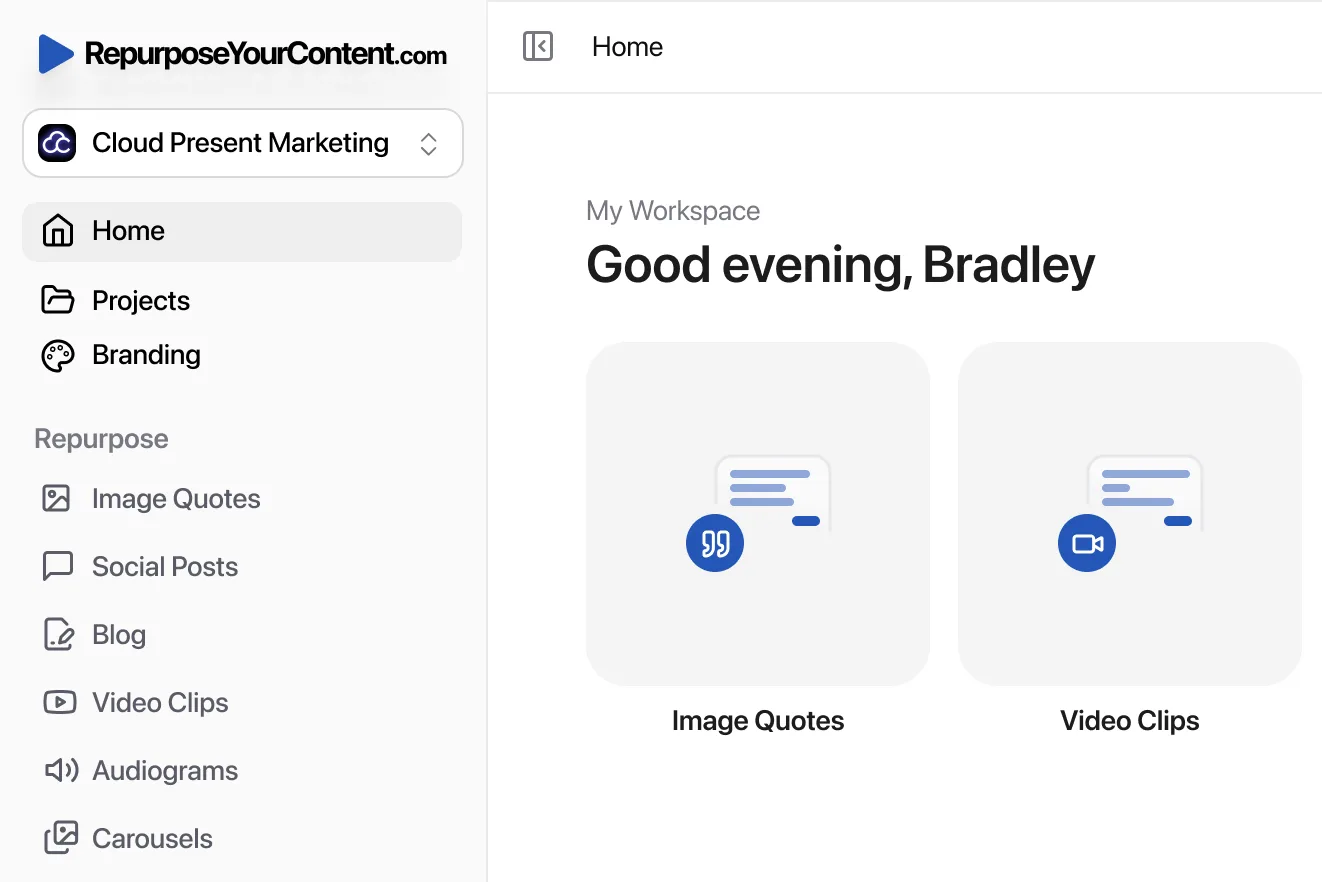
RepurposeYourContent can receive a podcast, interview, keynote, sales call, livestream, course, or meeting recording and return finished content. Its done-for-you podcast content service fits teams that need the written layer without assigning every production task internally.
Outsourcing doesn't remove editorial responsibility. The client still needs to confirm product names, sensitive claims, guest references, and the preferred call to action. A clear brand guide and one review pass protect quality.
The trade-off is simple. DIY provides maximum control but consumes recurring production time. A done-for-you service reduces execution time, while the client retains final approval and can request revisions before publication.
10. Plan Production Timelines and Prioritize the Work
Podcast SEO includes several separate jobs. Keyword research shapes the topic. Recording creates the source material. Transcription creates crawlable text. Article writing creates the search-focused answer. Show notes improve navigation. Linking and schema connect the page to the wider site.
Treating all tasks as one vague “SEO step” hides the actual workload. A realistic DIY process includes research, listening, outlining, drafting, transcript cleanup, timestamping, internal linking, schema validation, and distribution. Each step can take from minutes to several hours, depending on recording length and editorial standards.
Use a repeatable production workflow
A practical episode process looks like this:
- Research the query: Collect audience language and validate it with Ahrefs, Semrush, or Google Keyword Planner.
- Record with intent: Cover the primary question and related subtopics naturally.
- Create the transcript: Generate a first pass, then correct names, terms, and speaker labels.
- Write the article: Lead with the answer, then organize the discussion around descriptive H2s.
- Format show notes: Add timestamps, summaries, resources, and related episodes.
- Apply schema: Validate Article and PodcastEpisode markup.
- Distribute assets: Publish the episode page, video version, clips, LinkedIn posts, and email content.
- Review performance: Watch indexed pages, impressions, clicks, rankings, plays, and conversions.
A busy team should prioritize the written page first. An episode article, summary, H2 structure, transcript, and internal links create the foundation. Clips and graphics amplify the asset, but they don't replace the page Google can crawl.
Top 10 Podcast SEO Best-Practices Comparison
| Item | Implementation complexity | Resource requirements | Expected outcomes | Ideal use cases | Key advantages |
|---|---|---|---|---|---|
| Publish a Real SEO Article Per Episode, Not Just a Raw Transcript | Medium–High (SEO writing + structure) | 2–3 hrs/episode; SEO knowledge; CMS & schema support | Indexed, rankable episode pages; long-term organic traffic | Podcasts prioritizing web discovery and evergreen growth | Dual discoverability (article + audio); topical hubs; internal linking |
| Write Keyword-Aware Episode Titles and Descriptions for Apple/Spotify | Low–Medium (metadata writing) | 15–20 mins/episode; podcast-specific keyword research | Faster app-search ranking; higher CTR in apps | Shows relying on app discovery or frequent releases | Quick gains in app search; improved CTR; low time cost |
| Structure Show Notes with Descriptive H2s and Timestamps | Medium (content structuring, chaptering) | 45–60 mins/episode; careful listening for chapters | Increased dwell time; better parsing for rich results and chapters | Episodes with clear topic shifts or multiple segments | Scannability; clickable chapters; improved UX and SERP signals |
| Publish Full Transcripts Alongside Articles for Long-Tail Coverage | Medium (transcription + proofreading) | 15–30 mins human review per 45-min episode; transcription tool | Captures long-tail queries; accessibility; more indexable words | Conversational interviews, quote-rich episodes | Large indexable content; accessibility; searchable transcript |
| Build Internal Link Clusters Across Episode Articles | High (strategic planning + execution) | 30–50 hrs to plan/write pillar + clusters; ongoing linking | Stronger topical authority; higher rankings for competitive keywords | Niche shows with 5–10+ related episodes | Distributed authority; faster ranking for pillar topics; reduced cannibalization |
| Implement Article Schema and Podcast Schema Markup | Medium (technical/validation) | 1–2 hrs initial setup; ~10–15 mins per article; dev or plugin | Eligibility for rich snippets; improved SERP displays and voice results | Sites seeking enhanced SERP features and accurate metadata | Higher CTR via rich snippets; chapter/episode details in search |
| Conduct Keyword Research Using SEO Tools + Audience Questions | Low–Medium (research + validation) | ~1–2 hrs/month; tools (Ahrefs/Semrush) + audience audit | High-intent episode ideas with validated demand; lower competition | Content planning and topic ideation focused on conversions | Audience-aligned topics; validated search demand; long-tail focus |
| Optimize Your Podcast Feed and RSS Metadata for Discoverability | Low (one-time setup, review) | One-time configuration; artwork (3000x3000); 24–48 hr propagation | Correct indexing and display across platforms; better app ranking | New shows, host migrations, or relaunches | Accurate platform display; category-driven discoverability; professional appearance |
| Service Option: Outsource SEO-Ready Episode Articles and Show Notes | Low for creator (outsourced), Medium for vendor | Typical delivery 72 hrs; client review ~15 mins; service fee | Ready-to-publish optimized articles and notes; time savings | Creators with limited time or no in-house SEO/writing resources | Saves creator time; consistent quality; scalable production |
| Production Timelines, Time-Saving Tactics, and Combined Cost Estimates | Low (planning & guidance) | Varies; templates, automation, or outsourcing options | Efficient resource allocation; prioritized workflows | Teams planning workload, automation, and outsourcing mix | Realistic time estimates; prioritization and automation strategies |
Turn Every Recording Into a Searchable Content Asset
The central principle is straightforward. Audio alone is invisible to Google, while a well-built episode page creates a real indexed asset that can rank and compound across a topic cluster. Platform metadata still matters because podcast discovery happens inside apps, but web SEO gives the episode a second route to new listeners and buyers.
A per-episode podcast SEO checklist should include:
- Validate one primary keyword from audience questions and SEO research.
- Optimize the RSS show title, author, description, language, category, and artwork.
- Write the episode title with the main keyword near the beginning.
- Put the key insight in the opening description.
- Write the top summary before drafting the detailed notes.
- Add descriptive H2s based on listener questions.
- Add timestamps and chapter labels.
- Publish a real SEO article, not only a raw transcript.
- Embed the proofread transcript on the same page.
- Add internal links to the pillar and related episodes.
- Validate Article and PodcastEpisode schema.
- Publish a video version on YouTube when appropriate.
- Distribute clips, LinkedIn posts, quote graphics, carousels, and audiograms.
- Measure indexed pages, impressions, clicks, rankings, plays, and conversions.
The workflow can stay simple. Step 1: Send one 45-minute podcast, interview, keynote, sales call, livestream, or course recording. Step 2: RepurposeYourContent returns 20 to 30 finished assets in 72 hours, including video clips, LinkedIn posts, quote graphics, carousels, audiograms, and a blog post. Step 3: Spend about 15 minutes reviewing the delivery and requesting unlimited revisions. Step 4: Publish the article and connect it to the relevant topic cluster. Step 5: Review performance and improve future titles, summaries, and episode topics.
The service offers a 72-hour turnaround guarantee, or the client doesn't pay, with pricing from $14 per finished asset. The client sends the recording, receives finished content in the brand voice, and keeps control of the final publishing decision. This suits founders, podcasters, speakers, and B2B teams that have expertise recorded but lack recurring production capacity.
A professional transcript workflow still needs human review for names, technical terms, and sensitive claims. This transcription workflow guide provides additional process context for teams building their own system.
Book a call or request a sample from RepurposeYourContent to see how one recording can become an SEO-ready article and a complete set of publishable assets.
Tags: