How to Turn Podcast Episodes Into Blog Posts That Rank
A complete workflow to turn podcast episodes into blog posts that rank on Google. Learn the step-by-step process for transcription, editing, and SEO.

By 2024, podcast listeners worldwide had reached about 504.9 million. A podcast episode can turn into a blog post that gets indexed, ranked, and found long after the recording goes live.
That is the answer to how to turn podcast episodes into blog posts. You transcribe the audio, map the episode to a search keyword, restructure the strongest points into headings, and rewrite it as a scannable article. Never publish the raw transcript.
Why Your Podcast Needs a Blog Post Counterpart
Podcast audio can build trust fast, but it leaves search traffic on the table. Google can index written pages far more easily than spoken files, which means the same insight stays hidden unless it has a blog counterpart. Turning episodes into articles gives the content a second life in search, where people are actively looking for answers instead of passively listening.
That matters because the audience is already large. By 2024, podcast listeners worldwide were estimated at about 504.9 million as reported in this podcast repurposing overview. Converting episodes into indexed articles turns audio-only conversations into searchable assets that can capture demand long after the original publish date.
A blog post also does something the episode cannot. It creates a page that can support internal links, keyword targeting, and topic clusters on your site. That's why a single recording shouldn't just sit on a player page.
Practical rule: If a topic can answer a real Google query, it deserves a written version.
This is also where repurposing beats one-off publishing. A podcast episode disappears into feeds and apps. A blog post can keep pulling readers into your content library, your email list, and your offers.
One useful lens is to compare native audio with repurposed written content. The difference is not just format, it's discoverability and how the asset fits into your wider content system. This comparison of native content versus repurposed content is a good reminder that distribution alone is not enough.
The Manual Workflow to Turn Podcast Episodes Into Blog Posts
The manual process is straightforward, but it's not quick. After transcription, a proper SEO article usually takes 1 to 2 hours per episode if the transcript is clean and the episode is focused. That's real work for a busy founder, especially when the episode also needs to be clipped, shared, and promoted.
Step 1 Start with the transcript, then find the thesis
Do not begin by copying the transcript into a post. Read the whole thing first, because the core thesis is often different from the planned topic. A guest interview may start with one theme and end with a much stronger, more searchable idea.
The fastest path is to mark the best segments while reading. Pull out the lines where the host or guest gives a complete explanation, a clean framework, or a strong opinion. Those are the parts worth keeping.
Step 2 Map the thesis to search intent
The next move is to ask what someone would Google. Not what the episode was called, but what problem it solves. That search intent becomes the target keyword, and it should match the reader's likely question.
Useful test: If the keyword sounds clever but not searchable, it's probably the wrong target.
This step is where many DIY posts fail. They mirror the episode title instead of the reader's intent. A good article is built around the question, not the recording order.
Step 3 Build the outline from the strongest segments
Use the episode's best sections as the spine of the article, but rearrange them logically. Chronology is for audio. Readability is for blogs. Put the strongest ideas first, then add headers that help skimmers move through the page.
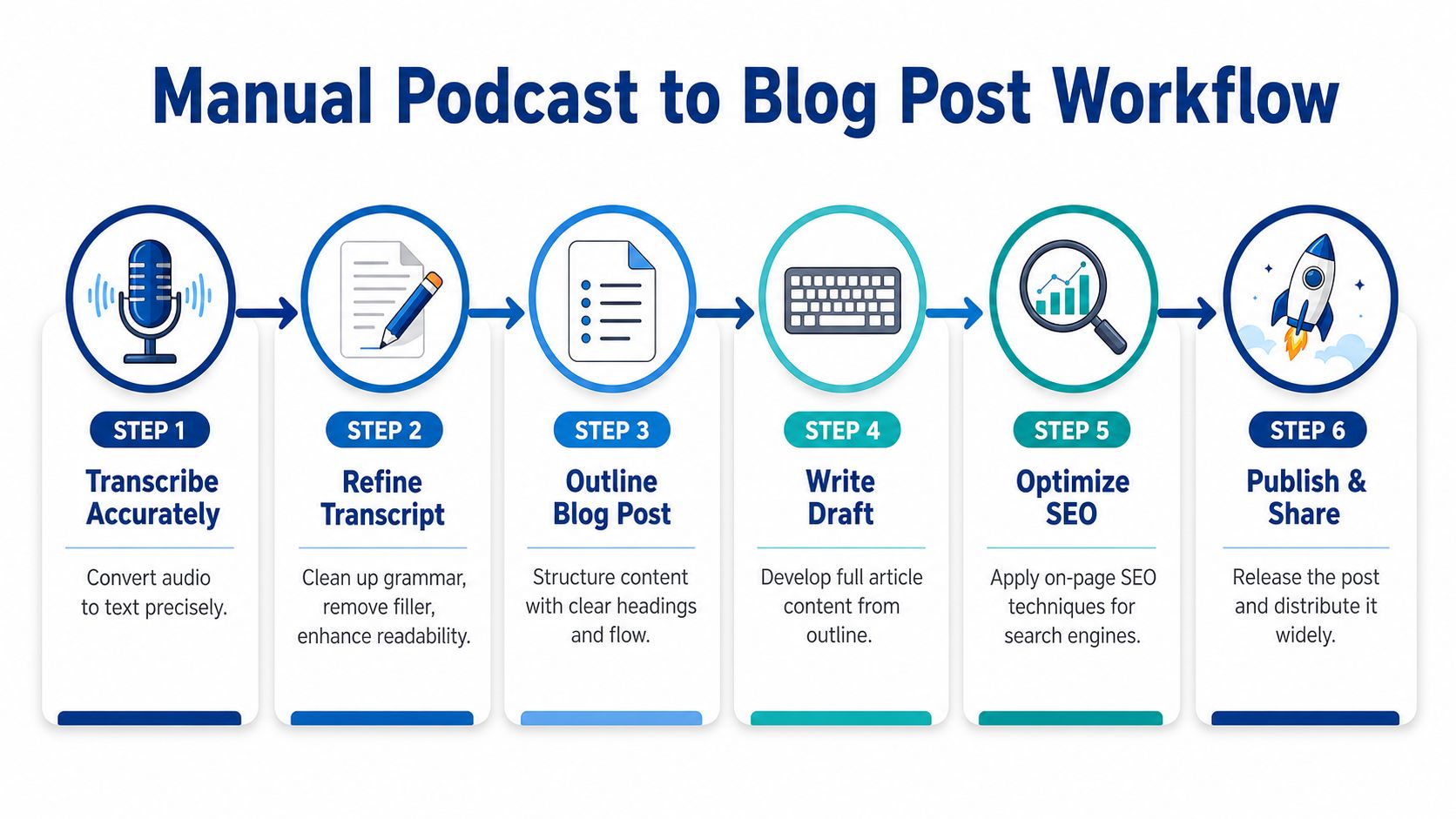
A practical podcast-to-blog workflow is to generate a transcript, choose one clear angle, restructure the spoken content into scannable prose with data and headers, then run a fast SEO pass before publishing as laid out in this conversion guide. That sequence keeps the post focused and stops it from reading like a transcript with line breaks.
Here's a simple working example for a 45-minute episode:
- Transcribe and skim it first. Mark the thesis, the strongest examples, and any lines worth quoting.
- Choose the keyword next. Match the episode to a real search intent, not the original episode title.
- Write the outline from the best segments. Arrange the ideas by usefulness, not by when they happened in the conversation.
- Draft in fresh prose. Rewrite the ideas for readers, and keep only the strongest verbatim lines as pull quotes.
- Edit for readability. Remove filler words, break long sentences, and add transitions.
- Run the SEO pass. Add the title, meta description, internal links, and formatting before publishing.
That process is repeatable, but it still takes focus. Most podcasters underestimate the drafting stage because the conversation already exists. The hard part is turning spoken ideas into a page someone wants to scan.
For show notes versus full articles, keep the difference clear. Show notes are useful for summaries, timestamps, and links. A full article is a search asset. It should answer the query completely, with proper structure and written flow. This guide on podcast show notes from recordings helps clarify the split.
How to Optimize Your New Blog Post for Search
A strong article can still miss search traffic if the page structure is weak. Start with the query you want the post to rank for, then shape the episode around that intent. A founder who turns every episode into a blog post ends up with a lot of content and very little search value. The better move is to pick episodes that already answer a real question, support a buying decision, or fit a topic cluster such as a B2B content marketing strategy for 2026.
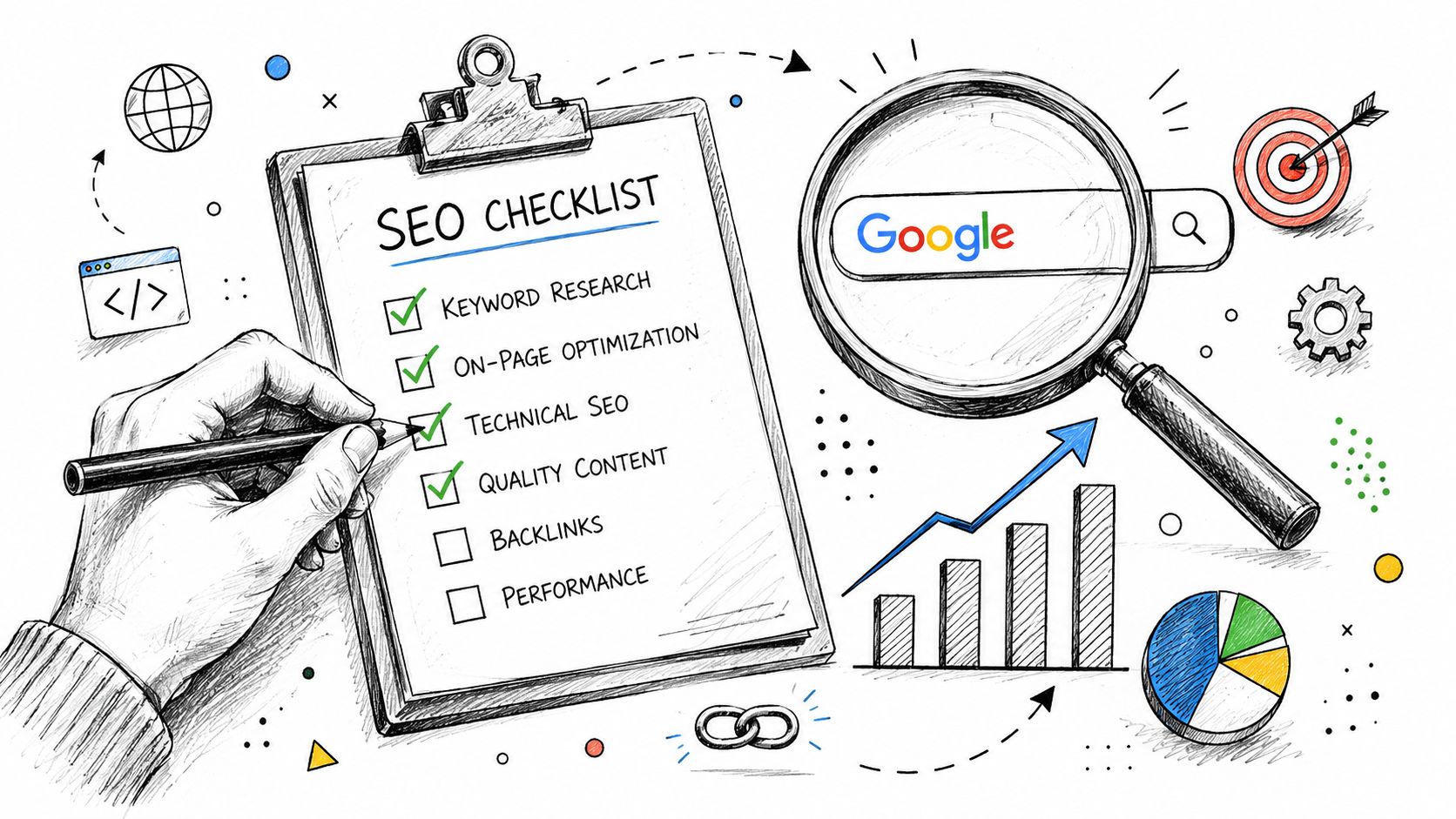
The page should also link to two or three related posts so the article is not isolated. Internal links help readers keep moving through your site, and they help search engines understand where the topic sits in your broader content map. Add the original episode embed near the top if you want to keep listeners engaged, since the written post and the audio can support each other without competing for attention.
A blog version needs SEO structure that podcasts do not naturally have. That means a clear outline, an introduction, a few main sections, a conclusion, and a final SEO pass for keywords, metadata, and links. as recommended in this podcast-to-blog guide The episode may have had strong ideas, but the page still has to be built for search behavior.
The checklist is simple:
- Title discipline: Keep it short enough to avoid truncation.
- Meta description discipline: Make it clear and useful, not poetic.
- Header discipline: Break the page into readable blocks.
- Internal linking discipline: Point readers to related content.
- Embed discipline: Keep the episode accessible for people who prefer audio.
Search does not reward raw transcripts. It rewards pages that answer a question cleanly.
One more point matters here. A transcript-heavy page may be faster to produce, but it usually performs worse for intent and readability. A rewritten article gives you room for context, transitions, and commentary the transcript never had. It also lets you place the episode in a search-friendly frame instead of forcing the reader to do the sorting work.
How to Preserve Your Authentic Voice in Writing
The fastest way to ruin a repurposed episode is to scrub out the host's personality. The piece may still be accurate, but it reads like generic marketing copy instead of something a real person said with conviction. That usually happens when the rewrite chases polish before it protects the speaker's tone.
Start by deciding what must stay recognizable. Keep the host's recurring phrases when they sound natural in print. Keep their point of view when the episode makes a clear argument. Use direct quotes from guests when a line carries real weight, instead of flattening it into a safer paraphrase.
A strong blog version also needs a structure the podcast never had. The draft should have an introduction, 3 to 7 main sections, a conclusion, and an SEO pass for keywords, metadata, and links as described in this formatting guide. That frame gives the voice somewhere to live without forcing it into transcript shape. If you want a closer look at the workflow behind that kind of rewrite, see how AI content repurposing works.
A few practical habits keep the writing human:
- Keep signature language: Preserve phrases the host uses on purpose, especially when they signal perspective or attitude.
- Quote strong lines: Leave the clearest host and guest lines in place when they already say the point well.
- Read it aloud: If the sentence sounds stiff or unlike the speaker, it needs another pass.
- Revise for voice, not just grammar: Clean copy still needs rhythm, edge, and a recognizable point of view.
If the written draft doesn't sound like the host, it isn't finished.
That test matters because readers can tell when a blog post has been over-edited. A tidy but lifeless article does not feel like an extension of the show. It feels like a transcript that went through copyediting and lost the person behind it.
The 15-Minute Alternative to DIY Repurposing
If you only have a few minutes, the real decision is not whether to repurpose. It is which episodes deserve the manual work and which ones should move through a service that handles the heavy lifting for you. The strategic filter is simple, convert the episodes tied to search demand, evergreen questions, or sales-relevant topics, then leave the rest as audio only.
DIY repurposing works, but it costs time you may not have. The manual path can take 1 to 2 hours per episode after transcription, and that is before clipping, posting, or promoting anything else. For a founder or podcaster with a full calendar, that quickly turns into an editorial bottleneck.
A done-for-you model shifts that work off your desk. You send one recording, and a team turns it into finished content. That approach reflects how podcast repurposing has moved from a labor-heavy editorial task to a repeatable content operations process as described by PodRewind.
The trade-off is straightforward:
- DIY path: You manage the transcript, the outline, the writing, the SEO pass, and the revisions.
- Done-for-you path: You spend about 15 minutes sending the recording, then receive polished assets back.
- Output difference: One recording can become 20 to 30 ready-to-publish assets, including video clips, LinkedIn posts, quote graphics, carousels, audiograms, and a blog post.
That speed matters because the article comes with the delivery. You are not only getting social snippets. You are getting a search-ready piece that gives the recording a second life in Google and in your content library.
The commercial upside is easy to see. A service like RepurposeYourContent is built for clients who want one recording turned into a broader content system, not another task on the to-do list. If you want to evaluate the handoff before committing, start with the podcast repurposing service. The promise is direct, 72-hour turnaround guarantee, or you don't pay, from $14 per finished asset, with one 45-minute recording becoming 30 assets.
Start Turning Your Episodes into Search Traffic
The choice comes down to time. If you want full control, the manual workflow gives you that, and it can produce a solid article in a couple of hours. If you want speed, a done-for-you service gets the work off your plate in about 15 minutes.
Either way, the wrong option is leaving the episode as audio-only. That keeps the content invisible to search and limits its shelf life. A written article gives the same ideas a second, compounding life in Google.
If you're ready to stop spending hours turning recordings into content, book a call with RepurposeYourContent or request a sample. Send one episode, and get a polished article back without the writing grind.
Tags: