What Is Hashtag
What is hashtag. What is a hashtag, really? A clear 2026 guide to how hashtags work, where they help, and how creators and marketers should use them
A hashtag is a word or phrase prefixed with the # symbol that becomes a clickable, searchable topic link. In 2026, hashtags work less as a reach hack and more as a topic signal for people and platform algorithms.
A founder finishes recording a podcast, watches the audio export, and opens an Instagram or LinkedIn draft. The cursor blinks. One caption is half-written, three hashtags are deleted, and the same question remains: what is hashtag strategy supposed to look like now?
The uncertainty is practical. The creator needs to know what to type, how many tags to use, and whether the tag belongs in the caption, comment, title, or description. The answer depends on the platform and the subject of the post.
The Moment Every Creator Stares at the Caption Box
A podcast recording has already taken preparation, coordination, and focus. The conversation ends, but the work doesn't. The founder still needs a caption for the video clip, a description for the quote graphic, and a clear topic label for every social post.
A hashtag is a word or phrase preceded by # that groups related public posts into a searchable topic stream. The symbol changes ordinary text into metadata that platforms can parse, index, and often turn into a clickable link.
In 2026, that function matters more than the old promise of instant reach. A relevant tag tells people what a post concerns and helps a platform classify the conversation. It doesn't replace a strong opening, useful information, or clear language.

The symbol has a long history. Chris Messina proposed using the pound sign to group related Twitter posts on August 23, 2007, when Twitter was only about a year old. #barcamp is commonly cited as the first hashtag, and Telefónica's history of the hashtag explains why that moment became a lasting milestone.
For a busy podcaster, the useful question isn't whether hashtags are fashionable. It is whether a tag improves the classification and retrieval of a specific asset. A clip about pricing objections needs a different label from a clip about hiring, even when both come from the same episode.
A simple batch content creation workflow for creators makes that distinction easier. The recording becomes a group of assets, and each asset receives a label based on its actual subject.
Practical rule: Treat a hashtag as a signpost for one idea, not as decoration added after the caption is finished.
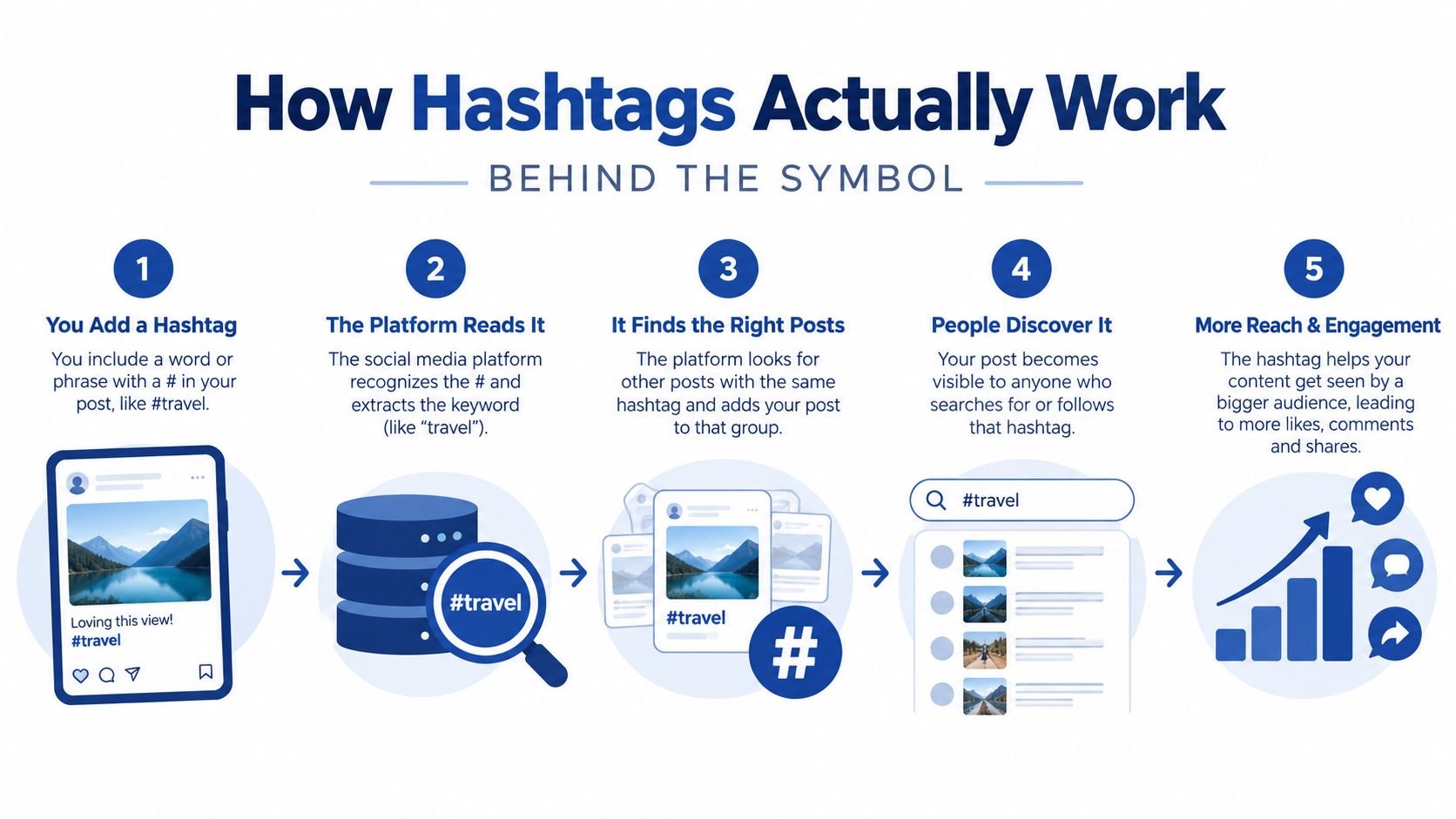
How Hashtags Actually Work Behind the Symbol
The mechanics are simple, but small formatting mistakes can break the connection.
The parser reads one continuous token
The # symbol, also called the pound or number sign, tells a platform to interpret the characters that follow as a topic tag. The tag normally ends when the platform encounters whitespace or a punctuation break.
That means #hashtagstrategy and #hashtag strategy are different. The first is one searchable token. The second contains a tag followed by an ordinary word.
Capitalization usually helps people read longer tags, while platforms commonly normalize the casing for indexing. As a result, #HashtagStrategy and #hashtagstrategy generally point to the same topic stream.
Numbers can work inside tags. Underscores and emoji are also accepted on many platforms. Periods, commas, and most punctuation usually cut a tag short, so #B2BMarketing works more reliably than a tag containing punctuation.
The platform turns the token into metadata
Once published, the platform can connect that token with other public posts using the same spelling. A reader can select the tag and reach a topic page, search result, or conversation stream.
That creates a user-generated metadata layer. Research reviewing hashtag studies describes hashtags as more than simple labels. They can organize discussion, shape discourse, and connect online conversations with activity outside digital platforms, as documented in research on hashtags as social metadata.
The practical chain looks like this:
- A creator chooses a phrase. For example, a founder selects #productmarketing.
- The creator writes it as one token. Spaces and disruptive punctuation are removed.
- The platform parses the token. It recognizes the phrase as a topic marker.
- The platform indexes matching posts. Public posts using the same tag can join the topic stream.
- People search or click the tag. They find posts connected by the shared subject.
The result is an information architecture decision. A broad tag may gather many posts but provide weak context. A highly specific tag may describe the post accurately but attract a smaller conversation. Effective design balances clarity, relevance, and aggregation.
A B2B marketer can find more practical context in this guide to the LinkedIn algorithm in 2026. The tag supports the topic, but the post still needs language that explains the subject directly.
Where Hashtags Behave Differently by Platform
The underlying mechanic stays similar, but placement and volume change by surface. A podcast clip should not receive the same hashtag treatment on Instagram, LinkedIn, TikTok, YouTube, and X.
| Platform | Recommended Tags | Placement | Primary Function |
|---|---|---|---|
| Three to five relevant tags, despite a technical ceiling of 30 | Caption or relevant comment | Topic classification and search context | |
| Three to five relevant tags | End of the post, before or around the see-more break | Professional topic discovery and following | |
| TikTok | A tight mix of broad, niche, and branded tags | Caption | Topic signaling alongside the video |
| YouTube | A small set of topic markers | Title or description | Video topic and search context |
| X | One or two focused tags | Within the post body | Conversation categorization and search |
Instagram's technical ceiling has historically been 30 hashtags for a feed post, Reel, or caption-plus-first-comment combination, according to Instagram hashtag limit guidance. That ceiling isn't a target. A compact set of precise tags usually gives the caption cleaner context than a block of unrelated terms.
LinkedIn doesn't enforce a hard hashtag limit, but practical guidance recommends three to five relevant hashtags, with three often treated as a clean choice. A founder discussing sales objections might use #b2bsaas, #productmarketing, and #salesenablement. Generic tags such as #business add less information.
TikTok supports broad, niche, and branded tags in captions. The video carries most of the communication, so the tags should clarify its subject rather than repeat every possible keyword.
YouTube uses hashtags as topic markers in titles and descriptions. The tag supports the video's subject, but the title and description still need plain-language keywords. X remains closely associated with hashtag-driven conversation, so one or two tags can help categorize a concise post.
For operational teams, hashtags for ops teams offers a useful comparison point for deciding whether a tag serves discovery or merely fills space. A broader B2B social media strategy for 2026 can then assign each platform a different publishing role.
From 125 Million Daily Uses to a Quiet Shift in 2026
Hashtags became important because they solved a real indexing problem. People needed a way to group posts around events, communities, campaigns, and recurring subjects. Platforms needed a visible structure for topic search.
One source cites roughly 125 million hashtags used every day on Twitter, showing the scale the system reached as adoption spread. The Smithsonian also documents a Guinness-recognized record of more than 60 million uses of #TwitterBestFandom in one 24-hour period, recorded from March 16 to 17, 2019, in its account of the hashtag's internet history.
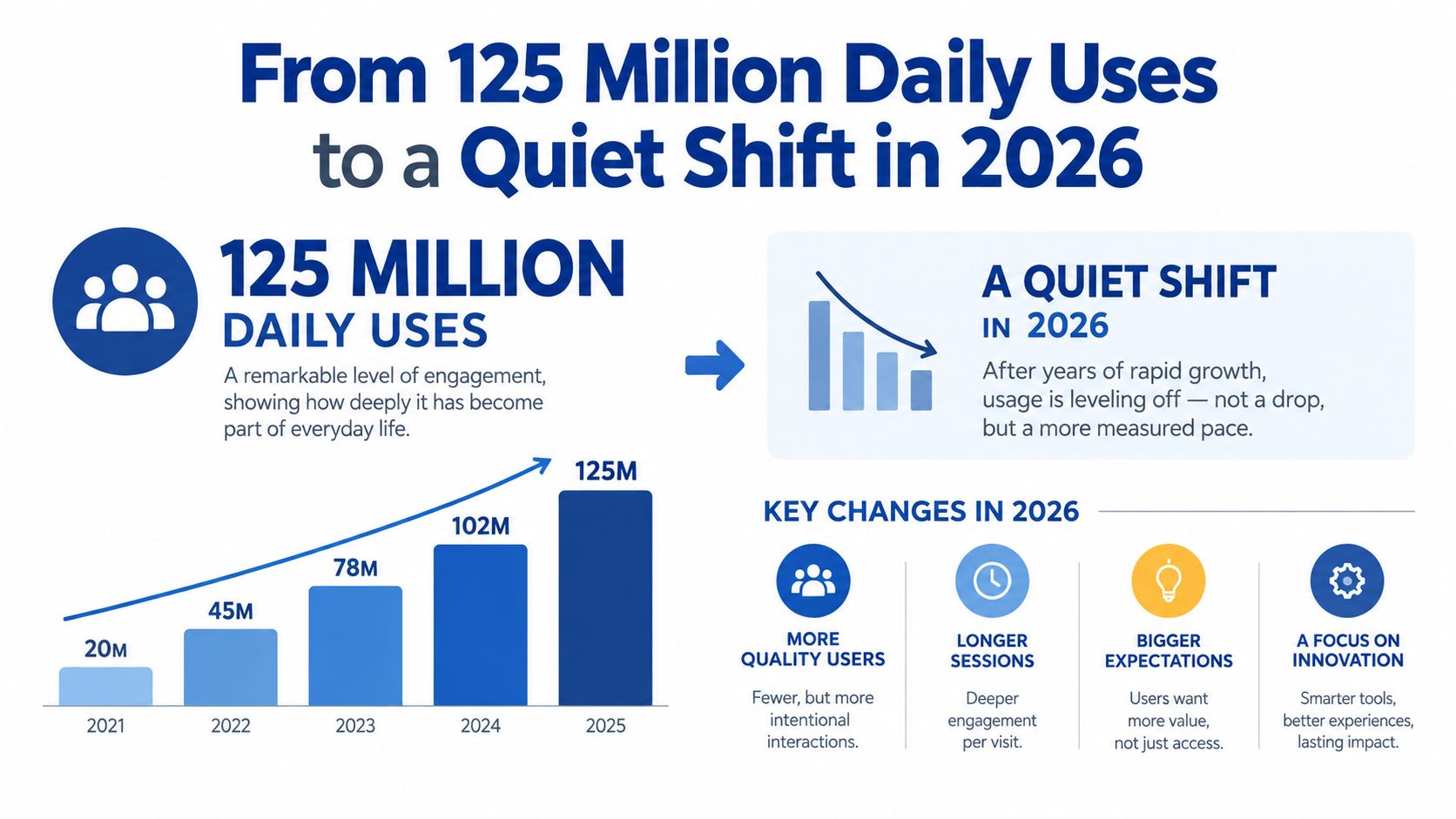
Those figures explain why the hashtag became more than a formatting habit. It became a shared communication system. August 23 is also recognized by Telefónica as International Hashtag Day, reflecting the symbol's lasting cultural role.
The current shift is strategic. Recommendation systems and keyword search now evaluate the content itself, including its language, subject, audience signals, and viewer response. A hashtag can supply useful context, but a large tag count doesn't automatically make a post more relevant.
What the shift means for creators
A podcast team should stop asking, “How many hashtags can this caption hold?” The stronger question is, “Which topic should this asset help people identify?”
That changes the workflow:
- Use precision first. Select tags that describe the specific clip.
- Keep the set compact. Remove tags that don't add subject information.
- Write searchable language. Put the topic in the caption, title, and on-screen text.
- Match the audience. A founder's tag should reflect the buyer or professional community.
- Review the result by relevance. A tag earns its place when it clarifies the asset.
A long-form creator can also use a content repurposing statistics resource to plan distribution around the recording itself. The hashtag is one layer of that system, not the entire discovery strategy.
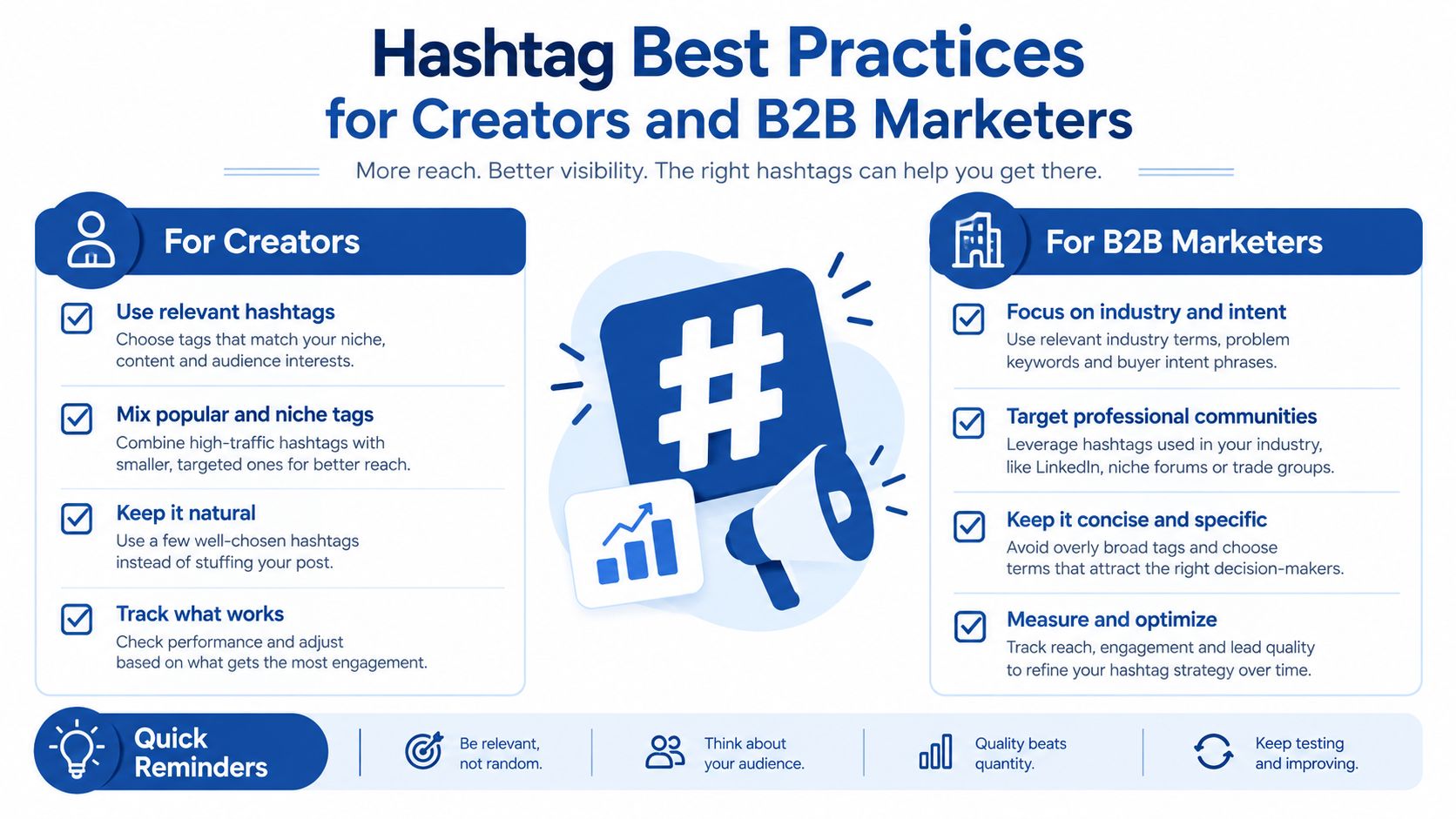
Hashtag Best Practices for Creators and B2B Marketers
Good hashtag work starts before the caption. The creator should search a candidate tag on the platform where the post will appear and inspect the surrounding conversation.
That review answers practical questions. Does the tag describe the right industry? Are recent posts relevant? Do buyers, peers, or unrelated accounts dominate the results? A phrase can look appropriate in a keyword list and still signal the wrong audience.
Build a small, readable tag set
The best tag set reflects the asset's exact angle. A clip about handling pricing objections might use #b2bsaas and #productmarketing on LinkedIn. A quote graphic about founder confidence might need a shorter, broader awareness tag on Instagram.
Use these operating rules:
- Write for scanning. Use capitalization to make multiword tags easier to read, such as #ProductMarketing.
- Avoid keyword stuffing. Thirty loosely related tags create noise, even where the platform permits that volume.
- Place core tags in the caption. The platform has clearer context when the tags sit beside the post's subject.
- Rotate with purpose. Change supporting tags when the asset's angle changes. Don't rotate the primary subject merely to appear varied.
- Keep branded tags distinct. A show name or campaign tag works best when its spelling stays consistent.
- Separate platform behavior. A tag set designed for LinkedIn may look crowded on X or incomplete for a TikTok caption.
A dedicated guide to building an Instagram hashtag strategy can help teams assess tags within that platform's visual and search environment. B2B teams should apply the same discipline to industry-specific language instead of copying lifestyle creator patterns.
Count the real DIY cost
Manual research takes time because each platform shows a different set of results. A small team can spend 30 to 60 minutes per post searching tags, checking relevance, rewriting captions, and formatting the final draft.
That time comes after editing, design, transcription, approvals, and scheduling. For a founder publishing one clip, it may be manageable. For a content team publishing several assets from every recording, the work becomes a production queue.
The strongest hashtag is the one that makes the post easier to classify without making the reader work harder.
Turning One Recording into Tagged, Ready-to-Publish Assets
A 45-minute podcast can contain several distinct subjects. Treating the entire recording as one topic wastes that range. Each clip needs its own angle, caption, visual treatment, and hashtag layer.
A practical workflow looks like this:
- Pull the transcript. Mark the sections where the guest answers a focused question.
- Identify three to five thematic hooks. Examples include pricing objections, product positioning, founder hiring, customer research, and sales calls.
- Draft the asset captions. The caption should explain the clip without relying on the tag for meaning.
- Choose one primary tag. Match it to the clip's specific subject, not only the podcast name.
- Add two or three supporting tags. Use related industry or audience terms when they are a strong match.
- Adapt the set by platform. Keep the LinkedIn version professional, the Instagram version readable, and the X version compact.
- Review the final package. Check spelling, links, visual text, and whether every tag describes the asset.
Consider a clip about pricing objections in a B2B software conversation. Its LinkedIn caption could use #b2bsaas and #productmarketing because those tags identify the commercial context. An Instagram quote graphic from the same moment might use a shorter awareness tag, while the show's branded tag remains optional.
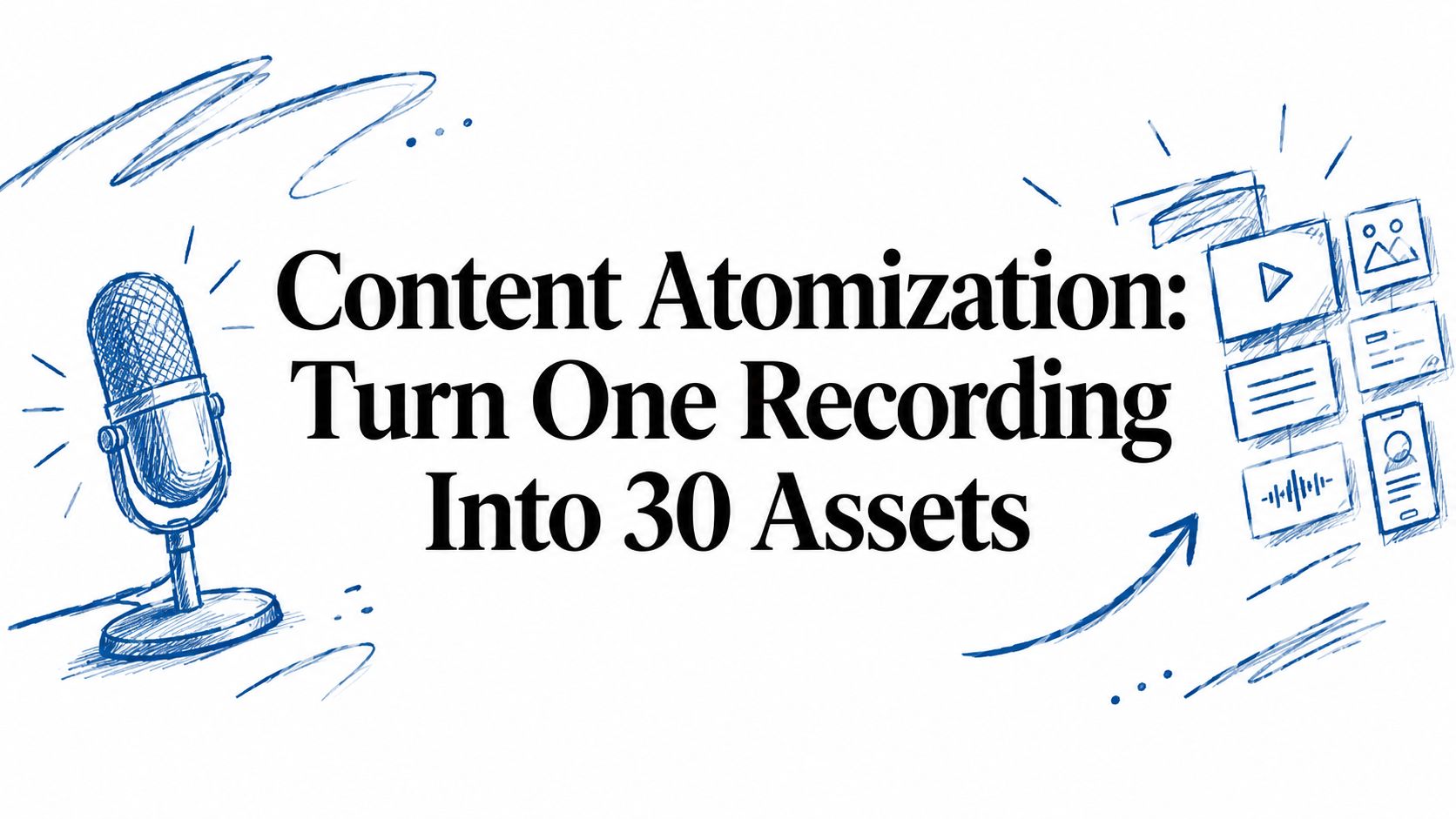
The recording can also produce a carousel, audiogram, short video, quote graphic, and blog post. Each format should preserve the same central idea while changing the entry point. Content reuse cases show how teams can think beyond one social post. A structured creator content repurposing workflow keeps the editorial decisions connected.
A small content team may spend two to four hours per recording running this workflow manually. That estimate includes transcript review, hook selection, caption writing, formatting, tag selection, and quality checks. A typical specialist service may quote two to three business days and $25 to $75 per finished asset, depending on the formats and review process.
The done-for-you alternative
RepurposeYourContent is one done-for-you option for this workflow. A client sends one podcast, webinar, keynote, interview, or meeting recording. The service delivers 20 to 30 ready-to-publish assets in 72 hours, including video clips, LinkedIn posts, quote graphics, carousels, audiograms, and a blog post, written in the client's brand voice with unlimited revisions.
The client's time is about 15 minutes. The service's published pricing starts at $14 per finished asset, and its 72-hour turnaround guarantee means the client doesn't pay if the deadline is missed. One 45-minute recording becomes 30 assets, with topic-specific hashtag suggestions attached to the relevant posts.
That model removes the repetitive work without removing editorial control. The creator still approves the ideas, tone, and final assets. The production team handles transcript review, formatting, platform variations, and the tagging decisions that make each piece easier to find.
A hashtag is still useful when it identifies a real topic with precision. It becomes wasteful when it replaces clear writing or turns into a wall of unrelated keywords.
Creators and B2B marketers can start with one recording and map each strong idea to a separate asset. To turn that recording into finished clips, posts, graphics, and platform-specific captions, book a call with RepurposeYourContent or request a sample.
Tags: